
Monday, March 16, 2026
Home Blog Page 819

Don’t be left in the cold over winter weather insurance claims

0

Kansans are no strangers to winter weather. With the arrival of the freezing conditions
comes the potential for winter-related damage to your home or property. Your homeowners or renters insurance policy can protect you against common winter damage, so be sure to contact your agent to conduct a review of your current policy and ensure you are covered for all the perils of winter weather.

Kansas Insurance Commissioner Vicki Schmidt recommends taking the following precautions to prevent the worst of the season’s surprises:
• Clear your gutters and prune trees to prevent structural damage from falling branches and ice dam formation.
• Protect your pipes from freezing by detaching garden hoses from your home and winterizing your irrigation systems. When temperatures drop severely, leave your faucet running with a slight drip and open the cabinet doors under your sinks.
• Evaluate the insulation and ventilation in your attic, keeping the warm air in your home and out of your attic to minimize the formation of ice dams.

“Every Kansan should take precautionary steps this winter to help protect their property from freezing temperatures and winter weather,” said Commissioner Vicki Schmidt. “If you are a victim of a winter catastrophe, a burst pipe or a roof collapse, contact your insurance agent right away.”

Review the Department’s Homeowners Claims Settlement Guide to help you through the claims process. If you or someone you know is having trouble with an insurance claim, please contact the Kansas Insurance Department’s Consumer Assistance Division toll-free at 1-800-432-2484, email [email protected] or visit the Department online at insurance.kansas.gov for any claimsrelated questions or concerns.

Don’t Let Delivery and Takeout Foods Fumble Your Super Bowl

0

February 12 marks Super Bowl LVII and Americans from coast to coast will gather with friends and family to cheer on their team, enjoy the halftime show and partake in traditional football foods. While foods prepared at home remain a popular option, delivery and takeout options are convenient alternatives. Since this event can last up to four hours, harmful bacteria have ample time to develop in your favorite dishes, which increases the possibility of foodborne illness.

The U.S. Department of Agriculture’s (USDA) Food Safety and Inspection Service (FSIS) wants to keep you in the game with some tips on how not to get benched by foodborne illness.

“Many Americans enjoy delivery and takeout foods during the Super Bowl for convenience, but food safety precautions are the same as food prepared at home,” said USDA Under Secretary for Food Safety Dr. Emilio Esteban. “To prevent foodborne illness, food should not be left out for over two hours without proper heating or cooling and should be placed out in small amounts and replenished as needed to keep your family and friends safe.”

Follow some tips from the food safety playbook to tackle foodborne illness head on throughout the game:

Play 1: Boost your Food Safety Defense Strategy with Four Simple Steps for Preparing Foods

You can’t see, smell or taste harmful bacteria that may cause illness. When preparing food, follow the four guidelines below to keep food safe:

  • Clean — When handling raw meat and poultry, wash your hands for at least 20 seconds and clean and sanitize surfaces often with soap, water and a sanitizer.
  • Separate — Don’t cross-contaminate. Use separate cutting boards, plates and utensils to avoid cross-contamination between raw meat or poultry and foods that are ready-to-eat.
  • Cook — Cook to proper internal temperatures, checking with a food thermometer.
  • Chill — Refrigerate promptly and do not leave food out at room temperature for over two hours.

Play 2: Block Foodborne Illness and Bacteria by Staying out of the Danger Zone

Leaving takeout and delivered foods out too long at room temperature is not safe. Dangerous bacteria can grow most rapidly in the range of temperatures between 40 F and 140 F (the Danger Zone), doubling in number in as little as 20 minutes.

  • If you order food and it’s delivered or picked up in advance of the big game, divide the food into smaller portions or pieces, place in shallow containers and refrigerate until ready to reheat and serve. You can also keep the food warm (above 140 F) in a preheated oven, warming tray, chafing dish or slow cooker.
  • Perishable foods, such as chicken wings, deli wraps and meatball appetizers, should be discarded if left out for longer than two hours without something keeping them hot or cold. To prevent food waste, refrigerate or freeze perishable items within two hours.
  • Leftovers should be reheated to an internal temperature of 165 F as measured with a food thermometer. If using a microwave to reheat, cover and rotate the food for even heating. Food should be placed evenly in a covered microwave safe glass or ceramic dish with the lid or wrap vented to let the steam escape.

Play 3: Get in the End Zone – Store Your Leftovers Safely

  • To prevent bacterial growth, it’s important to cool food rapidly so it reaches a safe temperature of 40 F or below as fast as possible. Divide large amounts of food into shallow containers and cut large items of food into smaller portions to cool.
  • Place leftovers into airtight containers to help keep bacteria out and retain moisture.
  • Leftovers can be kept in the refrigerator for 3 to 4 days or frozen for 3 to 4 months. Although safe indefinitely, frozen leftovers can lose moisture and flavor when stored for longer times in the freezer.

Stay food safe year-round with our free magnet with safe internal temperatures, available in English and Spanish. Contact the FSIS Outreach team at [email protected] to order yours today!

If you have food safety questions, call the USDA Meat and Poultry Hotline at 1-888-MPHotline (1-888-674-6854), email [email protected] or chat live at ask.usda.gov from 10 a.m. to 6 p.m. Eastern Time, Monday through Friday.

Access news releases and other information at FSIS’ website at www.fsis.usda.gov/newsroom. Follow FSIS on Twitter at twitter.com/usdafoodsafety

or in Spanish at: twitter.com/usdafoodsafe_es.

USDA touches the lives of all Americans each day in so many positive ways. In the Biden-Harris Administration, USDA is transforming America’s food system with a greater focus on more resilient local and regional food production, fairer markets for all producers, ensuring access to safe, healthy and nutritious food in all communities, building new markets and streams of income for farmers and producers using climate smart food and forestry practices, making historic investments in infrastructure and clean energy capabilities in rural America, and committing to equity across the Department by removing systemic barriers and building a workforce more representative of America. To learn more, visit www.usda.gov.

BAK coming to Kansas roadways

0

Annual event celebrates cycling, Sunflower state

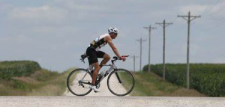
Registration for the 49th Biking Across Kansas, the annual celebration of all things cycling and the Sunflower State, opens Sunday, Jan. 29, which is, fittingly, Kansas Day. The riders will pedal the highways and byways June 10-17.

The full route from Colorado to Missouri covers 542 miles in the span of a week. Riders pedal between 50 and 80 miles each day.

Overnight stops this year include Elkhart, Satanta, Spearville, Stafford, Newton, Eureka, Chanute and Garnett, with a celebration picnic in Pleasanton. Cyclists will pass through Hugoton, Sublette, Dodge City, Kinsley, Partridge, El Dorado, Toronto, and Iola among others.

“BAK is an annual bicycle tour across the state of Kansas,” said David Rohr, BAK board president. “It promotes health and fitness through bicycling, as well as the history and beauty of the Kansas landscape, and the warm hospitality of the Kansas towns and people.”

Many bicyclists will return as repeat participants, some who bicycled the very first tour in 1975, he said. Others will take on the challenge and enjoy the trip across the State for the first time.

In recent years, riders represented a wide age span— from 7 to 87 — and multiple generational families. Entries are anticipated from 30 or more states, including as far away as New York, Pennsylvania, Florida, New Mexico, Washington and California. In addition, Biking Across Kansas has attracted participants from countries outside the United States.

Starting with around 100 riders in the first year, as many as 800 participate now. So, BAK is a big economic boon for the communities along the route.

Why do BAK? The reasons are many, Rohr said.

“It is a cycling challenge and a uniquely Kansas adventure,” he said. “On a bicycle, you are moving more slowly and can experience this beautiful state like you can’t from behind a windshield.”

And, probably most importantly, “you’re burning so many calories on the bike that you can enjoy all the pie and ice cream you want without any guilt.”

Registration opens on https://bak.org at 6 a.m. Jan.29.

For more information, visit https://bak.org or contact BAK Director Stefanie Weaver at 913-735-3035 or email  [email protected].

About Biking Across Kansas

Biking Across Kansas (BAK) is an annual, eight-day, bicycle tour across the state of Kansas. BAK promotes health and wellness through bicycling, the history and beauty of the Kansas landscape, and the warm hospitality of the Kansas towns and people. BAK started in 1975 with fewer than 100 hundred riders. Forty-five years later the tour is now capped annually at 850 participants.

Who Done It? (Best Of)

0

At first glance I thought I’d been the victim of some radical animal rights group. I’d been away for a couple days and when I returned home I found my squeeze chute draped in red, white and blue crepe paper streamers with several insulting messages attached to the antique chute. The note that really got my attention stated that, “You have been white-tagged by OSHA because working facilities are not safe and healthful.”

Taped to the side gate, that had long ago rusted permanently shut, were three advertisements from scrap iron dealers. All the ads were cut out of the yellow pages and all carried a similar message: “Top dollar paid for scrap metal that no longer serves a purpose. Free pick-up.”

Attached to the front door of the squeeze chute was a two-dollar-off coupon for spectacular savings on an $18,000 hydraulic squeeze chute that according to the flyer did everything but make lunch. Also included were several sets of instructions and plans for new working facilities and crowding alleys. I had to admit I could use some, working facilities, that is.

The final insult taped to my crossbred chute was a huge yellow OSHA sign written in both English and Spanish pointing out several safety violations and the penalties for committing such heinous acts. The mandatory penalty for possessing a man-killing chute as outlined by OSHA was $1,000 and a “failure to correct such safety hazards could result in a ten thousand dollar fine and six months in jail.”

At first I suspected the cows for doing this to my chute because underlined in the production code of ethics was the statement that, “Equipment should be used and maintained to insure livestock safety and to prevent choking.” I had to admit that the cows had justifiable cause but I knew they didn’t speak Spanish and who would feed them if I was in jail?

I hated to think about the possible repercussions but I had to admit to myself that it really could have been OSHA itself who white-tagged my chute. I knew that they conduct periodic job inspections but I really didn’t think that a government employee would have taken the time to drape my chute in colorful streamers. Although the crepe paper streamers did reinforce the chute, they also ruined the paint job where they were taped to it. So I concluded it must have been some irresponsible friend of mine playing a practical joke.

Just three days prior to the attack I had some friends over to help me preg check which could have prompted the insults. Thus, I had three really good suspects. It could have been the vet. After all, his relationship with my crossbred chute over the years has been a stormy one. He has had a cow tip over backwards in it, the headgate opened up when he was examining a bad eye and he has had his arm halfway up a cow when she slipped lose, backing his elbow into the tailgate.

It could very well have been my friend and neighbor John. Admittedly, my squeeze has tried to kill him on several occasions. The top has fallen down on his head and the sides have pinched him worse than a perverted Senator. (Aren’t they all?) But John is usually the one who gets to operate the headgate which is usually considered a position of honor, but in my case demands hazard pay. That alone would find him innocent in any court in the land even if he did desecrate my chute.

But I really suspect Beans because he’s been trying to sell me a slightly used 1935 model squeeze chute for years, the kind that features an easy pull, spring loaded latch like mine used to have.

Because of the insulting nature of the messages I would fire all three right now and never have them help me again, but according to the OSHA rules they, “Cannot be discharged or discriminated against in any way for filing complaints concerning unsafe working conditions.”

I’ll probably find out who did it the next time we work cows because according to OSHA, they all have the right to refuse to work under conditions that endanger their lives.