Tuesday, March 17, 2026
Home Blog Page 824

K-State plans workshops to support locally grown foods in Kansas

0

Reports indicate 70% of consumers will pay more for food grown locally. Kansas State University will be hosting workshops in three Kansas locations to help the state’s meat, poultry and egg producers capitalize on growing demand for those products.

The Kansas Local Meat Marketing workshops are scheduled for Feb. 3 in Wichita, Feb. 24 in Olathe, and March 3 in Parsons. Each session will run from 10 a.m. to 3 p.m. and will cover the following topics:
 Licensing and regulations: What you need to know.
 Marketing strategies and best practices.
 Panel discussion (local producers and processors).

Registration is available online at tinyurl.com/LocalMeatKSU. The cost to attend is $20, and includes lunch of locally grown foods. “These workshops are aimed at producers wanting to capitalize on the opportunities at hand,” said Margit Kaltenekker, the agriculture and natural resources agent for K-State Research and Extension’s office in Douglas County.

Kaltenekker said local foods have been a growing sector the past 10-20 years, amounting to an estimated $9.1 billion in sales nationally. “Disruptions of our local and regional supply chains during the pandemic that are still lingering have fueled consumer’s increased demand for locally grown foods, and highlighted the importance of rebuilding our internal infrastructure for a more resilient food system,” she said.

In 2022, The Nielsen Company reported that 46% of Americans prioritize locally grown food, and 70% are willing to pay more for it. Nielsen also found that this demand crosses all demographic groups, though Millennial (ages 23-38) and Gen Z (ages 8-23) groups are especially interested in sourcing local foods.

“The licensing and regulation of selling meat, poultry or eggs direct to consumers can be a confusing and complicated matter for those just beginning direct-to-consumer sales,” said Aaron Hyland, an agriculture and natural resources agent in K-State Research and Extension’s Rawlins County office.

“But those regulations are important to know before you even begin this process because things like your choice of processor, and even the size of your operation can affect what and how you are able to sell those products.” Kaltenekker said farm communities have historically been built on the interdependency within local and regional economies. Selling locally grown foods provides an economic benefit within the community, as well as provides products that are fresh and healthy, with fewer environmental impacts.

“Revitalizing our rural communities is crucial for our collective prosperity,” she said. “Providing a means for more producers to access local markets is what these workshops are all about.”

More information about the workshop is available by contacting Erica Blair by email, [email protected], or at local extension offices in Kansas.

The workshops are hosted by K-State’s Local Foods Transdisciplinary Team, and sponsored by the Kansas Sustainable Agriculture Research and Education (SARE) program, Walton’s, Frontier Farm Credit, Allen County Farm Bureau, Neosho County Farm Bureau, Sedgwick County Farm Bureau, Johnson County Farm Bureau, Kansas Farmers Union, and the Kansas Rural Center.

By Pat Melgares, K-State Research and Extension news service
Conservation Plantings

0

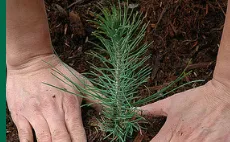
For many years the Kansas Forest Service has offered trees to Kansans for specific purposes. These low-cost tree and shrub seedlings are for use in P Plants are one to two years old and sizes vary from 8 to 18 inches, depending on species. Two types of seedlings are offered; bareroot and containerized. Containerized provide a higher survival rate and quicker establishment. Orders are accepted from now through May 1st, but order early to ensure receiving the items you want.

Orders are shipped beginning in mid-March. Approved uses for these plants include windbreaks, wood lots, wildlife habitat, timber plantations and educational and riparian (streambank) plantings. They may not be used for landscape (ornamental) plantings or grown for resale.

All items are sold in units. Each single species unit consists of 25 plants. For example, a unit of Eastern red cedar has 25 trees per unit. Though a single species unit is most commonly purchased, four special bundles are also available including a quail bundle, pheasant bundle, eastern pollinator bundle and western pollinator bundle.

Tree planting accessories are also available including marking flags, root protective slurry, rabbit protective tubes, weed barrier fabric and tree tubes. If there have been problems with deer browsing on young trees, the tree tubes are a must.

For details and an order form, go to: http://kfs.mybigcommerce.com/all-items/ Note that there are three pages of items that are accessed by clickable links at both the top and bottom of the listing. Order forms are also available from local K-State Research and Extension offices.

‘Everything Horses’ Featured For EquiFest Of Kansas At Salina

0

Calendar dates must be circled in red for the EquiFest of Kansas, March 16-19, at Salina.
That’s the announcement from Justine Staten, executive director of the Kansas Horse Council, producer of EquiFest.
The first EquiFest was at Wichita in 1998, then in Topeka starting in 2016, and Salina has hosted EquiFest since 2020.
“This year’s EquiFest is four days instead of three days like in the past,” Staten clarified. “It will again be at the Saline County Livestock Expo Center and Tony’s Pizza Events Center.”
More than 15,000 people have annually attended EquiFest which serves as the Kansas Horse Council (KHC) primary fundraiser.
“The KHC provides the Kansas equine industry with leadership and direction through education, promotion, and public policy advocacy,” Staten said.
“What makes EquiFest so special is the variety,” Staten emphasized. “There’ll be all breeds of horses and all disciplines represented throughout the competitions, demonstrations, and displayed exhibits.”
In addition, EquiFest features educational and informative workshops, world-renowned clinicians, music, poetry, history, and storytelling.
The horse trade show is open all four days featuring wall-to-wall vendors in multiple locations. “They’ll offer something for everyone, clothing, accessories, saddles, tack, home décor, trucks, trailers, tractors, implements and more,” Staten said.
Children are the future of every horse activity, so a special Kids’ Corral is again being developed encouraging youth involvement. A new feature is Trike Races to simulate the EquiFest Driving Derby, which is attracting many entries, Staten said.
The EquiFest youth horse judging contest has been revamped this year with additional divisions to increase participation for impressive awards.
Everybody always asks: “What will there be to eat?” According to Staten, “If you like a variety of food, check out several food trucks and concessions on site. Again, there’s something for all tastes.”
Attendees at EquiFest will also once more have an opportunity to meander through the stall barn. “You can see up close anything from long-eared minis to gentle giants. Living history is on display at a military encampment,” Staten said.
Plus, there’ll be a farrier competition, ranch rodeo, dancing horses, draft horse races, and breakaway roping competition.
Among clinicians are Buster McLaury, Texas cowboy; Curt Pate, Montana stockman; Patrick Sullivan, liberty horsemanship; and Sally Batton, equestrian team coach.
Demonstrations include Broken Spoke Clydesdales, six-horse hitch; Pegasus Riders, trick-roman riding; Wichita Police Mounted Unit, search-rescue operations; and trainer Ryan Cole, versatility horses.
Workshops throughout the four days are to feature agrotourism panel, Kansas horseback trails, extreme cowboy races, and legendary horsemen panel.
Special guests are Kathryn Leitner, horse artist-writer, Gary Pratt, country musician; Caleb Martin, horseman-celebrity actor; and Steve Stafford, Sunday morning church service.
Complete schedule of activities is available at www.equifestofks.com.

CUTLINES

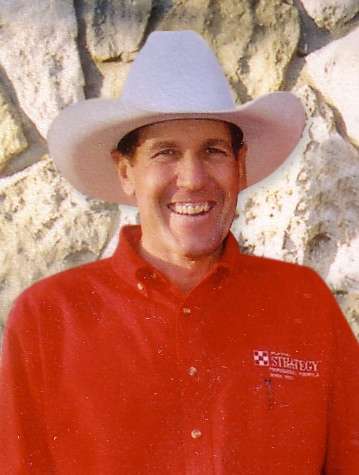
A product of the big ranch country in West Texas, Buster McLaury brings a unique perspective into his clinics and demonstrations at EquiFest of Kansas, March 16-19, at Salina.

To be featured at the EquiFest of Kansas in Salina, March 16-19, Curt Pate, Montana stockman, has conducted demonstrations and clinics on stockmanship, colt starting, and ranch horsemanship throughout North America and Europe.

Justine Staten serves as executive director of the Kansas Horse Council, which is producing the EquiFest of Kansas, March 16-19, in Salina.

‘Everything Horses’ Featured For EquiFest Of Kansas At Salina

0
Frank J Buchman
Frank Buchman

Calendar dates must be circled in red for the EquiFest of Kansas, March 16-19, at Salina.
That’s the announcement from Justine Staten, executive director of the Kansas Horse Council, producer of EquiFest.
The first EquiFest was at Wichita in 1998, then in Topeka starting in 2016, and Salina has hosted EquiFest since 2020.
“This year’s EquiFest is four days instead of three days like in the past,” Staten clarified. “It will again be at the Saline County Livestock Expo Center and Tony’s Pizza Events Center.”
More than 15,000 people have annually attended EquiFest which serves as the Kansas Horse Council (KHC) primary fundraiser.
“The KHC provides the Kansas equine industry with leadership and direction through education, promotion, and public policy advocacy,” Staten said.
“What makes EquiFest so special is the variety,” Staten emphasized. “There’ll be all breeds of horses and all disciplines represented throughout the competitions, demonstrations, and displayed exhibits.”
In addition, EquiFest features educational and informative workshops, world-renowned clinicians, music, poetry, history, and storytelling.
The horse trade show is open all four days featuring wall-to-wall vendors in multiple locations. “They’ll offer something for everyone, clothing, accessories, saddles, tack, home décor, trucks, trailers, tractors, implements and more,” Staten said.
Children are the future of every horse activity, so a special Kids’ Corral is again being developed encouraging youth involvement. A new feature is Trike Races to simulate the EquiFest Driving Derby, which is attracting many entries, Staten said.
The EquiFest youth horse judging contest has been revamped this year with additional divisions to increase participation for impressive awards.
Everybody always asks: “What will there be to eat?” According to Staten, “If you like a variety of food, check out several food trucks and concessions on site. Again, there’s something for all tastes.”
Attendees at EquiFest will also once more have an opportunity to meander through the stall barn. “You can see up close anything from long-eared minis to gentle giants. Living history is on display at a military encampment,” Staten said.
Plus, there’ll be a farrier competition, ranch rodeo, dancing horses, draft horse races, and breakaway roping competition.
Among clinicians are Buster McLaury, Texas cowboy; Curt Pate, Montana stockman; Patrick Sullivan, liberty horsemanship; and Sally Batton, equestrian team coach.
Demonstrations include Broken Spoke Clydesdales, six-horse hitch; Pegasus Riders, trick-roman riding; Wichita Police Mounted Unit, search-rescue operations; and trainer Ryan Cole, versatility horses.
Workshops throughout the four days are to feature agrotourism panel, Kansas horseback trails, extreme cowboy races, and legendary horsemen panel.
Special guests are Kathryn Leitner, horse artist-writer, Gary Pratt, country musician; Caleb Martin, horseman-celebrity actor; and Steve Stafford, Sunday morning church service.
Complete schedule of activities is available at www.equifestofks.com.

CUTLINES

A product of the big ranch country in West Texas, Buster McLaury brings a unique perspective into his clinics and demonstrations at EquiFest of Kansas, March 16-19, at Salina.

To be featured at the EquiFest of Kansas in Salina, March 16-19, Curt Pate, Montana stockman, has conducted demonstrations and clinics on stockmanship, colt starting, and ranch horsemanship throughout North America and Europe.

Justine Staten serves as executive director of the Kansas Horse Council, which is producing the EquiFest of Kansas, March 16-19, in Salina.

Replacing The Feed Truck

0

“Feeding cattle puts a lot of wear and tear on a truck.”
Pickups used to feed cattle a few square bales of hay every day have long gone to the wayside.
Nowadays, powerful flatbed trucks with added equipment to haul and unroll big round hay bales are common on most ranches.
Of course, the trucks must be four-wheel-drive to get around in mud and snow with two bales loaded on.
Stress is heavy on all parts of a truck from the engine to the framework, to the springs and axles when carrying tons of hay. Inclement weather conditions increase the rust, vibration, on every part of the mechanical devices.
Large heavy treaded rubber tires are required to handle the hay weight. Still, no matter how slow and careful the truck is driven on rock country roads, tires often go flat.
It’s a major ordeal to change the tires, and sometimes more of an effort to get one fixed. Not many stockmen repair their own flat tires, although many have tried, and found it too much work.
As serious as having a flat tire is the high probability of ruining the tire when it runs out of air. Like everything, truck tire replacement is expensive.
Trucks are not the only implement used to feed hay to cattle, but seemingly more stockmen use them than tractors. Tractors are called into feeding duties when a truck won’t run or gets stuck and must be pulled out.
Most tractors still don’t have an unrolling apparatus, so bales are dropped out in the field with considerable hay wasted when cattle eat.
Regardless of how well-built and the amount of attempted careful care given feed trucks, they wear out way too soon. No matter how many times a feed truck is repaired there comes a point when it just can’t be fixed again.
A replacement of some sort is essential, but that is becoming a nearly impossible task. While the price is incomprehensibly high, and must be paid regardless, even tougher is locating the truck.
Modern technology makes it possible to search throughout the entire nation by pushing computer keys. A new or used truck of any kind with sufficient cattle feeding capabilities has not located.
Optimism prevails when reminded of First Samuel 13:1: “God is out looking for your replacement.”
+++ALLELUIA+++
XVII–4–1-22-2023