Tuesday, March 17, 2026
Home Blog Page 833

Jimmy Is The Most Famous ‘Crow’ Of All

0

“Not a single day goes by when there aren’t a handful of crows flying around the pasture north of the ranch house.”
They aren’t really much of a menace and do little damage nowadays.
That’s not always been the case, Dad said several times. In the 1930s, evidently, the big birds were large consumers of field crops with their droppings made a huge mess.
The county used to pay bounties for crow beaks brought into the courthouse, not unlike coyote ears. Unsure what the amount, perhaps two-cents, or maybe 50-cents, but that would have been a lot in the depression days.
Supposedly, crows would roost in trees and could be shot down in numbers with a 12-gauge shotgun blast.
Many people again viewed “It’s a Wonderful Life” traditional Christmas season movie starring Jimmy Stewart. The other “Jimmy” in the show is most recognizable as well, but likely not given much of a second thought.
That’s Jimmy the Crow. No, that’s a misidentification, it’s Jimmy the Raven, according to research.
Ravens differ from crows in appearance by their larger bill, tail shape, flight pattern, and by their large size. Ravens are as big as red-tailed hawks, and crows are about the size of pigeons. The raven is all black, has a 3.5-4-foot wingspan and is around 24-27 inches from head to tail.
Though a crow is a black bird, it’s not a “blackbird.” Nor is a blackbird a crow. The common blackbird is a species of true thrush with a number of subspecies. Not a raven, crow, or blackbird by definition, the common starling is also black in 12 subspecies.
Although most farmers disagree, starlings can be beneficial to agriculture by controlling insects that do damage. However, starlings are more known as pests themselves. They often feed on fruit and sprouting crops and are a nuisance for their noise and droppings while roosting.
Right or wrong, as a youth with a rifle, crows were shot at several times, always missing. But a few blackbirds and starlings, whatever subspecies of each, have bit-the-dust. Uncertain about ever having ever seen a real raven.
Back to the story at hand. Jimmy the movie star bird is a male raven. He appeared in more than 1,000 feature films from 1938 to 1954.
Jimmy first appeared in the movie You Can’t Take It With You. Director Frank Capra would then cast the bird in every subsequent movie made.
Of course, Jimmy’s most memorable role was Uncle Billy’s pet in Building & Loan during 1946’s It’s a Wonderful Life. And as the crow that landed on the Scarecrow in 1949’s Wizard of Oz.
Owned by Hollywood animal trainer, Curly Twiford stole the bird from its Mojave Desert roost in 1934. Jimmy was trained to do an assortment of tricks including typing, opening letters, and even riding a tiny motorcycle.
Jimmy could understand several hundred words, though only around 50 were what trainer Twiford called “useful”. It took Jimmy a week to learn a new useful word, two weeks if it had two syllables.
Twiford said that Jimmy could perform any task possible for an eight-year-old child.
His human co-stars were complimentary of the bird. “When they call Jimmy, we both answer,” remarked Jimmy Stewart on the set of It’s a Wonderful Life. “That bird is the smartest actor on the set, requiring fewer re-takes than his human counterparts.”
After he had become more popular with the studio, Metro-Goldwin-Mayer had Jimmy insured for $10,000.
Lloyds of London wrote a policy to cover Jimmy’s $500 a week fee plus Curly Twiford’s $200 handler fee.
Twiford credited these fees with keeping him solvent during World War II. At one point, Jimmy had 21 “stand-ins,”15 of which were female. They would fill in for Jimmy when the scene did not require any tricks or movement.
Jimmy received a Red Cross gold medal in acknowledgement of 200 hours spent entertaining veterans after the war. His footprints were cement enshrined at a Los Angeles pet store, alongside the dog Lassie and other Hollywood animal stars.
Jimmy’s last-credited film was Three Ring Circus in 1954, after which little is known about him. Trainer Curly Twiford said that Jimmy would “probably live to be 150-years-old,” which newspapers re-printed. In reality, ravens seldom live more than 30 years in captivity.
So, of all the blackbirds that have been flying around for centuries, Jimmy the Raven is the most famous of all.
+++30+++

CUTLINES

The two Jimmy’s, renowned actors; Jimmy the Raven and Jimmy Stewart.

Jimmy in It’s a Wonderful Life.

Jimmy types up a good quote.

Jimmy is a raven not a crow, according to those in-the-know.
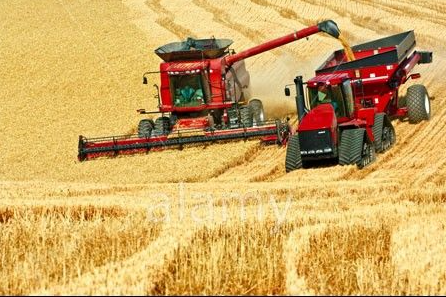
Combine harvesters finish positive for 2022, while tractor sales fall

0

As reported in High Plains Journal, Red tractor and combine harvester sales finished 2022 with healthy gains in unit sales while ag tractors finished the year below 2021 levels in both the U.S. and Canada, according to the latest data from the Association of Equipment Manufacturers.

Total U.S. ag tractor unit sales fell for both the month of December as well as the year as a whole compared to 2021, with the sub-40hp segment leading losses in both time frames, losing 26.7% for the month and 19.3% for calendar 2022. U.S. self-propelled combine sales, however, grew 16.3% on the month, finishing the year up 15.8 percent. Only one other segment grew for the year, 100+hp units, finished the year up 11.3 % despite losing 2.7% for the month of December. Total farm tractor sales in the U.S. for the year fell 14.8% versus 2021.

n Canada, combine harvesters led sales for the year again, up 10.7%, assisted by a 27.7% bump in December. Overall unit sales in tractors finished the year down 7.2%, with the sub-40hp segment leading losses north of the border as well, down 17% for December and 9.8% for the year. Conversely, 4WD units were the only tractor segment to finish the year positive, growing 6.3% for the year, helped by more than doubling sales in the month of December. Two-wheel-drive tractors above 100hp finished the year nearly flat, selling only nine fewer units than the year before, putting that segment down 0.2%.

“The strength of combine harvester sales during this unusual time in ag markets is a testament to the advantages new technologies make in improving the quality and quantity of crops farmers can bring out of the field,” said Curt Blades, senior vice president, industry sectors and product leadership at the Association of Equipment Manufacturers. “And while other segments fell versus 2021, the previous two years saw the sales gains they did because of the pandemic, while this year was more a return to normal. That said, overall equipment sales finished near or above their 5-year average more often than not this year.”

Farm groups decry ‘regulatory chaos’ in wake of sixth ‘finalized’ WOTUS rule

0

As reported in High Plains journal, a chorus of angry responses from dozens of farm and business groups met the Dec. 30 announcements by the Environmental Protection Agency and Corps of Engineers of a sixth “final” definition of the phrase “waters of the United States” in the Clean Water Act in less than 10 years. One member of Congress said the rule making will result in “regulatory chaos.”

The new rule will take effect 60 days after it is published in the Federal Register. Its enactment, while expected, was announced even as the Supreme Court is currently deciding a case, Sackett v. EPA, that may well supersede or modify it. The two agencies are issuing a memo with U.S. Department of Agriculture to “provide clarity” on the agencies’ programs under the Clean Water Act and Food Security Act.

New rule making

The Biden administration initiated the new rule making process in June 2021 after President Joe Biden at first attempted to repeal and replace President Donald Trump’s Navigable Waters Protection Rule via executive order. Like all such moves in recent years, the attempt resulted in immediate lawsuits. After one reached the Supreme Court, the court ordered the administration to start a new rulemaking process instead of using executive orders. In 2022, a coalition of farm groups asked the EPA in to delay the rule-making process.

The Corps and EPA said the new rule establishes what they call a “durable” definition of waters of the U.S. “to reduce uncertainty from changing regulatory definitions, protect people’s health, and support economic opportunity.” But farm groups disagree.

“This [new] rule does not provide the needed clarity and certainty that the regulated community has long called for,” Courtney Briggs, senior director of government affairs for the American Farm Bureau Federation, said in a podcast. “This rule allows the federal government to expand their jurisdictional reach over private property. It is clear that the [federal] agencies have doubled down on their use of the troubling significant nexus test, which will require landowners to hire environmental consultants, attorneys and engineers to ensure they are in compliance.”

National Milk Producers Federation President Jim Mulhern said, “NMPF is disappointed that once again dairy farmers, who every day strive to be leaders in environmental stewardship, may need to live under a WOTUS rule that is cumbersome, unclear and overly complicated. Because the EPA’s most recent iteration fails to resolve what is now a 50-year struggle to define what constitutes a water body subject to federal regulation under the Clean Water Act, our members will face continued uncertainty as they attempt to comprehend and comply with unclear regulations. NMPF was pleased with the Navigable Waters Protection Rule and disappointed when it was revoked. NMPF is also disappointed that EPA failed to listen to numerous agriculture stakeholders that called on the agency to stay rulemaking on a new WOTUS rule until the Supreme Court ruled on the Sackett case, expected this spring.”

Sixth definition in 10 years

According to Rep. Tracey Mann, R-KS, “Thanks to regulatory overreach, farmers, ranchers, and agricultural producers will now be forced to operate their businesses under the federal government’s sixth definition of ‘water’ in the past ten years alone. The Biden administration’s newest version of ‘Waters of the U.S.’ removes longstanding bipartisan exemptions for common water features like ponds or streams found on farms and ranches. The Biden administration has created regulatory chaos for producers, who are working hard to keep us all fed, fueled, and clothed. Farmers are the original conservationists, and they deserve the gratitude and support of the federal government, not red tape and burdensome overregulation.”

Chandler Goule, CEO of the National Association of Wheat Growers, said, “The National Association of Wheat Growers is deeply concerned that the EPA and U.S. Army Corps rushed to get this revised definition out prior to the end of the year instead of waiting for the decision in the Sackett case before the Supreme Court. While we continue reviewing the final rule, since the rulemaking process was announced last year, NAWG has stressed that farmers need clarity regarding jurisdiction, recognize important agricultural water features, and more long-term certainty from the courts and administrations.” In April 2022, NAWG filed an amicus brief with other agriculture groups in the Sackett case.

Soil Health U event returns to Salina, Kansas, in January

0

Jan. 18 and 19 in Salina, Kansas, farmers and ranchers will gather for High Plains Journal’s Soil Health U event, which will be held in-person for the first time since the 2020 COVID-19 pandemic. The event will be held at the Tony’s Pizza Event Center and will include two days of educational sessions, keynotes speakers and a top-notch trade-show with vendors for all aspects of agriculture.

Starting Garden Transplants from Seed    

0

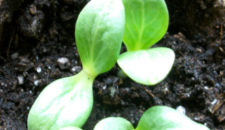
January is often a cold and dreary month for many gardeners. However, planning for and starting vegetables and flower transplants from seed can make this a much more interesting time of year.

Following are the steps needed to be successful in seed starting.

Purchase Recommended, Quality Seed: Start by taking a look at our recommended varieties at http://www.bookstore.ksre.ksu.edu/pubs/L41.pdf . These plants have proven themselves across the state of Kansas and this is a good place to start when deciding what to plant. However, also talk to your neighbors, friends and your local garden center about what has worked well for them.

Obtain your seeds from a reputable source including garden centers and seed catalogs. If choosing seeds from a business that does not specialize in plants, pay special attention to the package date to make sure the seed was packaged for the current year.  Though most seed remains viable for about 3 years, germination decreases as seed ages. Also, this allows you to keep the seed for a longer period of time with an expectation of good germination. See the accompanying article on using old garden seed for more detailed information.

Determine the Date to Seed: There are two pieces of information that needs to be known in order to determine the date to seed transplants: the target date for transplanting outside and the number of weeks needed to grow the transplant. There is a companion article in this newsletter listing common plants and the number of weeks needed to grow a transplant.

The target date for transplanting the cool-season crops such as broccoli, cabbage, cauliflower and onions are the end of March to the beginning of April.  Warm-season crops like tomatoes, peppers and most annual flowers are usually planted about May 10 in Manhattan. Northern Kansas may be a week or so later than Manhattan and southern Kansas a week or so earlier.

Sowing Seed: Do not use garden soil to germinate seed as it is too heavy and may contain disease organisms. Use a media made especially for seed germination.

Keep Seed Moist: Seed must be kept moist in order to germinate. Water often enough that the media never dries. Using a clear plastic wrap over the top of the container can reduce the amount of watering needed. Remove the wrap after the seedlings emerge.

Light: Most plants will germinate in either darkness or light but some require darkness (Centurea, Larkspur, Pansy, Portulaca, Phlox and Verbena) and others require light (Ageratum, Browallia, Begonia, Coleus, Geranium, Impatiens, Lettuce, Nicotiana, Petunia and Snapdragon).

All plants require adequate amounts of light once emergence occurs. South facing windows may not provide adequate amounts and so fluorescent or LED fixtures are often used. Suspend fluorescent lights 2 to 4 inches above the top of the plants.  LED lights are much more variable. Use LED lights that are designed to grow plants and follow the manufacturers recommendations. Regardless of the type of light used, leave the lights on for 16 hours each day.

Temperature: The temperature best for germination is often higher than what we may find in our homes especially since evaporating moisture can cool the germination media. Moving the container closer to the ceiling (top of a refrigerator) can help but a heating mat is best for consistent germination. A companion article lists common plants and their optimum germination temperature. After plants have germinated, they can be grown at a cooler temperature (65 to 70 degrees during the day and 55 to 60 degrees at night). This will help prevent tall, spindly transplants.

Plant Movement: Plants react to movement. Brushing over the plants with your hand stimulates them to become stockier and less leggy. Try 20 brushing strokes per day. However, brushing will not compensate for lack of light or over-crowding. Plants grown under inadequate light will be spindly regardless of any other treatment.

Hardening Transplants: Plants grown inside will often undergo transplant shock if not hardened off. Plants are hardened off by moving them outside and exposing them to sun and wind before transplanting occurs. Start about two weeks before transplanting and gradually expose the plants to outside conditions. Increase the number of hours and degree of exposure over the two-week period. (Ward Upham)

Using Old Garden Seed

Seed stores best if kept in a cold, dark, dry location. Most types of seed will remain viable for about 3 years under these conditions though there are exceptions. For example, members of the carrot family (carrots, parsnips and parsley) are short-lived and are usually good for only 1 to 2 years. If you are unsure of viability and have plenty of seed, there is an easy method of determining how good your seed is.

Place 10 seeds on a paper towel moistened with warm water and cover with a second moistened towel. Roll up the towels and place inside a plastic bag with enough holes for air exchange but not so many that the towels dry quickly. Place the bag in a warm place such as the top of a refrigerator. Remoisten towels with warm water as needed. After the first week, check for germination. Remove sprouted seed and check again after another week. Add these numbers together to determine the percent germination.

Ward Upham, Extension Agent