Wednesday, March 18, 2026
Home Blog Page 847

It’s been one year since widespread wildfires tore across western and Central Kansas.

0
For the ranchers who lost so much, the rebuilding process is far from over.

PARADISE, Kansas — These are the survivors.

As rancher Rich Koester walks through his cattle pen, he points them out one by one.

The cow with a plastic ear tag that’s warped from melting in the fire’s heat. Another whose burnt hair never quite grew all the way back. The Black Angus who’s still a little jumpy when Koester tries to separate her from her calf.

It’s been a full year since dry grass and high winds fueled the massive wildfire north of Russell, Kansas, last December that burned across every inch of Koester’s pasture. And some scars still remain.

But signs of hope exist, too.

Koester crouches to feed a handful of hay to a row of calves eagerly peeking their faces through breaks in a gate.

When these baby cattle were born in the weeks after the fire, their mothers’ udders were too badly burned to nurse them. Now one year later, those same mother cows have recovered enough to feed the next generation of calves.

“I always say that when time goes on, time heals,” Koester said. “Time heals up.”

But healing from a disaster this extensive is an uphill climb. Koester and ranchers across the region still face a daunting path forward as they push to rebuild their businesses, their herds and their lives.

On Koester’s property alone, the flames consumed hundreds of acres of grass, destroyed miles of fencing and killed roughly 100 cattle. And because those cattle are his livelihood, he’s had to spend time and money rehabilitating his property and his herd while his business suffers from tremendous financial losses.

“It’s a little bit tighter this year,” Koester said. “We’ll get by … somehow.”

Koester is far from the only rancher facing such challenges. The fire that engulfed his land was the largest of several that day, incinerating more than 190 square miles. That’s an area larger than all of Wyandotte County or the city of Wichita.

His neighbor, Monty Morrill, lost roughly half of his cattle to the same fire. Flames consumed a handful of buildings, some farm implements and an old homestead where his family stayed when they worked in the pasture, too. It melted the plastic trim off of a pickup truck.

Even a year after the fire, he’s still picking up scorched pieces of wood and metal debris scattered across his pastures.
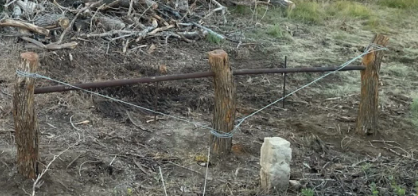
“It’s starting over from scratch,” Morrill said. “But it’s even worse than starting over from scratch because you’ve got to clean up all the stuff. … It’s going to be a long process.”

As ranchers have picked up the pieces in the fire’s wake, one of their first priorities has been replacing the fences that were destroyed. Without a fence, there’s no way to keep cattle in a pasture.

But with so many people in a rural area needing the same fencing supplies at the same time, it was hard for ranchers to get their hands on the materials they needed to start.

And the amount of supplies they’ve needed has been astronomical.

Monte Nuss, acting director of the Russell County USDA farm services agency, said his office has received relief funding requests for 535 miles of fencing.

If you were to start in Russell and build a 535-mile fence in a straight line heading west, you’d nearly make it to Utah.

“It’s a great undertaking,” Nuss said. “It’s just a slow process.”

Then there’s the price tag. Building a fence can cost around $20,000 per mile, Nuss said.

So the total cost for replacing all of the destroyed fencing in this one county will likely be more than $10 million dollars.

That’s just for one step of the rebuilding effort.

Even a full year after the fire, Nuss said, less than half of the fencing in his county has been replaced.

And for ranchers, that federal relief doesn’t cover the full cost. If a rancher replaces 20 miles of fence at an average cost of $20,000 per mile, the total cost would be $400,000. USDA relief can reimburse for up to 75% of that, which would still leave the rancher with a bill for $100,000.

On top of that, there’s the drought that’s made it tough for pastures to recover after being burnt to a crisp.

In ideal conditions, it still might take a few years for all the grass to grow back. But the historically dry conditions this year haven’t helped. Morrill has been feeding his cattle hay since earlier this fall because there wasn’t much grass left for them to graze.

“Once the rain quit this summer, it was pretty much game over,” Morrill said. “It’s gonna be pretty tough for a few years unless we get some rain in the spring.”

And rebuilding the decimated cattle herds will take even longer than replacing the grass they eat and the fences that corral them.

In Russell County alone, the fire killed 1,711 cattle — 1,359 cows, 36 bulls and 316 calves — according to data from the county’s USDA farm services agency. The USDA office has paid out just north of $1.3 million to Russell County cattle producers to help cover those losses.

Local community donations and other organizations have helped, too. The Kansas Livestock Association, for instance, distributed $2 million in disaster relief funding to 94 farmers statewide, including Morrill.

But Nuss said the losses the ranchers endured stretch beyond what you can write on a check.

Some of the cows that died in the fire were about to give birth, so it’s essentially losing two generations of cattle and a year’s worth of work.

“Where they lost cows … they lose income,” Nuss said. “No cows means no calves.”

That’s what happened to Koester. His income from raising cows and their calves has been way down this year, he said, because he hasn’t had the calves to sell. And it’ll take at least a couple more years for him to get his herd numbers back up to where they were.

Morrill sells bulls from a bloodline that his family has painstakingly bred for generations. So replacing the animals he lost isn’t as simple as just buying some new ones at auction.

“You have to make those cows,” Morrill said. “(The fire) pretty well killed our business.”

He had planned to sell more than two dozen bulls this year. Because of the fire, he only had eight of them.

He estimates it’ll be at least a decade before he can fully restore his cattle herd and business. But that’s exactly what he plans to do.

“You don’t have a choice,” Morrill said. “You’ve got a family to take care of.”

In Koester’s pasture, the land looks vastly different than it did a year ago.

Red swaths of regrown little bluestem grass rise and fall on distant hills. Yucca plants that were reduced to charred stumps are now adorned with crowns of long, green leaves. The layer of tan ash that blanketed just about everything has blown away or blended into the dirt.

Over the past several months, Koester and his family have gradually replaced a couple of miles of his ruined fence, too — one wooden post, steel stake and stretch of barbed wire at a time.

“You just kind of keep going,” Koester said. “Some people ask me, ‘Aren’t you going to retire?’ And I go, ‘No, this is my life.’”

One silver lining of this tragedy, he said, is that having his family work together to rebuild the fence has brought them closer together and given his daughters a better idea of his life’s work.

But the process is far from over. Koester estimates that this fence project is only around halfway done.

As he climbs up a roadside embankment to check on one of the new fence posts, he stops at a small patch of black ground and picks up a pinch of fine cinder between his fingers. If you look close enough, the pasture is dotted with pockets of this soot — a reminder of the scars the fire left here.Getting his pastures back to where they were before the fire won’t be easy, he said. But in his mind, it’s well worth it.

“It’s gonna get better again,” Koester said. “That’s the way I always look at it. … We’ve gone through the worst part of it, so it’s gotta look up.”

Resources for Kansans experiencing stress or despair in the wake of wildfires, drought and other disasters: 

-Kansas Ag Stress, statewide mental health resources for producers and their families
https://www.kansasagstress.org/
24/7 hotline: 1-800-447-1985
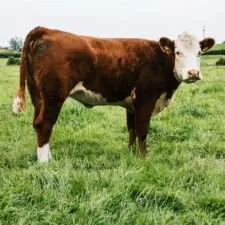

 

Alternative winter feeding with limited forage

0
Beef Cattle

Hay prices and availability will be among the most significant challenges cattle raisers will face this winter. Mary Drewnoski, beef systems specialist at the University of Nebraska-Lincoln, presented on this topic during a recent webinar through Oklahoma State University.

To properly meet cow nutrient needs, producers must understand the quality of their forage and how it impacts dry matter intake. Drewnoski sorts forage into three categories—low quality, medium quality and high quality. She said low quality forage is anything less than 52% total digestible nutrients, or TDN. Corn and soybean residue fit in the low-quality category.

“You’re going to get about 1.8% of body weight for dry cows and even that varies a bit depending on feeding method,” she said.

Medium quality hay encompasses the majority of hay available and includes forage with 52 to 59% TDN. High quality hay is mostly fed to dairy cattle and is greater than 59% TDN.

Another element to consider for forages is crude protein, although there are certain limitations for this value. Drewnoski said producers often underestimate the amount of energy and protein lactating cows need.

“A mid-gestation cow needs about 11 to 12 pounds of TDN and about 1.6 pounds of crude protein,” she said. “Comparatively, a late gestation cow needs 14 pounds of TDN and 2.2 pounds of crude protein.”

Drewnoski said for a gestating cow, crude protein works well because the microbes can utilize any ruminal-available protein to fulfill the protein needs of the cow.

“When we get into early lactation, crude protein doesn’t tell you everything you need to know,” she explained. “We can be providing plenty of ruminal-available protein like in alfalfa and still not quite be meeting the needs of that cow for actual protein. Especially on young cows, this can affect breed-up.”

In drought conditions like the past year, Drewnoski suggests producers consider adding a bypass protein through cottonseed meal or dried distiller’s grain, also known as DDGs. She said even an ionophore can help meet their true protein needs.

Corn residue is usually about 45% TDN and ranges from 3 to 6% crude protein. Drewnoski said producers that are grinding ingredients like corn residue, soybean hay and sorghum residue should be testing for nitrates, especially if they’re not going to be coupling it with higher energy feedstuffs. When comparing corn and sorghum residue, Drewnoski pointed out that milo is actually higher in energy than corn. Sorghum residue is about 52% TDN and can even be up to 55%, and ranges from 5 to 7% crude protein.

Drewnoski said corn residue does not meet a mid-gestation cow’s need. Sorghum on the other hand can meet a late-gestation cow’s requirement. However, forages can also work together to solve this dietary equation.

“We can couple corn residue and soybean hay, for instance, to meet the needs,” Drewnoski explained.

Demand remains strong, prices strengthen

0

Compared to the last report demand remained strong and prices strengthened, in all regions, ahead of the Christmas holiday and the anticipated winter storm, according to the Kansas Department of Agriculture, Dec. 20.

Producers and brokers continue to report that there is a lot of hay moving and that was reflected in the amount of total hay bought or sold last week. A little rain was received across the state but once again, for those in southwest Kansas, conditions remain dire with little moisture received. Prices are based on averages, and given on a per-ton basis, unless otherwise noted. Next report will be Jan. 10.

Dairy alfalfa steady to .10 higher, grinding alfalfa steady, ground and delivered steady, movement slow to moderate. Supreme horse alfalfa, small squares, $12-$14/bale. Dairy, 1.40-1.50/point RFV. Good stock or dry cow, $290-$300. Grinding alfalfa, large rounds, $300-$315, large 3×4 and 4×4 squares, $305-$315. Ground and delivered locally to feed lots and dairies, $340-$350. Alfalfa/grass hay mix, ground and delivered, $280-$290. CRP grass hay, large 3×4 squares, $145-$155. Corn stalks, large 3×4 squares, $130-$140 delivered. For the week ending Dec. 17, 5,529 tons of grinding alfalfa and 875 tons of dairy alfalfa was reported bought or sold.

South central:

Dairy alfalfa steady to .10 higher, grinding alfalfa steady to $5 higher, ground and delivered steady to $10 higher, and alfalfa pellets mostly steady, movement slow to moderate. Horse alfalfa, small squares, $255-$275. Dairy 1.40-1.50/point RFV. Good stock cow, $290-$305. Fair/good grinding alfalfa, large rounds, $285-$295, 3×4 and 4×4 squares, $285-$295. Ground and delivered, $290-$310. Alfalfa/soybean mix, ground and delivered, $285-$300. Sun-cured alfalfa pellets, 15% protein, $320-$335, 17% protein, $325-$335, dehydrated 17% protein, $375-$385. Bluestem grass hay, large rounds, $140-$150, large 3×4 squares, $170-$180. CRP grass hay, $120-$130. Sudan, 3×4 and 4×4 squares, $200-$210. Corn stalks, large rounds, $130-$135. Soybean stalks, large rounds, $115-$125. Failed soybean bales, large round and large squares, $195-$205. Soybeans ground and delivered, $220-$225. Milo, large rounds, $115-$120. Wheat straw, $115-$125. For the week ending Dec. 17, 6,333 tons of grinding alfalfa and 242 tons of dairy alfalfa was reported bought or sold.

Southeast:

Dairy alfalfa steady to .10 higher, grinding alfalfa steady, ground and delivered steady, movement slow to moderate. Supreme horse alfalfa, small squares, $12-$14/bale. Dairy, 1.40-1.50/point RFV. Good stock or dry cow, $290-$300. Grinding alfalfa, large rounds, $300-$315, large 3×4 and 4×4 squares, $305-$315. Ground and delivered locally to feed lots and dairies, $340-$350. Alfalfa/grass hay mix, ground and delivered, $280-$290. CRP grass hay, large 3×4 squares, $145-$155. Corn stalks, large 3×4 squares, $130-$140 delivered. For the week ending Dec. 17, 5,529 tons of grinding alfalfa and 875 tons of dairy alfalfa was reported bought or sold.

Dairy alfalfa steady to .10 higher, grinding alfalfa steady, bluestem grass hay steady, movement slow to moderate. Horse or goat alfalfa, $260-$270. Dairy 1.40-1.50/point RFV good stock cow, $265-$275. Fair/good grinding alfalfa, $200-$230. Bluestem grass hay, small squares, $140-$165, good 3×4 squares, $150-$165, large rounds, $130-$140. Brome, 3×4 and 4×4 squares, $170-$180. Corn stalks, large rounds, $100-$110. For the week ending Dec. 17, 1,573 tons of grass hay was reported bought or sold.

Northwest:

Dairy alfalfa steady to .10 higher, grinding alfalfa steady, movement slow. Horse or goat alfalfa, small squares, $300-$400 delivered, 3×4 squares, $370-$380 delivered. Dairy, premium/supreme 1.40-1.50/point RFV. Fair/good grinding alfalfa, large 3×4 squares, $300-$310. Milo stalks, large rounds, $145-$150.

North central/northeast:

Dairy alfalfa steady to .10 higher, grinding alfalfa, and bluestem grass hay steady, ground/delivered mostly steady, movement slow. Dairy alfalfa 1.40-1.50/point RFV; Premium horse hay, small squares, $12.50-$13.50/bale, 3×4 squares, $290-$300. Fair/good, grinding alfalfa, large rounds, $230-$240, large 3×4 squares, $245-$255. Alfalfa ground and delivered, $275-$300. Alfalfa/prairie grass mix, ground and delivered, $270-$275. Bluestem grass hay, small squares, $7.50-$8.50/bale, large 3×4 squares, $190-$200, good large rounds, $140-$150. Brome, small squares, $9-$9.50/bale. Sudan, large rounds, $125-$135, large 3×4 squares, $160-$170 delivered. Wheat straw, small squares, $6/bale, large rounds, $95-$105, large squares, $110-$120. Corn stalks, large rounds, $95-$105, corn stalks ground and delivered, $145-$155. For the week ending Dec. 17, 991 tons of grinding alfalfa and 511 tons of dairy alfalfa was reported bought or sold.

Source: Kansas Department of Agriculture-USDA Market News Service, Manhattan, Kansas.


Now, and then

0
john marshal

Two Kansas governors, Democrats John Carlin and Laura Kelly, have encountered the local storms of a national inflation, a shared experience linked over 40 years of history.
Although gasoline prices are down recently and the Kansas economy seems stable, inflation seems a scab that won’t heal. It distracts Topeka as Kelley, beginning a second four-year term, prepares a budget for the next fiscal year. Inflation looms even as unemployment is low and business plows on.
Kelly had begun her first term with the grinding work of overcoming the lunacy of Brownback’s Ponzi economics. The state is now out of serious debt and into the black, the budget balanced for more than two years. At the same time the treasury has retired or paid down a lot of the debt rung up during the arid Brownback years.
*
By early 1980, a year into Carlin’s first term as governor, the cross-currents of American inflation and recession had swept across Kansas, increasing the pressure on state resources and drawing heavily against budget reserves. The economy was sliding downhill.
Chief among the pressures was the Federal Reserve’s prime rate, which large banks charge their most credit-worthy customers; local “prime” is generally a point or two above the Fed’s rate.
The national prime had increased from 11.75 percent, when Carlin took office in January 1979, to 18.5 percent by mid-March 1980, and by the end of that year had reached a record 21.5 percent – numbers that today seem unthinkable. (The Fed’s current prime is 7 percent.)
*
Last month the Kelly administration was on the way to another balanced state budget. Tax collections are up, spending is stable and a seven percent surplus ‒ “rainy-day” savings ‒ nudges $700 million. An upswing for income tax collections seems to indicate a steady employment sector and sound labor market, according to Revenue Secretary Mark Burkhart. Sales tax growth, up nearly seven percent, reveals a healthy state economy.
And yet, inflation. Within it lurks the cost and availability of housing, the price of prescription drugs and health insurance, tuition and fees at colleges and technical schools, access to rural medical care and urban clinics ‒ among many of today’s inflationary troubles.
*
In 1981 the price for West Texas crude was $35.74 per barrel ($118 in today’s dollars) and a gallon of gasoline was at roughly $1.31 ($4.25 today).
The minimum wage was $3.35. In Kansas, a $40,000 annual salary was living large; high-end housing in Johnson County’s golden ghetto offered four bedrooms and three baths for $120,000.
Farms were slipping. In 1981, Slow economic growth here and sluggish demand abroad had depressed farm prices by ten percent. Crop prices were down ten percent; livestock prices were down seven percent. Wheat was at $4 per bushel. Costs to farmers had increased five percent.
Carlin at the time believed that the state’s fortunes no longer could rest entirely on oil and gas, agriculture, and the aircraft industry. The legislature had become self-satisfied, captured by their own network of reinforcing old values; discussion of new ideas seemed foreign to them.
Carlin insisted on creating a willingness to change. The beginnings of this evolution were protracted and painful. They involved Carlin’s long campaign for a severance tax on oil and gas, for an increase in the state sales tax, for added income taxes on higher brackets.
In Carlin’s later years as governor the Republican-dominant Legislature moved to allow multi-banking in Kansas and it began to court international trade with a primary focus on China. Legislators also established a practice called economic development planning and endorsed a new $20 million venture capital fund.
*
In 1981, Carlin’s budget for fiscal 1982 proposed $2.8 billion in total state spending, including a $1 billion operating budget for the government’s operating expenses; this fund is financed chiefly by sales and income taxes.
Today, a nine-fold increase from the Carlin years. Total spending is roughly $19 billion, with a $9 billion operating budget. Another $7 billion includes federal grants and aid for highways, city and county projects, local schools and so on. The rest comes from agency fees, permits, licenses and other assessments. The governor and the Legislature have a strong base to build a budget for the next fiscal year, which begins July 1.
We are apt to think there is less stress in Topeka when the state is in the black, but Kansas is in an odd spot against a jittery national economy, seven percent inflation and a war in eastern Europe.
It helps to recall when things were worse. In Carlin’s final year as governor, voters approved liquor by the drink.


Typically Called ‘Founder,’ Laminitis Is Extremely Complicated Horse Foot Problem

0
Frank J Buchman
Frank Buchman

“Laminitis is a very complex problem in horses.”
That is much more complicated than just overfeeding or overdrinking cold water when hot.
Typically referred to as “founder” by longtime horsemen, laminitis is generally blamed for their over feeding or watering.
However, veterinarians at the American Association of Equine Practitioners (AAEP), Lexington, Kentucky, have provided much more in-depth laminitis information.
“Laminitis is a painful horse foot disease that has many causes although there are ways to minimize risks,” simplified AAEP. Laminitis can affect one or all feet, but it is most often seen in the front feet concurrently.
Technically, laminitis results from the disruption constant, intermittent or short-term blood flow to the sensitive and insensitive laminae.
These laminae structures within the foot secure the coffin bone, a wedge-shaped bone within the foot, to the hoof wall. Inflammation often permanently weakens the laminae and interferes with the wall/bone bond.
In severe cases, the bone and the hoof wall separate so the coffin bone rotates within the foot. It is displaced downward called “sinks” and eventually penetrates the sole.
While the exact mechanisms by which the feet are damaged remain a mystery, certain precipitating events can produce laminitis. Although laminitis occurs in the feet, the underlying cause is often a disturbance elsewhere in the horse’s body.
Among causes are feed overload or changes, high fever, colic, excessive foot pressure, old age, walnut bedding, and other diseases.
“Although controversial, prolonged use or high doses of corticosteroids may contribute to the laminitis in some horses,” AAEP said.
Draft breeds, Morgan’s, ponies. miniature horses, and donkeys are highly susceptible as are horses who have had previous laminitis episodes.
Signs of laminitis include lameness, foot fever, increased foot pulse, pain in the toe, hesitant gait, and stretched out stance.
Chronic laminitis signs are foot bruises, abscesses, flat feet, crest neck, and dished hooves.
“The sooner treatment begins, the better the chance for recovery,” AAEP emphasized.
Possible treatments include dietary restrictions, administering mineral oil and specific medications, stabling on soft ground, and opening abscesses,
“Cooperation between veterinarian and farrier might include corrective trimming, frog supports, and therapeutic shoes or pads,” AAEP recommended.
Veterinarians advise standing the horse in ice water after a predisposing cause such as a retained placenta or grain overload.
Some horses that develop laminitis make uneventful recoveries and go on to lead long, useful lives. “Unfortunately, others suffer such severe, irreparable damage that they are, for humane reasons, euthanized,” AAEP admitted.
Radiographs will show rotation of the coffin bone and may illustrate abscesses or gas accumulation that affects therapy. “This will also help the farrier with the therapeutic shoeing,” AAEP verified.
Once a horse has had laminitis, it may be likely to recur. It can become chronic because the foot coffin bone has rotated, and the laminae never regain their original strength.
There may also be interference with normal blood flow to the feet as well as metabolic changes within the horse.
Extra care is recommended for any horse that has had laminitis That would include modified diet, routine hoof care, health-maintenance schedule, nutritional supplement, and avoiding lush pasture.
The best way to deal with laminitis is preventing the causes when possible. Keep all grain stored securely out of the reach of horses.
Introduce the horse to lush pasture gradually. Be aware that when a horse is ill, under stress, or overweight, it is especially at risk.
An equine practitioner can formulate a good dietary plan, and owners should. provide horse routine health and hoof care.
“When suspecting laminitis, it a medical emergency and the veterinarian must be contacted immediately,” it was emphasized.
Additional detailed information about laminitis is available from AAEP at 859-233-0147 or email [email protected].
+++30+++

CUTLINE

Over conditioned ponies are predisposed to laminitis.