Thursday, March 19, 2026
Home Blog Page 858

State Tournament for “National Archery in the Schools Program” to Remain in Hutchinson

0

The Kansas Department of Wildlife and Parks, the Kansas State Fairgrounds and Visit Hutch are proud to announce that the Kansas “National Archery in the Schools Program” (NASP) State Tournament will remain in Hutchinson for a minimum of five years. Previously, the Kansas NASP State Tournament moved locations. However, following positive feedback from the Tournament being held in Hutchinson in 2021, the three coordinating entities quickly began discussions about a long-term agreement that would ensure
continued success of the Tournament. As a result, the next State Tournament will be held March 24-25, 2023, at the Kansas State Fairgrounds in Hutchinson, with at least four more annual Tournaments to follow.

“The central location of Hutchinson and the amenities offered at our state fairgrounds combined with the success of the 2021 event made this an easy decision for nearly all involved,” said Lyndzee Rhine, KDWP outdoor skills and recruitment coordinator. “This is an incredible program that has opened outdoor recreation opportunities for thousands of Kansas youth, and this multi-year agreement is just further evidence of the program’s value not only to participating students and schools, but also to our state.”

NASP was adopted in Kansas in 2006 and has grown exponentially since its inception. Designed to be an in-school curriculum-based archery program, NASP has been implemented at more than 350 schools and community organizations in Kansas.

“The new agreement to continue hosting the Kansas NASP State Tournament in Hutchinson is an exciting next step in the partnership that we have with the Kansas Department of Wildlife and Parks and the Kansas State Fairgrounds,” said Holly Leiker, director of national sales and sports events for Visit Hutch. “We are looking forward to being able to continue welcoming these students and their families to Hutchinson over the next several years.”

Annually, the Kansas NASP State Tournament offers students the opportunity to compete and earn scholarships or personal archery equipment. The 2021 State Tournament resulted in $3,500 in scholarships and two championship bows to the top male and female archers from the event. But more than that, it is an activity that does not discriminate based on popularity, athletic skill, gender, size, or academic ability – benefits that, especially when following a pandemic, are more important than ever.

“We are extremely excited with the decision of the Kansas National Archery in the Schools Program State Tournament coordinators in choosing Hutchinson and the Kansas State Fairgrounds as its home for the next five years,” said Bryan Schulz, general manager of the Kansas State Fair. “This is the perfect fit for such a great event and our team looks forward to working with them to make this a signature event for Hutchinson and the State of Kansas.”

Across the nation, NASP is aimed at improving educational performance for students in grades 4-12. Through its curriculum, students learn focus, self-control, discipline, patience and life lessons required to be successful at any endeavor – not just sports. In Kansas alone, more than 15,000 students have benefitted from this nationwide program.

Beyond the classroom, many schools have taken NASP to the next level, where student archers participate competitively in local and state tournaments, going as far as the NASP National Tournament. To learn more about NASP – including how to implement NASP at a school near you – click HERE or contact Rhine at (785) 260-3033 or [email protected].
TC Energy Pipeline Rupture and Oil Discharge near Washington, Kansas

0

EPA personnel continue to remain on-scene monitoring clean-up activities

Contact Information: Kellen Ashford, [email protected], 816-610-2132

EPA Region 7 on-scene coordinators (OSCs) and an EPA public information officer (PIO) are on-scene of the pipeline rupture and oil discharge near Washington, Kansas. EPA OSCs are monitoring the clean-up activities being performed by TC Energy and the EPA PIO is working with TC Energy PIOs to ensure the public remains informed of all actions taking place at the scene.

Since EPA’s third news update (Friday, Dec. 9), TC Energy crews have built a second earthen underflow dam to provide structural relief to the earthen underflow dam that was constructed last week. There have been no additional oil impacts or oil migrations since the last EPA news update.

There are approximately 317 personnel on-scene from EPA, TC Energy, and other state and local agencies. 2,163 barrels of oil-water mixture have been recovered from Mill Creek. 435 barrels of oil have been recovered directly from the ruptured pipeline. That’s a total of 2,598 barrels recovered from the scene.

Questions regarding the investigation related to the cause of the pipeline rupture and operational status of the pipeline should be directed to the U.S. Pipeline and Hazardous Materials Safety Administration (PHMSA).

Questions about the pipeline rupture’s impact on the supply of oil will be referred to the U.S. Energy Information Administration (EIA).

KS Rural Center uses Local Food Promotion Program Grant to Build “Central KS Food Corridor”

0

As part of its mission to promote the long-term health of the land and its people, the Kansas Rural Center (KRC) is pleased to announce its recent acceptance of a Local Food Promotion Program grant from the USDA’s Agricultural Marketing Service (AMS).

This project will see KRC and partners, Common Ground Producers and Growers, Kansas Wesleyan University and St. John’s Baptist Church of Salina working to create a “food corridor” along Interstate 135 that bridges Wichita and Salina in central Kansas, in which a new food hub will be established. Over the next three years KRC will work to bring farmers together to form a new food hub organization to assist with the aggregation and marketing of locally produced agricultural products and deliver them throughout the region. Additional work will be done to connect with food purchasers and wholesale markets and make sourcing local products easier for buyers.

“We’re excited to continue our work of supporting small farmers and rural communities with this food hub project!” said Ryan Goertzen-Regier, the Farmer Engagement Coordinator for the grant. “By forming an organization that will assist existing farmers with scaling up, marketing, and delivering their local food products I hope to see the barriers to entering farming reduced for young and beginning farmers as well, who otherwise may have an extremely difficult time getting their farm businesses up and running.”

Other aspects of the project will focus on delivering fresh produce and local foods to food deserts and other areas with low access to healthy foods. The food hub’s distribution network will assist easier movement of local food throughout the region.

“Working together is the key to building thriving communities, and we’re thrilled to be working with Common Ground Producers and Growers, Kansas Wesleyan University and St. John’s Baptist Church of Salina to strengthen local food systems across central Kansas,” said Kansas Rural Center’s Executive Director, Tom Buller.

In the upcoming months Kansas Rural Center staff will be gathering with farmers and ranchers from across a twelve county region to begin assessing farmer interest and capacity for the formation of the food hub and what legal structure it should utilize. Parties interested in becoming a seller or buyer of local foods in Sedgwick, Reno, Butler, Harvey, McPherson, Marion, Rice, Ellsworth, Saline, Dickinson, Ottawa and Lincoln counties can stay informed by signing up for Kansas Rural Center’s mailing list at https://kansasruralcenter.org/newsletter or contacting [email protected].

Funding for “Building the Central Kansas Food Corridor: Creating a Food Hub and Delivery Network to Serve Communities Along Interstate 135 in Kansas and Increase Food Access” was made possible by the U.S. Department of Agriculture’s (USDA) Agricultural Marketing Service through grant AM22LFPPKS1095-00. Its contents are solely the responsibility of the authors and do not necessarily represent the official views of the USDA.

For more information about the Kansas Rural Center, visit https://kansasruralcenter.org/, call 866-579-5469, or email [email protected].

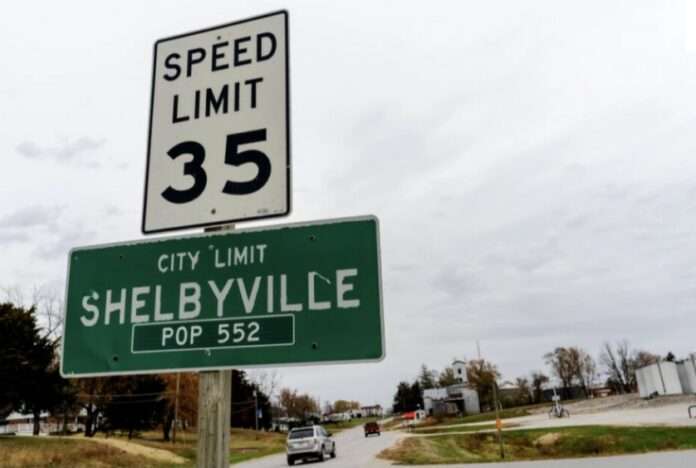
Rural America is getting older. A fifth of the population is now over the age of 65

0

Jonathan Ahl
KOSU

Rural America is continuing to get older, and a new report shows the extent has hit a new high.
The U.S. Department of Agriculture’s annual Rural America at a Glance report shows more than 20% of rural residents are over the age of 65 compared to 16% in urban areas.
“The aging of the baby-boom generation will continue to contribute to the loss of working-age adults through the end of this decade,” the report from the USDA’s Economic Research Service stated.
The report also said there is a corresponding decrease in the working age population, with those 18-64 making up 58% of non-metro residents, compared with 61% of metro residents.
Fixing the problem will take a lot of work from a lot of different areas, according to Mary Hendrickson, a professor of rural sociology at the University of Missouri.
“There’s federal issues, there are state issues, there are community issues, there are regional issues. Can we start thinking about regional networks? There really is not just one thing,” she said.
Hendrickson said rural areas need to make things better for families, and that can include everything from better broadband access to establishing reliable daycare and preschool options, which are not only lacking but often non-existent in rural areas.
“If we’re going to talk about wanting to be family friendly, then we’re going to need to have some policies that are helpful,” Hendrickson said.
Some rural communities have tried creative ways to try and attract younger people to make their home away from urban areas, including offering grants to new homeowners and establishing recruiting committees to try and get former residents to move back.
“Those kinds of programs are essential,” Hendrickson said. “Folks who live in these rural areas sometimes look around and think more of the challenges rather than thinking about what are the opportunities for helping and making their place attractive for a younger generation.”
Other rural advocates caution those kinds of projects won’t be enough and argue for more systemic change at the federal level.
“We learned during COVID that many people can work from anywhere, and that gave a lot of hope to rural communities looking to increase their population,” said Chris Merritt, executive director of the Illinois Institute of Rural Affairs at Western Illinois University. “But state and federal governments need to get more involved to make sure these communities have health care, schools, transportation and grocery stores. Those things can’t happen at just the community level.”
While rural communities look to increase their younger population, they will also have to deal with new challenges of having more older residents.
“Declines in the working-age population may make it harder to meet labor demands in some rural industries and local labor markets. At the same time, many rural areas lack sufficient health care capacity, broadband service, community centers, and other services to address the challenges associated with an aging population,” the USDA report said.