
The price and availability of various foodstuffs is newsworthy fodder these days. Inflation, and perhaps price gouging, is making all foodstuffs more expensive.
Parts of the food supply chain have been disrupted by drought, flood, fires, Covid hangover, labor shortages, shipping bottlenecks, bird flu, fuel, fertilizer and pesticide shortages — all pressuring higher food prices.
Plus, I read this morning that many food and beverage companies and restaurant chains have reported near-record quarterly earnings. That looks like opportunistic price gouging to me.
All this food discussion got me to thinking. The real value of foodstuffs is the nutrition they contain. I’m talking basic nutrition — protein, carbohydrates, vitamins, minerals, fats, amino acids, etc.
And, yet, nutritive content scarcely plays any role in foodstuff pricing. Price is determined mostly by quantity and availability. Seldom for nutrition.
Which brings me to this question: From a nutrition standpoint, I wonder how much basic foods have changed since the days of early human evolution? I wonder if a thick, juicy, loin steak from some dinosaur was substantially different, nutrition wise, from a modern beef steak? I’d bet the answer is “not much.”
Does a modern fish seined from the ocean or line-caught in a Flint Hills pond, differ all that much, nutrition wise, from some prehistoric fish noodled by a Neanderthal? I’m guessing — about the same.
And, is a bushel of modern rice substantially better, nutrition wise, than a bushel of wild rice hand-gathered by a hungry early Hominid? Probably not much different. Same with nuts, fruits, and fresh greens.
How would a fresh dinosaur egg differ nutrition-wise from a fresh, hen, duck, or goose egg? Bet not much.
My point is that the “market” prices we pay for foodstuffs constantly yo-yo up and down, all-the-while virtually ignoring their rather-stable nutritive content.
Could it be that the “market” prices of foodstuffs should take into account nutrition? Just something to contemplate as you stand in the supermarket checkout line.
***
Okay, enuf of this deep-thinking. Folks appreciate humor more than contemplating their belly-buttons. So, here we go:
A rural widow of several years decided to herself that it was time to get back into the elder-dating game. She was tired of the loneliness and wanted companionship. She decided that perhaps the best way to find her heart’s desire was by attending a selection of rural churches within driving distance.
So, she started out. Week after week, the new churches she visited were nice, but not inspiring, and the companionship outlook wuz dim.
But, finally, one Sunday morning, the rural church she attended looked promising on all accounts. She took particular notice of a number of attractive, graying, single gentlemen with tan marks across their foreheads — a good indication of time spent in the sun farming or ranching.
When it became time to pass the collection plate, the minister made an innovative announcement. “Anyone who puts a $50 bill in the plate has the opportunity to select a favorite three hymns,” he said.
Without hesitation, the eager widow was the first person to drop $50 into the collection plate. When the minister acknowledged that she was the winner, he asked her to name her favorite three hymns.
She stood up, pointed in three directions around the chapel, and declared, “I select him, and him, and him.”
***
After selling most of his beef herd because of the drought, a rancher poured out his sad tale to his banker. “I simply ran out of grass and water and that settled the deal. Can’t raise cattle without grass and water,” he explained.
But, then he went on, “But, I do have bad news and good news for you.”
His banker replied, “Well, spill it.”
The rancher swallowed hard and said, “First the bad news. After we settled up after the auction, I came up $100,000 short of paying off all the overdue notes you’re holding.”
“What possibly could be good news?” the banker replied sourly.
“Well, the good news is that I’ve decided to stick with you as a lender for at least another year,” the rancher brightly concluded.
***
Did you hear about the rancher who was so rich that he no longer branded his cattle? He takes them to his jeweler in town and has them engraved.
***
Words of wisdom for the week: “A gossip talks about others. A bore talks about himself. A brilliant conversationalist talks about you.”
Have a good ‘un.
Dinosaur steak vs beef steak
The Hit Man
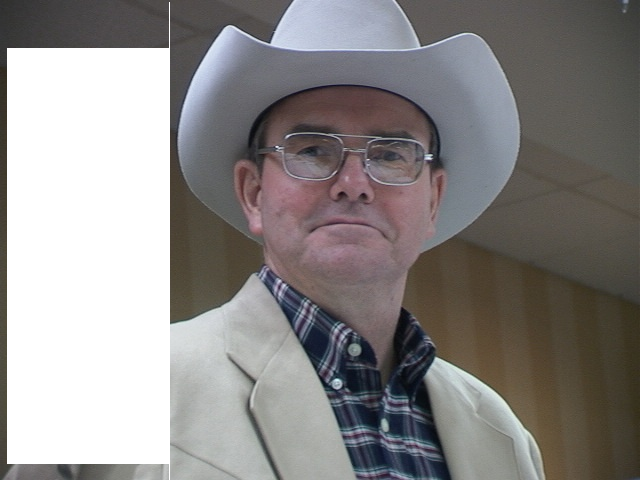
I’ve always enjoyed shipping cattle, even better than branding or preg checking cows, and there are many reasons why. Being the son of a long-haul trucker I liked the smell of diesel before sunup and I liked talking to the truckers who were always from exotic locales, like Iowa and Nebraska. (The truckers hauled hogs out to California and backhauled California calves.) I also enjoyed shipping day because it gave me a chance to use my collegiate livestock judging team skills by sorting off calves in the sorting alley. I’ve also always had a secret desire to be a rodeo clown (I certainly have the clothes for it) and by dodging cows, bulls and calves and diving over fences head first in the sorting alley, I was sharpening my bullfighting skills.
Because most of my friends are auction yard owners or video sale reps and because they knew I liked to ship cattle I was asked numerous times over the years to ship cattle for them. Mostly this happened when my friends had another shipping scheduled that day, because they lived eight hours away while I may have been right next door, or maybe they wanted to watch their kid play soccer or a Little League game. While I’ve seen photos and dreamed of one day being asked to load 18 trucks all in a row, that never happened to me. Mostly I got to ship a lot of mixed-load, one truck deals where the seller was a cantankerous old coot.
Because the buyer wasn’t going to spend a fortune in plane tickets, motels or speeding tickets just to have a rep there on weigh-up day that meant I had to represent both buyer and seller. I also got asked to ship a lot of cattle when the cattle I’d be shipping were sold three months prior on the video and the cash market was now a lot lower. In that case my instructions from the buyer were always the same. “Put a hard sort on them.” This is order-buying speak for, “I want as few of those high dollar calves as possible because I can buy them a lot cheaper now.”
This meant I had to be very creative in coming up with excuses to sort calves off. Of course, I sorted off all the gimps, muddy, off-colored, horned calves, or those still wearing an eye patch, but I also sorted off calves because they may have had an ingrown nose hair, a rat tail, dilated pupils, carpal tunnel syndrome, poor angle of the dewclaw, a “type A” personality, two white hairs on the belly, a high tail set, a rash I interpreted to be a precursor to a wheat allergy, hemorrhoids, or just because a calf walked a little funny.
Of course, the opposite was true and if the price of cash cattle was a lot higher on delivery day than the price agreed to three months prior, the buyer wanted as many of the cheaper cattle that could fit on the truck even if it meant an overweight ticket for the driver. The buyer’s instructions in this case were always the same: “Put every calf on the truck that can walk up the chute.”
Needless to say, this type of behavior did not endear me to the ranchers whose cattle I shipped and I got a nagging feeling the only conflict the buyer really had that day was what ball game to watch on television.
I stopped shipping cattle for my “friends” after I secretly overheard a conversation between an order buyer I’d just shipped a load of cattle for and the very angry seller. Neither knew I was listening in. The order buyer had the call on speaker and after listening to the rancher call me a long list of expletives my order buying “friend” said, “Sorry Joe. It sounds like Lee really screwed up. He considers himself quite the cattle judge which is funny because you ought to see his cattle. If he applied the same set of criteria to them they’d all be sorted off.”
Ha, ha, ha. So the next time I got a call from my “friend” to ship some cattle I replied, “I’m on to your game. From now on do your own dirty work because I refuse to be your ‘hit man’ anymore.”
Farms welcoming tourists now make up a $1 billion industry of corn mazes and pumpkin patches


For many people, fall is marked by taking trips to the pumpkin patch, getting lost in a corn maze or catching a hay ride. These seasonal activities are part of agricultural tourism, and it’s a booming industry.
It’s a crisp fall afternoon and Loren Liebscher is towing a wagon filled with families with his tractor and heading towards his pumpkin patch — something he’s done every autumn for 21 years.
About 18,000 visitors come to P Bar Farms in Hydro, Oklahoma each year. They come to find the perfect pumpkin and to explore a 10-acre corn maze, one of the state’s first.
“We started with just three things: we had a pumpkin patch, a corn maze and a petting zoo,” Liebscher said. “And then things began to change.”
Since then, he’s added activities like hay rides, jumping pillows, a farm slide, rock mining for children and haunted nights in the corn maze.
Liebscher’s farm is a part of the booming agritourism industry. The agritourism sector — everything from corn mazes to pick-your-own pumpkin patches and apple orchards — has grown to a nearly $1 billion industry, according to the U.S. Department of Agriculture.
Liebscher said he jumped head first into the agritourism industry after he grew tired and stressed from raising cattle and growing wheat. He got the idea to start a corn maze when he read an article in an agricultural magazine about a farmer making big profits off his expansive corn maze.
“One question [the farmer] got asked all the time was, ‘Doesn’t it bother you that people go and mess up your corn?’” Liebscher chuckled. “He said, ‘Okay, the corn in the maze is worth $1,000,’ and he said, ‘I just grossed $100,000 doing agri-tainment. Do you think I really care about the corn?’”

As the number of U.S. farms continue to decline, Kendra Meyer, an agritourism specialist for Iowa State University’s Extension Office, said the number of people looking to experience where their food comes from has soared.
“More and more people are moving to urban areas, and so people are removed just one step further from the farm life,” Meyer said. “So getting out on the farm, being able to see that apple they picked and where it came from, rather than just going and picking it up in the grocery store, is a fun and exciting thing.”
Meyer said the farmers she often works with show interest in agritourism because it serves as a way for them to make a side income. But she said it also gives farmers the opportunity to share their story and how they produce their crops with visitors.
“When you share that with someone coming on your farm, it gives you a connection that you feel immediately with that farmer,” Meyer said. “At least for me, it makes me feel good about buying my produce there because it’s someone you trust, it’s someone you know.”
Building up an agritourism business takes time

Near Marcus, Iowa, Geralyn and Alan Hoefling have been welcoming visitors to their pumpkin patch for 26 years.
Alan, a commodity broker and soybean farmer, and Geralyn, a retired preschool teacher, started with a small patch so Geralyn’s preschool students could learn how pumpkins grow. Today, Hoefling’s Pumpkin Patch and Corn Maze has grown into a side business that offers people a vast variety of pumpkins and gourds to choose from.
“Our passion for starting the pumpkin patch was to have a place for families to go,” Geralyn said. “We are a pumpkin patch. I want people to go out and pick, and that’s just part of the fun.”
But the couple said they’ve never really thought of themselves as an agritourism attraction. Despite the months it takes to get everything set up for the pumpkin patch, they’ve never charged admission to visit their farm, only for the pumpkins people pick off the vine.
“We want [families] to know they are able to enjoy everything without the high cost of entering,” Geralyn said. “But I always tell people, if you want a big entertainment place you might want to look elsewhere, but if you want a pumpkin patch, this is the place to come.”
Getting started in agritourism isn’t an easy job. It can take years for farmers to establish their business, according to Iowa State’s Meyer.

“Agritourism isn’t something you can just jump fully into and have a full-time income,” Meyer said. “Agritourism is a way to add that extra piece to your farm. It allows [farmers] to build piece by piece and create a business that is sustainable after many years of work.”
Tara and Chris Peters have owned Pete’s Pumpkin Patch in Rolla, Missouri, for 12 years. Tara said neither she nor her husband come from an agricultural background, but they learned how to build up their business by learning from other farmers.
“When you’re starting out, that’s who you rely on,” Peters said. “People that have done it before, and then you come share what works for you and what doesn’t work for you. And then you grow from there.”
Peters has been a member of the Missouri Farm Bureau’s Agritourism Committee since 2015. She said being a part of the committee has allowed her to tour agritourism attractions all across Missouri and help advise them on how to make their businesses more successful.
Challenges of agritourism
Even in the agritourism business the growing conditions matter.
This summer’s drought killed the Peters’ chances of growing corn for a corn maze at Pete’s Pumpkin Patch in Missouri. Meanwhile, in Oklahoma, it made it more expensive for Liebscher to grow his corn, and his usual $1,500 bill to irrigate the corn shot up to $5,000 this year.
Opening their farms to the public also comes with some legal risks for farmers. While many farmers have been running agritourism businesses for years, there are no federal laws that define agritourism. Meyer said it’s important for states to regulate the growing industry.
“More laws allows for more understanding of what [agritourism] really is and how we can help those producers be the best they can be and help protect them,” she said.
States like Missouri, Kansas, Nebraska and Oklahoma have had liability protections for agriculture tourism farms for over 5 years, and Iowa passed an agritourism liability act in 2021. Illinois remains among the dozen of states that have no laws related to agritourism liability.
Liebscher said dealing with the normal issues that come with farming, keeping up with agritourism regulations, and maintaining a visitor-friendly farm year-round can make it challenging to stay on top of everything.

After his wife experienced health issues last year, Liebscher decided it was time to put the farm up for sale and simply enjoy life together.
“You learn through that experience what’s important,” he said, “and it’s not run a corn maze until you’re exhausted.”
After more than two decades, he said what he’ll miss the most is meeting with visitors and seeing families enjoy their time at his farm. He hopes the next owner of his corn maze will put as much passion into the business as he did.
“It’ll be hard for me, because it’s been such a huge part of my life, and I’ve spent a lot of time and effort in agritourism,” Liebscher said. “But it’s time to move on to something different.”
Xcaret Nuñez covers agriculture, food systems and rural issues for KOSU and Harvest Public Media and is a Report For America corps member. Follow Xcaret on Twitter @Xcaret_News.
This story was produced in partnership with Harvest Public Media, a collaboration of public media newsrooms in the Midwest. It reports on food systems, agriculture and rural issues. Follow Harvest on Twitter: @HarvestPM
Copyright 2022 KCUR 89.3. To see more, visit KCUR 89.3.
https://www.kmuw.org/2022-10-24/farms-welcoming-tourists-now-make-up-a-1-billion-industry-of-corn-mazes-and-pumpkin-patches
Horticulture Tips for Fall/Winterizing

REMINDERS
- Remove annual flowers killed by frost.
- Can still plant spring-flowering bulbs.
Winterizing Roses
Though most shrub roses are hardy in Kansas, other types of roses can be more tender. For example, the hybrid teas have certain species in their ancestry that originated in the warm climate of southern China. These roses need protection to reliably survive Kansas winters. Mound soil or compost about 8 to 10 inches high around each plant. If using soil, bring it in from another part of the garden. Do not pull it from between plants because this can damage the rose roots or make them more susceptible to cold.
Mounding is normally finished by Thanksgiving. After the ground has frozen, add a 4-inch mulch of straw, leaves or hay for further protection. More soil may be spread on top of the mulch to keep it in place. Do not add the mulch before the ground freezes or mice may invade and feed on the roses over the winter. The purpose of these coverings is not only to moderate the cold, but also to prevent warm days during the winter or early spring from stimulating growth that is tender to returning cold weather. Excessively tall canes should be pruned to a height of 36 inches and tied together to prevent them from being whipped by strong winter winds. Wind can damage the crown of the plant or loosen the surrounding soil.
Next spring, remove coverings before new growth starts. If soil was used for mounding, remove from the area so that the level of soil stays constant from year to year. Compost can be spread out around the plant and used as a mulch. Wait until after the ground thaws, or the tops may begin growing before the roots can provide water.
Amaryllis Culture
Now is the time to start amaryllis if you wish to have them in bloom for Christmas. The amaryllis is a tender bulb that is ready to bloom when purchased. The genus name for this plant is Hippeastrum, which means “horse star,” an appropriate name for a plant that produces massive blooms as much as 8 to 10 inches across. These plants can produce 3 to 4 blooms on a 1- to 2-foot stem. Often, a second flower stalk follows the first at about the time the flowers on the first stem fade. The leaves usually start to appear when the flowers begin to open.
Amaryllis bulbs can be huge – approaching the size of a grapefruit. The larger the bulb, the larger the flowers and the more expensive the bulb. Regardless of size, amaryllis likes tight quarters. Place in a pot only 1 to 2 inches larger in diameter than the bulb. About half of the bulb should remain exposed. Hold the bulb so the roots hang down into the pot, and add potting mix. Firm the mix around the roots carefully so that they are not snapped off. Water thoroughly and place the plant in a warm, sunny location. Amaryllis likes day temperatures in the 70s and night temperatures in the 60s. The flower bud may start to appear right away or the plant may remain dormant for a period of time, but eventually all mature bulbs do bloom. Move the plant to a cooler location and out of direct sunlight when the flower buds begin to show color so the flowers last longer. Amaryllis can remain in bloom for about a month.
Flowers should be cut off after blooming to keep the plant from expending energy to form seeds. Place the plant back in a sunny location until it is warm enough to be placed outside. Sink the pot in the soil in an area that has dappled shade. The plant can be gradually moved to sunnier locations until it receives full sun for a half day. Continue to fertilize with a balanced houseplant fertilizer as you would a normal houseplant. Bring the pot in before first frost and place in a dark location. Withhold all water so the leaves have a chance to dry completely. Leaves can then be cut off close to the top of the bulb. Amaryllis can often be left in the same pot for several years but will eventually need repotting. Again, choose a pot that is only 1 to 2 inches larger in diameter than the bulb and repeat the process described above. Offsets are normally produced by amaryllis and can be given their own pots if desired. These small bulbs have a concave side when removed but develop a round shape when given their own space. They grow quickly and can be mature enough to flower in a couple of years.
Garden Soil Preparation — It’s Not Too Late
Autumn is an excellent time to add organic materials and till garden soils. Winter can still be a good time to take care of this chore as long as the soil isn’t frozen. It is far wiser to till now than to wait until spring when cold, wet conditions can limit your ability to work soils easily. Working soil when it is wet destroys soil structure and results in hard clods that are very slow to break down. On the other hand, dry soil may need to be watered so it can be more easily tilled. Be sure to wait several days after watering to let soil moisture levels moderate. You want the soil moist, not wet or dry, when tilling.
There is a limit to how much organic material such as leaves can be added in one application. Normally, a layer 2 inches deep is adequate with 5 to 6 inches being the maximum that can be added at one time. Shredding the material before application encourages faster and more complete decomposition due to increased surface area. Remember, soil preparation is an important key to a successful garden.
Ward Upham, Extension Associate
Stay Food Safe this Thanksgiving Holiday
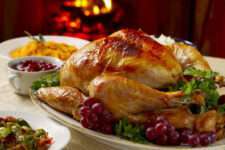
WASHINGTON, November 7, 2022 – Keep your stomach full of turkey and free from foodborne illness this Thanksgiving holiday. The U.S. Department of Agriculture (USDA) reminds us all that it’s important to remember the steps to food safety during America’s biggest meal.
“While the four steps to food safety — clean, separate, cook and chill — are important every day and at every meal, they are particularly significant on Thanksgiving,” said USDA Deputy Under Secretary Sandra Eskin. “There will likely be many guests and many delicious dishes at your holiday table, but you don’t want to invite any foodborne pathogens. Follow those four steps — in particular remember to use a food thermometer — and your Thanksgiving dinner will be a safe one.”
Keep your Thanksgiving celebration food safe by following the tips below.
Clean and Sanitize
Handwashing is the first step to avoiding foodborne illness. Wash your hands for at least 20 seconds with soap and water before, during, and after handling food. In a recent study, 97 percent of participants in a USDA test kitchen failed to wash their hands properly. Make sure to follow these handwashing steps:
- Wet your hands with clean, running water.
- Lather your fingers with soap.
- Scrub soapy hands and fingers thoroughly for at least 20 seconds. Rinse your hands under clean, running water.
- Dry hands off with a clean towel or air dry them.
Clean and sanitize any surfaces that have touched raw turkey and its juices and will later touch food such as kitchen counters, sinks, stoves, tabletops, etc.
Avoid Cross-Contamination
Cross-contamination is the spread of bacteria from raw meat and poultry onto ready-to-eat food, surfaces, and utensils. One way to avoid this is by using separate cutting boards — one for raw meat and poultry, and another for fruits and vegetables. Our recent study found that sinks are the most contaminated areas of the kitchen. USDA recommends against washing your raw poultry due to the risk of splashing bacteria throughout your kitchen. Clean and sanitize any areas that will come into contact with the turkey before and after cooking.
Thaw the Turkey Safely
Never thaw your turkey in hot water or leave it on a countertop. There are three ways to safely thaw a turkey: in the refrigerator, in cold water and in the microwave.
- Refrigerator thawing: Turkey can be safely thawed in a refrigerator to allow for slow and safe thawing. When thawing in a refrigerator, allow roughly 24 hours for every four to five pounds of turkey. After thawing, a turkey is safe in a refrigerator for one to two days.
- Cold water thawing: The cold water thawing method will thaw your turkey faster but will require more attention. When thawing in a cold-water bath, allow 30 minutes per pound and submerge the turkey in its original wrapping to avoid cross-contamination. Change the water every 30 minutes until the turkey is thawed. The turkey must be cooked immediately after thawing.
- Microwave thawing: To thaw a turkey that fits in the microwave, follow manufacturer’s recommendations. Cook it immediately after thawing because some areas of the food may become warm and begin to cook during the thawing process, bringing the food to the “Danger Zone.”
It’s safe to cook a completely frozen turkey; however, it will take at least 50 percent longer to fully cook.
Cook Thoroughly
Your turkey is safe to eat once it reaches an internal temperature of 165 F. Insert a food thermometer into the thickest part of the breast, the innermost part of the wing and the innermost part of the thigh to check its internal temperature. USDA recommends using a food thermometer even if the turkey has a pop-up temperature indicator to ensure it has reached 165 F in the three previously stated places.
Stuffing your Turkey
USDA recommends against stuffing your turkey since this often leads to bacteria growth. However, if you plan to stuff your turkey, follow these steps:
- Prepare the wet and dry ingredients for the stuffing separately from each other and refrigerate until ready to use. Mix wet and dry ingredients just before filling the bird’s cavity.
- Do not stuff whole poultry and leave in the refrigerator before cooking.
- Stuff the turkey loosely — about 3/4 cup of stuffing per pound.
- Immediately place the stuffed, raw turkey in an oven set no lower than 325 F.
- A stuffed turkey will take longer to cook. Once it has finished cooking, place a food thermometer in the center of the stuffing to ensure it has reached a safe internal temperature of 165 F.
- Let the cooked turkey stand 20 minutes before removing the stuffing.
For more information on turkey stuffing, visit Turkey Basics: Stuffing.
The Two-Hour Rule
Don’t leave your food sitting out too long! Refrigerate all perishable foods sitting out at room temperature within two hours of being cooked, or one hour if the temperature is 90 F or above. After two hours, perishable food will enter the “Danger Zone” (between 40 F and 140 F), which is where bacteria can multiply quickly and cause the food to become unsafe. Discard all foods that have been left out for more than two hours. Remember the rule — keep hot foods hot and cold foods cold.
- Transporting hot foods — Wrap dishes in insulated containers to keep their temperature above 140 F.
- Transporting cold foods — Place items in a cooler with ice or gel packs to keep them at or below 40 F.
When serving food to groups, keep hot food hot and keep cold food cold by using chafing dishes or crock pots and ice trays. Hot items should remain above 140 F and cold items should remain below 40 F.
Leftovers
Store leftovers in small shallow containers and put them in the refrigerator. Thanksgiving leftovers are safe to eat up to four days in the refrigerator. In the freezer, leftovers are safely frozen indefinitely but will keep best quality from two to six months.
Resources
For Thanksgiving food safety questions, call the USDA Meat and Poultry Hotline at 1-888-MPHotline (1-888-674-6854), email [email protected] or chat live at ask.usda.gov from 10 a.m. to 6 p.m. Eastern Time, Monday through Friday.
Do you have any last-minute turkey day questions? The Meat and Poultry Hotline will be open on Thanksgiving Day from 8 a.m. to 2 p.m. EST.
