Saturday, March 21, 2026
Home Blog Page 893

Incentives For Cowmen To Precondition Calves Before Marketing

0

Exactly what does it mean when calves are advertised as and sold as “preconditioned”?
“Preconditioning programs involve a series of ranch management practices to improve health and nutrition of calves,” said David Lalman.
“Preconditioning adds value to calves for buyers, which benefits cow-calf producers,” according to the Oklahoma State University Extension animal scientist, Stillwater.
By strict definition, preconditioning is “a vaccination, nutritional, and management program.”
It is designed to prepare young cattle to best withstand the stresses of adjustment when they leave their point of origin and enter the channels of trade.
Preconditioning is not a new idea but has received considerable attention in recent years.
That’s due to interest in value-added programs for cow-calf producers, beef quality assurance programs, and beef industry strategic alliances.
“Purpose of preconditioning is to reduce stress in calves at weaning, improve the immune system, and boost performance in post-weaning,” Lalman said.
That includes stocker production and cattle feeding, and in carcass performance, higher grading carcasses with fewer defects.
There are actually different levels of preconditioning. Often, calves will be advertised with “one round of shots,” while others are credited with “two rounds of shots.” Both are considered preconditioning, of sort.
In certain certified preconditioning programs, calves must be weaned for a minimum of 45 days.
They have to be vaccinated twice with IBR, BVD, BRSV, PI3 as well as, clostridial and Pasteurella Pneumonia vaccines. That is to be done 21 days prior to sale.
The cattle must be castrated, dehorned and healed, dewormed, and treated for external parasites.
“Common preconditioning programs cost cow-calf owners about $60 per head,” Lalman said.
That depends on the nutrition ration, health of calves, and length of the preconditioning program.
One common question is whether or not preconditioning programs add sufficient value to feeder calves to offset the added costs.
“Evidence supports the importance health makes to stocker, feedlot, and carcass performance, and profitability.” Lalman emphasized.
Research has indicated preconditioning increases feedlot and carcass performance while reducing feedlot morbidity and mortality rates and lowering medicine costs.
Performance gains included higher average daily gains, improved feed conversion, and lower cost of gain.
Sickness in the feedlot reduces the percentage of Choice grade carcasses compared with those that have not been sick.
“As cattle feeders continue to increase their use of grid pricing, even more importance will be placed on carcass attributes,” Lalman said.
Since preconditioning programs improve health and thriftiness of calves, producers can expect a price premium due to the improved health of preconditioned calves marketed.
Feedlot managers indicated a significant perceived performance difference favoring preconditioned calves.
Significant benefits were expected for death loss percentage, percentage of sick cattle, average daily gain, feed efficiency, and carcass traits. That includes percent grading Choice and percent of severely discounted carcasses.
Those differences increased the perceived value of preconditioned calves for feedlot managers by $5.25 per hundred
The perceived value expressed by feedlot managers exceeded the value based on market data. “It appears feedlot buyers pay what it takes to purchase preconditioned calves,” Lalman said.
That premium appears to be less than the perceived expected value of preconditioned calves based on feedlot managers’ experience.
“Therefore, for cow-calf producers to receive premium prices closer to the perceived added value for preconditioning programs, more effort should be made to build a reputation for integrity by sellers,” Lalman said.
Preconditioning programs can be profitable for cow-calf producers, but not from the premium price alone that buyers have been found to pay for preconditioned calves.
Several factors contribute to enhanced returns from preconditioning, Lalman repeated,
That includes selling added weight, marketing into a seasonally upward trending market, selling dehorned healthier steers in larger and more uniform lots.
“Producers should recognize that added weight means lower prices, and may increase fleshiness, which often is discounted by feeder cattle buyers.” Lalman emphasized.

CUTLINES
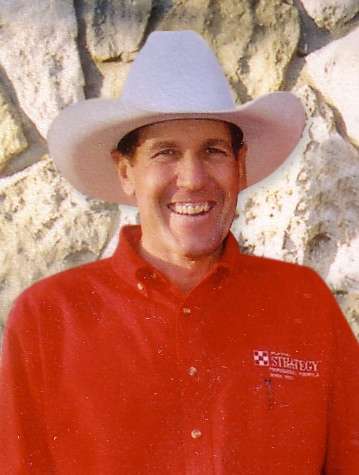
“Preconditioning adds value to calves for buyers, which benefits cow-calf producers,” according to the Oklahoma State University Extension animal scientist David Lalman, Stillwater.

Value of preconditioned calves for feedlot managers is said to be increased by $5.25 per hundred.

High-Priced Machinery Still Difficult To Find With Farmer Purchases Slow

0
Frank J Buchman
Frank Buchman

“Farm equipment is often difficult to find, and generally higher priced while farmers remain especially hesitant to buy new machinery.”
However, combine sales were up in September compared to August this year, while total tractor sales fell, according to Curt Blades.
Association of Equipment Manufacturers (AME) official, Blades said, “Total U.S. agriculture equipment sales in September were above the five-year average.” But sales were down in nearly all segments from the same time in 2021.
“The ag equipment market, as with most markets for manufactured goods, is turbulent,” Blade evaluated.
Farmers do want to take advantage of efficiency and technology new equipment offers especially with strong commodity markets. “However, supply chain difficulties continue to weigh on manufacturers’ deliveries,” Blade pointed out.
Total farm tractor sales for September 2022 were down 12.8-percent from 2021, but still above sales in August.
At the end of September, the Association of Equipment Manufacturers official said 210,540 total farm tractors had been sold this year. That’s down from 245,807 this time last year.
Sales for two-wheel drive, less than 40-horsepower tractors were down 16.3-percent from 2021. Year to date, 140,790 tractors have been sold in this category, down from 170,715 at the same time last year.
Two-wheel drive, 40 to 100 horsepower tractors sales were down 10.2 percent, from last year. Year to date, 49,468 tractors have been sold in this category, down from 56,445 at the same time last year.
However, sales for two-wheel drive 100 horsepower tractors were up 9.6 percent. 18,146 “big” tractors have been sold, up from 16,257 at the same time last year.
Four-wheel drive tractor sales are down 33.1 percent. A total of 2,136 four-wheel-drive tractors have been sold, down from 2,390 on the same date in 2021.
Sales for self-propelled combines saw growth in September, up a modest 6.6-percent. A total of 4,555 combines have been sold, up from 4,406 by September a year ago.
Shortages of combines, planters, and tractors are well understood by now, Blades pointed out.
But what about grain hauling equipment? “Not as dependent on microchips, perhaps, but it still requires labor and basic raw materials to be constructed,” according to Machinery Insider.
Used-trailer sales tend not to be too seasonal, with the exception of spring planting season when overall auction volume is down.
The number of trailers sold at auction the first quarter of 2022 were only 40 percent of what they were last year and just 25-percent of what was sold at auction in 2020.
“No farmer wants to be stuck not being able to deliver $8 corn.” Machinery Insider officials said. “That incentive plus short supply pushed prices to historic highs.”
Average grain trailer values this year are 25 percent higher than in 2021, and 60 percent higher than in 2020.
Manufacturers are sending new trailers out their doors at record levels. This resupply will eventually help moderate used-trailer values that have been strong this spring and summer.
Used hopper bottom prices have been exceptionally strong the past five to six years even when other farm equipment was depressed. Compared with pre-2021 levels, today’s hopper bottoms average 13-percent to 18-percent higher.
“This higher value, however, trails behind the astronomical prices now given for high-horsepower tractors and combines,” Machinery Insider evaluated.
“Tri-axle trailers are increasingly sought after when hauling grain greater distances or facing long unloading waiting time,” officials said. “The extra 200 to 300 bushels that a tri-axle offers per load is enough to justify the higher cost.”
“New or used, small or large, red or green or blue or purple, machinery supplies are tighter than a drum right now,” Machinery Insider repeated. “But there are exceptions when spending time on the internet searching equipment websites.”
Model year 2019 and 2020 round balers are one of those exceptions. Between 2017 and 2020, cattle prices were stable. Corn, on the other hand, was cheap before a rocket ride late in 2020.
That gave cattlemen nice profits sending them to dealers’ lots to upgrade their hay equipment. “Today balers purchased then are coming into dealers’ lot on trade. This provides an opportunity to find decent prices on late-model round balers.” Machinery Insider reported.
“Well-equipped round balers are selling steady, but not at the level paid for tractors, combines and tillage equipment,” officials evaluated.
These values reflect differences in how well equipped a baler is. For example, specialty crop or silage special machines sell for 15-percent to 30-percent more. Other features add to the price of a machine.
Generally, for farmers looking to upgrade equipment, something off the manufacturer’s line is not possible unless ordered long ago.
“Used quality pieces are out there,” officials reiterated. “Yet, with all that is happening in the ag industry, it’s hard to know how much to pay.”
Estimating sale price has always been difficult, but with supply chain buckling, valuing equipment is harder than ever. “
“Each operation is different. So, purchasing typically comes down to what is needed most and can be afforded for added farm profit,” officials emphasized.
+++30+++

Largest Texas Ranches Longest Time Breeders Working Quarter Horses

0

History of two large longtime Texas ranches that continue breeding and using horses for cattle work is interesting.
“The Waggoner Ranch and King Ranch have been breeding Quarter Horses for 100 years,” announced the American Quarter Horse Association.
Even though the American Quarter Horse Association (AQHA) registry was founded in 1940, these ranches already had horse herds.
“Several horses from both ranches were inspected and admitted for initial AQHA registration,” confirmed officials in Amarillo, Texas,
W.T. Waggoner Estate
Established in 1852, the Waggoner Ranch is a historic north Texas ranch south of Vernon, Texas.
Notable for being the largest ranch within one fence in the United States, it is used primarily to raise crops, beef cattle, and horses as well as for oil production.
Dan Waggoner set up in the cattle business in 1849. He and his son, William Thomas “W.T.” Waggoner, built the ranch known throughout the West as “Waggoners.”
W.T. Waggoner always sought the best horses available, bringing in foundation stal¬lions including Yellow Jacket, Midnight, Blackburn, and Pretty Boy.
In 1940, his son E. Paul Waggoner began registering AQHA horses. Five years later, E. Paul Waggoner purchased Poco Bueno, a yearling son of King P-234 who became a Hall of Fame sire.
Poco Beuno has impacted the line ever since at Waggoners, which in 1994 claimed the AQHA Best Remuda Award. The program has produced nearly 6,500 American Quarter Horses.
“Poco Bueno was a great horse, and a lot of our mares go back to him,” said Trace Cribbs, Waggoners’ equine division manager now. “We’ve had some real good studs over the years, but what really made our program were the Pretty Boy mares.
“We’ve bred a lot of mares to Smart Chic Olena, and we’ve exper¬imented with running bloodlines,” Cribbs said. “We don’t mind going back to some older lines. We want a good rope horse that you can roll back in with performance, movement, and cow.”
Now, they’re evaluating a three-year-old Jesses Topaz son named Justa Topaz. He traces to Mr Jess Perry, Peppy San Badger and the Poco Bueno stallion Poco King Tuck.
“We like the reined cow horse, and we are big proponents of the AQHA Ranching Heritage program,” Cribbs said. “Our No. 1 customers are cowboys.
“We look for horses with substance, about 15 to 15.2 hands, with a lot of bone, around 1,200 pounds. We want to get the structure and the brain, trainability, right.”
So, do they want a big-motored horse or a “pusher,” that need pumped up to make them go? “There are different jobs that one or the other kind are good for, so we need to raise both,” Cribbs emphasized.
W.T. Waggoner Estate sold in 2016 to Stan Kroenke, who owns the National Football League’s Los Angeles Rams and is husband of Wal-Mart heiress Ann Walton Kroenke.
At the time of acquisition, the ranch comprised 520,527 acres, or 800 square miles. But additional acreage was included in the sale making the total closer to 535,000 acres. It is estimated that the operation runs about 12,000 mother cows.
“We’ve kept our old bloodlines in our mares,” said Cribbs. “Those bloodlines are our history, and Mr. Kroenke did not want to lose that. That’s great for us as we have so much invested in these mares.”
King Ranch
King Ranch is AQHA’s all-time leading breeder by number of foals, having produced more than 7,200 in its long history.
Mainly a cattle operation, King Ranch, headquartered at Kingsville in south Texas, includes more than 825,000 acres. It was founded in 1853 by Richard King and Gideon Lewis.
The ranch does not consist of one single contiguous plot of land, but rather four large acreages called divisions.
“The King Ranch commitment to excellent Quarter Horses over the past century is remarkable. It helps ensure the future of the horses we love and the ranching industry.” said Karen McCuistion, AQHA director of member programs.
Four King Ranch horses registered by AQHA were foaled in 1922. They included Little Richard, son of Old Sorrel.
Little Richard holds registration number 17, which puts him in what is considered the “foundation” sires in the AQHA Stud Book.
“Purpose of the horse program is to provide our cowboys with the best horses in the world for their daily work,” said King Ranch’s James Clement III. “Producing a horse that can stand up to this work, this heat, this climate, this country, is our Number One goal.”
For more than a century, form to function is why every horse foaled on the King Ranch today is descended from Old Sorrel, most through Mr San Peppy and his son Peppy San Badger.
Clement is a great-great-great-grandson of Richard King. The historic King Ranch which grazes more than 35,000 cattle and 200 Quarter Horses.
It takes tough horses to handle it, and Old Sorrel proved to be exactly what was needed. A son of Hickory Bill, the sorrel stallion was foaled in 1915 out of a Thoroughbred mare from Kentucky. He was purchased by the ranch while still on his dam from foundation breeder and neighbor, George Clegg.
Bob Kleberg, a grandson of Richard King, often said that Old Sorrel was the best cow horse the ranch ever had. He had good temperament, intelligence, cow sense, endurance, good feet, and a good mouth.
The stallion’s best qualities were perpetuated through careful line breeding, relentless testing, selection, and rigorous culling.
In 1940, when AQHA was registering its first horses, King Ranch had eight sons and grandsons of Old Sorrel that were being bred to daughters and granddaughters of Old Sorrel.
More than 100 descendants were in the first studbook, including Wimpy, who is P-1 in the AQHA studbook.
“There is no greater honor for me than serving this ranch and this Running-W brand for the seventh-generation,” said Lee Roy Montalvo, King Ranch Quarter Horse manager. “Our ancestors were trying to build the perfect ranch horse.”
Today, the AQHA Best Remuda-earning King Ranch stands several stallions including The Boon by Peptoboonsma.
The ranch is also evaluating its homebred Coronel Del Rancho, six-year-old son of Not Ruf At All, their first bred and owned AQHA Versatility Ranch Horse world champion.
“The importance of our history cannot be understated, but we are always looking forward,” Clement said. “We continue our commitment to breed the best possible cow horse for the King Ranch cowboys promoting the American Quarter Horse throughout the world.”
Both ranches will be recognized at the AQHA Breeder Recognition Banquet, during the 2023 AQHA Convention, February 26, in Fort Worth, Texas.

CUTLINES

Established in 1852, the Waggoner Ranch is a historic north Texas ranch south of Vernon, Texas. W.T. Waggoner Estate sold in 2016 to Stan Kroenke, who owns the National Football League’s Los Angeles Rams and is husband of Wal-Mart heiress Ann Walton Kroenke.

The Waggoner Ranch program has produced nearly 6,500 American Quarter Horses. The ranch is 535,000 acres, or 800 square miles.

Mainly a cattle operation, King Ranch, headquartered at Kingsville in south Texas, includes more than 825,000 acres. It was founded in 1853 by Richard King and Gideon Lewis.

King Ranch is the American Quarter Horse Association’s all-time leading breeder by number of foals, having produced more than 7,200 in its long history.

Wheat Scoop: Request Your 2022 Kansas Wheat Recipe Book

0
Kansas Wheat

Contact: Marsha Boswell, [email protected]

For audio version, visit kswheat.com.

Some folks may collect stamps, trading cards or gnomes, but only true Wheaties keep their eye out for a specific collectible published for the past six decades — the annual recipe book from the Kansas Wheat Commission. The 2022 edition is now available — free of charge — and does not disappoint with classic recipes for bread bowls, pizza crust and pretzels in addition to soon-to-be family favorites like campfire biscuits, lemon Bundt cake and fudge nut bars.

“We’re excited to send you the 2022 Kansas Wheat Commission Recipe Book,” said Cindy Falk, Kansas Wheat nutrition educator and co-director of the National Festival of Breads. “The annual recipe booklet is a tradition that has represented Kansas as the wheat state and the Breadbasket of America.”

“We love to hear how folks use their recipe books. Whether it’s adding to their collection or using the recipes to earn a purple ribbon at their county, we hope these recipes become family favorites.”

Recipes for each year’s book are hand-selected and tested by Falk at the Syngenta Speak for Wheat Test Kitchen at the Kansas Wheat Innovation Center in Manhattan. Linda Beech, K-State Research and Extension agent, emeritus, helped test this year’s recipes and distributed nearly 1,000 recipe books in mid-October at the annual conference for K-State Research and Extension county agents. Free samples of the whole wheat sugar cookies featured on this year’s recipe book cover also helped entice attendees to pick up extra copies of the booklet.

“Kansas Wheat has a long history offering recipe books to extension agents, and extension has played a big role in having those books on hand for people to pick up in their local communities,” Beech said. “These are recipes you can always count on to work and be delicious. This year’s book is a really interesting collection of recipes that is a mini-history lesson of 50 years of home-baked products.”

The 2022 book pays homage to the 50th anniversary of the Wheat Foods Council and National Bake and Take Day. Bake and Take Day began on the fourth Saturday in March 1970 in Sumner County as a community service project. The Kansas Wheathearts, an auxiliary organization of the Kansas Association of Wheat Growers, set out to share baked goods with family members, friends, neighbors and others, generating community goodwill. The concept was so successful that it was expanded to National Bake and Take Month in 1973.

“While the purpose of Bake and Take Day is to encourage participants to bake a product made from wheat and take it to a neighbor, friend or relative, the personal visit to members of the community has become as rewarding and important as the baked goods you deliver,” Falk said. “Now, more than 50 years later, we can still enjoy sharing baked goods with others.”

Also celebrating the five-decade mark, the Wheat Foods Council educates consumers about the nutritional benefits of consuming a variety of wheat foods. Since 1972, the Wheat Foods Council has done this through its industry-wide partnerships dedicated to increasing the consumption of wheat and other grain foods through nutrition information, education, research and other promotional activities.

“The Wheat Foods Council is supported voluntarily by wheat producers, millers, bakers and related industries,” Falk said. “The Kansas Wheat Commission has been instrumental in organizing and leading the Council since its inception.”

Interested in a recipe book for your collection, local library, extension office, classroom or anywhere else? Let us know! Request a free copy of the recipe book or check out this year’s recipes online at kswheat.com/recipebook.
###
Written by Julia Debes for Kansas Wheat


The 2022 Recipe Book is full of classics breads, muffins and cookie recipes from the past few decades. Request your copy today!


KU News: Kansas Law Enforcement Training Center graduates 300th Basic Training Class

0

From the Office of Public Affairs | http://www.news.ku.edu

Headlines

Editors: Note graduates from agencies in Allen, Barton, Butler, Crawford, Ellis, Finney, Franklin, Hamilton, Harper, Harvey, Labette, Logan, McPherson, Osborne, Sedgwick, Shawnee and Thomas counties.

Contact: Kansas Law Enforcement Training Center, [email protected]
Kansas Law Enforcement Training Center graduates 300th Basic Training Class

HUTCHINSON — Twenty new law enforcement officers graduated from the Kansas Law Enforcement Training Center (KLETC) on Oct. 21 at a ceremony held in the KLETC Integrity Auditorium.

This graduation ceremony marked the 300th class to graduate from KLETC since it was created in 1968.

“Every class is special, but this class is special numerically because it is our 300th basic training class,” said Darin Beck, KLETC executive director. Beck, who has served in that role since June 2018, shared a little bit of KLETC history with the graduates.

“In 1968 the Legislature created KLETC by statute,” he said. “They recognized that there was a need to formalize training in the state, and the first basic training class was held Feb. 26, 1968, to March 15, 1968.”

The commencement speaker for the ceremony, Kansas Attorney General Derek Schmidt, said it was special to be back for the 300th, and he expressed his appreciation for the graduates. “Their decision to enter this profession, this line of work, to serve despite the perils, to serve despite the criticism, is admirable.”

Graduates receive certificates of course completion from KLETC and Kansas law enforcement certification from the Kansas Commission on Peace Officers’ Standards and Training, the state’s law enforcement licensing authority. The training course fulfills the state requirement for law enforcement training. Classroom lectures and hands-on applications help train officers to solve the increasingly complex problems they face in the line of duty.

Established by the Kansas Legislature in 1968, KLETC trains the majority of municipal, county and state law enforcement officers in Kansas and oversees the training of the remaining officers at seven authorized and certified academy programs operated by local law enforcement agencies and the Kansas Highway Patrol.

About 300 officers enroll annually in KLETC 14-week basic training programs. KLETC offers continuing education and specialized training to over 10,000 Kansas officers each year. KLETC is located one mile west and one mile south of Yoder, near Hutchinson, and is a division of KU Lifelong & Professional Education.

The graduates, who began their training in July 2022, represented multiple municipal, county and state law enforcement agencies from across Kansas. Graduates are listed below by county and agency:

Allen County
1. Tyrone Grant-Wooden, Humboldt Police Department

Barton County
1. Angela Enriquez, Barton County Sheriff’s Office

Butler County
1. Hunter Crouch, Andover Police Department

Crawford County
1. Joshua Hammons, Pittsburg Police Department

Ellis County
1. Alexander Baker, Hays Police Department

Finney County
1. Shaun Hale, Holcomb Police Department

Franklin County
1. James Nelson, Wellsville Police Department

Hamilton County
1. Alex Ledezma, Hamilton County Sheriff’s Office

Harper County
1. Bailey Luck, Anthony Police Department

Harvey County
1. Wyatt Blasi, Newton Police Department

Labette County
1. Mark Raney, Parsons Police Department

Logan County
1. John Wojtech, Oakley Police Department

McPherson County
1. De Anna Jo Balencia, McPherson Police Department

Osborne County
1. Jerry Cameron, Osborne Police Department

Sedgwick County
2. Mackenzie Balthazor, Wichita State University Police Department
3. Scott Kitzenberger, Haysville Police Department

Shawnee County
1. Zachary Bower, Kansas Department of Wildlife and Parks
2. Layne Watkins, Kansas Department of Wildlife and Parks
3. Nicholas Yeager, Kansas Department of Corrections

Thomas County
1. Cody Collins, Thomas County Sheriff’s Office.

-30-

————————————————————————

KU News Service
1450 Jayhawk Blvd.
Lawrence KS 66045
Phone: 785-864-3256
Fax: 785-864-3339
[email protected]
http://www.news.ku.edu

Erinn Barcomb-Peterson, director of news and media relations, [email protected]

Today’s News is a free service from the Office of Public Affairs