
Two proposed constitutional amendments are on the Nov. 8 ballot. One would upend the balance of power in state government. The other would hamstring the local right to choose.
In good times, governing is balanced among the legislative branch, which makes law, the executive branch enforcing that law, and the judicial, which applies and interprets the law. Each provides a check on the other, offering stability for the system.
In recent years the legislative branch has become lopsided. The Republican party dominates the 125-member House with 86 to the Democrats’ 39. In the 40-member Senate, Republicans are in control, 29-11. With two-thirds majorities in both chambers, the party already holds veto power over the governor.
A proposed amendment to the Kansas constitution would grant the majority even more power. It allows legislators – Republicans or Democrats – to alter or override a governor’s executive orders: a disaster declaration, a public health emergency, an energy crisis, deploying personnel to confront trouble or resolve a predicament.
The amendment also allows legislators to alter or override state regulations or their enforcement by state agencies. Don’t like how the gas pumps measure gallons? Legislators may tell the Agriculture Department, which inspects pumps for accuracy, to back off. (Or step it up.) Alarmed by plans for that pig farm next to the high school? Leave it to the politicians, not Health and Environment.
This amendment would stifle a governor’s check on legislative supremacy. It censors the executive branch, leaves it without tenor or intent.
This amendment gives a legislature the power to countermand a governor – Republican or Democrat – and to rule on a whim, or on orders from patron cause lobbies. Constituent concerns or the doubts of a governor would no longer matter.
Power no longer to the people, but to special interests and campaign donors.
*
Another amendment would order Kansas counties to elect sheriffs for four-year terms.
How strange. With one exception, counties have been electing sheriffs since before Kansas was a state. In 1974, Riley County voters consolidated the sheriff’s department with the Manhattan and Ogden police departments. The Riley County Law Board hires a director for the Riley County Police Department.
Last year an alarm went up in Johnson County when a special commission reviewed a plan to appoint rather than elect the sheriff. Johnson County, home to more than 20 law enforcement agencies, seemed a candidate for streamlining. The notion to take politics out of law enforcement gave the sheriffs’ lobby a case of nerves. Johnson County Sheriff Calvin Hayden, an election fraud fanatic, whipped up fears of a vague conspiracy. Talk of reform was quashed. The idea was dropped.
This ballot amendment, on the other hand, would cancel a long-held local option on sheriffs – elect or appoint – and replace it with a constitutional mandate to elect.
The topic prompts a contrary question: Why do we continue to elect sheriffs? They should no more be elected than should police chiefs. The office has outgrown partisan politics, or should have. Law enforcement should carry no party label, no emblem other than the insignia on officers’ uniforms. Public safety must be above the influence of campaign donors, beyond the glad hand of a ward heeler or the palm of a precinct committeeman.
Today’s law enforcement requires many talents, including scientific skills, some legal education, public relations, psychology, digital and cyber-technology, business acumen and administrative ability, among others.
Sometimes you get that through politics. More often, you don’t.
Ideally, counties with a city large enough to support a good police department should have a combined law enforcement agency serving both the towns and counties. Whatever subpoena or other errand services are required could be handled by deputies working out of the courts.
In some rural counties, small cities have eliminated the expense and obligation of a police force and engaged sheriffs for municipal law enforcement.
In Riley County the seven-member Law Board is composed of local commissioners, lay citizens, and the county attorney. So far it’s working.
It might work in other counties. The public would retain control through the election of officials who select law enforcement leaders. And the public would be better served, both with efficiency and with even better enforcement.
*
The proposals on the Nov. 8 ballot seek to abuse power through constitutional fiat. One amendment would stifle the local option to select its type of law enforcement. Another would flatten the executive branch of government and inflate the legislature with nearly unbridled command.
Both are bad for Kansas.
Two bad ideas
HALLOWEEN (THROUGH THE YEARS)
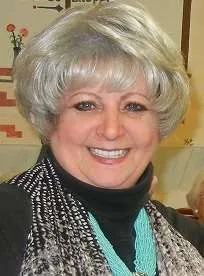
My first memories of Halloween were when I was about 7 when I started to school. I never got to trick or treat before then. The masks back then were awful and were a heavy plastic that were held on by an elastic band around your head. Even in the cold weather they were hot.
Mom drove me all over town to the houses I could visit. The places we stopped were people that dad and mom were in card club with or worked with. So didn’t get to trick or treat more than 20 homes. But it was a big deal to me and I thought I had hit the jack pot with the little sack of candy I ended up with.
When I became a teenager mom thought I could go out on my own. So my group of friends and I hit almost every house in town, and sometimes we went to one more than once. Especially if they had something that we really liked so we would have more pieces of that candy. But my favorite thing was if the women had made cookies.
Yep, back in the 50’s and early 60’s they made home made cookies and they were the best treat of all. But we knew every one at the houses we went to trick or treating so no one worried about the cookies. The ladies in our little town of Mullinville were great cooks too.
Then when I was in high school our idea of fun on Halloween was soaping the windows of the businesses in town. Of course the seniors were paid by the business owners the next day to wash them so everyone had fun with that. Our other fun job on Halloween back then was moving all the lawn furniture from all over town to set up a house in the middle of Main Street.
I lived with the folks for awhile after I finished beauty school. Another change in the fun for Halloween happened then. A friend and I decided one year to go trick or treating and most of the people didn’t know we weren’t high school boys. That was the last time I trick or treated but we sure had fun with it.
Then when I got married and moved to Hutchinson I started to work in a big salon. I convinced the girls in the salon that we should dress up for Halloween. We all went to a costume shop here in town and rented some costumes. The first year my friend and partner in crime dressed up as little Dutch boy and girl. What a fun day that was.
Then when I was working in my salon here at the house I borrowed some overalls from a farmer friend and customer of mine and his straw hat. I wore a plaid shirt that I had with it. I used some black eye shadow to rub on my cheeks and chin to look like a beard shadow. I had some customers that didn’t know me when they came in the shop. That was the best part of the day.
When our first Cocker Spaniel Lady came into our lives it was time to find costumes for her. She could wear a size 3 in a child costume. She seemed to love to get dressed up and go to the nursing homes and visit people and stop and see some people at their homes. Our favorite costume was the one when she was a Holstein cow. She just strutted when she wore it and the udders hanging down didn’t bother her at all. Looked better on her than kids because the udders were in the right position instead of on the kids stomachs.
Lacy was not as thrilled with the costumes but she would wear one so she could go visiting the nursing homes. She was cute in a pilot’s bomber jacket and the skull cap they wore back then. The jacket had on the back 4 paw prints and it said 4 paw squadron.
Since the girls are both gone now Halloween is a quiet night here at the house. No fun with bad knees jumping up and down to give our treats and go down the steps to the back door. So we don’t turn on any yard lights and the kids don’t stop by our house.
So Halloween is just another day in this retired folk’s home now and I usually look at the photos of the girls in their Halloween outfits. Halloween through the years has come full circle from being too young to trick or treat to not being able to do the treats anymore. HOPE YOU ALL HAD A HAPPY HALLOWEEN! To contact Sandy: [email protected].
KU News: KU School of Music to celebrate 50 years of jazz with large celebration
From the Office of Public Affairs | http://www.news.ku.edu
Headlines
KU School of Music to celebrate 50 years of jazz with large celebration
LAWRENCE — The KU Jazz 50th Anniversary Celebration will commemorate a major milestone for the official School of Music jazz program and honor the bands that existed before its inception. The event will feature concerts Oct. 28-29 highlighting alumni of the KU Jazz Studies Program.
Fourth College of Liberal Arts & Sciences executive dean candidate to present Oct. 28
LAWRENCE – The fourth and final candidate for the University of Kansas College of Liberal Arts & Sciences executive dean position will give a public presentation from 2 p.m. to 3 p.m. Friday, Oct. 28, in the Beren Petroleum Conference Center in Slawson Hall. Jeanette Altarriba currently serves as the dean of the College of Arts and Sciences at the University at Albany-State University of New York.
KU Libraries announce 2022 Shulenburger Award for Innovation & Advocacy in Scholarly Communication
LAWRENCE – KU Libraries have granted the 2022 David Shulenburger Award for Innovation & Advocacy in Scholarly Communication to two recipients at the University of Kansas: Shannon O’Lear, director of the Environmental Studies Program, and Corey Rayburn Yung, School of Law research professor. The awards coincide with KU’s celebration of International Open Access Week, which is Oct. 24-30.
Full stories below.
————————————————————————
Contact: Fally Afani, School of Music, [email protected], @MusicKU
KU School of Music to celebrate 50 years of jazz with large celebration
LAWRENCE — The University of Kansas School of Music will be celebrating a major milestone this month with a celebration and concert.
The KU Jazz 50th Anniversary Celebration will commemorate 50 years of the “official” jazz program — and the “unofficial” bands that existed beforehand. The event will feature two concerts highlighting alumni of the KU Jazz Studies Program, both taking place at 7:30 p.m. at the Lied Center of Kansas
On Oct. 28, current performers for KU Jazz Ensemble I will present a tribute to saxophonist and woodwind artist Gary Foster, with guest soloists Steve Houghton (drums), Matt Otto and Paul Haar (saxophones), Ron McCurdy (trumpet), Jeff Harshbarger (bass) and others. Foster, a 1962 graduate of KU and a native of Leavenworth, is one of the most celebrated jazz and commercial music artists from the Los Angeles scene, with performance and recording credits including Barbra Streisand, Natalie Cole, Frank Sinatra and Mel Torme along with a list of some of the most important jazz artists of the past 50 years. He also appears on more than 500 motion picture soundtracks.
The following evening Oct. 29, KU alumni from the past 50 years will perform in big bands and a vocal jazz ensemble, and they will be directed by the program’s four directors—Robert Foster (the founder of the program in 1972), James Barnes, Ron McCurdy and Dan Gailey.
Tickets are available at lied.ku.edu or by phone at (785) 864-2787.
Sponsors include Reach Out Kansas Inc. and the Zakoura Family Fund, a fund of the Greater Kansas City Community Foundation.
About the KU Jazz Studies Program
The KU Jazz Studies Program began its “official” existence in 1972, when Robert Foster, then KU director of bands, formed the first jazz ensemble within the curriculum. Since that time, the program has grown to include three big bands, 11 jazz combos, a vocal jazz ensemble, and numerous classes in jazz and commercial music. In addition to Foster’s direction, the program was led in subsequent years by James Barnes, Ron McCurdy and the current director, Dan Gailey.
The program is now considered one of the premier college jazz programs in the nation. Highlights over the years include the program’s 29 DownBeat Student Music Awards, including eight awards given to KU Jazz Ensemble I in the category of best college big band; invited performances at jazz festivals in Montreux, Umbria (Italy), Vienne (France), New York (Jazz at Lincoln Center) and the Monterey Next Generation Festival in California, along with international conference performances in New York, New Orleans, Detroit, Atlanta, Miami, Chicago and Boston; and additional appearances at the Kennedy Center in Washington, D.C., Jazz at Lincoln Center in New York and the Kauffman Center in Kansas City.
-30-
————————————————————————
The official university Twitter account has changed to @UnivOfKansas.
Refollow @KUNews for KU News Service stories, discoveries and experts.
Tweets by KUnews
————————————————————————
Contact: Evan Riggs, Office of the Provost, 785-864-1085, [email protected], @KUProvost
Fourth College of Liberal Arts & Sciences executive dean candidate to present Oct. 28
LAWRENCE – The fourth and final candidate for the University of Kansas College of Liberal Arts & Sciences (CLAS) executive dean position will give a public presentation from 2 p.m. to 3 p.m. Friday, Oct. 28, in the Beren Petroleum Conference Center in Slawson Hall.
The presentation will be livestreamed, and the passcode is 907615.
Jeanette Altarriba will present her vision for the College in today’s rapidly changing landscape of higher education. The College is the largest academic unit at the university, and the executive dean will strategically and collaboratively lead the school in its scholarly and educational contributions.
Altarriba currently serves as the dean of the College of Arts and Sciences at the University at Albany – State University of New York, a position she has held since 2019, first as interim dean and then as permanent dean. She spent the past 30 years at the University at Albany in numerous leadership positions.
Faculty, staff and students are encouraged to offer their impressions and observations of Altarriba online through a limited-time feedback survey. Feedback on Altarriba’s presentation is due by 5 p.m. Nov. 1. A recording of her presentation will be available the morning after the presentation on the search website until the survey closes.
Each candidate meets with Chancellor Douglas A. Girod, Provost and Executive Vice Chancellor Barbara A. Bichelmeyer, senior administrators, College chairs and directors, KU deans, KU Endowment, the KU Alumni Association, university governance, graduate and undergraduate students, and the College dean’s office executive committee and administrative staff.
As dean of the University at Albany College of Arts and Sciences, Altarriba oversees the largest of all schools and departments on the campus, with 21 academic departments and over a dozen centers and institutes. She is a full professor in the department of psychology and a Collins Fellow, which recognizes faculty deemed exemplars of institutional commitment to the university.
Before this appointment, Altarriba served as the vice provost and dean for undergraduate education, a position she held for six years. She founded and directed the Center for Undergraduate Research and Creative Engagement, an entity devised to foster and develop undergraduate research opportunities to connect students and faculty to further research programs and projects. She has also served as director of the cognition and language laboratory for her entire 30-year tenure. Additionally, she served separately as chair of the department of communication and the department of psychology.
Altarriba is a distinguished scholar in cognitive psychology, particularly in the field of bilingualism and psycholinguistics. She is a co-editor of eight books, and author or co-author of more than 150 journal articles and book chapters in the areas of language processing, bilingualism, emotion, memory, perception and multicultural mental health counseling.
Altarriba earned a bachelor’s degree from Florida International University in psychology and a master’s and doctorate in cognitive psychology from Vanderbilt University. She completed postdoctoral research training at the University of Massachusetts, Amherst.
-30-
————————————————————————
Subscribe to KU Today, the campus newsletter,
for additional news about the University of Kansas.
http://www.news.ku.edu
————————————————————————
Contact: Alicia Marksberry, KU Libraries, [email protected], @kulibraries
KU Libraries announce 2022 Shulenburger Award for Innovation & Advocacy in Scholarly Communication
LAWRENCE – KU Libraries have granted the 2022 David Shulenburger Award for Innovation & Advocacy in Scholarly Communication to two recipients at the University of Kansas: Shannon O’Lear, director of the Environmental Studies Program, and Corey Rayburn Yung, School of Law research professor.
The announcement coincides with KU Libraries’ celebration of International Open Access Week, which is Oct. 24-30. The recipients will be honored at a later date.
O’Lear was chosen as a recipient for her dedication to the open dissemination of scholarly work to open access (OA) journals and sites and her work in educating students on open publication. Yung is recognized for his publication of two OER law textbooks that have helped reduce costs for students in a particularly expensive field of study.
Shannon O’Lear: Educating and engaging with open access
O’Lear has engaged in OA and OER in many facets of her work. Within the past two years, she published work to open sites, received grant awards for OER development and course integration, and received training through a flexible course design boot camp offered by the Center for Teaching Excellence.
“Dr. O’Lear is leaning into open practices in exciting and innovative ways, such as co-authoring and publishing with undergraduate students in an open journal and by creating assignments that engage students in authentic environmental issues through openly licensed and publicly available podcasts that benefit future students and other interested folks,” said Josh Bolick, head of the David Shulenburger Office of Scholarly Communication & Copyright. “It’s exciting to see these collaborations impact student learning and experiences.”
O’Lear is especially engaged with her undergraduate students. She collaborated with KU librarians to educate her students on Creative Commons licenses, encouraging them to share their own work beyond the classroom. She created a renewable podcasting assignment for her students, whose resulting works, “Podcast Perspectives on Environmental Geopolitics,” were compiled into Pressbooks, a sustainable and open resource. O’Lear also invited undergraduate students to be her collaborators on a proposal report to be published in KU ScholarWorks, KU’s open digital repository.
“It is encouraging that the Shulenburger Award for Innovation & Advocacy in Scholarly Communication exists, because it demonstrates that creating and sharing knowledge without boundaries is valued here. I am honored and delighted that the work I have been doing is being recognized by this award,” O’Lear said. “I have also been fortunate to have support through an Open Educational Resources grant from The Commons and KU Libraries as well as funding and collegial support from the Center for Teaching Excellence.”
Corey Rayburn Yung: Far-reaching impacts through OER
Concerned about the affordability of course materials used in his classroom and their overly broad scope and outdated laws, Yung decided to publish two OA textbooks, Sex Crimes and Criminal Law.
“Law school materials are insanely expensive and not very flexible or adaptable, even for professors, so you end up with a system that doesn’t really work well for anyone, which is why I started writing some open access materials,” Yung said. “I’m surprised at the response and am very excited and honored.”
When Yung began teaching the first sex crimes course at KU, no suitable course materials existed and had to create his own. After many years of using his own materials, Yung made them publicly available in Sex Crimes. His second open access book, Criminal Law, can be adapted by instructors to reflect local jurisdictions and includes a teacher’s manuals, classroom slides, videos and review assignments. His free and open textbooks are now used in universities across the country.
“Professor Yung demonstrates a deep and sustained interest in decreasing costs for law students by creating multiple editions of two open textbooks that are adopted widely,” Bolick said. “In a field known for costly education, that’s an important contribution.”
Granted annually, the Shulenburger Award for Innovation & Advocacy in Scholarly Communication recognizes KU staff, faculty, students and academic departments that engage in outstanding efforts to facilitate open access. Former KU Provost and Executive Vice Chancellor David Shulenburger, a longtime advocate for open access, established the award with a private gift in 2014 to recognize KU community members demonstrating exceptional advocacy and innovation in the scholarly communication system.
Learn more about open access news, policy and impact at KU.
-30-
————————————————————————
KU News Service
1450 Jayhawk Blvd.
Lawrence KS 66045
Phone: 785-864-3256
Fax: 785-864-3339
[email protected]
http://www.news.ku.edu
Erinn Barcomb-Peterson, director of news and media relations, [email protected]
Today’s News is a free service from the Office of Public Affairs
The Medicare Open Enrollment period has begun!

The Medicare Open Enrollment period has begun! Each year from October 15 to December 7 Medicare beneficiaries may compare plans and make changes in their drug plan (Part D) or Medicare Advantage plan during this open enrollment period. Those changes will take effect on January 1.
Medicare drug plans are allowed to change their cost and coverage rules from year to year, so it is important to read the Annual Notice of Change received each year to see if there are any changes that affect you.
Plan changes may affect your monthly premium, deductible, out of pocket maximum, drug co-pays and your pharmacy, doctor or hospital choices. It is important that you review your plan options each year during open enrollment to make sure you are receiving the most affordable price and minimize out-of-pocket costs.
There are many trained senior health insurance counselors at the K-State Research & Extension Office in Newton and around Harvey County who are ready to help you free of charge. Please contact one of the offices below to schedule an appointment to review your Medicare Part D drug plan or Medicare Advantage plan.
K-State Research and Extension – Harvey County Office 316-284-6930
Harvey Co Dept on Aging 316-284-6880
Grand Central Senior Center 316-283-2222
Sedgwick Senior Center 316-772-0393
Hesston Senior Center 620-327-5099
Kidron Bethel 316-284-2900
Newton Presbyterian Manor 316-281-4363
Trinity Heights United Methodist Church 316-283-6410
KU News: Study sheds light on how songs, movies and memories shape how people enjoy lighthearted entertainment
From the Office of Public Affairs | http://www.news.ku.edu
Headlines
Study sheds light on how songs, movies and memories shape how people enjoy lighthearted entertainment
LAWRENCE — A new study from the University of Kansas has found that people tend to have more memories associated with older songs and movie clips than newer ones, and they tend to be happier memories as well. People also tend to appreciate content that triggers a memory more, and the findings — from a KU assistant professor of journalism & mass communications — help shed light on why people often find meaning in lighthearted entertainment such as pop music or superhero movies. The study was published in the Journal of Communication.
Kansas Public Radio wins Station of the Year for record 21st time
LAWRENCE — Kansas Public Radio, based at the University of Kansas, has earned the Station of the Year award for a record 21st time from the Kansas Association of Broadcasters (KAB) and received 17 individual accolades, including eight first place awards, four second place awards and five honorable mention awards. Winners were recognized at an awards dinner during the KAB Annual Convention in Manhattan on Oct. 24.
‘How the Light Gets In’ shares experiences of formerly incarcerated women through interactive installation
LAWRENCE — A multisite exhibition opening Nov. 3 at the Spencer Museum of Art and Lawrence Public Library shares the experiences of formerly incarcerated women reentering society. The interactive installation “How the Light Gets In” was created by artist Sarah Newman in collaboration with Hyunjin Seo and the KU Center for Digital Inclusion in the William Allen White School of Journalism & Mass Communications.
Center for East Asian Studies opens year of public health programming with film screenings
LAWRENCE — Public health is the focus of programming from the Center for East Asian Studies this year, beginning with a film series Oct. 25-28 at the Kansas Union. The series opens with the Academy Award-winning film “Parasite” at 6 p.m. Tuesday. The four feature films deal with diverse public-health related issues and will be followed by discussions led by KU faculty and graduate student commentators.
Full stories below.
————————————————————————
Contact: Mike Krings, KU News Service, 785-864-8860, [email protected], @MikeKrings
Study sheds light on how songs, movies and memories shape how people enjoy lighthearted entertainment
LAWRENCE — That song really takes me back.
We’ve all heard a song or seen a movie that brings back a memory or reminds us of an earlier time. A new study from the University of Kansas has found that people tend to have more memories associated with older songs and movie clips than newer ones, and they tend to be happier memories as well. People also tend to appreciate content that triggers a memory more, and the findings help shed light on why people often find meaning in lighthearted entertainment such as pop music or superhero movies.
Researchers played song clips from artists either from the current day or roughly 10 years ago and did the same with movie clips, then asked research participants about any associated memories from the samples. Older entertainment evoked more memories, and people appreciated older music more as well. They appreciated both forms more when they activated memories, regardless of when it was released.
“What we’re trying to do is understand what happens when we encounter media and how that affects us. We also look at the implications regarding our sense of identity,” said Judy Watts, assistant professor of journalism & mass communications at KU and a co-author of the studies. “People often travel mentally back to a time period when they re-encounter beloved media, but we want to unpack what exactly they’re experiencing when they do that. Did they have appreciation, happiness or other emotions? Music was picked for the first study because it tends to be especially nostalgic. The second study was designed to see if those same effects would happen with audiovisual cues.”
The studies, written with co-authors James Alex Bonus and C. Joseph Francemone of Ohio State University, was published in the Journal of Communication.
For the music-based study, more than 400 college students heard six song selections from an artist, released either in 2020 or roughly a decade earlier, during their early adolescence from artists such as Taylor Swift, John Legend or Charli XCX. They were asked whether the song activated a memory, and if so to describe the memory. They were also asked about their memory engagement with statements such as “I was so young and naïve in this memory,” “life was so much simpler at the time of this memory” or “I felt completely immersed in this memory.”
For the second study, more than 400 college students were similarly shown clips from a recent or older movie, such as “Frozen” or “Frozen II,” or “Avengers: Endgame” or “Guardians of the Galaxy.” They were then asked the same questions about whether the media had associated memories, and of what type.
As expected by the researchers, study one results showed older music produced more memory recall and the songs were more appreciated. Additionally, the memories associated with older music were also older, more positive and had more downward temporal comparisons — meaning participants felt that while the memories were positive, they also believed their lives were better now than at the time of the memory. Whether a memory was specific or more social did not vary widely, but several variables such as memory recall, memory immersion and positive effect were predictors of appreciation. That suggests people appreciate any type of entertainment that activates a memory, the researchers wrote.
The study with movie clips replicated most of the memory-related findings from that conducted with music, particularly older pieces of media having more associated memories, and those being older, more positive and having more temporal comparisons. One notable difference was that specific memories were a predictor of appreciation of the content versus general memories — and were associated with less appreciation. Also, appreciation did not differ between older and newer movies, but people had a higher level of appreciation overall for movies versus music.
The findings help further understanding of autobiographical memory and how media effects are part of such mental processes. While it has long been understood and accepted that a song, movie or other piece of popular media can trigger a memory, little research has been conducted on whether these memories result in meaningful experiences. In contrast, media effects research tends to focus on more “meaningful” media, such as highly regarded, classic or highbrow forms of entertainment, not necessarily lighter fare such as pop songs, superhero movies or other popular forms of entertainment, Watts said. Better understanding of the emotional outcomes of such media-induced reminiscence is important as well, as such media can potentially help people deal with stress and negative feelings. That is especially true of the temporal findings explored in the study, or whether people feel like life was better at the time of a memory induced by media, or if they are doing better now than when they were younger, and what types of memories are associated with appreciation of media.
“We tend to assign meaning to pieces of entertainment we experience in formative times of our lives. That’s typically cast off as something that’s not particularly meaningful,” Watts said. “But we think it matters because it’s about how you experienced it, often with people we care about, and when we revisit it, we can feel warm, happy or other emotions. We’re interested in the psychological processes of memory and media, and it is one way, I think, to speak to a person’s memories, how they connect media to a time, place or people.”
-30-
————————————————————————
The official university Twitter account has changed to @UnivOfKansas.
Refollow @KUNews for KU News Service stories, discoveries and experts.
Tweets by KUnews
————————————————————————
Contact: J. Schafer, Kansas Public Radio, 785-864-2246, [email protected], @KPRNews
Kansas Public Radio wins Station of the Year for record 21st time
LAWRENCE — Kansas Public Radio, based at the University of Kansas, has earned the Station of the Year award for a record 21st time from the Kansas Association of Broadcasters (KAB). The KAB announced the award Aug. 18. The Station of the Year award was first presented in 1996. KPR won the prize that first year and has now earned the KAB’s highest honor more than any other radio or TV station in the state.
In addition to the coveted top prize, the public radio station received 17 individual accolades, including eight first place awards, four second place awards and five honorable mention awards.
The individual honors were earned in hard news feature/enterprise story, station excellence, sports feature, excellence in diversity/equity/inclusion news, station website, public service announcement, editorial/commentary, complete newscast by local station, spot news, special program, excellence in multimedia/digital storytelling and public affairs program. This year’s individual awards for KPR:
Hard News Feature/Enterprise Story
Honorable Mention: “Kansas Governor Promotes $1 Billion Incentives Package to Attract Mystery Manufacturer,” by Jim McLean
Station Excellence
First place: Kansas Public Radio, “Winning at Broadcasting Since 1952,” KPR staff
Sports Feature
First place: “It’s Rodeo Season in Kansas and a Rodeo Museum May Be in the Works,” by Greg Echlin, J. Schafer (editor)
Second place: “A Man with a Tail, a Crown and a ‘Dream Job’ as the Royals’ Mascot,” by Jim McLean
Honorable Mention: “Kansas Jayhawks Seek Revenge in 16th Final Four Appearance,” by Greg Echlin, J. Schafer (editor)
Excellence in Diversity/Equity/Inclusion News
First place: Conversations: “What’s Up with White Women? Unpacking Sexism and White Privilege in Pursuit of Racial Justice,” by Dan Skinner
Honorable mention: Conversations: “Forever Boy: A Mother’s Memoir of Autism and Finding Joy,” by Dan Skinner
Station Website
Second place: KansasPublicRadio.org, managed by KPR Staff, Danny Mantyla
Public Service Announcement
Honorable mention: “Stopping the Coronavirus Starts with Me and You,” by Kaye McIntyre, KPR Staff
Editorial/Commentary
Second place: “Thinking of Baseball in the Cold of Winter and Remembering a Kansas Great,” by Rex Buchanan
Complete Newscast by Local Station
First place: “All Things Considered News with Laura Lorson,” Laura Lorson
Second place: “All Things Considered News with J. Schafer,” J. Schafer
Spot News
First place: “Right-Wing Extremism Has Been Taking Root in Rural Kansas for Decades,” by Jim McLean
Special Program
First place: Conversations: “The Sleep Deprived Teen,” by Dan Skinner
Excellence in Multimedia/Digital Storytelling
First place: The KPR Presents Book Club: “The Queen’s Gambit,” by Kaye McIntyre
Honorable mention: The KPR Presents Book Club: “Sitting Pretty,” with Rebekah Taussig, by Kaye McIntyre
Public Affairs Program
First place: KPR Presents: “A Remembrance of Bob Dole,” by Kaye McIntyre.
The Kansas Association of Broadcasters recognized this year’s winners at an awards dinner during the KAB Annual Convention in Manhattan on Oct. 24.
-30-
————————————————————————
Subscribe to KU Today, the campus newsletter,
for additional news about the University of Kansas.
http://www.news.ku.edu
————————————————————————
Contact: Elizabeth Kanost, Spencer Museum of Art, 785-864-0142, [email protected], @SpencerMuseum
‘How the Light Gets In’ shares experiences of formerly incarcerated women through interactive installation
LAWRENCE — A multisite exhibition opening Nov. 3 at the Spencer Museum of Art and Lawrence Public Library shares the experiences of formerly incarcerated women reentering society. The interactive installation “How the Light Gets In” was created by artist Sarah Newman in collaboration with Hyunjin Seo and the KU Center for Digital Inclusion in the William Allen White School of Journalism & Mass Communications.
Newman and Seo, Oscar Stauffer Professor of Journalism, collaborated with women in reentry through creative workshops. The resulting project is designed to create conversation about the structural barriers and societal biases that these women experience.
“The work is intended to invert and complicate the normal expectations of knowledge in society,” Newman said. “Who holds knowledge and wisdom, and who is situated to teach or transmit that knowledge to others?”
The women in the program wrote texts that will be displayed through immersive installations at both the Spencer Museum and Lawrence Public Library. Printers in each space will continuously print out statements by these women that visitors can read and take with them. Visitors are also invited to share their experiences by responding to prompts on laptops in both spaces, which will also be sent to the printers’ queues. Informed by the wisdom of the women in this program as well as of the audience, this exhibition encourages viewers to approach others with compassion, curiosity and humility.
“The Center for Digital Inclusion is pleased to collaborate with artist Sarah Newman, the Spencer Museum of Art and Lawrence Public Library on this exhibition providing women in our technology education program an opportunity to offer insights and communicate with a broader public,” Seo said.
“How the Light Gets In” will remain on view at the Spencer Museum and Lawrence Public Library through Jan. 8, 2023. The exhibition and related programs are supported by the National Endowment for the Arts, the Kansas Creative Arts Industries Commission, the Mellon Foundation and the Linda Inman Bailey Exhibitions Fund.
Related programming
The Return Project: Women in Reentry, Technology Education, and Artistic Collaboration
Nov. 3: 4-6 p.m., Spencer Museum of Art
The opening reception of “How the Light Gets In” will include a panel discussion with project participants and gallery talk with artist Sarah Newman.
Teen Zone Expanded: Printmaking
Nov. 30: 2-4 p.m., Lawrence Public Library
Spencer Museum staff will lead a printmaking activity in the Library’s Teen Zone inspired by the writings of formerly incarcerated women that are included in “How the Light Gets In.”
Gallery Talk: “How the Light Gets In”
Dec. 8: 10:15–11 a.m., Spencer Museum of Art
Spencer Curator Joey Orr discusses themes in artist Sarah Newman’s installation “How the Light Gets In.”
-30-
————————————————————————
Don’t miss new episodes of “When Experts Attack!,”
a KU News Service podcast hosted by Kansas Public Radio.
https://kansaspublicradio.org/when-experts-attack
————————————————————————
Contact: LaGretia Copp, Center for East Asian Studies, 785-864-0307, [email protected], @KUEastAsia
Center for East Asian Studies opens year of public health programming with film screenings
LAWRENCE — Public health is the focus of programming from the Center for East Asian Studies this year, beginning with a film series Oct. 25-28 at the Kansas Union. The four feature films deal with diverse public-health related issues and will be followed by discussions led by KU faculty and graduate student commentators. All films are free and open to the public.
1. “Parasite” (Korean): 6-8:45 p.m. Tuesday, Oct. 25, Kansas Union, Divine Nine Room. Discussion led by Yan Bing Zhang, professor of communication studies.
2. “The Farewell” (Chinese): 6-8:30 p.m. Wednesday, Oct. 26, Kansas Union, Centennial Room. Discussion led by Changming Duan, professor of educational psychology.
3. “Go Away Mr. Tumor” (Chinese): 6-8:30 p.m. Thursday, Oct. 27, Kansas Union, Divine Nine Room. Discussion led by Hui Cai, associate professor of architecture.
4. “The House Where the Mermaids Sleep” (Japanese): 6-8:45 p.m. Friday, Oct. 28, Kansas Union, Divine Nine Room. Discussion led by Brad Cokelet, associate professor of philosophy.
The film series is part of the Center for East Asian Studies’ Title VI grant activities. Its 2022-2026 grant uses the conceptual frame of “Global Asia” to address diverse perspectives on nationally and internationally pressing issues. This year’s theme, shared by all KU area studies centers, is public health. It will address various related issues and concerns through educational activities such as a movie series, workshops and a spring conference. The intent is to support interdisciplinary discussions of structural inequalities, social well-being, mental health, environmental injustice and culturally specific medical practices through the lens of “global Asia.”
The importance of public health cannot be overstated, according to Akiko Takeyama, CEAS director.
“COVID-19 opened our eyes to the issue of public health that impacts our lives in many different ways: reliable resources, preventive medicine, structural inequalities, care work and culturally different reactions to the issue,” Takeyama said. “Thus, the theme of public health addresses not only science, medicine and technology but also social relations, cultural practices and a wide range of different experiences. Our center’s mission intersects with what the Title VI grant expects of us: to provide Asian cultures and studies to reflect a wide range of perspectives and generate meaningful dialogues. It is our pleasure to shed light on public health in a global context through the lens of Asia.”
To achieve these goals, the center created a public health steering committee consisting of CEAS- affiliated faculty from education, architecture, communication studies and philosophy. This interdisciplinary committee works collaboratively and shares ideas and insights on public health issues through their diverse perspectives. The committee hopes the film series will start an open-ended conversation leading toward a two-day spring symposium in April 2023. The goal of the symposium, according to Ayako Mizumura, CEAS academic director and steering committee chair, is “to bring graduate students and faculty together to foster further active interactions, knowledge exchanges and academic collaboration” and to create a “community building tool among faculty, public scholars and students, as well as local community members.”
-30-
————————————————————————
KU News Service
1450 Jayhawk Blvd.
Lawrence KS 66045
Phone: 785-864-3256
Fax: 785-864-3339
[email protected]
http://www.news.ku.edu
Erinn Barcomb-Peterson, director of news and media relations, [email protected]
Today’s News is a free service from the Office of Public Affairs
