

Bill Dean Williams, 76, of McPherson, KS, died October 17, 2022. Arrangements are with Stockham Family Funeral Home, McPherson. (website: www.stockhamfamily.com)
Lovina’s Community Pulls Together for Benefit Dinner
Lovina’s Amish Kitchen
Lovina Eitcher,
Old Order Amish
Cook, Wife &
Mother of Eight
Our house feels nice and cozy since Joe started our coal stove in the basement. With the temperature outside at 61 degrees, it’s almost too warm, so I have some windows open. It’s too cold in here without heat and too warm with heat. I imagine it won’t be long before we will be needing the coal stove going full blast.
Saturday we plan to attend my family gathering at brother Albert’s.
Yesterday I spent the day at Susan’s friend Ervin’s house. Susan and I washed off walls and ceilings, cabinets, etc. Ervin has most of his belongings there but has a lot of unpacking to do. The children were excited to show me their bedrooms.
All five children had a disappointment on Sunday night. Ervin and Susan had bought them a miniature pony that had just been weaned from his mom. They led this pony everywhere and became attached to him fast. He was a calm little pony, just perfect to entertain five little children. On Sunday night they saw it wasn’t acting right and called the vet. But before he came out, the pony died. The vet thinks it had something to do with being away from his mom and maybe developing parasites. He said weanlings have been known to do this. Well, little four-year-old Jennifer’s explanation was, “We need to get a pony that’s not allergic to our food.” She thinks the pony was allergic.
We had a good outcome with the benefit grilled chicken and pulled pork dinner on Friday evening, to help Dustin and Loretta with hospital and ongoing medical expenses. We appreciated everyone that helped in any way. It takes many hands to do a benefit like this.
The menu was pulled pork, grilled chicken, chicken noodle soup, baked beans, potato salad, peanut butter, strawberry, pecan, and pumpkin pies, lemonade, and coffee. To prepare for this we had one hog roasted, but we ran out so we could’ve had two. We had 1200 pounds of grilled chicken and it took 700 pounds. (The rest was taken around to places in a nearby community for donation.) It is so hard to know how much to have as you don’t have any idea how many people will show up, and we had carry-outs available, too. We bought 80 pounds of noodles from an Amish bulk food store, and 75 quarts of chicken broth were donated by the local families. There were 23 kettles (12-quart size) of chicken noodle soup made. It took 21 kettles. Women in the community made 30 gallons of potato salad and 30 gallons of baked beans. We had more than enough of that. Close to 130 pies came in, and we ran out of strawberry and peanut butter pies.
Son-in-law Dustin had a birthday on Saturday, October 8 (the day after the benefit). Loretta baked him a cake and brought it here Sunday for our noon meal. Daughter Elizabeth, Tim, and four children, daughter Susan and two children, Ervin and three children, daughter Verena, and sister Verena were all here. We had mashed potatoes, gravy, chicken noodles, chicken, baked beans, potato salad, pecan and pumpkin pies, and cake. A lot of the food was leftovers from the benefit so the meal was easy.
Deer hunting season is in (bow season). Son-in-law Tim shot two and daughter Lovina’s special friend Daniel shot two, also. One was an eight-point buck. Tim is making jerky with some of his deer.
Sister Verena spent a few nights here. Her heat wasn’t on yet so her house was quite chilly.
God’s blessings to all!
Glazed Sweet Potatoes
2 pounds medium sweet potatoes or 2 (18-ounce cans) sweet potatoes, drained
1/4 cup butter or margarine
1/4 cup maple-flavored syrup
1/4 cup packed brown sugar
1/4 teaspoon ground cinnamon
If using fresh sweet potatoes, place in a kettle; cover with water and cook, covered for 25–35 minutes or just until tender. Drain; cool slightly. Peel and cut into chunks. Place cooked or canned sweet potatoes in a 2-quart baking dish. In a small saucepan, combine butter, syrup, brown sugar, and cinnamon; cook and stir until mixture boils. Pour over potatoes. Bake at 350 degrees for 30–40 minutes.
Prey For Me
Working with animals like we do we quickly learn that they can easily be divided into either prey or predator. Baby lambs, calves and purse dogs are prey to predators like wolves, coyotes and eight year old 4H showmen. Antelope, horses, crippled bison, female joggers wearing headphones and guys on bicycles are prey to mountain lions. Homeowners are prey to couples in nice clothes peddling religion door to door while pretty much every living thing in the sea is prey to the 150 ton blue whale. Looky-loos on car lots are prey to used car salesmen, heavy-footed drivers are prey to highway patrolman, cows fall prey to predatory veterinarians with long arms on preg checking day and girly boys in school are prey to bullies on the football team.
Sometimes roles can change and something can go from being the predator to the prey and vice versa, like the coyote who attacks sheep who then falls prey to the human predator with a rifle. Or rattlesnakes whose poisonous fangs make them dangerous predators but become prey to ranchers and roustabouts with sharp shovels. The tormenting bully is a predator until he becomes the prey who is expelled from school by a predatory principal. Consider the mosquito who is a painful predator every time I go outside but I turn into the predator when I nail a mosquito with a nasty slap to my own face. (In that case I’m both the predator and the prey simultaneously.) The best example of a human who can be either be prey or predator is someone who ranchers deal with regularly: their banker.
I’ve known two bankers in my life who are named Jim and they are both nice, honest, fair and they bent over backwards to lend money to well-meaning folks with a dream. In my case Jim loaned me $300 so I could buy my first show steer even though all I had for collateral was a three legged dog. In my case, I was the predator and Jim was the prey. But Jim did more than loan me money; he gave me a tour of the bank, took me inside the vault and made me feel like a real business man and as a result I banked with the bank Jim was employed by for 40 years until they were swallowed up by a huge bank that didn’t have any Jims working for them.
My next experience with a banker was not so great. My wife and I had an agreement to borrow $100,000 to build our dream home on a great piece of real estate we used as collateral. But when it came time for the bank to give us the first one-third of the money the predatory banker informed us that there might be a problem with the loan. To make a long story short, we finally got the money, paid off the entire loan within three years and have not borrowed money from a banker ever since!
My mom dealt with banks every day because she worked for the FDIC after my folks divorced. Her job was to travel all over the country shutting down banks that had gone belly up. As a result I have a fabulous collection of bank bags from bankrupt banks. My mom’s job was to get rid of all the loans on the books of the broke banks and in thousands of cases this meant telling good loyal bank customers that they’d have to either pay off their loan or find alternative financing. Immediately! This turned my mom into the most menacing predator in the country.
One day at a bank in western Colorado a rancher looked at my mom’s name badge and said, “Pitts, huh. You wouldn’t by chance be related to that guy who writes for the newspaper?”
She replied proudly, “Yes, he’s my son.”
Prior to my mom’s admission I had several newspapers and magazines in the area who used my column but within three months I had none. Zero! Zip! Nada! I told my mom, “You have to quit telling people you’re related to me. It’s killing my business!”
So, in the future if you can’t find my column you’ll know I was a victim of my deceased mom, the predator, who made “Pitts” a bad name from coast to coast.
www.LeePittsbooks.com
Apple Cobler Shortbread Squares
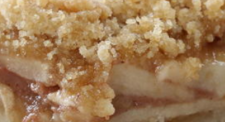
Imagine the taste of your favorite apple pie, combined with the taste of your favorite apple cobbler, served on a homemade shortbread crust. That’s exactly what these Apple Cobbler Shortbread Squares taste like! This is a great apple dessert bar to make in the fall or anytime you get a craving for something apple-icious!
Serves: 12
Cooking Time: 45 minutes
What You’ll Need:
- CRUST
- 1 stick butter
- 1/4 cup granulated sugar
- 1 teaspoon vanilla extract
- 1 cup all-purpose flour
- 1/4 teaspoon salt
- FILLING
- 3 large apples, peeled, cored, and thinly sliced
- 3 tablespoon granulated sugar
- 2 tablespoon all-purpose flour
- 1 teaspoon ground cinnamon
- 1/4 teaspoon ground nutmeg
- TOPPING
- 1 cup light brown sugar
- 3/4 cup all-purpose flour
- 6 tablespoon butter, softened
What To Do:
- Preheat oven to 300 degrees F. Coat an 8-inch square baking dish with cooking spray.
- In a medium bowl, beat 1 stick butter, 1/4 cup sugar, and the vanilla until creamy. Add 1 cup flour and 1/4 teaspoon salt; mix well. Press mixture evenly into baking dish. Bake 15 minutes.
- Meanwhile, in a large bowl, combine Filling ingredients; mix until apples are evenly coated. In a medium bowl, combine Topping ingredients; mix until crumbly. Sprinkle half the topping over crust. Increase oven temperature to 350 degrees F.
- Place apple mixture in an even layer over crust. Sprinkle with remaining topping.
- Bake 30 to 35 minutes or until toothpick comes out clean. Let cool 2 hours then refrigerate 2 hours. Serve or store in an airtight container.
Beef, climate and what it has to do with your diet
A webinar titled “Choosing a climatarian diet: Beef as an ultimate climate-smart food” featured a panel of speakers ranging from a cattle rancher to a chef. The event was sponsored by the Cattlemen’s Beef Board.
Featured on the panel was Billy Gascoigne, national director of agriculture and strategic partnerships at Ducks Unlimited; Robbie LeValley, cattle rancher from Colorado; Jared Block, key account manager, Brew-to-Moo program, Wilbur-Ellis; Clay Mathis, PhD, director and endowed chair, King Ranch Institute for Ranch Management at Texas A&M University-Kingsville; Mary Cressler, founder of Vindulge and author of Fire + Wine cookbook; and Jess Pryles, meat scientist; creator and CEO of Hardcore Carnivore moderated the panel.
Consumers don’t have to be worried about the beef on their plate being sustainable, and a climatarian diet is one that incorporates beef—instead of excluding it and other animal protein sources. The panelists hoped to help those watching uncover the role beef production plays in a climate-smart food system.
Beef’s role in climate smart food for Mathis is one that achieves three accomplishments—it feeds people, and in the process of producing the beef, cattle help with plant root growth, which reduces erosion and produces clean water.
“And the third thing is, cattle can upcycle nutrients—graze for forages and turn it into a human edible protein product,” he said. “Those three things—that’s climate friendly to me.”
Block agreed. Especially since at Wilber Ellis Nutrition researchers are working to harness the unique functions of the rumen in cattle.
“They’re able to upcycle vast majority of available proteins and fats and starches and all sorts of organic materials that otherwise in a lot of these situations would go to some sort of wasteland type situation,” he said.
In conservation, Gascoigne has learned that by keeping cattle on the landscape grasslands continue to stay in working order.
“But when thinking about carbon in a climate context, we need to think about not only the ability to pull carbon out of the atmosphere, but actions on the landscape that result in more carbon going into the atmosphere,” he said.
Grazing helps retain more carbon in the soil. Mathis said under the right management the waste from animals can help maintain or keep some of the carbon within the soil, along with some of the co-products and food by-products that are being fed to livestock instead of potentially going into landfills. Or those products that produce and release gases into the environment are reduced when livestock are using it.
LeValley said in the climate change conversation it is often reported that if livestock were simply removed from the landscape and food chain, then climate change would be addressed. She knows that’s simply not true.
“We know from research, and we know from a practical standpoint, and we literally know from generations of observation that when you remove the ability to graze or to harvest these landscapes, then the root mass under the significant amount of these grass species then is not as deep and as not as high volume,” she said. “And that alone is part of the reason we do have that ability to store carbon.”
Additionally, if the grass species are not actively managed and harvested, the leaves become thinner, narrower and thus reduce photosynthesis as well as the number of buds that initiate into leaves.
“So simply removing animals from a landscape while these grass species will still be here will not have that larger volume of root mass or the wider and thicker leaves,” she said. “Which then actually reduces the resiliency to handle the climatic changes that we see with the droughts that are here on the western landscape.”
Pryles said she hears the argument if the cattle weren’t around, there’d be more land available to grow crops. But that’s not necessarily true, and LeValley said the majority of her Colorado rangelands are in areas that can’t be farmed.
“You would not see a human out here utilizing this grass right here, or this shrub, or any of the landscape here, but our wildlife does, and our soil microbes do and our threatened species do, as well as our livestock,” she said. “We’re efficient with providing that food security and the food supply for an ever increasing nation.”
She’s thrilled the cattle can utilize the grass, taking the cellulose and turning it into a high quality protein consumers can enjoy. Mathis thinks this is a great perspective to have.
“If we if we consider that about 30% of the land in the United States isn’t land that we can farm and produce food for humans,’ he said. “But much of that is land that can be used for grazing cattle and we go back to the whole idea of upcycling, they can go graze that and when they do they take that that forage in and they convert it to beef.”
Learn more about beef’s role in the climate solution at https://www.beefitswhatsfordinner.com/raising-beef.
As reported in the High Plains Journal
