
Every day in the clinic or hospital I meet extraordinary caregivers. They are the ones who have gone above and beyond the call of duty; sometimes for years at a time. When you ask them how they do it, they shrug and smile. I am not talking about any doctor, nurse, or therapist. I am referring to those who care for and look after their elderly friends and family members. This can be a spouse, adult child, adult grandchild, neighbor, or even a good friend.
There are many reasons that people volunteer to be caregivers. Spouses can often not imagine living apart from each other. Adult children and grandchildren may want to return the care that they were given growing up. Neighbors often have a relationship of caring that spans years. Whatever the reason, these people answered the call for help.
Those who have stepped up to care for another person deserve our praise and admiration. What they also need and deserve is our help and support. Caring for another person around the clock can be exhausting. Chronic health conditions, like dementia, incontinence issues, or balance issues, can further complicate that care. Caring for someone else can cause a strain in relationships between spouses, siblings, and extended family. I have seen caregivers ignore their own health and refuse admission to the hospital for themselves. They do this because they fear that there will be no one to care for their loved one if they are not there.
The responsibility for caring for another person can affect all aspects of life for the caregiver. Jobs, school, and vacations can be challenging when taking on a full time caregiving role. Even a trip to the grocery store is complicated when caring for someone who needs constant supervision to be safe. There are resources to help caregivers, but finding them can be difficult.
Many caregivers do not know where to look for help. Adult daycare or respite care for weekends or nights can be difficult to find or prohibitively expensive. There are several national organizations with resources such as AARP, the Alzheimer’s Association, Family Caregiver Alliance, and the National Council on Aging. These organizations all have websites with great tips that can offer support for caregivers.
Do not forget to reach out to your family member’s primary care physician or clinic care coordinator. They may be able to help you reach out to local resources and support groups. Know that caregivers should never do this all alone. We want to help and support the care you give. The goal is keeping everyone happy, healthy and well cared for – including the caregiver. Thank you for all you do. How can we help?
Jill Kruse, D.O. is part of The Prairie Doc® team of physicians and currently practices as a hospitalist in Brookings, South Dakota. Follow The Prairie Doc® at www.prairiedoc.org and on Facebook featuring On Call with the Prairie Doc®, a medical Q&A show providing health information based on science, built on trust, streaming live on Facebook most Thursdays at 7 p.m. central.
Caring for the Caregiver
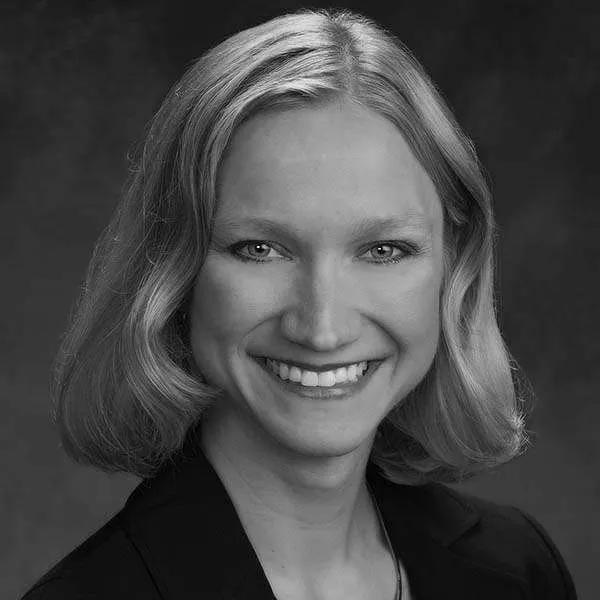
KU News: KU physicist named to Class of 2022 MacArthur Fellows

From the Office of Public Affairs | http://www.news.ku.edu
Headlines
KU physicist named to Class of 2022 MacArthur Fellows
LAWRENCE — The fellowship — widely known as a “genius grant” — is an $800,000, no-strings-attached award to extraordinarily talented and creative individuals as an investment in their potential. The program is intended to encourage people of outstanding talent to pursue their own creative, intellectual and professional inclinations.
First College of Liberal Arts & Sciences dean candidate to present Oct. 17
LAWRENCE — Alfred López is one of four candidates who will present their vision for the College in today’s rapidly changing landscape of higher education. López currently serves as the head of the School of Interdisciplinary Studies at Purdue University, a position he held in the interim on two separate occasions before receiving a permanent appointment in 2022.
KGS scientist, partners receive NSF funding to expand program to reduce barriers in STEM occupations
LAWRENCE — A National Science Foundation grant will allow a researcher from the Kansas Geological Survey and her collaborators at seven other institutions to expand the reach of a program designed to reduce hostile workplace climate barriers that individuals face when entering STEM occupations. Blair Schneider, KGS science outreach manager and associate researcher, will lead the development of a trainer certification program and oversee logistics related to workshops offered by the ADVANCEGeo program.
Full stories below.
————————————————————————
Contact: Erinn Barcomb-Peterson, 785-864-8858, [email protected]
KU physicist named to Class of 2022 MacArthur Fellows
LAWRENCE — The MacArthur Foundation announced Steven Prohira, assistant professor in the Department of Physics & Astronomy, as a Class of 2022 MacArthur Fellow.
The fellowship — widely known as a “genius grant” — is an $800,000, no-strings-attached award to extraordinarily talented and creative individuals as an investment in their potential. The program is intended to encourage people of outstanding talent to pursue their own creative, intellectual and professional inclinations.
As a physicist, Prohira is advancing the study of cosmic rays and ultra-high energy neutrinos through a rare combination of expertise in three distinct areas: theory, engineering and experimental design. He proposes a novel method for detecting the notoriously elusive sub-atomic particles known as ultra-high energy neutrinos — important messengers from outside of our solar system and very difficult to observe.
“Detection of ultra-high energy neutrinos is a relatively small field within physics, but it’s one with a host of creative and exciting experiments and, hopefully, discoveries just around the corner,” Prohira said. “My hope for this grant would be that it might introduce more folks to the fascinating world of neutrinos and encourage them to explore the physics that can be done with them at both the largest and smallest scales.”
The MacArthur Foundation calls Prohira “an early career scientist with a unique combination of talents and bold ideas … well-positioned to help transform what we know about long-held mysteries of our universe.”
“We’re tremendously proud of Professor Prohira’s achievements that led to this exciting recognition,” said Chancellor Douglas A. Girod. “It will be thrilling to see what he discovers next as he continues on his path of discovery that is illuminating fresh, new ideas about the cosmos and is pushing out the limits of our knowledge.”
Prohira said this particular award focuses specifically on creativity.
“Believe it or not, science is a very creative pursuit,” he said. “It is also highly collaborative. I think advancements in science get made when creativity and this diversity of thoughts and skills come together.”
Prohira’s research has appeared in such journals as the Journal of Cosmology and Astroparticle Physics and Physical Review Letters, among other scholarly publications.
His research at KU has included a project to measure ultra-high energy neutrinos and ultra-high energy cosmic rays that interact in the Antarctic ice, or with the Earth’s atmosphere, creating radio waves.
More recently, Prohira has invented a potentially game-changing technique for detecting neutrinos in an energy range beyond what has been measured to date.
Prohira is a KU alumnus, having earned a master’s degree in 2016 and a doctorate in 2018 from the university. As a doctoral student, he was one of just 52 graduate students nationwide selected to participate in the U.S. Department of Energy’s 2017 Office of Science Graduate Student Research Program.
David Besson, professor in the Department of Physics & Astronomy, was Prohira’s graduate advisor. The MacArthur Fellow said that as one of the first experimental physicists working in ultra-high energy neutrinos, Besson laid all of the groundwork for Prohira’s own research program.
Before coming to KU, Prohira earned a bachelor’s degree from Gonzaga University in 2009.
-30-
————————————————————————
The official university Twitter account has changed to @UnivOfKansas.
Refollow @KUNews for KU News Service stories, discoveries and experts.
Tweets by KUnews
————————————————————————
Contact: Evan Riggs, 785-864-1085, [email protected]
First College of Liberal Arts & Sciences dean candidate to present Oct. 17
LAWRENCE – The first candidate for the University of Kansas College of Liberal Arts & Sciences (CLAS) executive dean position will give a public presentation from 2 p.m. to 3 p.m. Monday, Oct. 17, in the Beren Petroleum Conference Center in Slawson Hall.
The presentation will be livestreamed, and the passcode is 952208.
Alfred López is one of four candidates who will present their vision for the College in today’s rapidly changing landscape of higher education. The College is the largest academic unit at the university, and the executive dean will strategically and collaboratively lead the school in its scholarly and educational contributions.
López currently serves as the head of the School of Interdisciplinary Studies at Purdue University, a position he held in the interim on two separate occasions before receiving a permanent appointment in 2022. An affiliated faculty member at the university since 2017, López also serves as the director of the Global Studies Program and the director of the Latin American and Latino Studies Program at Purdue.
Each candidate will be announced approximately two business days before their scheduled campus visit. Public presentations for each of the candidates will take place in the Beren Petroleum Conference Center in Slawson Hall on the following dates:
1. Alfred López: 2-3 p.m. Monday, Oct. 17
2. Candidate 2: 2-3 p.m. Wednesday, Oct. 19
3. Candidate 3: 2:30-3:30 p.m. Tuesday, Oct. 25
4. Candidate 4: 2-3 p.m. Friday, Oct. 28
Faculty, staff and students are encouraged to offer their impressions and observations of each candidate online through a limited-time feedback survey. Feedback on López’s presentation is due by 5 p.m. Oct. 19. A recording of his presentation will be available the morning after the presentation on the search website until the survey closes.
Each candidate will meet with Chancellor Douglas A. Girod, Provost and Executive Vice Chancellor Barbara A. Bichelmeyer, senior administrators, College chairs and directors, deans, KU Endowment, the KU Alumni Association, university governance, graduate and undergraduate students, and the College dean’s office executive committee and administrative staff.
Co-chairs Simon Atkinson and Kim Warren lead the search committee. Atkinson serves as the vice chancellor for research, while Warren serves as associate professor of history in the College and associate dean of Academic Affairs for the KU Edwards Campus.
“The search committee has recruited and vetted an amazing pool of candidates who are highly invested in KU’s large programs in the liberal arts and sciences,” Warren said. “The finalists are strong scholars in their disciplines who have also had experience growing programs across fields.
“Search committee members have spent a lot of time with the candidates on Zoom and look forward to introducing them in person to colleagues and the larger KU community.”
As head of Purdue’s School of Interdisciplinary Studies, López provides leadership and vision for one department and 15 interdisciplinary programs with 385 undergraduate students, 240 students seeking a minor and 80 master’s and doctoral students across three graduate programs. He organized the school’s search for the director of film studies and served on the College of Liberal Arts (CLA) Strategic Planning Committee, which prepared a new five-year strategic plan.
López serves as a mentor to students in the Latin American and Latino Studies Program as well as the Global Studies Program. He has significantly increased the enrollment and number of majors and minors available in both programs. A tenured faculty member at Purdue since 2012, López serves as a professor of English and comparative literature and is an affiliated faculty member of American studies. He served as an associate professor in the English departments of the University of Mississippi and Florida International University before arriving at Purdue in that same role in 2007.
During the 2019-2020 academic year, López was selected as one of 15 faculty members to participate in the Purdue Insights Forum, a yearlong comprehensive training program for administrators. Additionally, he was named Outstanding Faculty Member by the Latino Cultural Center in spring 2018.
López’s research and teaching specialties include the Global South and postcolonial studies, Cuban and Cuban-American studies and Latin American and Caribbean studies. He has written five books, including “José Martí: A Revolutionary Life” in 2014, with one more book forthcoming. López is the founding editor of the Global South, the leading academic journal of globalization studies.
López earned a bachelor’s degree in English from Florida International, a master’s degree in English from The Ohio State University and a doctorate in English from the University of Iowa. He also conducted a graduate study at the Universidad de Guanajuato in Mexico.
About the KU College of Liberal Arts & Sciences
The approximately 11,000 undergraduates, 1,700 graduate students, 700 faculty and 375 staff who comprise the KU CLAS share a commitment to excellence. The department provides students with a broad foundation of arts, liberal arts and sciences concepts that will expand what they know and provide new ways of thinking about challenges.
The College is home to more than 50 departments, programs and centers, as well as the School of the Arts and School of Public Affairs & Administration. Those departments, programs and centers offer more than 150 majors, minors and certificates, which prepare students with fundamental skills and knowledge that will serve them in any career.
-30-
————————————————————————
Subscribe to KU Today, the campus newsletter,
for additional news about the University of Kansas.
http://www.news.ku.edu
————————————————————————
Contact: Julie Tollefson, 785-864-2114, [email protected]
KGS scientist, partners receive NSF funding to expand program to reduce barriers in STEM occupations
LAWRENCE — A National Science Foundation grant will allow a researcher from the Kansas Geological Survey and her collaborators at seven other institutions to expand the reach of a program designed to reduce hostile workplace climate barriers that individuals face when entering STEM occupations.
Blair Schneider, KGS science outreach manager and associate researcher, is co-principal investigator on the $1.2 million “ADVANCE Partnership: Empowering scientists to transform workplace climate through the ADVANCEGeo community-based intervention program” grant. Schneider will lead the development of a trainer certification program and oversee logistics related to workshops offered by the ADVANCEGeo program.
“Research shows that hostile workplace climates have impacts at multiple levels: psychological levels, physiological levels, professional levels, economic levels and broader societal levels. These barriers have resulted in a STEM workforce that is primarily made up of cis, white, able-bodied men,” Schneider said.
Most of the solutions implemented to address these barriers have centered on financial hurdles, lack of access to resources or role models, and limited or nonexistent networks. Though important, these solutions to date have not resulted in significant improvements in diversity in science, technology, engineering and math as well as geoscience fields, Schneider said.
“Our team argues that one primary barrier, which is prevalent at every step of someone’s recruitment and retention in STEM and geosciences, is the impact of hostile climates and exclusionary behaviors, which includes sexual and other forms or harassment, bullying, discrimination and microaggressions,” Schneider said. “I have experienced many of these exclusionary behaviors in my path to becoming, and staying, a scientist. I want to change the status quo so that others don’t have to overcome these unnecessary and painful obstacles along the way.”
The ADVANCEGeo program began work in 2017 to address sexual harassment in the earth and space sciences. Since then, the program has expanded to address a range of exclusionary and discriminatory behaviors. Schneider and her colleagues have developed a variety of workshops, tailored to different STEM disciplines, to address workplace climate, including implicit biases, microaggressions, bystander intervention training, safety in the field and development of effective codes of conduct. During the COVID-19 lockdown, the team converted the trainings to a virtual format.
“The evaluation data show that the virtual setting is just as good, sometimes even better, for attendees. We plan to offer the majority of our trainings in the future in the virtual planet to reduce our footprint on Mother Nature,” Schneider said.
The project has also developed a public resources website hosted by the Science Education Research Center at Carleton College.
The new funding will allow the ADVANCEGeo partnership to develop a trainer certification program to teach others how to lead workshops and discuss topics related to hostile climates and exclusionary behaviors, to work with other departments and organizations for an extended period instead of offering one-and-done workshops, and to develop a business model to ensure sustainability of the ADVANCEGeo program. More information about ADVANCEGeo trainings is available by visiting the Request a Workshop page on the program’s website.
In addition to Schneider, ADVANCEGeo co-principal investigators are Erika Marín-Spiotta (lead PI, University of Wisconsin-Madison), Jessica Blois (University of California, Merced), Melissa Burt (Colorado State University), Meredith Hastings (Brown University), Sora Kim (University of California, Merced), Allison Mattheis (California State University, Los Angeles), Debbie Hanneman (Association for Women Geoscientists) and Billy Williams (American Geophysical Union).
ADVANCEGeo’s network of partners includes more than 10 professional societies and nonprofit organizations: the Association for Women Geoscientists, Earth Science Women’s Network, American Geophysical Union, Geological Society of America, American Meteorological Society, Long-Term Ecological Research Network Office, BlackInGeoscience Network, GeoLatinas — Latinas in Earth and Planetary Sciences, Asian Americans and Pacific Islanders in Geosciences, Society of Latinx/Hispanics in Earth and Space Science, and 500 Women Scientists.
For more information, contact Schneider by email.
The Kansas Geological Survey is a nonregulatory research and service division of the University of Kansas. KGS researchers study and provide information about the state’s geologic resources and hazards, including groundwater, oil and natural gas, rocks and minerals, and earthquakes.
-30-
————————————————————————
KU News Service
1450 Jayhawk Blvd.
Lawrence KS 66045
Phone: 785-864-3256
Fax: 785-864-3339
[email protected]
http://www.news.ku.edu
Erinn Barcomb-Peterson, director of news and media relations, [email protected]
Today’s News is a free service from the Office of Public Affairs
Wheat Scoop: Dusting it in: Kansas wheat producers plant with hope for moisture

For audio version, visit kswheat.com.
Despite continued drought and delays in fieldwork and fertilizer delivery, Kansas producers are no strangers to dusting in the next year’s wheat crop — planting behind failed fall crops, capitalizing on the smallest increments of rainfall and keeping their faith in the seeds going into the ground.
“There’s lots to worry about, and I haven’t figured out how I can affect any of it,” said Mike McClellan, who farms near Palco in Rooks County.
McClellan is just starting to plant wheat in mid-October. Everything seems to be behind this fall — a welcome little bit of rain last week greened the soybeans back up, delaying harvest, and the drought’s impact on the Mississippi River, making it hard to obtain needed fertilizer. He is trying to pre-purchase fertilizer and diesel but admits the totality of the drought, delays and increased input costs make him nervous.
USDA’s recent summary of the 2022 wheat crop was also not encouraging. In the Small Grains 2022 Summary released on September 30, USDA slashed Kansas wheat production to 244.2 million bushels, compared with 364 million bushels last year. As a result of the persistent drought, USDA reported 700,000 acres were planted to wheat, but not harvested, and yields plummeted to an average of 37 bushels per acre, well below 52 bushels per acre in 2021 and 45 bushels per acre in 2020.
And McClellan isn’t the only one feeling the effects of a delayed fieldwork at the start of this year’s growing season. For the week ending October 9, the USDA National Agricultural Statistics Service reported half of the Kansas wheat crop has been planted, slightly behind the five-year average of 54%. Emergence, however, remains well behind at 19%, compared to 29% last year and 31% for the five-year average.
Brian Linin is one whose wheat has started to come up near Goodland, and he’s excited that he might get a good stand. After initially completing planting on his summer fallow ground last week, his crew noticed a field of not-so-great corn was a little wet following a rain a week ago, so he hopped back in the tractor and planted it to wheat.
“This may be our best field because we actually got moisture,” he said, noting that the extra field means his own acreage is now up for the year.
A lot of wheat is going into the ground in his area, thanks to higher prices and continued dry conditions that make wheat a more appealing planting option. While Linin is positive right now, he recognizes the drought is far from busted. For the last two years, his area has had a cumulative moisture deficit of 12 inches — which will make it hard on this year’s wheat crop, even with a good start.
The most recent NASS crop progress report also detailed the driving drought concerns. Topsoil moisture was rated at 81% very short to short. Even more concerning, subsoil moisture was rated at 86% very short to short.
Ron Suppes, who farms near Dighton, is particularly concerned about subsoil moisture. He just finished up wheat planting and estimated three-fourths of his crop will emerge, thanks to the dribbles of rain he received recently, but the remaining fourth will likely not come up. He questioned whether stands will have enough moisture underground to make it to the cooler temperatures that signal dormancy and sustain the crop through winter.
Only time will tell what Mother Nature has in store for this year’s growing season, but Kansas farmers continue to do what they do best — dust in the crop, pray for rain and hold out hope that next year’s harvest is better than the last.
###
Written by Julia Debes for Kansas Wheat
IdeaTek is bringing gigabit fiber internet to Nickerson

Contact: Amy Bickel
Marketing Project Manager
[email protected]
620-860-9433
Hey, Nickerson — Internet Freedom™ is here.
IdeaTek expanded its fiber footprint in the Reno County city, giving businesses and households access to gigabit speeds at affordable prices.
The expansion furthers the company’s mission of providing Internet Freedom to Kansas communities, said Daniel Friesen, IdeaTek’s Co-Founder and Chief Innovation Officer.
“We are extremely excited for the opportunities this much-needed fiber investment will bring to Nickerson,” he said. “Our mission of internet freedom means we believe everyone should have access to high-speed fiber internet – no matter where they live. We look forward to providing residents and businesses with the world-class connectivity they deserve.”
Last year, IdeaTek deployed wireless internet to the city and surrounding residences. It was developed as a temporary solution for remote areas.
Friesen said that investment in fiber is a scalable solution for Kansas’ future growth. “Our mission is to build to the standards of the future, not today.”
With this rollout, IdeaTek offers unlimited, uncapped, symmetrical speeds of up to 2 gigabits per second. IdeaTek also does not require contracts.
The expansion into Nickerson is one of several community builds IdeaTek has planned for 2022. Crews are also finishing constructing fiber in Lindsborg and Goddard.
Based in Buhler, IdeaTek was founded by Daniel Friesen and four high school friends in 1999. Today, the company employs over 130 Kansans and is continuing to grow. The team is dedicated to the mission of connecting underserved communities with affordable high-speed internet.
To date, IdeaTek has deployed more than 4,000 miles of fiber — plus built more than 100 fixed wireless towers — serving customers in nearly 70 Kansas communities.
Residents and businesses interested in signing up for service can visit http://hookmeup.ideatek.com to enter their address and contact information. Or, they can call the IdeaTek sales team at 855-433-2835.
About IdeaTek Telcom
IdeaTek Telcom, LLC, is a Buhler, Kansas-based broadband service provider with the mission of “fighting for Internet Freedom.” IdeaTek uses a unique and innovative approach to deploy scalable, long-term fiber optic infrastructures, bridging the broadband gap in rural communities. The company has already successfully built over 4,000 miles of fiber throughout Kansas. IdeaTek has long been at the forefront on broadband equity issues and is committed to enriching the communities in which they operate. They were recently named to Inc. 5000’s list of fastest-growing companies for the ninth time.
KU News: Report shows tectonics to be main driver of hillslope ‘connectivity’

From the Office of Public Affairs | http://www.news.ku.edu
Headlines
Report shows tectonics to be main driver of hillslope ‘connectivity’
LAWRENCE — Hillslopes are critical landscape features that move water from ridges down to valleys, transport sediments and nutrients, and link terrestrial ecosystems with aquatic ones — facets of a hillslope’s “connectivity.” A new analysis of hillslope connectivity from the University of Kansas gives new understanding of mechanisms that determine how effectively hillslopes drive floods and landslides as well as promote the presence of wetlands. The researchers also worked with water-science advocacy organization CUAHSI to produce a new open-access digital tool to assist researchers, conservationists, policymakers, agricultural land managers and students.
‘The Labyrinth of Desire,’ a cloak-and-dagger rom-com, set to open at KU Theatre
LAWRENCE – University Theatre will open its 2022-23 season with “The Labyrinth of Desire,” by Caridad Svich, offering comedic and romantic hijinks as a multitude of suitors vie for the love of a clever and reluctant young woman. The show opens Oct. 14 in the William Inge Memorial Theatre at Murphy Hall. Cast and crew members include Kansans from Lansing, Lawrence, Lecompton and Overland Park.
KU announces recipients of Keeler Intra-University Professorships for 2022-2023
LAWRENCE – Four University of Kansas professors have been selected to pursue special projects designed to develop their scholarship in a field while also fostering collaboration at KU during the 2022-2023 academic year. The faculty members, from KU’s departments of East Asian Languages & Cultures, Geography & Atmospheric Science, Philosophy and Physics & Astronomy, will pursue interdisciplinary projects with colleagues from across the university.
Full stories below.
————————————————————————
Contact: Brendan Lynch, KU News Service, 785-864-8855, [email protected], @BrendanMLynch
Report shows tectonics to be main driver of hillslope ‘connectivity’
LAWRENCE — Chances are good that most people reading this are situated on a hillslope, as hillslopes cover some 90% of the Earth’s landmass.
Hillslopes are critical landscape features that move water from ridges down to valleys, transport sediments and nutrients, and link terrestrial ecosystems with aquatic ones — facets of a hillslope’s “connectivity.”
A new large-scale analysis of hillslope connectivity at the continental scale from the University of Kansas was recently published in Geophysical Research Letters. The study gives new understanding of mechanisms that determine how effectively hillslopes drive floods and landslides, as well as promote the presence of wetlands.
“’Connectivity’ describes the likelihood that a part of the landscape is linked to a river,” said lead author Admin Husic, Harold A. and Donna R. Phelps Chair’s Council Assistant Professor of Civil, Environmental & Architectural Engineering at KU. “If you know a certain component of the landscape is highly connected to a river network — well then, that part of the landscape could contribute a lot of water as well as other contaminants to the network. In a way, you can identify some source areas you might want to target for management.
“More basically, ‘connectivity’ describes the movement of water — what compartments of a landscape are efficient at moving water as runoff. Some hillslopes readily convey this runoff quickly. Other hillslopes aren’t,” he said.
The study incorporated data from sources like digital-elevation models created by the U.S. Geological Survey, the Global Earthquake Model, the North American Land Data Assimilation System, the Global Landslide Catalog and the Dartmouth Flood Observatory database.
In seeking to determine what factors most influenced connectivity, Husic, along with co-author and recent KU graduate Alexander Michalek, now at the University of Iowa, report “the dominance of tectonic drivers, like river steepness and seismic activity, over climatic drivers, like precipitation and aridity, in controlling the strength of connectivity for the entire continental United States.”
The researchers found that high connectivity zones are associated with increased propensity for landslides, whereas low connectivity zones promote wetland development. Further, the researchers worked with water-science advocacy organization CUAHSI to produce a new open-access digital tool for researchers and the public, called the “Index of Connectivity Mapper.”
“We created these structural connectivity maps for every 10-meter-by-10-meter square grid for the entire United States,” Husic said. “This required use of supercomputers here at KU, because we did this calculation for about 75 billion locations in the United States.”
Rather than “hoard” the data, the researchers wanted the map, which covers the continental United States, to be freely available to researchers, conservationists, policymakers and students.
“These maps can assist scientists and land managers in their respective domains. An ecologist may want to understand how hillslopes contribute water and nutrients to a river and how that impacts the aquatic ecosystem,” Husic said. “The index of connectivity is a tool that can be used for that purpose. On the other hand, an agricultural land manager may be interested in finding hotspots of soil erosion or deposition, which is also made possible through investigation of our structural connectivity maps.”
The KU researcher said he hoped the digital data gateway could also serve as an educational tool for students working in water science or environmental engineering, for example.
“The math behind the maps isn’t necessarily incredibly complex, but it requires collecting and processing raw data sources as well as implementing many lines of code,” Husic said. “So, we sort of did all that for people. It’ll be convenient for students and other researchers to access the calculated outputs and start working with them right away rather than spending time tracking down all the data sources, writing the code and double-checking that the calculations are correct.”
While the new study of structural connectivity compares hillslope responses to historical climate conditions rather than those projected to occur due to human-driven climate change, this insight will provide a better grasp to predicting how an area may respond to more intense weather events predicted in coming decades.
“If we can understand how hillslopes respond to rainfall inputs, we will be better able to predict potential future responses,” he said. “Here in the Midwest, as climate changes, we anticipate similar amounts of total rainfall, but the rainfall will come down during a shorter timeframe, making events more intense. Looking forward into the future, an important consideration is how the increased intensity of events shifts the amount of rainfall that is absorbed by hillslopes versus how much is transmitted to rivers.”
-30-
————————————————————————
Subscribe to KU Today, the campus newsletter,
for additional news about the University of Kansas.
http://www.news.ku.edu
————————————————————————
Contact: Lisa Coble-Krings, Department of Theatre & Dance, 785-864-5685, [email protected], @KUTheatre
‘The Labyrinth of Desire,’ a cloak-and-dagger rom-com, set to open at KU Theatre
LAWRENCE – This October, fans of the performing arts can escape into a breezy, lighthearted play produced by the University Theatre within KU’s Department of Theatre & Dance. “The Labyrinth of Desire,” by Caridad Svich, offers comedic and romantic hijinks as a multitude of suitors vie for the love of a clever and reluctant young woman named Laura.
Performances are in the William Inge Memorial Theatre at Murphy Hall. “The Labyrinth of Desire” will play at 7:30 p.m. Oct. 14, 15, 20, 21 and 22 and at 2:30 p.m. Oct. 16. Tickets are available for purchase at kutheatre.com, by calling 785-864-3982, or in person from noon to 5 p.m. weekdays at the box office in Murphy Hall. Additionally, the Oct. 21 performance will be livestreamed. Purchase livestream tickets at kutheatre.com/streaming. The play serves as KU Theatre & Dance’s 2022-23 season opener.
The play relies on cloak-and-dagger intrigue reminiscent of 16th century Spanish commedia. Svich has freely adapted and translated the script from the play “La Prueba de los Ingenios” by the prolific Spanish dramatist Lope de Vega.
The production will be guest-directed by Paris Crayton III of New York City. “The Labyrinth of Desire” asks: What compels us to hide our true self? To what lengths will we go to satisfy desire?
“’Labyrinth’ explores desire from many different angles: How we fall in and out of love and what it looks like when the person we thought we desired is only a ‘steppingstone’ to getting closer to who our heart truly yearns for,” Crayton said. “Working at KU has been a blast. The students are a joy, and they work harder than most professionals.”
Crayton’s staging involves a lot of movement, which makes KU’s production of the play unique, he said. Patrons can expect examples of the anachronistic with props especially.
This is the second time Crayton has been in residency at KU. His play “Chasing Gods” was staged at the university in summer 2019, a collaboration between KU and NewYorkRep.
Crayton is an award-winning playwright, actor, director and educator. He was one of ArtsATL “30 under 30” and Atlanta Journal Constitution’s “Artist to watch.” Creative Loafing named him 2014’s “Best Local Playwright.” Critics have called him “a powerful dramatist” and praised him as “One of the most important playwrights of our time.” His directing credits include “Crumbs from the Table of Joy” at DeSales University, “Chasing Gods” at Davidson College, “Ma Rainey’s Black Bottom” at Pure Artistry and “Mama Bear” at Out of Box Theatre. He is a member of the Actors’ Equity Association. See more at www.ParisCrayton3.com.
In addition to Crayton, the creative team members are Gabrielle Smith, a 2021 graduate of the department and freelance actor from Lansing, as associate director; Lindsay Webster, a third-year MFA student in scenography from Novi, Michigan, as costume and scenic designer; Kelly Vogel, resident artist/academic associate, as lighting designer; Renee Cyr, doctoral student in theatre, from Lawrence, as dramaturg; and Kaitlin Nelke, a freelance stage manager from Kansas City, Missouri, as stage manager.
The cast members include Betsy Armstrong, a senior in film production, as Florela; Cooper Holmes, a freshman in theatre performance from Overland Park, as Ricardo; Farrukhbek Varisov, a senior in theatre performance and political science from Tashkent, Uzbekistan, as Alejandro; Marek Skeeba, a freshman in theatre performance from Lecompton, as Camacho; Allison FitzSimmons, a sophomore in behavioral neuroscience from Lincoln, Nebraska, as Laura; Promita Dey, a junior in aerospace engineering from Overland Park, as Finea; Myles Hollie, a sophomore in theatre performance from Richmond, Virginia, as Paris; Asher Suski, a senior in theatre performance and linguistics from Ames, Iowa, as Estacio; and Basia Schendzielos, a junior in French from Shreveport, Louisiana, as the Duchess of Ferrara.
The University Theatre and University Dance Company are production wings of KU’s Department of Theatre & Dance, offering five to six public productions throughout the academic year. The University Theatre and University Dance Company productions are funded in part by KU Student Senate fees, and the theatre’s season is supported by Truity Credit Union.
-30-
————————————————————————
Don’t miss new episodes of “When Experts Attack!,”
a KU News Service podcast hosted by Kansas Public Radio.
https://kansaspublicradio.org/when-experts-attack
————————————————————————
Contact: Evan Riggs, Office of the Provost, 785-864-1085, [email protected], @KUProvost
KU announces recipients of Keeler Intra-University Professorships for 2022-2023
LAWRENCE – Four University of Kansas professors have been selected to pursue special projects designed to develop their scholarship in a field while also fostering collaboration at KU during the 2022-2023 academic year.
The following faculty members were awarded Keeler Intra-University Professorships this academic year:
1. Jay T. Johnson, geography & atmospheric science
2. Kyoungchul “KC” Kong, physics & astronomy
3. Corey Maley, philosophy
4. Kyoim Yun, East Asian languages & cultures
Keeler Intra-University Professorships provide faculty members an opportunity to strengthen their knowledge of an academic specialty, to broaden or achieve greater depth in a defined field of study, or to achieve competence in a new area of scholarly endeavor. Their work should also lead to increased collaboration and synergy across disciplines.
Keeler Professorships have supported faculty development for tenured KU faculty since the 1980s. Faculty members apply for the professorship with the endorsement of their department and dean. Selected faculty are relieved of departmental responsibilities for one semester, and their departments receive financial support to assist with meeting instructional needs. The Center for Faculty Development & Mentoring reviews applicants and selects recipients.
“The center’s mission is to help faculty develop rewarding careers at KU,” said Lou Mulligan, interim vice provost for faculty affairs. “The Keeler Professorship is central to building new and lasting interdisciplinary connections that fuel groundbreaking work after acquiring tenure. This year’s recipients fully embody the center’s mission.”
The program is possible through a gift of the Keeler family in memory of W.W. Keeler, petroleum engineering alumnus and former president of the KU Alumni Association. Keeler served as president and chief executive officer of Phillips Petroleum Co. from 1967-1973, and he was principal chief of the Cherokee Nation from 1949-1975, a position he was originally appointed to by President Harry Truman.
About the recipients
Jay T. Johnson
Jay T. Johnson, professor of geography & atmospheric science, will spend the spring 2023 semester learning from the Spencer Museum of Art issues related to public practice and engagement within the curatorial world to aid in his community-engaged scholarship with Kaw Nation and the Lawrence community surrounding the future of Iⁿ ‘zhúje ‘waxóbe and Robinson Park. His Keeler Professorship will support the practical effort of moving Iⁿ ‘zhúje ‘waxóbe, facilitated workshops and site visits in partnership with the Kaw Nation, and community engagements in Robinson Park in collaboration with Sydney Pursel, curator of public practice at the Spencer Museum of Art.
Johnson joined the KU faculty in 2008.
“Our project opens an unprecedented opportunity to document the unfolding of a reparative process between Kaw Nation and the City of Lawrence,” Johnson wrote in his application. “Understanding its significance, we plan to capture all significant events and record interviews with all core participants and community members to produce a series of edited stories and potentially a feature-length documentary film. We will also be collecting and preserving all relevant documents and photos produced during the project for archiving purposes for publication.”
Kyoungchul “KC” Kong
KC Kong, professor of physics & astronomy, will spend the spring 2023 semester collaborating with faculty in the Department of Electrical Engineering & Computer Science to study quantum Shannon theory, solidify theoretical backgrounds on quantum computation and develop teaching materials and research related to quantum computation. He will work with Taejoon Kim, assistant professor of electrical engineering & computer science, and other faculty members at EECS. His Keeler Professorship will support curriculum development for physics classes, including quantum computing and quantum information science; weekly discussion sessions with his collaborators – including Hyunsoo Kim, assistant professor of physics at the Missouri University of Science & Technology – and a research project with Taejoon Kim.
Kong joined the KU faculty in 2010.
“Quantum computation and quantum information are in the intersection of engineering, physics and mathematics,” Kong wrote in his application. “They bring a new dimension into classroom teaching and research. They are important for students’ job perspectives as well. Both engineering and physics and astronomy will gain from the outcome of this proposal. My group and professor Taejoon Kim’s group will benefit from the increased collaboration and synergy in terms of research and potential funding opportunities.”
Corey Maley
Corey Maley, associate professor of philosophy, is spending the fall 2022 semester working with Michael Branicky, professor of electrical engineering & computer science, Jonathan Brumberg, associate professor of speech-language-hearing. Maley’s Keeler Professorship is examining non-digital computation, particularly in the context of contemporary computer science and engineering and furthering the development of an interdisciplinary course in non-digital computation.
Maley joined the KU faculty in 2014.
“Non-digital computation is becoming increasingly important,” Maley wrote in his application, “both as it can be applied in emerging technologies and for understanding the theoretical basis of computation in neural systems. In addition to building computers inspired by the brain, we also need to understand what kind of computation the brain performs.”
Kyoim Yun
Kyoim Yun, associate professor of East Asian language & cultures, will spend the spring 2023 semester developing her book project “Templestay for All: A Wellness Journey amid a Happiness Crisis in South Korea” and a related course titled “Happiness in East Asia.” Yun will work with Kathryn Rhine, associate professor in geography & atmospheric sciences. With additional support from the Hall Center for Humanities and the Center for East Asian Studies, she will explore how the South Korean Buddhist establishment has partnered with the government to address social-emotional well-being through Templestay, a short-term retreat program held for laypersons at Buddhist monasteries, during the global pandemic.
Yun joined the KU faculty in 2007.
“Given the increasingly precarious conditions of life that human beings are collectively facing in the 21st century, grief, anxiety and depression may well be a global condition for which there is no easy remedy,” Yun wrote in her application. “Both my research and teaching projects are particularly timely and relevant given the added stresses caused by two years of the global pandemic.”
-30-
————————————————————————
KU News Service
1450 Jayhawk Blvd.
Lawrence KS 66045
Phone: 785-864-3256
Fax: 785-864-3339
[email protected]
http://www.news.ku.edu
Erinn Barcomb-Peterson, director of news and media relations, [email protected]
Today’s News is a free service from the Office of Public Affairs
