Sunday, March 22, 2026
Home Blog Page 909

NASDA hosts Ag Secretary Vilsack at annual meeting

0

The National Association of State Departments of Agriculture recently held its 2022 annual meeting in Saratoga Springs, New York. U.S. Department of Agriculture Secretary Tom Vilsack spoke during the group’s plenary session.

NASDA is a nonpartisan, nonprofit association that represents the elected and appointed commissioners, secretaries, and directors of the departments of agriculture in all 50 states and four U.S. territories. NASDA grows and enhances American agriculture through policy, partnerships and public engagement.

Vilsack said at USDA it’s harvest season of sorts and has been working for the last year and a half on a number of issues and challenges facing agriculture and rural America.

One of those issues resulted in the launch of the Partnership for Climate Smart Commodities, which focuses on agriculture and forestry products that are developed as a result of climate smart practices.

“Frankly, when we put the billion dollars out and challenged U.S. agriculture, we weren’t sure what the response would be,” he said. “But we were absolutely blown away by the response—over 1,000 applications, over $20 billion in requests.”

Vilsack said they looked at a large grant pool of about 450 applications. Seventy awards shared a piece of $2.8 billion. Fifteen projects involving fruits, vegetables and specialty crops, 13 involving beef, pork and other livestock, 11 corn and soybeans, nine dairy projects, five timber and forest projects, four rice projects, three peanuts and cotton, two energy and three energy into hemp were funded.

He expects and anticipates nearly 50,000 farmers, ranchers and producers to participate in the projects with more than 25,000 acres to be engaged and involved in these activities.

USDA will also have the ability to verify, quantify, measure and certify the results—relying on more than 50 universities, land grant universities, historic black colleges and universities, minority serving institutions, Hispanic serving institutions, tribal colleges across the board.

“All 50 states are engaged and virtually all commodities,” he said. “And the result will be, we believe at least 50 million metric ton reduction of co2 equivalent.”

Together with all the other activities that USDA is undertaking, they’ll be working toward agriculture meeting its goal under the Paris Agreement. Decisions for small grants will take place sometime around the first part of November.

“I think the most important lesson that we learned from this was before we started this process, we went out and listened,” he said. “We listened to farmers and ranchers and producers and they said, ‘Look, here’s how this needs to work. It needs to be pilot. It needs to be voluntary. It needs to understand the important role of incentives, and it needs to be market driven.’”

Vilsack hopes to learn from the experience and later funnel and transition the information into how they administer conservation programs with the passage of the Inflation Reduction Act. It’s the largest single investment in conservation since the Dust Bowl.

“It’s an exciting opportunity and I think it’s going to it’s going to create new revenue streams for farmers,” he said. “It’s going to allow agriculture to be part of the solution. It’s going to allow agriculture to essentially jettison, if you will, to the front of the pack in terms of our country’s response to the climate challenge.”

More efforts to help meat outlets

There are efforts to improve meat processing opportunities underway as well, and Vilsack is excited to see the progress being made in this area.

“As you know, we’ve really focused a lot on competition and part of that competition is expanding opportunities for processing,” he said. “Already 266 facilities across the United States have received over $53 million in assistance from the USDA to be able to expand their capacity to market beyond their individual state border.”

Reduced inspection fees were approved for 2,600 small or very small facilities to help them remain open and profitable.

“We focused on the mid supply chain, knowing that there’s a need for warehousing and cold storage and mobile slaughter units,” Vilsack said. “We’ve already provided three loan guarantees over $37 million. There are 18 applications in the queue.”

He anticipates and expects there to be more than $100 million set aside for those applications.

There have also been significant investments in local and regional food systems and a food system transformation effort, which USDA announced recently—the establishment of regional food business centers. These will be areas around the country dedicated to helping others who are interested in establishing local regional food systems.

At NASDA Vilsack announced because of the concerning cost of fertilizer, several weeks ago USDA instituted their nutrient management initiative under the NRCS program.

“(We’re) allocating $40 million to encourage better understanding on the part of producers of how best to utilize the nutrients that they have,” he said.

Vilsack said there have been studies that suggest and indicate that there’s possibly between 25% and 30% of acres currently fertilized that may not require as much or any fertilizer.

In closing

During his speech Vilsack had the opportunity to answer questions from state directors, commissioners and secretaries as well as visit with the students and others attending.

“It’s just exciting to see how many young people are interested in agriculture. How many understand and appreciate that probably one of the most innovative if not the most innovative industry in the country is one that you wouldn’t normally expect,” he said. “If you went out on the street here in Saratoga Springs and you basically interviewed folks walking down the street and said, ‘What do you think the most innovative business and occupation is in this country?’ I doubt that they would list agriculture in the top five.”

Agriculture is indeed one “if not the most” innovative business and industry in the country, and Vilsack hopes young people can appreciate that agriculture is happening everywhere.

Prior to speaking at NASDA Vilsack wasn’t sure about how many farms were in New York state, however, some of the young people he interacted with knew that answer—600 farms in NY and 300 of which are food producing in New York City.

“They know agriculture is happening,” he said. “They know that agriculture is part of the solution. They’re not the problem. They know that agriculture is a place where they can make a difference, a significant difference and they are excited to be to be part of it.”

As reported in High Plains Journal
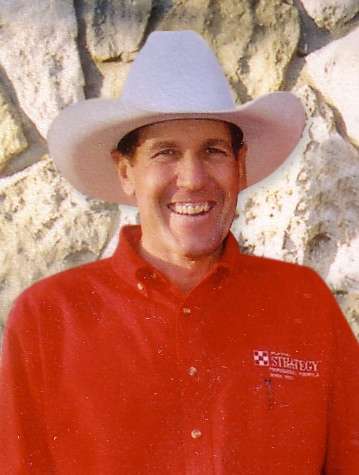
Strong Flint Hills Ranch Heritage, ‘Jimmy’ Had ‘Eyes In The Sky’ Airplane Career

0

“Jimmy Alexander wasn’t a cowboy.”
That’s despite strong Flint Hills ranch heritage, dad Bud and brothers Bobby and Wayne, Kansas Cowboy Hall of Fame inductees.
Alexanders were in generality recognized as “cowboys,” often even ornery ones, the genetic trait brother Jimmy did inherit.
Oh, Jimmy Alexander knew the cowboy life working youthfully hard ranching, gladly providing testimonies for the Hall of Fame inductees.
Airplanes were Jimmy Alexander’s love in life from a very young age continually throughout his lifetime.
Upon his recent passing, Jimmy’s airplane shenanigans were retold, some even unveiled.
Nephew and niece Tom Alexander and Barb Lerner remember their uncle flying between the Bobby Alexander home and windmill. They could see Jimmy’s ornery grin in the airplane going over Flint Hills east of Council Grove,
According to true legend, Jimmy flew home to visit parents Bud and Maude north of Council Grove. “He’d fly his plane straight up into the air until the motor stalled out, roll the plane over, and come shooting down like a corkscrew. Kicking the plane back on, Jimmy pulled the plane up just before hitting the ground.” Mom scowled while Dad smiled typically.
Brother renowned rodeo cowboy and pasture manager Bobby pretty much refused to fly with Jimmy’s daredevil piloting. “One time, Bobby and wife Georgie were stranded coming back in their pickup from a Texas rodeo. Jimmy flew them home like a nice brother.”
The ornery pilot knew every little airport in the southwest. Jimmy flew his great-nephew namesake Jimmy Lerner, now of Council Grove, from Texas and Oklahoma to help Grandpa Bobby Alexander look after Flint Hills cattle.
After the Katy Railroad stopped service, Jimmy used that abandoned track strip as the Alexander Ranch Airport in the mid-’50’s. He’d “fly over the top of Rex Materials to land at the airport being just feet above townsman Lowell Scripter as he flew by.”
Genetically inherited wheeler-dealer, Jimmy sold airplanes to both Jimmy Dean and Roy Clark. “He’d let Aunt Barb and family fly in them before delivering,” great nephew Bobby Alexander of Alexander Artworks said.
For clarification, (namesake) Bobby Alexander is Tom Alexander’s son, whose dad is “the” Bobby Alexander, Jimmy’s brother
“Jimmy sold the first airplane Kansas bought for Governor Docking and flew celebrities like Burl Ives and Mickey Mantle.”
One time his airplane shut down in the air and Jimmy had to land it in downtown Wichita. His only option was “The Big Ditch” on the Arkansas River Floodway. “That was one of the scariest moments of my life,” generally fearless Jimmy admitted.
Jimmy was Buzz Ropers’ flight instructor and referred him to Ralph Booker, McPherson refinery president, to be the company pilot. So, Buzz moved his family from Texas to Kansas for this job. They attended church with the Booker family and, Colleen, Buzz’s daughter, met Mr. Booker’s son Jason.
“Colleen and Jason now live in Council Grove, and Colleen’s sister is manager of the McPherson Airport,” Bobby related
James M. Alexander was born December 6, 1930, at Council Grove, and passed away August 4, 2022, at Wichita. Funeral was at Country Acres Baptist Church with the United States Navy Honor Guard conducting graveside services.
“The preacher had some good things to say as my cousins did as well,” Bobby commented
Jimmy personally recorded his autobiography “History of James M. Alexander,” dated June 29, 2012.
“World War II from about 1942 on would find a young cowboy early teenager living on the ranch at Council Grove, but always with his mind and eyes on the skies.
“My fervent interest in anything that flew by caused some dismay to my dad who now had another son in training as an Air Corp pilot. Brother Wayne was my hero.
“I begged three bucks off a reluctant dad for the first PT-19 ride and I knew I had to have more of this. Dad was afraid of airplanes, but circumstances changed. Twenty years later I would fly him to Kansas City for cancer treatments in a new Cessna 310. He really enjoyed it.”
As a 16-year-old, Jimmy went to work scrubbing and fueling airplanes for 50-cents an hour in order to ride in an airplane for $7 an hour. He attended airshows, learned piloting from ex miliary instructors, and finally got a solo flight.
Serving in the Navy, 1948-49, Jimmy hoped to fly, but pilots weren’t needed, so he took an early discharge. He worked at the Beechcraft plant near Herington and managed to “shag a job on a flightline for six years. Wow, what a deal.”
Meanwhile Jimmy got a private pilot license and partnered buying a J-3 Cub airplane for $500.
He was flying over the Flint Hills and decided to impress his brother who was checking pasture cattle. “I proceeded to land in the pasture only to smack a large rock. Embarrassment turned to the situation at hand.
“Farm boy improvised with my brother mending the right wing with a hedge post and flew it away. Whew lesson learned.”
With Beechcraft closing at Herington, Jimmy was promoted in transfer to Wichita expanding time in the air with more new airplanes.
Through promotions, Jimmy became an instructor and “endless hours” with commercial flights.
He worked at Emporia in 1958 crisscrossing the entire country for $500 a month.
No end to stories, monotonous to lay readers, excitement galore for Jimmy flying, selling, and everything airplanes.
He worked for Cessna 23 years, “meeting many fine people,” becoming an airplane salesman giving up on working for an airline. “I found it a good place to enjoy flying while being rewarded if you worked hard.”
Frequent sales trips included stops at Council Grove home. “My parents always watched me depart and were beginning to accept the notion that airplanes weren’t so terrible. Strange but not terrible.”
He formed a corporation with his wife Sharon and remained in the airplane trading and brokering business.
“I guess I would have to say it has been a pretty good ride. I am blessed.”
On April 2, 2011, James M. Alexander was presented the Wright Brothers Master Pilot Award from the Department of Transportation Federal Aviation Administration. It recognizes “Fifty Years of Dedicated Service in Aviation Safety.”
Bobby insisted, “Jimmy was just a super cool guy. I remember him taking me up in his plane when I was six years old.
“I thought then and still do to this day think Jimmy was one of the coolest people I have ever known. Uncle Jimmy was someone you just wanted to be around, he made everyone feel special and appreciated.”
+++30+++
CUTLINES

Jimmy Alexander was born with heritage to be a Flint Hills cowboy, but “his eyes were in the sky.” Council Grove native, Alexander had a lifelong career doing about everything that could be done with airplanes. Yet, he always retained close Flint Hills family and area ties.

Sons of Kansas Cowboy Hall of Fame inductee Bud Alexander, Jimmy, Bobby, and Wayne Alexander grew up on a Council Grove ranch. Bobby and Wayne continued the cowboy profession renowned in rodeo competition, while Jimmy claimed a “blessed” life involved with all aspects of airplanes.

“Oh, what an ornery threesome;” family was always close and very important to Jimmy Alexander. He’s with his big brothers Bobby and Wayne front and center at an Alexander Reunion in 2010.

If it would fly through the sky, Jimmy Alexander wanted to be in the pilot seat. This Cessna 310, on his funeral memorial handout, is just one of likely uncountable airplanes flown and merchandized by Alexander throughout the country. Jimmy flew his dad Bud of Council Grove to Kansas City in this plane for health treatments.

“Bloody” practical joke

0
Thayne Cozart
Milo Yield

Early this week I wuz finishing up mowing vegetation around the barns at Damphewmore Acres when I spied a vigorous “ink berry” plant along a brushy edge. It wuz loaded with ripe ink berries.
Before I proceed, let me remind readers that “ink berry” is a common name for American Pokeweed, a colorful, plant that grows throughout most of the eastern half of the U.S. A word of caution: all parts of the ink berry plant is poisonous.
That definition aside, when I saw the plant it brought back a memory from my childhood around Moran, Kan., about what I now see as a “bloody practical joke.”
It was during an era somewhere around 1950 when fall cutting of firewood for the winter was common. It was also common for a crew of neighbors to work together to lay in the winter firewood supply. The most common way for the crew to work wuz for some men to fell and de-limb the trees, others to drag the tree trunks and limbs to the big buzz saw, others to manhandle the limbs through the buzz saw, and others to split the bigger wood chunks.
I’ll mention that a buzz saw is one of the most dangerous contraptions ever invented. The circular cutting blade wuz powered by a tractor and belt and the blade spun at an alarming speed with a similar menacing loud buzz. The blade wuz unshielded and users put their life and limbs into danger every time firewood wuz made. The danger was known by all, but ignored by necessity.
However, in the time before chainsaws were invented, buzz saws were the most effective and efficient way to cut massive amounts of firewood. That fact will be attested to by anyone who ever spent much time making wood on either end of a manual crosscut saw.
Anyway, that’s the background. Here’s the bloody practical joke story. I was somewhere around 8-10 years old. The buzz saw crew wuz at our neighbor’s. The crew consisted of Austin, Harvey, Vance, and my dad Czar E., plus some other guys I can’t recall.
It wuz close to noon and the guys were getting ready to go to the communal lunch fixed by the wives of the crew members. Vance, one of the younger crew members, saw a ink berry plant, loaded with ripe red berries, not far from the buzz saw. Vance hadn’t been married too long.
The ink berry sight gave him an idea for a practical joke. He wuz wearing knee-high gum boots and heavy wool socks. He started the joke by taking his pocketknife and cutting off several clusters of ripe ink berries. He then dropped them into one of his boots and followed the berries with his stockinged foot and squished the ink berries around until his wool sock wuz soaked with what looked like fresh blood.
He told a couple of crew members to “help” him hobble into the closed-in porch. Then he planned to tell his wife that the ax he wuz using to split the wood had ricocheted off the wood sliced into his foot.
And, that’s what happened. He told his wife the story and then lifted his “bloody” foot out of the boot so show her how bad it wuz. Needless to say, his wife — and all the other wives — were alarmed at all the “blood.”
The thing is — when the prank wuz revealed and all the men crew members started laughing — all the women didn’t see the humor in the joke.
I wuz pretty little, but I still remember there wuz a lot of social tension around the table through lunch that day.
***
Well, that buzz saw memory jogged a couple of others into my mind. One I call a “very close call,” not for me, but for Burl, the elderly, bowlegged cattleman who wuz our landlord in Stillwater, Okla.
Burl and I were buzz-sawing up a stack of limbs he’d gathered for his winter wood supply. He insisted that he be the guy closest to the humming buzz saw because “he didn’t want me to get hurt.”
Long story short. With the buzz saw humming along, a stack of wood gathered around Burl’s feet. Eventually, he stumbled on a hunk of wood and fell forward toward the saw blade. He caught himself just in time, but when he pulled his cotton-gloved hand back, the palm of the glove was cleanly cut through by the saw blade, but Burl’s hand had nary a scratch or a cut on it. Burl blanched and said to me, “Now THAT wuz a close call.”
***
Third buzz saw memory wasn’t a “close call” for the recipient, but a permanent impairment. Gar Macomber wuz a pleasant old gentleman who ran a business from his acreage on the west side of Bronson, Kan. Gar sold bedding plants and, as I recall, he also had a small blacksmith shop.
But, what I, as a little kid, recall most about Gar wuz his peg leg, not an artificial limb as seen today, but a pure wooden peg leg that he stumped around on. I wuz too little to understand impoliteness when I bluntly asked Gar what happened to his leg.
He smiled wryly and told me that years ago he wuz cutting firewood with a buzz saw and the saw blade came unbolted and instantly cut his leg off right below the knee. I remember Gar saying, “It happened so fast that it didn’t even hurt. One second I had two legs and the next I had one.”
Gar’s story left a lasting impression on me about the dangers of buzz saws.
***
I’ll close this week with a lament about the passing of two fine folks that I admired. The first was Roger Welsch, the Nebraska humorist, public speaker, author and activist, who made “Postcards from Nebraska” a staple for many years on CBS “Sunday Morning.”
Roger and I were friends who seldom saw each other, but our paths used to cross frequently as aggie public speakers. Roger and I were kindred spirits in our love for rural life. RIP.
The second passing is of country music legend Loretta Lynn. We weren’t friends, but I admired her upbringing and the simplicity and purity of her songs. I have in our basement somewhere a Loretta Lynn vinyl record with the grooves worn smooth by the needle in my record player. RIP.
***
Words of wisdom for the week: “The difference between slow and lazy and thorough and complete is whether I’m doing the work, or someone else.”
Have a good ‘un.

Retaining justice

0
john marshal

Six of the state’s seven Supreme Court justices stand for retention on the November 8 ballot. They are not household names, but they are of household consequence.
The judiciary stands apart from the seamy campaigns for legislative seats and the governor’s high office. The courts are a measure of democracy, not its marionette. The courts – notably the Supreme Court – remain a cradle of equity, the last thread of hope in the people’s desire for a fair shake.
Nonetheless, Supreme Court justices must stand for retention by public vote as their six-year terms expire.
On the ballot are Chief Justice Marla Luckert, appointed in 2002 by Gov. Bill Graves; Justice Dan Biles (2009, by Gov. Kathleen Sebelius); Caleb Stegall (2014, Gov. Sam Brownback); Justice Evelyn Wilson (2019, Gov. Laura Kelly); Justice Kenyen Wall (2020, Kelly); and Justice Melissa Standridge (2020, Kelly).
Justice Eric Rosen (Sebelius ’05) is not up for retention.
Seven judges of the Kansas Court of Appeals also stand for retention.
*
Republicans have been angry with the state courts for years. They give a special stink-eye to the Supreme Court, which has repeatedly countered their efforts to starve local schools, to outlaw all abortion in Kansas, to play fast and loose with the state budget, and to subvert our voting laws, among other things.
In 2016 the party created a committee, “Kansans for Justice.” They spent a lot of money campaigning against justices up for retention. They had hoped to defeat incumbents and pack the Court with justices appointed by Gov. Sam Brownback, who yearned for ways to advance his pious social engineering. The plan failed. Voters retained the justices.
Last August, voters statewide rejected, 59 percent to 41percent, a proposed constitutional amendment to sidestep the Supreme Court and allow the state legislature to write new abortion bans. (A proposed amendment in November would allow the Legislature to quash the constitution’s separation of powers and overrule a governor’s executive authority.)
Republican leaders have sponsored resolutions to erase sovereignty for the state’s highest court; they demand that justices declare party affiliation and run for office. Another plan would dissolve the Supreme Court Nominating Commission, a lay-lawyer panel that screens nominees and sends three finalists to the governor, who selects one for appointment to the high court. This merit-based nomination and retention system began in 1958; it is non-political and it has worked well.
Attorney General Derek Schmidt, the Republican candidate for governor, wants the federal model for selecting state Supreme Court justices, with Kansas Senate veto power over a governor’s nominees. The 40-member Senate is Republican-dominant (29-11), and would control the nominations. Kris Kobach, a former secretary of state and candidate for attorney general, wants the same. Failing that, they have said, justices should declare party affiliation and run for office.
These models would consign the state’s highest court to Topeka’s shabby political theater, the high troupe for political hacks – precisely the federal model that Republicans long for.
*
The justices’ retention issue asks whether citizens want even more power for a political party, or a separate and sovereign Court.
The Appellate and Supreme Courts are increasingly asked to unravel divisive issues that the legislature cannot or will not resolve. Justices examine the law for answers. For that, they are criticized by politicians who have neither the intelligence nor the inclination to address those heated topics. Or, when they do, the result is disastrously inept or blatantly unconstitutional.
The courts hold a most crucial assignment, to assure our certain rights. This task must be left to those who know what they’re doing, professionals educated, experienced, literate in matters and issues of law.
Chief Justice Luckert and her six colleagues on the high court are by virtue of their appointment the best at hand. They are devoted to the law, not political theater.
Certain political action committees are at work with harsh, even malicious, advertisements claiming that some justices are foul, unfit. They are not.
Retaining them will keep the high court above the sordid mechanics of political mercenaries and sleazy cause lobbies. The courts are an instrument and arbiter of law, and without our courts there is no law, and with no law we are left to the repugnant whiplash of tribal warring, leaving little room for justice and even less for the citizens who need it.

Fresh Apple Salad

0

This week I’m sharing a very simplistic apple salad which I grew up eating, especially in the winter. I was amazed how many people raved about this salad when I served it for events, at Silver Dollar City. It’s down-home, and it can be made without too much sugar. It goes quite well with fried pork chops, potatoes and gravy. It’s also rather elegant for the holiday meals. Be sure and read my closing comments, at the end of the recipe.

On the dressing, ‘try’ to use homemade whipped cream. If you’re looking for the best heavy cream look for those with the most fat content. That my friends, is better flavor. The brand I most always purchase is the Walmart label. Why? Cost & taste, more than anything else. In a regular grocery store you will pay close to $7.00, or more for a quart of heavy cream. At the big ‘W’ I believe it’s around $3-4 a quart, approximately, and the fat content is the highest I can find.

Salad Dressing versus Mayonnaise: I’m more partial to salad dressing and I would choose Hellman’s for the best flavor. Lately I have been using a bit of what they call the ‘Mayo’ label. It’s lower in cost, and I like the flavor. Here comes the ‘however’, use what pleases you, not me!

Our past weekend was so enjoyable. We left things ‘undone’ on the home-front and spent Saturday having fun. First it was the PFI annual tent sale followed by a picnic at Chadwick, Missouri. We took Southwest Chicken Tortilla Soup and several sides as our meal. It was a cool afternoon, so the soup was perfect. Sunday we entertained our good friends from Minnesota for breakfast and then we left to go pick pears. Now I can make a batch of pear honey! YUM YUM. The pears still have a ways to go in the ripening department. This is a really good thing because my friends brought me apples from their farm, and I have those to prepare this week. I dove into them this afternoon and made my first apple pie of the season. (Wondering how we took soup on a picnic? I own a traveling slow cooker!)

Enjoy the colors as they fade into winter. Go for a drive somewhere, be frivolous, and go out for coffee and a slice of pie. Get away from home with a picnic lunch. Take a folding chair, blanket and book and set up near a body of water, for a good reading time. FYI, don’t forget the coffee thermos. Remember it is the little things we do for each other that make life so special. Remember the old saying: ‘If it’s to be, it’s up me!’

Expect good things to come your way, and look out, your basket will overflow!
Simply yours, The Covered Dish.

.

Fresh Apple Salad
1 cup finely diced celery
8-15 ounce can light tidbit pineapple, juice reserved
4 cups or 5-6 average apples, diced
(I leave skins on for color, can also be removed.)
1 cup grapes, cut into halves
1/2 cup chopped pecans or English walnuts
1 cup halved gumdrops in assorted colors
Dressing
1/4-1/3 cup mayonnaise
3 tablespoons honey
8 ounces whipped cream
*Options: raisins and marshmallows

Serves 10-12 persons
After chopping the apples generously roll them in the reserved pineapple juice. This will help keep the apples from browning. Drain well and
Place in large bowl with celery, pineapple and grapes. With a whisk blend the dressing in a separate bowl. Stir dressing into ingredients. Lastly stir in the gumdrops and pecans.

As a young girl this was always on the table for Thanksgiving and Holiday dinners. My grandmother, Lucy Rightmire Richardson, would put black, yellow and orange gumdrops for the fall dinners. At Christmas she often used red, green and white.
Sometime only diced orange slices were implemented. It was always one of my favorites and I called it ‘The Candy Salad’.