Kendall Crawford
Special to Harvest Public Media
Farmers die by suicide at a higher rate than the general population. That’s leading Midwestern states to train bankers, veterinarians and agribusiness professionals to be the new front line of defense against farm stress.
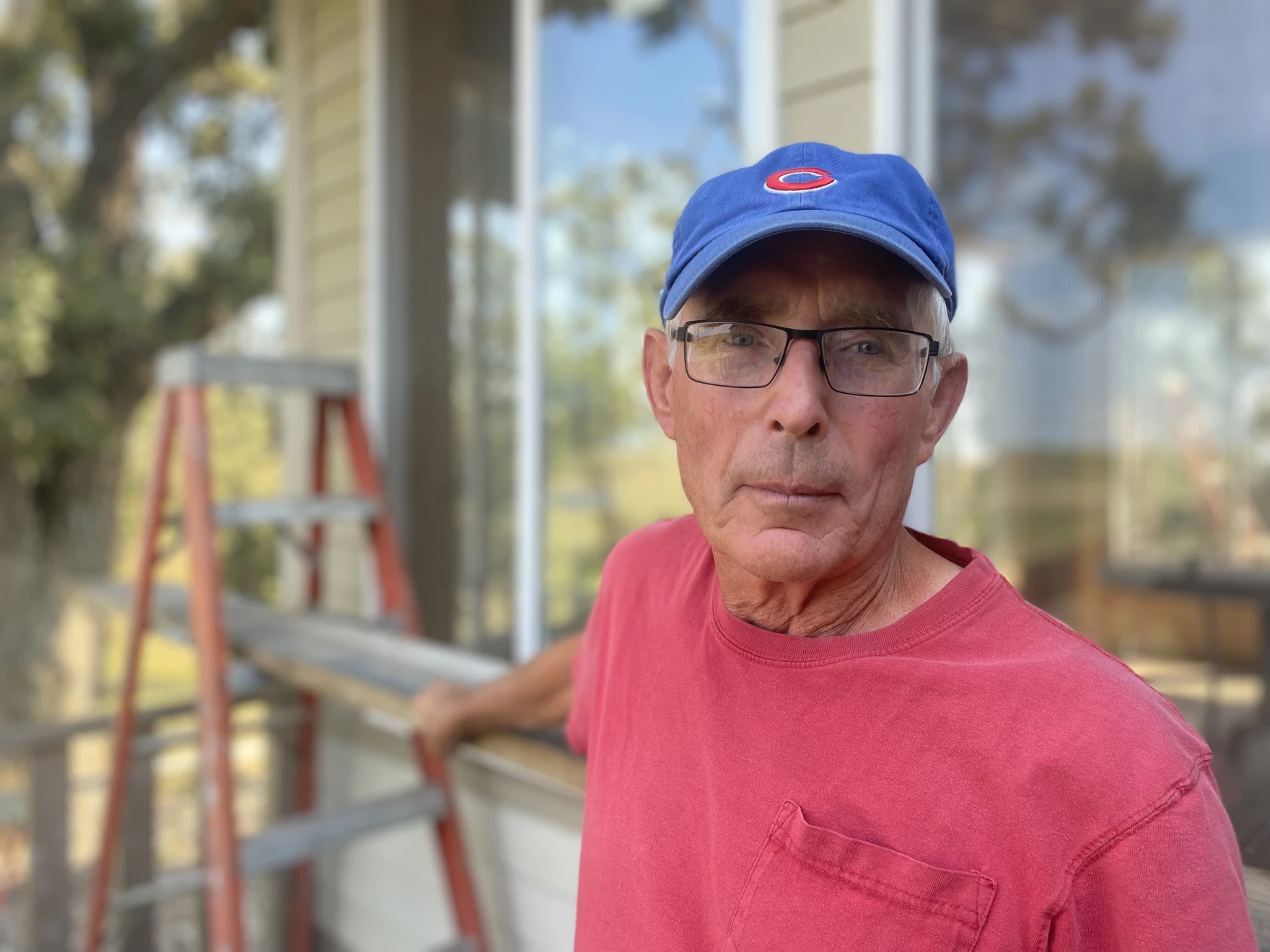
Bright patches of yellow and pink flowers line the walkway in Doug Fuller’s backyard in Cambridge, Iowa.
But, just one year ago, the same garden was bare. Fuller was in the middle of a year long battle with severe depression and suicidal thoughts.
“Hopelessness is probably the biggest thing you think of,” he said of his depression. “When this goes on for month after month after month, you just feel like ‘Is this ever gonna improve?’”
This experience – of farmers grappling with suicide – is devastatingly common. Farmers and ranchers are nearly two times more likely to die by suicide in the U.S., compared to other occupations, according to the Centers for Disease Control and Prevention.
Last year, the U.S Department of Agriculture awarded grants totaling $2.5 million to states across the country to expand mental health resources to farmers. Some Midwestern states took the money as an opportunity to distribute resources not only to farmers, but also to the lenders, the suppliers and community members they interact with on a daily basis.
The stresses of agriculture
Farmers face a lot of factors out of their control — from the weather to commodity prices to the ever-changing state of global markets. Michael Rosmann, a southwest Iowa psychologist who specializes in helping farmers, said the uncertainty of it all can lead to a lot of stress.
At the same time, Rosmann said the things that make a good farmer – independence and a willingness to take risks – can work against them when they need help.
“They’re reluctant to reveal what they perceive as weaknesses, when indeed, admitting that we need help is a strength not a weakness,” he said.
This hesitancy to ask for help means that intervention is difficult. More than doctors or counselors, farmers are likely to trust people who understand the unique stressors of agriculture.
“They often show signs of distress to people who they work with regularly,” Rosmann said. “They will tell people who are perceived to be on their side about what they’re going through.”
A different approach
At the annual Monona County Farm Bureau meeting in the small, western Iowa town of Ute, Donna Mills stepped up to a microphone. From the podium, she directed her captivated crowd of agricultural workers to a pamphlet, filled with suicide warning signs and hotline numbers, sitting in front of them.
These presentations are happening all over Iowa; in banks, in veterinarian offices, in co-ops and in pesticide safety training sessions. The Iowa Department of Agriculture is using its USDA grant to equip people who interact with farmers the most on how to identify stress and refer them to resources.
Mills, one of the program’s outreach coordinators, said sometimes the resources are met with awkward laughter and jokes. But, other times, she said she can see its impact.
“There were a few sessions that I had where someone would come up after me and say ‘There was a guy that was sitting in this training, he attempted to take his own life several times already. So thank you,’” Mills said.
The resources are integrated into spaces where farmers are already going for information. Iowa State University Extension’s state behavioral specialist Dr. David Brown said it’s a strategic effort to combat the heavy cloud of stigma in rural communities.
“If we put on a meeting that says we’re going to talk about farm stress, do you know how many farmers will show up for that? Absolutely none,” Brown said. “So we have to use other means to get the information into the farmers hands.”
Signs of promise
Similar peer support programs are being embraced in Nebraska. In 2019, the University of Nebraska-Lincoln Extension began to offer two-hour workshops for community members to understand farm stress.
The workshop’s facilitator, Glennis McClure, said the goal is to teach participants what to say to a farmer in need. So far, it’s found success. More than 80% of participants left the session with more confidence in their ability to talk to a person under stress, according to a survey by University of Nebraska Extension.
She said each participant has to practice how to ask that really important, but really difficult question: “Are you thinking about suicide?”
“We really shouldn’t be afraid of reaching out and trying to find out where people are in that scheme of things,” she said.
Grant Woodley, a rural pastor and farmer in Clarion, Iowa, took advantage of one of Iowa’s agricultural focused suicide prevention trainings. He said it gave him the language to approach hard conversations with his neighbors and friends.
“This training really gives lay people the tools to really walk alongside someone, to break through some of that isolation that occurs with mental health,” he said.
Reaching out Back in Cambridge, Fuller has fully recovered from his intense depression and isolation.
He doesn’t know what triggered his episode – maybe it was the way a windstorm flattened some of his crops or maybe it was the isolation of COVID. But, he said, he does know he only got better after he asked for help.
“I just don’t see any reason to have kept all this to myself,” he said. “Because it was as real as we are sitting here today.”
While Fuller didn’t always believe he would make it to the next harvest, he said it helped that his family and friends never stopped insisting he would.
If you or someone you know is struggling with suicidal thoughts, you can call 988 for help.
Kansas – https://www.kansasagstress.org/mental-health
https://www.kcur.org/2022-09-22/suicide-rates-are-higher-among-farmers-some-midwest-states-are-teaching-communities-how-to-help