
“Cockleburs can take over the farm if they are not controlled.”
The neighbor farmer made that assessment many years ago, and it is probably correct.
Certainly, cockleburs can readily thrive in ditches, wasteland, waterways, pastures, and sometimes cropland.
They are most noticeable when the hard ripe brown ’burs become tangles in horse manes and tails. The ’burs are also frequently a problem for dogs readily adhering to their hair as well as other livestock.
Charles L. Mohler at Sustainable Agriculture Research and Education has provided key information about cockleburs and managing the weeds.
An erect summer annual herb, seedlings have short, thick stems with purple at the base. The stem becomes green and covered with upward pointing hairs as the plant develops.
Fully mature stems are green, one-to-four-feet tall, highly branched, hairy, and flecked with purple, brown to black spots. The semi-woody, broad and sturdy taproot can reach four feet deep.
“Fruit” is a woody, brown, egg-shaped cocklebur. Each ’bur is approximately one-inch long by 0.7-inch or less wide, is covered in hard quarter-inch spines, and has two beaklike projections at the tip.
Each ’bur contains oblong, pointed, light brown to black seeds, covered in a papery, silver-black membrane.
Cockleburs are extremely competitive weeds due to fast emergence and rapid growth supported by the large seed,” Mohler said. “Populations of one to three plants per 10 square feet can cause soybean yield losses up to 75 percent.”
Tine weeding and rotary hoeing have limited effectiveness because the seedlings can emerge from deep in the soil.
Because the seeds do not persist well in the soil, rotation to a sod crop will help control this weed. Rotation to a winter grain will also help because the burs do not mature by grain harvest.
“Plant a cover crop after grain harvest to prevent resprouting from the shoot bases and subsequent seed production,” Mohler suggested.
“Cockleburs often establish first on unmanaged areas like embankments and stream banks,” Mohler said. “So, if you see it there, eradicate it quickly before it can invade your tilled fields.”
Germination of seeds is promoted by microbial decay or mechanical seed coat damage. Cocklebur seeds can survive for nine years.
Most emergence occurs in mid-spring to early summer, with occasional pulses of seedlings later in the summer.
“Cockleburs emerge well from an inch of soil, and can emerge from as deep as six inches,” Mohler informed.
The cocklebur is drought tolerant,” Mohler noted. “Roots can extend seven-feet laterally and four-feet deep, allowing access to water throughout the soil profile. Yet, they tolerate only light frost.”
Cockleburs are an aggressive competitor partially because of capacity to take up more water than other plants under similar conditions. “However, growth and reproduction are, nonetheless, reduced by prolonged drought,” Mohler pointed out. “Yet, cockleburs can tolerate flooding.”
Highly responsive to nitrogen, cockleburs will store excess nitrogen and later use it to increase seed production.
“Small plants regrow quickly from buds at the base of lower leaves if plants are trampled or clipped,” Mohler explained. “Once flowers have been pollinated, ’burs produce mature seeds even if the shoot or branch is severed from the roots.”
Plants flower as days shorten, with flowering in August regardless of age or size. Seed maturation continues until a killing frost.
“Common cocklebur primarily self-pollinates, but up to 12-percent of flowers are cross pollinated by wind dispersed pollen,” Mohler said.
Vigorous, open grown plants produce from 500 to 5,400 ’burs, each of which usually contains two seeds. “The number of ’burs depends entirely on the size of the plant at the time flowering begins,” Mohler said.
“The spiny ’burs cling to animal hair, clothing, grain sacks, about everything,” Mohler reiterated. “They tangle particularly well in sheep’s wool and are dispersed when the animals or wool are transported.”
Cockleburs float and are readily dispersed in streams, lakes, irrigation ditches. and flooded fields.
“People do not consume common cocklebur, but the seeds have been used in herbal medicine,” Mohler said. “Larger plants have good nutritional value for livestock but are rough and unpalatable.”
Pollen of cockleburs produce hay fever symptoms in sensitive individuals and contact with the stems can a cause dermatitis. Mohler noted.
“Cocklebur weed management can be tricky,” Mohler admitted. Of course, because of its toxicity to animals, it cannot be controlled by grazing, as many other weeds can be.
“There are, in fact, very few natural biological control methods for getting rid of cocklebur weeds,” Mohler contended
“The parasitic plant, dodder, may be effective in choking out cocklebur plants, but it isn’t advisable,” he said.
“Studies show that the Nupserha beetle is effective in controlling cocklebur, but it’s not a native species,” Mohler said. “The most effective methods of cocklebur control are hand pulling or chemical controls.”
There are different preemergent and post emergent herbicides available for chemical control of cockleburs. However, stringent applications rules and recommendations that must be followed.
“A weed control specialist must be contracted for advice before ever using chemicals to control cockleburs,” Mohler demanded.
Cockleburs Major Spiney Weed Problem For Landowners, Horses, And Dogs, Too
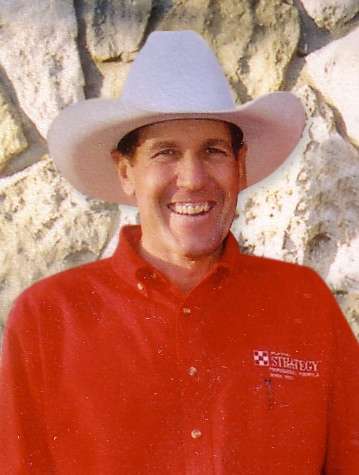
Flint Hills Cowboy Teams To Compete In State’s Oldest Ranch Rodeo Sunday

Its rodeo time this weekend at Council Grove.
The 36th annual Fall Ranch Rodeo sponsored by the Morris County Youth Rodeo Association (MCYRA) is scheduled for Sunday, October 2nd.
Starting with a grand entry at 1 o’clock, the rodeo will be at the MCYRA Arena, located 1½ miles east of Council Grove on Highway 56.
“Of special significance is that our ranch rodeo is the oldest in the state of Kansas,” said Clay Wilson, MCYRA president.
“The rodeo is also one of the oldest in the nation, along with possibly being the longest continuously annual ranch rodeo anywhere,” Wilson added.
Set for Sunday’s Western action matinee will be cattle sorting, steer branding, team roping, and double mugging.
“Four-member cowboy teams representing 14 Flint Hills ranches will be competing for event and overall championship recognition,” Wilson pointed out.
To provide for a full family day of rodeo activities, the host Morris County Youth Rodeo Association will again offer complete concessions with meals, drinks, and homemade lunch offerings.
Information about the full rodeo day’s activities is available from Wilson at 785-466-1359, and on Facebook.
CUTLINE
Four-member cowboy teams representing 14 Flint Hills ranches are entered in the 36th annual Fall Ranch Rodeo at Council Grove Sunday afternoon, October 2nd.
Lifelong Flint Hills Ranching Cowgirl Feature For Pioneer Bluffs Prairie Talk
“Cowboyin’ is women’s work.”
Bobbie Hammond, Olpe, has managed as many as 25,000 acres of Flint Hills grass and 8,000 head of cattle.
At the same time, she was a professional rodeo barrel racer. She won in the Old Timers’ Rodeo National Finals when she was a grandmother, and that was 40 years ago.
Hammond will share her life’s story in a Prairie Talk, Saturday afternoon, October 8, 2 o’clock, at Pioneer Bluffs.
“I always thought cowboyin’ is women’s work,” said Hammond. “It never occurred to me there was anything I couldn’t do because I was a woman. I was working with my dad from the time I was big enough to ride.
“I know it isn’t the kind of work every woman would want to do. Probably not every man can do it,” she continued. “It’s a lot of hard work. I do everything from breaking colts to fixing water gaps to treating sick steers. It’s knowing what an old steer will do before he even thinks of it himself.”
Today at age 83, Hammond is still working. “I don’t let a lot of grass grow under my feet,” she declared. “It is a lifestyle, I think.”
There is no cost to attend, but reservations are requested, with additional information, from Lynn Smith at [email protected], or 620-753-3484. Details can be found at pioneerbluffs.org, or on the Pioneer Bluffs Facebook event page.
Mission of Pioneer Bluffs is to preserve and share the ranching heritage of the Flint Hills. A National Register Historic District, Pioneer Bluffs is on Flint Hills National Scenic Byway K-177, one mile north of Matfield Green.
CUTLINE
Bobbie Hammond, Olpe, will share her life story “Cowboyin’ Is Women’s Work” in a Prairie Talk, Saturday afternoon, October 8, 2 o’clock, at Pioneer Bluffs near Matfield Green.
State Child Death Review Board: Child drug, fentanyl deaths increase in 2020

TOPEKA – (September 30, 2022) – The State Child Death Review Board this week reported that Kansas recorded an increase in the number of drug-related deaths in children age 0-17, including a rapid rise related to fentanyl.
The board’s just-released annual report analyzes the deaths of Kansas children (birth through 17 years old) that occurred in calendar year 2020, the most recent year for which data is available. The report showed that the number of drug-related deaths rose to 16 in 2020 up from five in 2019. There were 11 fentanyl deaths in 2020, after reporting no fentanyl deaths in the previous four years.
From a national standpoint, the Centers for Disease Control and Prevention reported nearly 500,000 people of all ages died from overdoses involving both illicit and prescribed use of opioids from 1999-2019. In recent years, both nationally and in Kansas, the data has shown an increase in the use of synthetic opioids like fentanyl. While fentanyl is a prescription drug, it is also manufactured illegally. Frequently it is incorporated into illicitly manufactured pressed pills and mixed with other substances without the knowledge of the end user.
“Within the three decades that the State Child Death Review Board has been in existence, more than 12,000 deaths of Kansas children have been examined,” said Sara Hortenstine, the board’s executive director. The stories of these tragic losses have turned into data aimed to inform and direct prevention in our state. There is an immediate need in our state to ensure that youth and their families know that fentanyl-laced products are accessible and that even a one-time experiment with a drug can be deadly.”
Overall, the report showed Kansas had 365 child fatalities in 2020, compared with 362 in 2019. The overall child death rate in 2020 was 52.4 deaths per 100,000 population, continuing a downward trend from the past decade. The data also revealed that the number of suicides among Kansas youth decreased, albeit slightly, continuing a decline experienced the previous year.
In 2020 there were 26 youth suicides in Kansas, a decrease from the 28 youth suicides occurring in 2019. The Board found that of the 26 youths who died by suicide, 85% were male and 15% were female. Furthermore, 54% communicated suicidal thoughts, actions or intent prior to taking their life. In eight of the suicide deaths, the Board determined that disruption in the youth’s life related to the COVID-19 pandemic was a contributing factor in their death.
In June 2018, Kansas Attorney General Derek Schmidt and the Tower Mental Health Foundation formed the Youth Suicide Prevention Task Force to survey efforts underway in Kansas to reduce the incidence of youth suicide and provide recommendations on further steps that could be taken. In 2019, the Kansas Legislature created the Kansas Youth Suicide Prevention Coordinator position in effort to implement the recommendations of the task force.
In September, a free app, called “Kansas – A Friend AsKS,” was launched in partnership with The Jason Foundation, a national suicide prevention organization. The app connects youth to tools and resources to help a friend, or themselves, who may be struggling with thoughts of suicide. The app also offers the option for users to call or text the 988 mental health crisis line, which was launched in Kansas in July. The app is available for download in both the Apple App Store and Google Play Store or by clicking the links at https://ag.ks.gov/asKS.
“The increase in drug overdoses and the continued loss of our youth by suicide are blunt reminders that we have much more work to do in Kansas to ensure the wellbeing of our children,” Schmidt said. “I appreciate the dedicated work of the State Child Death Review Board in compiling this information to help inform policymakers and stakeholders in efforts to meet the challenges of these health and wellbeing issues head on.”
In addition to policy recommendations, the report includes prevention points that families can use to decrease the likelihood of a child’s death.
The board is a multi-disciplinary, multi-agency volunteer board organized by law within the attorney general’s office to examine trends and patterns that identify risk factors in the deaths of children, from birth through 17 years of age. The report is available on the attorney general’s website at https://ag.ks.gov/scdrb.
If you or anyone you know are in need of crisis support, call or text the Suicide & Crisis Lifeline at 988. The Youth Suicide Prevention Coordinator is located in the Victim Services Division of the Office of the Attorney General and can be reached at 1-800-828-9475. If someone needs help with substance abuse, they may call the Substance Abuse Mental Health Services Administration national hotline at 1-800-662-4357 for confidential free help from public health agencies to find free substance use treatment and information.
Contact: John Milburn
785-296-8495
[email protected]
“Oh, but what would I bring?” I asked.
An Unhealthy Business (Best Of)
I recall reading an article a few years ago about a man who was in a terrible automobile accident and needed a brain transplant. It had to be a true story because it was in one of those tabloids by the checkoff counter in the grocery store. As I recall the story they had assembled an outstanding team of doctors to remove the brain and to transplant an unused brain, probably from a politician. Anyway, while the Doctors had left the room temporarily the brainless man left the operating room. They searched everywhere but were unable to find him.
I just found him. He owns and operates the Last Health Food Store in America.
Just a few years ago there was a virtual plethora of health food stores dotting the landscape. Now, just like the wok, they have vanished… all but one, which I discovered recently while waiting in a shopping center for my wife who was shopping.
The dark store reeked of rotting vegetables and dying pasta making machines. The shelves were lined with books on making the transition to vegetarianism. There was row after row of Vitamin C tablets with rosehips, prolonged release iris shampoo and skin treatment, food supplements and all those other things you don’t need if you eat normal food. The proprietor’s diploma from Herbal College was proudly displayed on the bulletin board along with a handbill that announced, “VIP’s… Vegetarian Inclined People, potluck supper at the Community Center, the public is invited, bring a vegetarian dish to share. No foods of animal origin. (I am not making this up) Featuring a special guest speaker, Enzing Payme will discuss the benefits of Rolfing (throwing up).
The proprietor of the Last Health Food Store in America saw me reading the handbill and asked, “Interested in attending our vegetarian buffet?”
“Oh, but what would I bring?” I asked.
“We’re having a special on Eden brand organic pinto beans, barley wafers, lentil curry cous-cous, and After the Fall Fruit Juices. I am personally taking a brown rice cream cereal and blue corn organic nacho chips” (These are all real products by the way) Mr. Veggie then pointed out that because Mori-No Tofu is packaged in aseptic packages with a ten month shelf life that meant I would never have to run out of tofu again.
Then he tried to sell me 7.5 ml of Bach Rescue Remedy. “It is of course the most widely used of the flower formulas,” he told me. “It is made up of 38 flowers and I have found it to have a calming and stabilizing effect on my nervous tension, constipation, anxiety, and desperation brought about by being in business for oneself.”
“Business not doing all that well?” I asked.
“You can say that again. I started five years ago with a sizable inheritance and I figure at this rate I can only last about three more years. The man who sold me this store told me that vegetarianism was a growth business. He said that 3.7% of Americans are vegetarians and most of them have higher income levels. He told me Americans are eating 11% more vegetables, 7% more fruits and a lot more nuts.”
“Sounds like he knew his fruits and nuts,” I said, feeling a little sorry for the owner of the Last Health Food Store in America. “I can’t understand it, it seems like such a good location. You are right next door to all those fast food places and they seem to be doing a great business.”
“I know. I should have put my money into burgers. In a way though I’ll be glad when I have to shut down.”
“Why do you say that?”
“You think I enjoy eating this stuff?”
