Tuesday, March 24, 2026
Home Blog Page 924

Flint Hills Cowboy On United States Bull Riding Team At International Event In Mexico

0

By Frank J. Buchman

 “The Kansas Kid” was a member of United States’ team competing at the recent major bull riding event in Mexico.

“It was an opportunity of a lifetime I just couldn’t pass up and a truly unbelievable experience,” exclaimed Devin Hutchinson.

The Professional Bull Rider (PBR) from Emporia competes in events throughout this country.

“I was riding in Arkansas over the fourth of July when I broke my hip,” Hutchinson said.

A career setback, but while recuperating “The Sunflower Kid,” as Hutchinson’s also known, was invited to international competition.

The 27-year-old, five-foot-eleven, 150-pounds Flint Hills cowboy credited his participation in the Santa Fe Rodeo Circuit for getting the invitation.

In May, Hutchinson was selected for the PBR World Finals as an ABBI rider representing American Bucking Bulls, Incorporated.

“That was special but to represent the United States at a major event in Mexico is beyond expectations,” he admitted.

Joining Hutchinson on the United States Bull Riding Team were Dakota Eagleburger, Fair Grove, Missouri, and Wyatt Calvert, Camdenton, Missouri.

“We are bull riding friends which made it especially meaningful for us to represent the United States team,” Hutchinson said.

Competition was at Puerto Vallarta, beach resort city population exceeding 250,000, on the Pacific Ocean in the Mexican state Jalisco.

While Eagleburger and Calvert flew to Mexico, Hutchinson traveled the 24-hour drive by car.

“I accompanied the ‘8 Segundos,’ Mexico’s premier country band,’ which was a wonderful experience in itself,” he said.

“They are a unique Mexican country group which matched similarly with my up and down lifestyle,” Hutchinson said. “Being a bull rider is actually similar to how rock and roll bands live.”

The band comprised of the Olivas brothers and their drummer friend Reyna Diaz owns the bull riding tour. “Torros En El Infierno Company was the tour sponsor who paid our expenses,” Hutchinson said.

Brazil, El Salvador, Puerto Rico, and Guatemala were also represented on Mexico’s team. “There were 50 bull rides in the event, with 25 Mexican style rides and 25 American style rides,” Hutchinson explained.

Of course, the U.S. team rode with bull ropes and spurs. However, Mexican bull riders use “no hands, and hooks for spurs.”

Jaripeo is the technical title for Mexico’s bull riding competition. “It developed in the 16th century and originally involved riding fighting bulls to the death,” Hutchinson related. “Mexico’s bull riding events later evolved to where contestants attempt to ride bulls until the animals tire and stopped bucking.”  

The U.S.-Mexico bull riding event did not feature the rankest bulls in the sport, according to Hutchinson.

“These bulls weren’t as judicious, older rodeo bulls zoned out from earlier professional careers,” Hutchinson said. “Still the bulls weren’t easy either. It was a lot of tension representing the United States against Mexico.”

Upon the United States team’s arrival, their foreign rivals were not the most receptive congenial, according to Hutchinson. “But by the time the competition was over, we had become acquainted and were friends,” he added.

No overall team scores were tabulated, but the United States team did quite well, Hutchinson insisted. “Dakota had a high marked ride on Outlaw Shakedown,” he said. “Wyatt and I made qualified rides on our bulls, but they weren’t as rank as some of the rest.

“It was the first bull I’d mounted since I broke my hip. So, I was a little cautious, but everything went just fine,” Hutchinson added.

Beyond the bull riding tour, the public relations and goodwill that came out of the Mexico trip were very significant.

“We were there for two weeks. So, it was special visiting the area and seeing the Mexican traditions,” Hutchinson said. “We had a lot of interviews on television, radio, and other media.

“Everybody was so congenial, friendly and helpful,” he continued. “The Mexican food was delicious. It was the real thing, nothing like Mexican food in this country.”

Back home now continuing to recuperate, Hutchinson said, “I probably won’t be riding bulls for another month or two.”

A powerline worker for the past six years, Hutchinson is starting back fresh in that professional just like with his bull riding. “I’ve been called to assist following the hurricane in Florida, and I’m on my way there,” he noted.

On the rodeo sidelines after his July accident gave Hutchinson time to think, meditate, and pray. “The injury was its own blessing really. Lots of things about the past, present, and future are considered when that’s all there is to do,” he said.

“My two-year-old son Stetson is really the most important to me now,” Hutchinson said. “He’s an adventurous little fella who helps make me a better person, too. I hope he grows up with dreams to be a cowboy. But I’ll do whatever I can to help him in every way whatever he does.”

Personally, Hutchinson has set goals to improve himself spiritually, be a better father, stronger person, and ride more bulls.

“I don’t focus on what bull I’m up against. I focus on my goals and try to ignore the rest,” Hutchinson insisted. “Sometimes life is all about risking everything for a dream no one can see but you.”


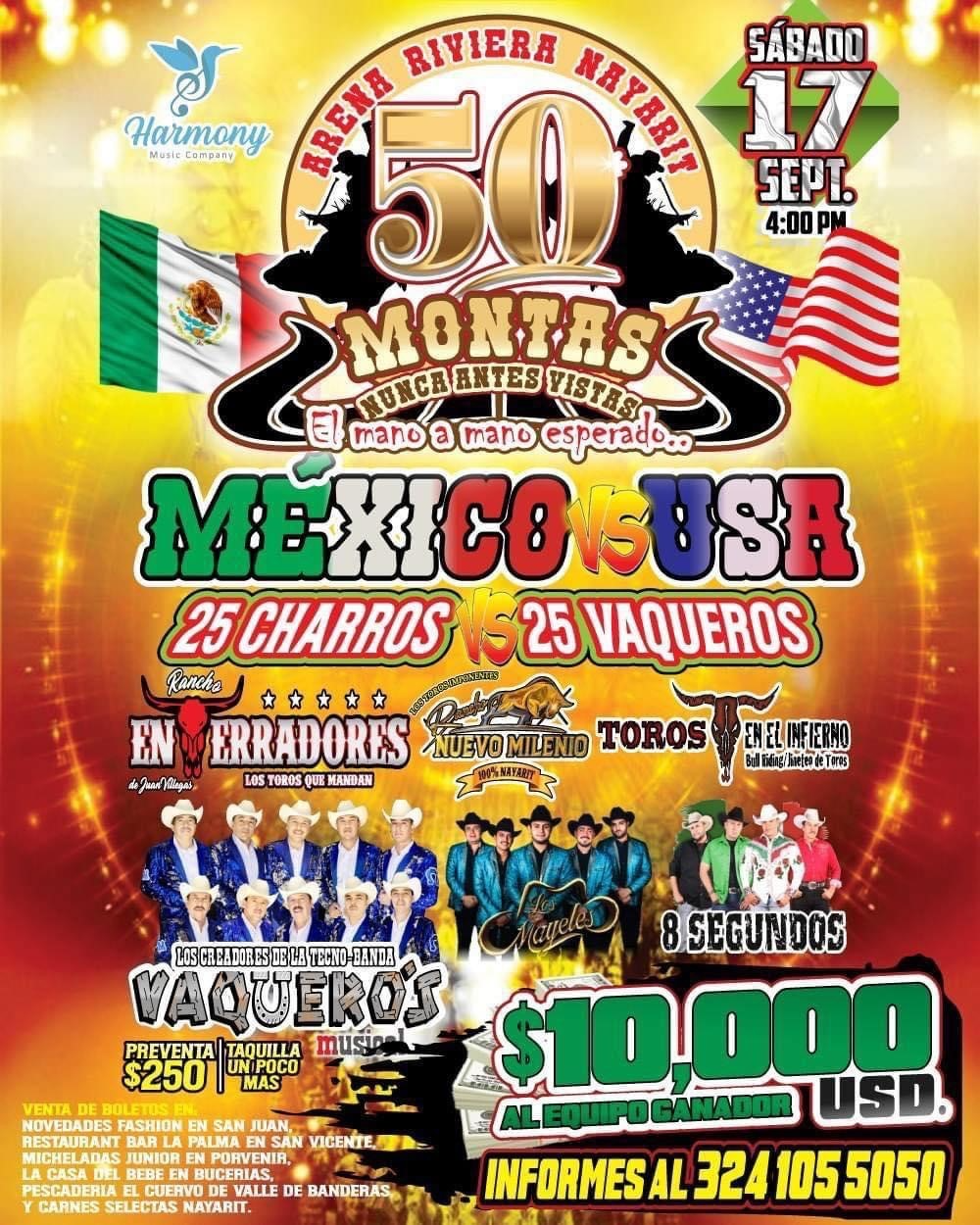
A colorful poster printed in Spanish promoted the recent international bull riding event in Mexico where the United States was represented by a team of three cowboys from Kansas and Missouri.


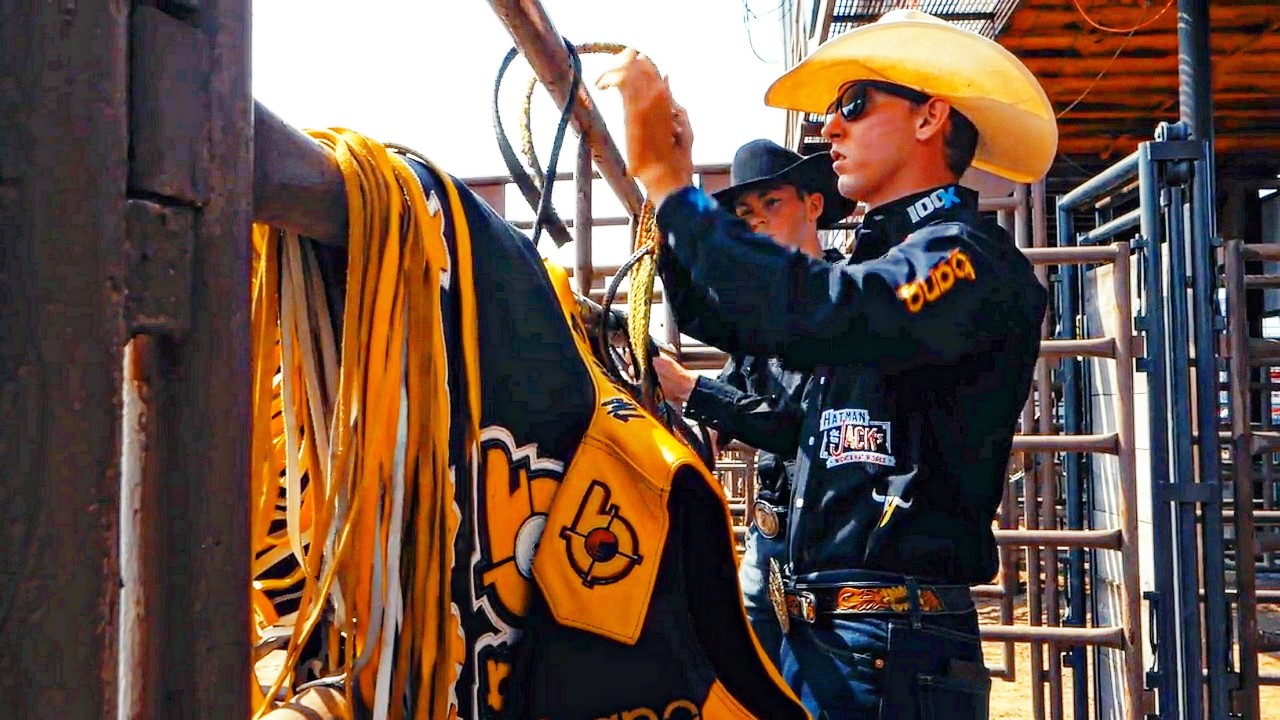
Flint Hills cowboy Devin Hutchinson is a Professional Bull Rider (PBR) competitor who was one of three cowboys on the team representing the United States at a recent event in Mexico.

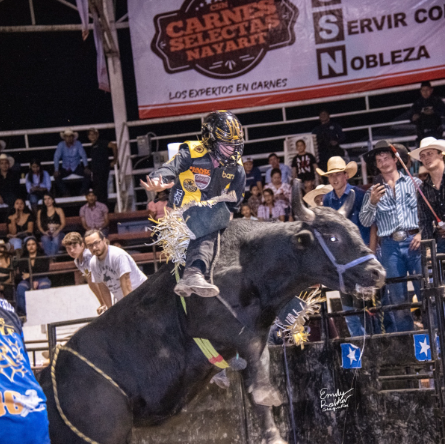
Dead Eye of En Erradores Rodeo Company was a challenge won by Flint Hills cowboy Devin Hutchinson when he was on the United States team at an international bull riding event in Mexico.


KU News: Expert helps shape another commemoration of Emmett Till case

0
From the Office of Public Affairs | http://www.news.ku.edu
Headlines
Contact: Rick Hellman, 785-864-8852, [email protected]
Expert helps shape another commemoration of Emmett Till case
LAWRENCE – The continuing relevance of the 1955 Emmett Till murder case to the issue of achieving equal rights for African Americans sometimes surprises even those who know it best.
For Dave Tell, University of Kansas professor of communication studies, his expertise in the commemoration of the infamous lynching continues to be called upon by documentarians and other historians. He is a consultant to the new exhibition, “Emmett Till & Mamie Till-Mobley: Let the World See,” opening Sept. 17 at the Children’s Museum of Indianapolis.
“I published the book ‘Remembering Emmett Till’ in 2019, and I kind of wondered if I would be done going to Mississippi,” Tell said. “But with the exception of some COVID pauses, I hardly slowed down. I find myself invited and going to Mississippi more than I ever did. I was just there, and I’m going back in two weeks to help the NBC affiliate in Chicago create its third Emmett Till documentary.”
After its initial display in Indianapolis, the new exhibit will travel across the country, including to Birmingham Civil Rights Institute in Alabama and the Martin Luther King Jr. Memorial Library in Washington, D.C. Its centerpiece is one of the vandalized signs that was erected at the spot where the teenage Till’s ravaged body was pulled from the Tallahatchie River following his abduction and murder by white men in retribution for allegedly having whistled at a white woman at a grocery store in Money, Miss.
Till, who lived in Chicago, was in the South visiting relatives at the time of his murder.
The exhibit concentrates on the nation-shaking impact of the decision by Till’s mother, Mamie Till-Mobley, to hold an open-casket funeral for her son and to allow photographs of the gruesome results of the racist attack to be published.
Tell has worked alongside curators, community members and the Till family to craft the exhibit.
“It is incredible,” Tell said. “It is technologically cutting edge, it is powerful and it will captivate audiences, young and old. The exhibit tells the story not just of the Till murder, but about how the community in Mississippi worked in concert with the family in Chicago to preserve the story.
“That’s why the centerpiece of the exhibit — the central artifact — is the shot-up sign that was erected in 2008 and subsequently filled with 317 bullet holes. They’re trying to stress that the Emmett Till tragedy can’t be confined to 1955. And so by putting up the sign that was vandalized in the 21st century, it is their way of pulling the story forward. It’s their chance to tell the story, not just of the Till tragedy, but of the community that rallied.”
When asked exactly which sign is in the exhibition, Tell gave a rundown of the dramatic history of the roadside marker at the site where Till’s body was pulled from the water.
“That sign was first erected in the spring of 2008,” Tell said. “It was stolen, thrown in the river and never recovered. It was replaced in the fall of 2008, and it stood there for eight years and accumulated 317 bullet holes. We counted them. It was taken down in 2016, and, eventually, in 2021, was displayed in the Smithsonian’s National Museum of American History.
“In 2018, a third sign was installed at the river site. It lasted only 32 days before it, too, was filled with bullet holes. This is the sign that’s going to go to Indianapolis. Finally, in the fall of 2019, a fourth sign was installed at the site, and, as far I know, it is the country’s only bulletproof roadside marker.”
-30-
————————————————————————
KU News Service
1450 Jayhawk Blvd.
Lawrence KS 66045
Phone: 785-864-3256
Fax: 785-864-3339
http://www.news.ku.edu
Erinn Barcomb-Peterson, director of news and media relations, [email protected]
Today’s News is a free service from the Office of Public Affairs

KU News: Ellsworth Medallion recipients and students win aerospace engineering design awards

0

From the Office of Public Affairs | http://www.news.ku.edu

Headlines

KU Alumni Association honors three recipients of Fred Ellsworth Medallion
LAWRENCE — Three Jayhawks will receive the 2022 Fred Ellsworth medallion for their faithful, longtime service to the University of Kansas and higher education. John Ballard, Overland Park; Warren Corman, Lawrence; and Kala Mays Stroup, Lawrence, will be honored Sept. 23 at the Burge Union in conjunction with the fall meeting of the KU Alumni Association’s national board of directors.

KU aerospace engineering students continue excellence in national design competitions
A team of student engineers from the University of Kansas took second place in a prestigious international aerospace competition, continuing KU’s long history of success at the event. KU Engineering’s “Hyperhawk” winnerThe students won recognition from the American Institute of Aeronautics and Astronautics for their design of an unmanned hypersonic spy plane, which they named the “Hyperhawk” system.

Full stories below.

————————————————————————

Contact: Jennifer Jackson Sanner, 785-864-9782, [email protected]
KU Alumni Association honors three recipients of Fred Ellsworth Medallion
LAWRENCE — Three Jayhawks will receive the 2022 Fred Ellsworth medallion for their faithful, longtime service to the University of Kansas and higher education. John Ballard, Overland Park; Warren Corman, Lawrence; and Kala Mays Stroup, Lawrence, will be honored Sept. 23 at the Burge Union in conjunction with the fall meeting of the KU Alumni Association’s national board of directors.

The Alumni Association created the award in 1975 in tribute to Fred Ellsworth, a 1922 KU graduate who became the association’s longest-serving leader. He retired in 1963 after 39 years as executive director and secretary.

John Ballard
Ballard, a 1973 School of Business graduate, recently retired as principal owner of Property Specialists Inc. in Leawood. As a KU student, he played football for the Jayhawks, and he has remained committed to assisting student-athletes through the years. He volunteered from 1985 to 2003 as a mentor to men’s basketball team members who were coached by Larry Brown and Roy Williams. He also assisted in recruiting Bill Self to Kansas as Williams’ successor, and he worked closely with Self and fellow alumni from 2006 to ’08 to champion the renovation of Jayhawker Towers Apartments for student-athletes. Most recently he served on the search committee in the hiring of Athletics Director Travis Goff. He and his wife, Cindy, are longtime member of the Williams Education Fund for Kansas Athletics.

For KU Endowment, the Ballards are members of the Chancellors Club and Jayhawk Faithful.

He has fulfilled vital leadership roles for the Alumni Association, leading the organization as national chair from 2018 to ’19 and serving six years on the board. As a longtime member of Jayhawks for Higher Education, the association’s statewide legislative advocacy network, Ballard has ardently made the case for higher education funding. He is a member of the JHE Steering Committee. His dedication to advocacy and his abiding interest in Kansas politics recently led him to co-found Kansans for Higher Education, an independent political action committee that includes alumni of both KU and Kansas State University who champion higher education and the far-reaching impact of both universities in serving all Kansans. He co-chairs the group.

“John is such a great example of what Jayhawks can do and should do as advocates,” said Kelly Reynolds Whitten, KU associate vice chancellor for state relations. “I’ve never seen a more dedicated Jayhawk, and I love to connect him with legislators because he is such a great, knowledgeable ambassador.”

Ballard has helped highlight KU’s growing presence in Kansas City, especially through the KU Medical Center and The University of Kansas Cancer Center. The Ballards have attended numerous Rock Chalk Balls through the years, co-chairing the event in 2011. They also have attended the Jayhawk Roundup in Wichita and traveled with the Flying Jayhawks.

They donated a 3,000-year-old papyrus to KU’s Spencer Research Library when their son, Jake, took a course taught by Paul Mirecki, associate professor of religious studies. After purchasing the papyrus at a fundraising event, the Ballards enlisted Mirecki’s expertise to learn more about it; the professor identified it as a rare example of the ancient Gnostic gospels. The Ballard Papyrus is now part of the Spencer Library’s Special Collections.

Warren Corman
Corman, a 1950 School of Engineering graduate, made an enormous impact on KU and higher education through his 69-year career in architecture and engineering. He served as an architect for the state of Kansas, the Kansas Board of Regents and KU. In the 1970s he led efforts to pass pivotal laws that improved the integrity and efficiency of the state’s process for selecting architectural, engineering and construction firms. He worked with former Kansas Gov. Bill Graves in the 1990s to advocate for a bond issue to help address the staggering backlog of deferred maintenance projects among the 600 buildings in the Regents system. The measure passed both houses of the Legislature with only one dissenting vote.

“Warren knew politics, and he knew how to get things through the Legislature,” said former Chancellor Archie Dykes, who led KU from 1974 to 1980. Dykes especially remembers Corman’s leadership in 1978 of the Bell Memorial Hospital construction at KU Medical Center, then the largest project in Kansas history. “Warren had to oversee that and push progress on construction to keep down cost overruns,” Dykes said. “He did it marvelously, and you rarely had any outbursts of anger from the medical doctors, which I thought was pretty good. He saw it through to a successful conclusion.”

Corman led hundreds of projects on nearly all KU campuses: Lawrence, Kansas City, Wichita, KU Edwards Campus in Overland Park and the Kansas Law Enforcement Training Center in Yoder. The extensive list begins with one of KU’s most exalted landmarks, Allen Fieldhouse, in 1955. Others include:

Dole Institute of Politics
Korean War Memorial
Hall Center for the Humanities
Danforth Chapel addition and renovation
School of Pharmacy
Multicultural Resource Center
Anderson Family Football Complex
After working from 1966 to ’97 for the Regents, Corman accepted Chancellor Robert E. Hemenway’s offer to become university architect and special assistant to the chancellor. Hemenway often asked Corman to find sites for new buildings and, in the case of the Multidisciplinary Research Building (“Mr. B”) in KU’s West District, oversee the construction in record time.

For Chancellor Bernadette Gray-Little, Corman served from 2012 to 2016 as consultant to the School of Engineering expansion.

For the Alumni Association, Corman, a World War II veteran who served in the Navy’s Seabees, continues to volunteer on the KU Veterans Alumni Network board.

Corman’s previous KU honors include Distinguished Alumnus of both the architecture and engineering schools, a Lifetime Service Award from Kansas Athletics and Grand Marshal of the 2011 Homecoming parade. He and his wife, Mary, also received the Spirit of 1912 Award during Homecoming 2019.

Kala Mays Stroup
Stroup, a three-time KU graduate, met Fred Ellsworth when he visited Great Bend, her hometown, to award her a scholarship to KU. After earning her bachelor’s degree in speech and drama in 1959, she remained on the Hill for graduate school, completing her master’s degree in education in 1964 and her doctorate in communication studies in 1974. She became a standard-bearer among women in higher education, going on to lead two universities as president and later the Missouri Commission of Higher Education. She also founded the National Nonprofit Leadership Alliance. which prepares and certifies undergraduate and graduate students to guide nonprofit organizations.

When Stroup and her late husband, Joe, returned to Lawrence in 2010, she also returned to the classroom as a University Honors Program lecturer, creating courses on nonprofit and philanthropic leadership and advising scores of students. She received Mortar Board’s Outstanding Faculty Award and the program’s Adviser Award.

From her own student years, Stroup credits honors program leader Professor Francis Heller and the incomparable Emily Taylor, dean of women, as pivotal influences. Stroup worked with Taylor as assistant dean of women, succeeding her as dean in 1975. Stroup also was selected as an American Council of Education Fellow to assist Dykes and the Board of Regents.

“Kala is an extremely talented woman. She was not only a leader at KU, but she was a leader for women’s causes everywhere,” Dykes said. “Just think of all the lives she affected. … She is no shrinking violet. She has strong opinions and values, and she has lived by them.”

Stroup left KU for Emporia State University, where she was the first woman vice president for academic affairs in the regents system. In 1983, she became the first woman to lead Murray State University in Kentucky as president. Seven years later, she became the first woman president of Southeast Missouri State University. In 1995, she oversaw all of Missouri’s public colleges and universities as higher education commissioner.

As a longtime KU volunteer, she served on the Alumni Association’s national board of directors from 1985 to 1990. For KU Endowment, she helped found and chaired Women Philanthropists for KU, and she is a member of the Chancellors Club and Jayhawk Faithful.

She also guided the Emily Taylor Women’s Resource Center (now the Center for Women & Gender Equity) as chair and led fundraising to establish a permanent KU Women’s Hall of Fame display in the Kansas Union. She has contributed to KU Libraries and chaired the advisory board.

Stroup in 2005 received the Distinguished Service Citation, then the highest award given by KU and the Alumni Association. She holds honorary doctorates from five universities and was named a Distinguished Alumna of the KU School of Education & Human Sciences. She is a member of the KU Women’s Hall of Fame.

Since 1975, 164 KU alumni and friends have received the Fred Ellsworth Medallion.

-30-
————————————————————————
The official university Twitter account has changed to @UnivOfKansas.
Refollow @KUNews for KU News Service stories, discoveries and experts.


————————————————————————

Note to editor: Hometown interest for: Goodland, Lawrence, Leawood, Lenexa, Olathe, Overland Park and Kansas City, Missouri.
Contact: Cody Howard, 785-864-2936, [email protected]
KU aerospace engineering students continue excellence in national design competitions
LAWRENCE — A team of student engineers from the University of Kansas took second place in a prestigious international aerospace competition, continuing KU’s long history of success at the event.

The students won recognition from the American Institute of Aeronautics and Astronautics for their design of an unmanned hypersonic spy plane, which they named the “Hyperhawk” system. Ron Barrett-Gonzalez, professor of aerospace engineering, said the award is the 41st that KU students have received in AIAA competition over the last decade.

“Our department is not exactly like the basketball team, but if you keep posting win after win after win, eventually people take notice,” he said.

The KU team was led by graduate student Nathan Wolf, of Olathe, who was previously part of a third-place team in the AIAA’s 2021 competition.

“It’s an honor to have won two of these design competitions,” Wolf said. “Although our aerospace engineering department is relatively small, we have a rich history of competing in these competitions with much larger universities and coming out on top.”

Other members of the team were KU students Isaac Beech, of Lenexa; Justin Clough, of Leawood; Garin McKenna, of Overland Park; Gerell Miller, of Goodland; Zach Rhodes, of Lawrence; and Jack Schneider, of Kansas City, Missouri.

The team offered judges two variants of the Hyperhawk system. One, an “endo-atmospheric” vehicle, which flies within 100 kilometers of the Earth’s surface, included a three-stage rocket with a reusable third stage the students labeled “Baby Jay.” The vehicle was designed to fly over its target at Mach 10, or roughly 7,000 miles per hour. The “exo-atmospheric” version placed the vehicle and Baby Jay reusable booster on a SpaceX Falcon 9 rocket. Both versions would be capable of being deployed on a new mission within 24 hours.

Barrett-Gonzalez said AIAA judges were particularly impressed that the student team incorporated an analysis of how laws and international treaties regarding both endo- and exo-atmospheric flight affect the Hyperhawk’s proposed mission parameters.

“We have very good contacts at the KU School of Business the KU School of Law,” he said, “and we had a great understanding of the legal issues at hand and the business case that could be made.”

Barrett-Gonzalez said KU students learn not just how to design vehicles during AIAA competitions, but also how to work within a team context — a necessary skill as they move forward in their careers.

“It’s one thing to be able to do something computationally or analytically as an engineer,” he said. “It’s another thing to get along with people and to work together toward a common goal and actually wind up making a functioning vehicle. The practical skills of teamwork were well solidified in the group.”

Winning at AIAA is a good way to jump-start those careers, added Wolf.

“These competitions are a great way to get noticed in the industry,” he said, “and faculty continue to get requests about students who compete from alumni and prestigious aerospace companies.”

During a recent summer internship with Boeing, Wolf said he ended up working with several KU alumni — including previous AIAA winners.

“The aerospace department here at KU clearly has a legacy of graduating exceptional design students,” Wolf said, “and I am just honored to continue that legacy.”

-30-

————————————————————————

KU News Service
1450 Jayhawk Blvd.
Lawrence KS 66045
Phone: 785-864-3256
Fax: 785-864-3339
[email protected]
http://www.news.ku.edu

Erinn Barcomb-Peterson, director of news and media relations, [email protected]

Today’s News is a free service from the Office of Public Affairs
KU News: KU experts can discuss role of climate policy issues in November midterms

0

From the Office of Public Affairs | http://www.news.ku.edu

Media advisory

Contact: Mike Krings, KU News Service, 785-864-8860, [email protected], @MikeKrings; Brendan Lynch, KU News Service, 785-864-8855, [email protected], @BrendanMLynch
KU experts can discuss role of climate policy issues in November midterms

LAWRENCE — As the 2022 midterm elections near, climate, transportation and related policies are among the issues coming to the forefront among climate voters and the broader electorate. University of Kansas School of Public Affairs & Administration and Environmental Studies Program faculty experts are available to speak with media about climate, climate change, public planning, infrastructure, transportation and related issues’ relevance in the November midterm elections as well as how such policies affect the daily lives of citizens and public officials.

Bradley Lane
Bradley Lane, associate professor of public affairs & administration, is an expert in transportation, transportation policy and related issues. He can discuss fuel prices, electric and autonomous vehicles, public transportation and the role of transportation issues on the campaign trail.

“Now is one of the most exciting times for transportation. Evolving technologies like electric-powered vehicles and automation, and mobility services providing cars, e-bikes and e-scooters promise to affect how our society moves,” Lane said. “Disruptive phenomena like the COVID-19 pandemic and fluctuating gasoline costs are making us think more about how we get around, how we make a living and what kind of lives we want to live. But exactly what these changes will be and how our lives will change is a story that remains to be told.”

Lane has researched and written extensively on transportation issues. He can discuss national topics such as federal transportation policy and local/regional issues like the recent announcement of a $4 billion Panasonic plant in northeast Kansas that will manufacture batteries for electric vehicles.

Ward Lyles
Ward Lyles, associate professor of public affairs & administration, can discuss climate and its role in communities and public planning. Issues such as flooding, catastrophic storms, the role of climate change therein and how public officials plan — and sometimes fail to plan for handling such events.

“Climate change now touches every aspect of our lives in Kansas and around the country, even though it can be hard to admit that because doing so means we have to deal with an increasingly uncertain and scary future,” Lyles said. “What we know is that over the next few years, Kansas and all states will make critical choices that will shape whether its economy, landscape and people suffer or prosper for decades to come. We need to discuss these choices and their implications every day from here forward.”

Lyles has conducted research in how public officials plan for handling events such as floods, how natural disasters affect public infrastructure and the role of caring in public planning. He can discuss such topics on national, state and local levels, including the Panasonic plan, land use and related issues in northeast Kansas.

To schedule an interview with Lane or Lyles, contact Mike Krings at 785-864-8860, [email protected] or @MikeKrings.

Shannon O’Lear
Shannon O’Lear, professor of geography & atmospheric science and director of KU’s Environmental Studies Program, can discuss the political geography of environmental issues, environmental security and vulnerability, human dimensions of global change and climate science. She’s the author of the 2018 book “Environmental Geopolitics,” which covers topics from energy and food security to resource conflict.

“The biggest environmental concern that candidates should be talking about and urged to take action on is infrastructure to support America in a changing climate and with justice and equity in mind,” O’Lear said. “Water is already proving to be significant in different ways.”

O’Lear said current events, like flooding in Kentucky, demonstrate that the U.S. is not ready for more frequent and more intense storms. Current events also demonstrate that economic practices are not adapting to increased drought, citing cattle operations in western Kansas and altered allocations of the Colorado River, and that water infrastructure continues to fail, as in Jackson, Mississippi.

“Our ability to provide, withstand and adjust to changes in the availability, reliability and sudden changes to water supply should have us thinking about how we are — as a country, as states, as municipalities, and as agricultural and industrial regions — utilizing and preparing for the new context of water in the current circumstances of a dynamic climate. Privatizing water supplies may be an easy answer, initially, but it will be important to think in terms of establishing a foundation for equitable and just access to water into the future.”

O’Lear said energy infrastructure is another concern.

“We know that stepping back from fossil fuels is the only reliable, long-term way to slow atmospheric warming — and hydraulic fracturing, which is not even allowed in most European countries, is toxifying huge volumes of water that are needed elsewhere,” she said. “Just as important as stepping back from fossil fuel reliance is facilitating the development of wind and solar power. Currently, there are bottlenecks in supplies and in regulation that are keeping promising energy infrastructure from being built. Expanding the grid of renewable energy – or maybe shrinking the grid to be more decentralized and flexible – could be done in a way that supports consumers in a fair and reliable way.”

The KU researcher suggested public perception of resource consumption could drive societal change.

“What would happen to our water supply if Americans were incentivized to replace thirsty, chemical-reliant lawns with native plants or gardens, for instance?” she said. “There was a time in this country when fur coats were equated with glamour and quality, but many people have changed their minds about what it means to wear fur. How might we generate a similar change in thinking and practice around how much water and energy we consume? I would be very interested to listen to a candidate who is talking about easing the demand on our infrastructure and allowing a more equitable distribution.”

To schedule an interview with O’Lear, contact Brendan Lynch at [email protected] or 785-864-8855.

-30-

————————————————————————

KU News Service
1450 Jayhawk Blvd.
Lawrence KS 66045
Phone: 785-864-3256
Fax: 785-864-3339
[email protected]
http://www.news.ku.edu

Erinn Barcomb-Peterson, director of news and media relations, [email protected]

Today’s News is a free service from the Office of Public Affairs
Man’s Best Friend, we Love You!

0
Today I want to pay homage to man’s best friend, for nowhere is man’s best friend appreciated more than in the world of outdoor sportsmen. They sit beside us in hunting blinds; often so close they’re nearly beneath us. They help us carry our gear to and from campsites, the boat, the woods and even back to the truck when the excursion is over. They are perfectly at home in the pickup, whether in the back, on the floor or in the seat beside us. They require very little in the way of maintenance, perhaps an occasional scrubbing to keep them squeaky clean. Yet, these stalwart companions provide us with years of dedicated, selfless service. Of course, I’m talking about man’s best friend, the plastic 5-gallon bucket.
I wish they had existed when I was a kid. Oh, we had 5-gallon buckets, but not plastic. Dad had a hanging feed bunk in the barn and if you couldn’t surprise the steers and beat them to the bunk at feeding time, the only way to survive the ordeal was to beat them out of the way with the bucket. I ruined more metal buckets that way than I care to remember. Had they been plastic, they’d have lasted forever. But, like I stated above, no one depends upon plastic 5-gallon buckets more than the outdoor sports enthusiast. They come in white, gray, green, black and camouflage. They can have metal handles or plastic. They are the ultimate seat / equipment carrier rolled into one.
No fisherman worth his or her fish and chips will have less than half-a-dozen, and that’s just in the boat. Be sure to designate one on the boat for those inopportune times when the need arises to relieve yourself of your morning coffee in the middle of the lake, an especially useful feature for your wife or girlfriend. Although a tad large, they also work well for bailing out water rushing into the boat when you fail to put the drain plug back into the drain hole in the transom before leaving the dock. When ice fishing, 2 nice white ones (to color coordinate with your surroundings) will carry your rods, tackle, bait and lunch onto the ice. One turned upside down will then become your seat, while the other holds your fish. Fitted with a lid of some description, one bucket can do both. When a fish is caught, simply jump up, lift the lid, deposit the fish then close the lid and repose yourself again. For you intense ice fishermen (you know who you are) this also hides your catch from prying eyes. In any fishing situation, plastic 5-gallon buckets are the ideal tool for transporting fish. Once home, they again spring into action as the supreme vessel to hold all the “by-product” when cleaning your catch. Bass Pro even sells a fish cleaning board specially made to fit the top of one. I also found a kit containing all the necessary parts to turn a 5-gallon bucket into an aerated bait container.
Though fishing seems to bring out the best in 5-gallon buckets, hunters also benefit from them. Again, they are the cat’s meow for carrying equipment to and from a blind or stand. To carry all my trapping supplies, I use one fitted with a canvas tool carrier. Though small camp chairs are probably more comfortable for a long wait, the buckets again excel as seats. Cabela’s offers a variety of seats, all made to fit 5-gallon buckets. One named the “Silent Spin Bucket Seat,” is equipped with bearings like a lazy susan, allowing a hunter to swivel and see in different directions. This seat can be purchased alone, with an added storage pouch that drapes around the bucket, or with an attached “stadium” seat, complete with back. Kits are also available with all the components needed to convert our friend the bucket into a hanging deer feeder (a nice camouflage colored number is probably best suited here.)
Not a hunter or fisherman, and feeling left out?… Wait, there’s more! What’s the most logical use for a plastic 5-gallon bucket around the campsite?… Right you are! I found several products to turn 5-gallon buckets into portable camp toilets. One called “Luggable Loo” is a toilet seat and lid that the company says, “effortlessly snaps on and off” any 5-gallon bucket, and allows you to “Stop dreading the call of nature when enjoying your next hunting, fishing or camping trip.” Now if you truly do dread “the call of nature” you may have some deeper problems than where to answer it. Anyway, they should probably make one in pink for the ladies and call it Luggable Louis. Just remember, these things won’t flush and don’t set over a hole in the ground so you become responsible for disposing of the contents! Please take the high ground here and empty them at the camps designated dumping station. Don’t nonchalantly toss it under the neighbor’s camper and try to blame it on their big dog.
Someone has said that there is no greater force in the universe than that force that holds 5-gallon buckets together when stacked. We buy them full of some product, use the product, and are left with the bucket, which, in some cases, is probably more useful than the product inside. So, after reading this, find you best friend and give them a little extra attention; kiss your wife and scratch the dog too while you’re at it…Continue to Explore Kansas Outdoors!
Steve can be contacted by email at [email protected]