Tuesday, March 24, 2026
Home Blog Page 930

Insight: History of Hedge

0

Greg Doering
Kansas Farm Bureau

Osage orange trees are still common throughout much of the United States, though not many people appreciate just how much the thorny, dense trees have shaped our country. Before Christopher Columbus’ arrival, Osage orange had a limited range in the Red River basin in Arkansas, Oklahoma and Texas. Like the droves of Europeans who followed, the tree eventually spread to all corners of our country so long as you don’t count Alaska and Hawaii.
The thorny, dense trees go by a number of names, including hedge trees, prairie hedge, hedge apple, horse apple, bowwood or yellow wood for the hue of the heartwood. Whatever moniker you choose, the trees were the original barbed wire. After sprouting, the hedge trees were aggressively pruned to promote thick growth that was woven into a living fence considered to be “horse high, bull strong and hog tight.”
Even after the widespread adoption of barbed wire, wood from the hedge tree is still highly prized for fence posts based on its ability to withstand the elements. Termites and other insects don’t bother the wood. Water doesn’t penetrate the dense grain either.
Today, a post made from Osage orange is likely to outlast the strands of barbed wire attached to it. In fact, the posts can be difficult if not impossible to work with if they’re left to season too long after cutting. Hedge posts don’t decay, rather they almost petrify into something between wood and stone.
Osage orange’s qualities extend well beyond corralling cattle and other livestock. Its tight grain makes the wood extraordinarily flexible, enough so that a bow made from the tree was worth a horse and blanket in the 1800s. Osage orange also offers the highest heat value of any species when burned as firewood.
Osage orange is probably the most popular and widely distributed plant that isn’t a food source for either humans or animals. Its fruit is a softball-sized green ball with folded contours that surround a cluster of seeds. We called them brain blobs growing up because the outer shell consisted of folded contours. They were dense and would make a satisfying sound when flung into a tree trunk. They’ll start falling off trees any day this time of year.
Rumor has it the fruits keep all sorts of creepy-crawlies away, from boxelder bugs and crickets to spiders and other pests, especially when placed in basements or near the foundation of a home. Research has yet to find any evidence to support those claims, yet the legends endure.
Steel T-posts and pipe braces are gaining favor, but some still prefer to use hedge posts for fencing. Composite compound bows can launch an arrow with a much greater force than the traditional longbow, yet Osage orange bow staves are still readily available. The living fencerows are long gone, but hedge trees planted during the Great Depression as windbreaks still mark the edges of fields.
There’s no one quality that has seeded the Osage orange across the countryside, rather versality is its main attribute. From hedge to post or bow to kindling, mankind has found it useful for centuries. While modern materials will eventually win out, they won’t ever have a history quite like hedge.

Good News for a Good Day

0

Dylan Yoder
Columnist

When times get tough, and the rigor of day-to-day business gets rough, I always like to remember that I have good things going on in my life. With the constant shifts in COVID news, the state of the market in just about anything, or the continuous violations of human rights in Ukraine and the subjugation of Iranian Women, it’s easy to feel down on the state of our world. However, as I’ve said before, and as I will continuously say, there are always good things happening too. There is always a happy story unfolding somewhere in the world, whether it be happening to you, your neighbor, or to someone you’ve never met before. With that being said, let’s take a look at some heartwarming stories   both near and far.
Starting first off with the spectacular displays of human rights movements that are happening in Iran today. Now yes, as I stated in the first paragraph, terrible subjugations of the Iranian women in their society have been in place for so many long years and centuries even. However, things have started to change a bit in recent times. The recent death of a woman in police custody has spurred numerous outcries from the women of the nation. Mahsa Amini was arrested on the account that she wasn’t wearing the traditional hijab, required of women in public places, and unfortunately became a martyr for the movement. As sad and frustrating as the situation is, however, it’s important to note that things are changing, and hopefully for the better. Women of Iran are starting public demonstrations of hijab burning, campaigns, and various other movements in order to gain the human rights that every living human deserves freely.
In local good news, Hutchinson’s very own Sandhills Brewery has become the recent recipient of neighborhood love. The small cozy brewery became under fire recently from the Kansas Alcohol and Beverage Control all for the reason that they weren’t making enough monetary sales. Upon hearing this news and fearing for the continuation of their business, The Brewery owner sent out an email to the community, hoping for the best as he struggled to find enough sales to keep the doors open. The following week, he had customers lined out the front of his door waiting to be served. Because of this act of kindness, the business made thousands and managed to pass through the first several hurdles he had to keep the brewery afloat.
As it would turn out, sometimes the nicest people aren’t always where you’d expect to find them. Two former Wall Street debt collectors have recently wiped away $6.7 billion dollars in medical debts of low-income families across America. They do this by simply buying loans from hospitals at discounted rates. As with every legal and medical-related thing, there’s much more that goes into it than just that, and you can find out more by simply searching the movement, titled RIP Medical Debt. Regardless, in a society without health systems in place, as costly as they are, it’s a delight to know that someone’s always interested in helping out.
With those things being mentioned, it’s important to know that there are an incredible amount of good things that happen in the world on a regular basis. Sometimes, you just have to dig a little for the good news in life. Just know that it’s there, and there are always good things happening worth being happy about. With that, hopefully, you got some good news to start out a great day.

‘Music by the Mill’ Fundraiser Event To Feature ‘Old Man Lingonberry’

0

Music lovers, history enthusiasts, and community supporters will love the new FUNdraiser at the Lindsborg Old Mill & Swedish Heritage Museum on Saturday, October 22.
“Music by the Mill” is a new fall event featuring great music, delicious food, and the opportunity to support community heritage going back more than a century.
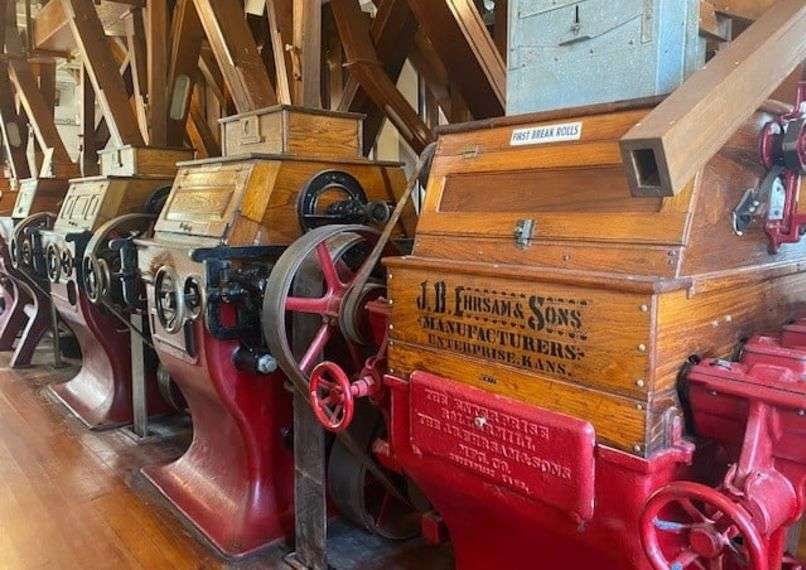
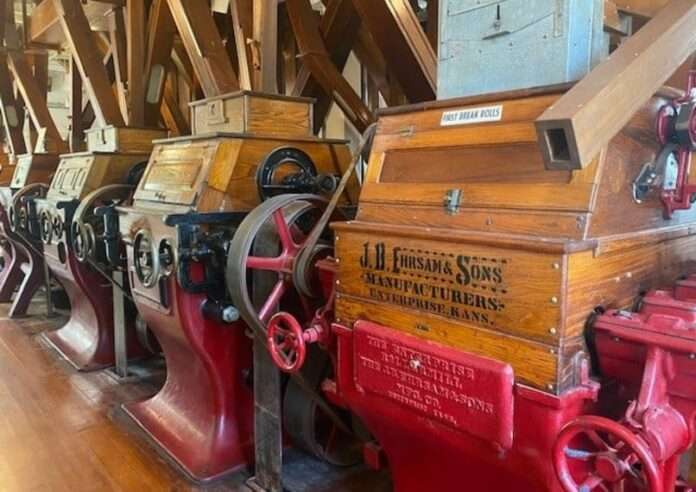
Local Lindsborg band Old Man Lingonberry will be the featured entertainment at Music by the Mill, to be held 4-6 p.m. by the Smoky Hill River and the museum’s historic 1898 Smoky Valley Roller Mill.
With genre-crossing influences for a wide, family-friendly appeal, Old Man Lingonberry is Tyler Atkinson, Taton Tubbs, Tyler Tubbs, and Jesse Crawford. Videos of their past performances are available at www.facebook.com/oldmanlingonberry.
While taking in the tunes, guests can enjoy mouth-watering, authentic Mexican food – tacos, tortas, quesadillas, and burritos – from the La Jefa Mexicana food truck!
No ticket or admission fee is required, but freewill donations are encouraged. All proceeds will go to the continuing support and maintenance of the museum. In addition to the roller mill, centerpiece attractions also include the 1904 St. Louis World’s Fair Swedish Pavilion, an 1870 homestead cabin (one of the first above-ground structures in the area), and McPherson County’s first courthouse – called Sweadal.
Caroline de Filippis, Community Development Director, said Music by the Mill will be a fun way to show support for the heritage of the Smoky Valley and Kansas.
“We want to invite everyone to come celebrate with us,” de Filippis said. “The museum and river is a beautiful place that will be filled with beautiful music. We can’t wait to see the community come together and support this incredible treasure.”
The Lindsborg Old Mill & Swedish Heritage Museum celebrates and preserves the pioneering spirit of the Smoky Valley by educating, entertaining, and building community across generations so that history comes to life. With special emphasis on the period from 1870 to 1910, the museum includes two buildings on the National Registry of Historical Places and extensive archives and artifact collections. The museum seeks to honor the rich story of Lindsborg and its people.
Learn more about the museum at www.oldmillmuseum.org.

Midwest farmers hope their hops can add a distinctive flavor to your craft beer

0

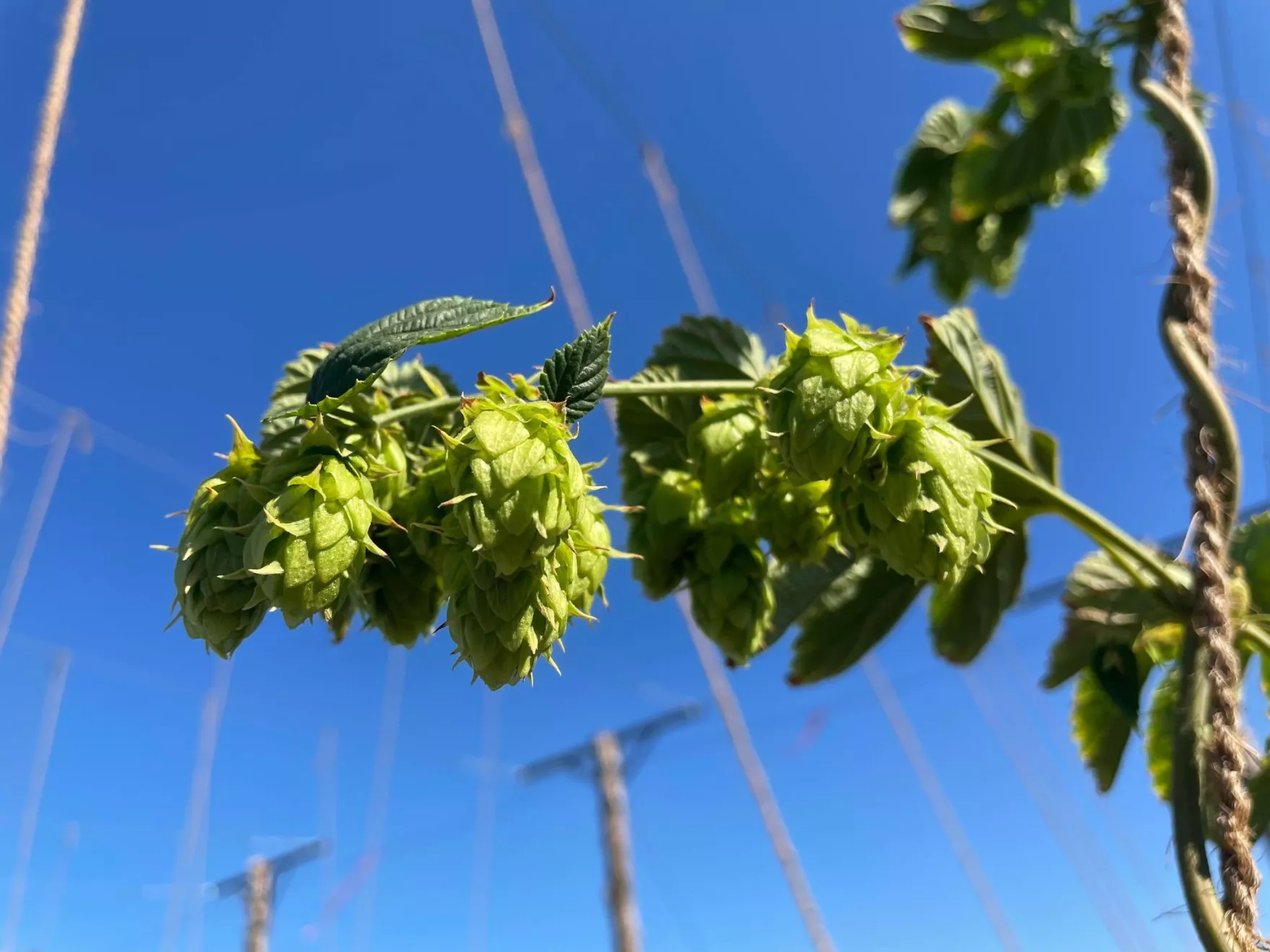
Hop cones (pictured above) give beer its smell and flavor. The biggest producers of hops in the U.S. are Washington, Oregon and Idaho, but researchers and farmers are looking for ways to grow the crop in the Midwest. Photo by Markus Spiske Unsplash.com

Xcaret Nuñez
Harvest Public Media

The craft beer industry is driving farmers in the Midwest to grow hops for their local beer makers. But the crop is not easy to grow — it’s labor intensive and expensive.
For the past 10 years, craft beer breweries have popped up all over the country, and some Midwest farmers are responding to the local craft beer craze by growing their own hops.

In the U.S. nearly all hop production takes place in the Pacific Northwest, with 70-75% of the crop grown in Yakima, Washington, where it’s often irrigated. The crop thrives in a moist temperate climate with long sunny days. Yet while a lot fewer acres of hops are grown in Midwestern states, (Continued on page 20)
(HOPS Continued from page 1) farmers and researchers are trying to change that.
Katie Stenmark is a horticulture doctoral student at Oklahoma State University and is one of three hop growers in Oklahoma. She’s currently researching how well different hop varieties will grow in both a greenhouse and on a quarter of an acre field environment.
“Oklahoma has ample access to wheat and barley for making beer, but we don’t have access to hops,” Stenmark said. “The overall goal of this project is to create quality hop cones that we can then use for a local brewery to create an Oklahoma-grown beer.”
Stenmark said her three-year study on growing hops will eventually help make recommendations to farmers interested in growing it in Oklahoma, where there’s currently less than an acre of the crop. Universities in Nebraska, Iowa and Missouri have also invested in research into growing the specialty crop.
More than 85% of Americans live within ten miles of a brewery, according to the Brewers Association, a trade organization of small and independent brewers. Although the latest hops production report from the U.S. Department of Agriculture shows total acreage was down by 2%, it doesn’t get the whole picture — it only records data for Washington, Oregon and Idaho, the three major hops producers.
“Since craft beer consumes so many hops, it’s really spiked a demand for this commodity,” said Maggie Elliott, science and communications director for Hop Growers of America. “Growers in the Midwest are engineering adaptive ways to embrace different challenges.”
Ryan Triggs, a Kansas hop grower and co-owner of Kansas Hop Company, has been learning how to adapt to the state’s heavy soil and daylight conditions since 2016. His familiarity with the craft beer scene and marrying into an agricultural family sparked his interest in growing hops. But he said it’s taken a lot of work to get to where he is now.
“We sold all our hops to four different breweries in our first year,” Triggs said. “But we had about 20 people on the field handpicking hop cones in the August heat — it was miserable. We realized quickly that we never wanted to handpick again.”
While the average size of a hop yard in the Pacific Northwest is 800 acres, Triggs grows hops on 3 acres — and his farm makes up about 30% of Kansas’ hops acreage. Triggs sells hops to about 75 breweries across the Midwest and opened a taproom called Tall Trellis in Olathe, Kansas, earlier this year.
But growing hops on a commercial scale is labor intensive and expensive. Adapting to a region’s challenges, like installing LED grow lights and an irrigation system, is a financial investment for farmers. It also requires setting up 18-foot trellises with coir twine every year for the hop bines, or long stems, to grow on.
“So far, there’s been no way to mechanize how to string the hops,” Elliot said. “Sometimes people have to even train the hops to grow and have to wind twine around every single plant.”
According to researchers at Michigan State University, it costs nearly $14,000 for a farmer to establish a hop yard the size of an acre. Then it takes about three years for hop plants to mature and produce a good yield.
Hops farmers are exploring how the climate and the soil the crop is grown in affect its flavor, similar to wine grapes. Triggs said having a unique flavor will make a grower’s hops stand out from the rest.
“It’s like having a brand-new color for an artist that they’ve never had before when they’re trying to paint a picture,” he said. “So giving a brewer an ingredient that they haven’t had access to before, opens up some doors as far as making new beers that can’t be released anywhere else.”
As for Stenmark, the Oklahoma State researcher, she looks forward to discovering how locally grown hops will influence local brews.
“We’re not necessarily expecting the same flavor profile as something that would be produced in the Pacific Northwest,” Stenmark said. “But we’re interested in finding out Oklahoma’s flavor of beer.”
https://www.kcur.org/news/2022-09-22/midwest-farmers-hope-their-hops-can-add-a-distinctive-flavor-to-your-craft-beer