Wednesday, March 25, 2026
Home Blog Page 935

Horse Stiffness Might Be ‘Tying-Up’ Syndrome With Various Causes, Yet Unknown Single Cure

0
Frank J Buchman
Frank Buchman

Tying-up is a syndrome or description of a horse with muscle damage that has many different causes.
“It is one of the most misunderstood and controversial syndromes in the athletic horse,” said Dr. Stephanie Valberg, equine veterinarian.
“Since there are several causes, some of which appear to be inherited, there is no single cure,” she added.
Typical signs of tying-up include a horse which becomes stiff, sweats, and is reluctant to move, according to Valberg.
In recent years, researchers have learned a great deal about tying-up, scientifically named exertional rhabdomyolysis.
Unfortunately, the information has shown that some of the most common beliefs about tying-up have been proven wrong.
What early researchers considered to be a problem with one cause, it is actually a broad-scale syndrome requiring continued research.
“In other words, tying-up is not one disease, but several different diseases with similar signs but different causes,” Valberg said.
Therefore, management of a Thoroughbred suffering from tying-up differs from management of a Quarter Horse or a backyard pleasure horse.
Some horses are healthy athletes that tie-up sporadically likely due to exercise in excess training, electrolyte depletion, or dietary imbalances.
“They respond well to rest, a gradual return to a graduated training regime, and balancing the diet,” Valberg said.
Other horses will suffer from chronic episodes of tying-up that can be debilitating.
“Our research suggests that there might be several inherited reasons for chronic tying-up,” Valberg said.
Certain lines of Thoroughbreds seem more susceptible to one form of tying-up with abnormal regulation of muscle contraction.
Triggering events include stress, excitement, lameness, high grain diets, and exercise at submaximal speeds.
Young fillies are most commonly affected and usually are the most nervous and high strung.
Prevention of further episodes of tying-up in susceptible horses should include standardized daily routines and minimizing stress and excitement.
The diet should be adjusted to include a balanced vitamin and mineral supplement, high-quality hay, and a minimum of carbohydrates.
Daily exercise is essential, either in the form of turnout, longing, or riding.
“Sometimes medications such as dantrolene given to fasted horses 90 minutes before exercise are helpful to prevent tying-up,” Valberg said.
Another form of tying-up is polysaccharide storage myopathy (PSSM). It is characterized by the accumulation of glycogen (storage form of sugar) and an abnormal sugar (polysaccharide) in skeletal muscle.
A form of PSSM called type 1 PSSM is caused by a mutation in the glycogen synthase gene. “Type 1 PSSM occurs in many Quarter Horses, draft breeds, warmbloods and several other breeds,” Valberg said.
It has not been identified in Thoroughbreds to date. This mutation causes PSSM horse’s muscle to continually make glycogen.
Consequently, when beginning exercise, they have trouble switching over to burn glycogen for energy rather than storing glycogen in muscles.
“Affected horses develop stiffness, muscle cramping and soreness due to a deficit of energy generation in their muscles,” Valberg said.
“PSSM type 1 horses are often calm, sedate horses that tie-up after a lay-up, especially when fed grain,” Valberg said. They tend to be found in disciplines such as halter and pleasure horse performance and do not usually perform well at speed.
Type 2 PSSM has a slightly different microscopic appearance and is due to a yet unknown genetic cause. It occurs in Quarter Horse-related breeds, warmbloods and likely other light horse breeds possibly including Thoroughbreds.
While type 1 PSSM is diagnosed by a DNA-based blood or hair root test, type 2 PSSM requires muscle biopsy.
“Horses with severe signs of PSSM should also be tested for a second genetic mutation called MH,” Valberg said. “When MH and type 1 PSSM occur together horses may develop severe episodes of tying up which can be fatal.”
Treatment of both forms of PSSM involves supplying horses with an alternative energy source such as fat rather than sugar.
Eliminating grain and feeding fats such as rice bran or vegetable oils stabilizes blood sugar and provides energy metabolism.
It is essential that horses with PSSM be turned out as much as possible and exercised often, even if only for 10 minutes every day.
“Horses with mild to moderate signs might be able to return to full athletic performance with management changes,” Valberg said.
“Breeding horses with PSSM has at least a 50 percent chance of passing the trait on to offspring,” she said.
Pre-screening horses for type 1 PSSM is now possible at the University of Minnesota Diagnostic Laboratory.
If a horse ties up, here are suggestions:
1) Stop exercising the horse and move it to a box stall. Do not force the horse to walk.
2) Call veterinarian.
3) Blanket the horse if the weather is cool.
4) Determine if the horse is dehydrated due to excessive sweating.
5) Provide fluids with small, frequent sips of water to hot horses, and provide free access to water once the horse has cooled out.
6) Relieve anxiety and pain with drugs prescribed by veterinarian.
7) Remove grain and feed; provide only hay until signs subside.
8) Small paddock turnout is good once the horse walks freely.

CUTLINE

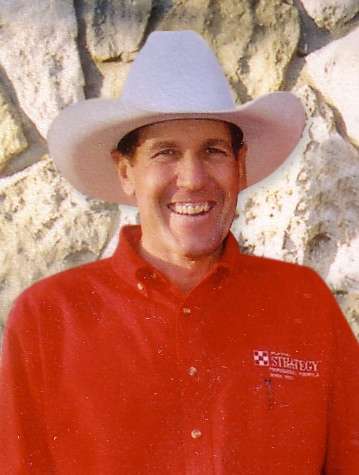
Tying-up is a syndrome or description of a horse with muscle damage that has many different causes, said Dr. Stephanie Valberg, equine veterinarian.

Stagecoaches Only Went Short Distances In Cold Weather

0

“It must have been awfully cold riding across the country in a stagecoach.”
That’s true, but Jon Mixon, who’s done considerable stagecoach research, said, “Stagecoaches were for traveling short distances.”
The fact was that if weather was “freezing,” passengers didn’t travel very far or didn’t travel at all, he added.
Stagecoach passengers usually only rode to a relatively close destination “This would be a matter of hours or perhaps just a day,” Mixon said.
“With few exceptions, the stagecoach itself and the horses were deemed more valuable than the passengers,” according to Mixon.
The stagecoach would not travel far in subzero temperatures if it indeed traveled at all that day. “The weather could cause the horses to overexert themselves and die,” Mixon said.
Dead horses do not make a successful business. “Fewer horses meant that travel was going to take longer,” Mixon pointed out.
If the weather was too cold for the horses, the stagecoach didn’t travel. “If it did, the passengers probably regretted that they took that coach on that day,” Mixon said.
The Old West was not known for its racial progressiveness, Mixon emphasized. “If a racial minority took a stagecoach, they would have to sit on the roof of the stagecoach,” he said.
Blankets were available as were buffalo hides “However traveling outside in inclement weather is always going to be unpleasant, regardless hos ‘bundled up’ you are,” Mixon recognized.
While heaters were employed for short distances, fire dangers made them likely used for wealthier or more vulnerable passengers.
Additionally, carrying fuel for heaters reduced the amounts of cargo and passengers that could be taken. “There was always a weight limit for the stagecoach as well as for the horses,” Mixon said.

KANSAS STATE FAIR ANNOUNCES 2022 ATTENDANCE NUMBERS

0

The Kansas State Fair announced that 315,273 people went through the gates at their 2022 event held September 9-18 in Hutchinson, versus 281,981 in 2021.

The Nex-Tech Grandstand concerts were well attended, and initial projections show carnival attendance trending over last year. Food and commercial vendors were also enthusiastic with their early sales projections.

Sponsorships also increased this year. “We have phenomenal partners and sponsors. I couldn’t be more pleased with the level of commitment our sponsors have shown us,” stated General Manager Bryan Schulz. “We would also like to thank all who attended, and want to build on this year’s success as we think ahead to 2023.”

The 2023 Fair is scheduled for September 8-17 in Hutchinson.  Visit www.kansasstatefair.com to learn more.

Fall or spring—what profits will these seasons bring?

0

As reported in High Plains Journal ask any new or soon-to-be mother and they’ll tell you they only want the best for their child’s health, development and future. Cattle producers feel the same way about their stock and they only want to make sound, practical decisions for each calf crop. Those management practices in question often center on topics such as breed, calving season, nutrition, health protocol, and breeding techniques.

Several Oklahoma State University professors—including Paul Beck, associate professor and Extension specialist for beef nutrition, and David Lalman, professor and Extension beef cattle specialist—decided to put these questions to the test in a four-year study conducted through OSU’s Department of Animal and Food Sciences. They set out to compare the effects of calving season for steer feedlot performance in the carcass characteristics. The study started in 2016 and Angus cows were randomly assigned to be bred to Angus and Hereford bulls through artificial insemination. Then Angus and Charolais clean up bulls were turned out for natural service on the open cows. Spring born calves were weaned in early October, backgrounded on native range, hay, and 3 pounds of DDGS supplement per day for 60 days, then grazed on wheat pasture through spring before being shipped to a commercial feedlot. Fall born calves were weaned between May and June, grazed on native range for 70 to 90 days, backgrounded in a dry lot during late summer for 30 days, then shipped to a commercial feedlot in August or September.

Fall versus spring

One aspect of the study focused on fall versus spring calving. Since nutritional deficiencies occur at different times during their production cycles, Lalman expected this to affect the overall performance of the offspring at slaughter.

“With good grazing management, most spring calving cows will be in moderate body condition—a body condition score of 4 to 5 using a scale of 1 to 9—when their calves are weaned in the fall,” Lalman said. “From that time until calving approaches again during the spring, these cows are managed to target a body condition score of 5 on average, at the time of calving. Through the fall and winter months, cattle producers adjust the amount and type of supplemental feed to keep cows in good condition. Calving occurs just before or during spring green up. This results in a relatively good synchrony between the increased nutrient requirements associated with lactation and diet quality. Therefore, there is not a tremendous amount of variation throughout the annual production cycle for a spring-calving cow. She stays relatively constant in body condition.”

Contrast this to conditions in a fall-calving system, cows calving in September or October normally calve in a body condition score of 6 to 7, Lalman said. As forage quality declines during fall, nutrient requirements associated with lactation are at their peak. Thus, cows lose body condition going into the breeding season and through the first and second trimesters. Commercial cow-calf operations generally provide supplemental feed with the objective of slowing the rate of body condition loss. This trend is reversed late in the second trimester and through the third trimester in a fall-calving operation. Under good grazing management and moisture conditions, spring and early summer forage is at its peak at the time the cows’ nutrient requirements are gradually declining during late-lactation. These conditions result in fall-calving calving cows gaining weight rapidly during summer.

“Under normal management conditions, the fall calving cow experiences substantially more body condition variation compared to a spring calving cow,” Lalman said. “We thought the wide differences in maternal nutrient availability and other environmental conditions might influence the performance of those calves once they reached the feedyard and might influence their carcass quality.”

When the effects of calving season were examined, spring calves weighed an average of 880 pounds when they entered the feedlot, while fall calves weighed 770 pounds. Lalmans said the difference in stocker phase forage quality can explain the majority of the differences with wheat pasture calves gaining at a faster rate compared to fall-born calves grazing mid to late-summer native range forage. The out weights for the spring calves averaged out to 1,500 pounds and the fall calves weighed 1,470 pounds. Fall calves had lower average daily gains than spring calves and thus required more days on feed to reach finishing. For example, fall-born Angus steers needed 163 days on feed versus spring-born Angus steers, which only required 146 days.

“I was surprised that the calves from the fall system ended up having more days on feed than the calves in the spring system,” Beck said. “The combination of lighter entry weight and slower gain in the feedlot combined to require about an extra two to three weeks to achieve the same backfat thickness.”

To Lalman, the main revelation was that there was almost no influence of calving season on marbling. Spring calves averaged out to a marbling score of 6 and fall calves averaged 5.9.

“I thought the fall-born steers might have lower marbling because those calves are exposed to a modest negative energy balance in-utero mid-gestation,” he explained. “Also, these calves were finished in northern Colorado each year. So lower feedlot ADG in fall-born calves fed through the harsh conditions of winter is no surprise, compared to spring-born calves fed through the spring and summer months. We expected the spring-born calves to have better feed efficiency, but there was no difference.”

When it came to calculating overall net revenue for fall versus spring calving systems, fall-born calves were about $20 per head more profitable during the finishing phase.

“In our study, the price margins slightly favored the fall-calving system, and that was mostly due to higher finished cattle prices during March and April,” Lalman said.

Beck said cattle producers should look at their environment when making the decision to raise fall or spring calves.

“Logically, most of us in the southern Great Plains look at the quality of forage and that fits a spring calving cow herd really nicely,” he said. “When we start putting these cows into a fall calving cow herd, it’s surprising how well those cows do on a predominately warm season forage base. There’s a lot of demand for calves at weaning in May or June. It just really fits nicely with economics because there’s not as many fall calving cows in our national cow herd. It’s something to look at and consider if you can make it work in your production system.”

View from space can help farmers with their decisions, NASA official says

0

As reported in High Plains Journal a view from space can help farmers and ranchers as they put together their production plans, according to a NASA official. Karen St. Germain, director of the Earth Sciences Division at the National Aeronautics and Space Administration, recently spoke about the mutual needs during a webinar at Kansas State University.

Agricultural is a data-driven industry and depends on reports for global market conditions, plus water management, in-season crop conditions and severity of weather and St. Germain said NASA is an important partner.

“NASA has supported agriculture for many years,” she said.

NASA provides soil moisture data and other information to the U.S. Department of Agriculture for global crop forecasts as an example, she said, adding it might be more critical than ever as producers have to deal with climate change and its impact on the United States and other farming regions across the plant. An imbalance that has occurred over the past 50 years has led to rising temperatures and rising oceans. “It is intensifying water cycles,” she said.

In practical terms, it means more severe rainfall events or drought and that impacts bottom lines for farmers and ranchers, she said.

St. Germain said NASA is committed to providing more accurate information to agriculture industry. Grain production depends on “what we plant, how we manage it and its environment.”

One of her focal points is to make sure that crucial information can get back to producers as quickly as possible, she said, and that includes trying to project more accurate stretches of wet and dry cycles so they can make adjustments in their growing season. Armed with that knowledge, producers may be able to adjust timing of inputs to help maintain yield and profitability, as an example. Mapping hailstorms and noting their severity can also help producers in their plans.

In her role, St. Germain provides executive leadership, strategic direction, and overall management for the entire agency’s Earth Division portfolio from technology development, applied science, research, mission implementation and operation. She understands agricultural needs as she spent time as a researcher at the University of Nebraska and has advanced degrees in electrical engineering.

NASA plans to commission a new satellite later this year to go with its existing 24-unit observation fleet and will also make additional investments to upgrade its existing fleet.

An interesting project St. Germain has been working on is a 14-day outlook for soil moisture that is in the demonstration phase. Producers have told her that if they had a more reliable two-week outlook on moisture they could make adjustments and those adjustments could make a difference in production and profitability.

Potential crop production on a multi-year modeling concept is something farmers also like, she said, particularly for corn and soybeans acres. If growers could look ahead and see that yield production for those crops might be lowered, they could look to an alternative crop such as wheat.

The decisions, she stressed, are ultimately up to producers as she believes that giving them as much information in a timely manner will influence choices.

“It can tell us and give us an indication when various crops could be stressed,” St. Germain said, and the grower can work with seed companies to develop genotypes that reduce stress.

From her High Plains experience she also knows that additional mapping can help with projections for the Ogallala Aquifer, which she says is vitally important to Nebraska and Kansas producers.

“NASA has been in partnership with the agriculture community for many years,” St. Germain said. “We are in it for the long haul.”

That includes continuing to get more insight from K-State and other land-grant universities and Extension programs so producers have resources they need for a sustainable future, she said.

Ernie Minton, dean of agriculture at K-State, who introduced St. Germain, said there is new excitement with NASA because of the Artemis 1 moon mission and what the program can mean for additional research in the coming decades. Artemis 1 is scheduled to launch this fall after several delays. Minton likened some of the excitement to when Mercury launches in the 1960s were a precursor to man’s eventual flight to the moon with the Apollo program beginning in 1969.