Friday, March 27, 2026
Home Blog Page 946

Horticulture 2022 Newsletter No. 36 

0
https://hnr.k-state.edu/extension/info-center/newsletters/index.html
Blog Post: http://www.ksuhortnewsletter.org
Video of the Week: Cuttings to Grow Inside for the Winter
https://kansashealthyyards.org/all-videos/video/cuttings-to-grow-inside-for-winter
Events
Kansas Forest Service Tree, Shrub Seedling Sale, September 1 – October 15
Orders can be placed starting September 1st and will continue until stock runs out or October 15th.
Select your preferred shipping date during check-out or pick-up is available on Fridays.
https://kfs.mybigcommerce.com/
K-State Garden Hour Webinar Series
https://hnr.k-state.edu/extension/info-center/k-state-garden-hour-webinar-series/k_state_garden_hour.html
REMINDERS
•           Fertilize cool-season lawn (Kentucky bluegrass or tall fescue) if haven’t done so yet.
•           Dig gladiolus when foliage begins to yellow and air dry before storing.
•           Buy spring-flowering bulbs while selection is good.  Plant in late September through October
TURFGRASS
Lawn Seeding Best Done in September
            September is the best month to reseed cool-season lawns such as tall fescue and Kentucky bluegrass.  See the August 23 newsletter for information on how to seed or overseed.  We usually recommend not planting Kentucky bluegrass past early October.  However, you can get by with an early to mid-October planting for tall fescue. October 15 is generally considered the last day for safely planting or overseeding a tall fescue lawn in the fall. If you do attempt a late seeding, take special care not to allow plants to dry out. Anything that slows growth will make it less likely that plants will mature enough to survive the winter
            Seedings done after the cut-off date can be successful, but the success rate goes down the later the planting date. Late plantings that fail are usually not killed by cold temperatures but rather desiccation. The freezing and thawing of soils heave poorly rooted grass plants out of the ground, which then dry and die. Keeping plants watered will help maximize root growth before freezing weather arrives. (Ward Upham)
                                                            VEGETABLES
Harvesting Sweet Potatoes
            Sweet potatoes should be harvested no later than the first fall freeze because cold temperatures can damage the sensitive roots. However, you may want to harvest earlier than this. Test dig a hill to see if they are the size you want.
            Sweet potatoes should be cured after being dug. The digging process often damages the tender skin, and curing helps these small wounds heal. Place the roots in a warm, humid location for 5 to 10 days immediately after digging. A location with a temperature around 85 to 90 degrees is ideal. A space heater can be used to heat a small room or other area. Raise the humidity by placing moist towels in the room. The curing process not only heals wounds but also helps convert starches to sugars. This process improves the texture and flavor of the roots.
            Sweet potatoes should be stored above 55 degrees. Storage at temperatures below that injures the roots, shortens storage life and gives them an off flavor. (Ward Upham)
Rotation of Vegetable Crops
            Rotating vegetable crops is a standard way of helping prevent disease from being carried over from one year to the next. Rotation means that crops are moved to different areas of the garden each year. Planting the same crop, or a related crop, in the same area each year can lead to a build-up of disease. Also, different crops vary in the depth and density of the root system as well as extract different levels of nutrients. As a rule, cool-season crops such as cabbage, peas, lettuce and onions have relatively sparse, shallow root systems and warm-season crops such as tomatoes, peppers and melons have deeper, better developed root systems. Therefore, it can be helpful to rotate warm-season and cool-season crops.
            As mentioned earlier, it is also a good idea to avoid planting closely related crops in the same area as diseases may be shared among them. For example, tomatoes, potatoes, peppers and eggplant are closely related. Also, broccoli, cauliflower, cabbage and brussels sprouts share many characteristics in common. For example, do not plant cabbage where broccoli was the previous year or tomatoes where the peppers were.
            So, why is this important to bring this up in the fall? Now is the time to make a sketch of your garden so that the layout is not forgotten when it is time to plant next year. (Ward Upham)
ORNAMENTALS
Plants and Lacebug Damage
            We are seeing oak and sycamore leaves browning or bronzing due to lacebug damage.  Other plants that may be affected include hawthorns, cotoneaster and pyracantha. Lacebugs are very small insects with wings that resemble lace under magnification. All stages of the insect develop on the undersides of leaves where they suck the sap. Adults are about 1/8 inch long. Under heavy infestations, stippling damage becomes evident. The leaves lose their green color, becoming pale and often show a bronze color.  The undersides of the leaves may become speckled with brownish black excrement spots and cast nymphal skins.
            Healthy plants will not be damaged by lacebug this late in the season. The trees and shrubs had plenty of time during the spring and summer to make the food needed to survive the winter. Control measures are not recommended. (Ward Upham)
Ornamental Sweet Potatoes
            We often receive the question as to whether ornamental sweet potatoes are safe to eat. The answer is yes. Note that they are chosen for ornamental qualities rather than flavor and so may not have the quality nor the nice shape of our traditional types. See the accompanying article on how to cure them. (Ward Upham)
MISCELLANEOUS
Garden Spiders
            People may become concerned when they see a large, noticeable spider setting up shop in or near the garden. These garden spiders feed on insects and are considered beneficial.
            There are actually two common species of garden spiders in Kansas that are active during the day. The yellow garden spider has a black abdomen with yellow to yellow-orange markings. The black legs have a yellow or reddish band.
            The banded garden spider has numerous bands on both the abdomen and legs. Those on the abdomen are alternating white and dark bands. The legs have alternating black and orange bands. Both of these spiders are orb weavers that spin large webs with the typical spider web shape.
            Though these garden spiders have poor eyesight, they are extremely sensitive to vibrations that pass through the web and use this sensitivity to capture their prey. Since these spiders are beneficial and harmless to humans, it is recommended that they be left alone. (Ward Upham)
Contributors: Ward Upham, Extension Associate
Division of Horticulture
1712 Claflin, 2021 Throckmorton
Manhattan, KS 66506
(785) 532-6173
For questions or further information, contact: [email protected] OR [email protected]
This newsletter is also available on the World Wide Web at:
http://hnr.k-state.edu/extension/info-center/newsletters/index.html
The web version includes color images that illustrate subjects discussed. To subscribe to this newsletter electronically, send an e-mail message to [email protected] or [email protected] listing your e-mail address in the message.
Brand names appearing in this newsletter are for product identification purposes only. No endorsement is intended, nor is criticism implied of similar products not mentioned.
K-State Research and Extension is committed to making its services, activities and programs accessible to all participants. If you have special requirements due to a physical, vision or hearing disability, or a dietary restriction please contact Extension Horticulture at (785) 532-6173.
Kansas State University Agricultural Experiment Station and Cooperative Extension Service K-State Research and Extension is an equal opportunity employer.  Issued in furtherance of Cooperative Extension Work, Acts of May 8 and June 30, 1914, as amended. Kansas State University, County Extension Councils, and United States Department of Agriculture Cooperating, Ernie Minton, Dean.


“Keeping on the sunny side of life”

0
After a visit about aches, pains and various medical issues, a patient was commenting on getting older. Similar to other patients, I expected him to say something like, “It’s no fun getting older.” To my surprise, the patient said, “I’m 85. That means I have a lot to be thankful for.”
Some people are almost always positive, and some are usually negative.Those that are positive have been found to have better outcomes and seem to enjoy themselves more while unfortunately, those that tend to be more negative do not do as well. Granted, factors such as poor health and misfortune can diminish anyone’s attitude. Thankfully, with a little effort, anyone can change their mindset. It really is amazing how much gratitude and a positive demeanor can improve your health.
There are many small ways to brighten your outlook. To start with, begin and end your day listing what you are grateful for.
Stop comparing yourself to others. This is one of the reasons social media has been shown to make people unhappy.  If one is constantly looking at how others are doing, dressing, and where they are traveling, one cannot resist comparing themselves and thinking they are missing out.
Exercise helps you feel better. Getting fresh air, some sun, and getting that heart pumping creates endorphins in your brain that can help improve your mental health in addition to the benefits to your physical health.
Look to build lasting relationships. Studies have shown that people who have satisfying relationships with friends and family are happier, have fewer health problems, and live longer. Start building those relationships now. It takes time to gain trust, to listen, and show you care.
As we get older, our world tends to get smaller. The places we go may decrease, the people we see may become fewer, and our daily activities may become more limited. However, that does not need to lead to less happiness. In fact, quite the contrary.
There is a poem that starts with “When I am an old woman I shall wear purple,” It draws on the wisdom of being yourself.  When the pressure to perform and impress has passed, it can be liberating to know more about yourself, what you like, and what you do not like. Then you will be free to just enjoy your day, and maybe wear purple with a red hat, if you feel so inclined.
Andrew Ellsworth, M.D. is part of The Prairie Doc® team of physicians and currently practices family medicine in Brookings, South Dakota. Follow The Prairie Doc® at www.prairiedoc.org and on Facebook featuring On Call with the Prairie Doc® a medical Q&A show based on science, built on trust for 21 seasons, streaming live on Facebook most Thursdays at 7 p.m. central.

At the Giving Garden

0

At the Giving Garden we make it a practice not to plant the same thing in the same spot every year. Why would we do this? Rotating vegetable crops is a standard way of helping prevent disease from being carried over from one year to the next. Rotation means that crops are moved to different areas of the garden each year. Planting the same crop, or a related crop, in the same area each year can lead to a build-up of disease. Also, different crops vary in the depth and density of the root system as well as extract different levels of nutrients. As a rule, cool-season crops such as cabbage, peas, lettuce and onions have relatively sparse, shallow root systems and warm-season crops such as tomatoes, peppers and melons have deeper, better developed root systems. Therefore, it can be helpful to rotate warm-season and cool-season crops.

As mentioned earlier, it is also a good idea to avoid planting closely related crops in the same area as diseases may be shared among them. For example, tomatoes, potatoes, peppers and eggplant are closely related. Also, broccoli, cauliflower, cabbage and brussels sprouts share many characteristics in common. For example, do not plant cabbage where broccoli was the previous year or tomatoes where the peppers were.

So, why is this important to bring this up in the fall? Now is the time to plan and make a sketch of your garden so that the layout is not forgotten when it is time to plant next year.

Fence law is complicated, but important to know

0
Beef Cattle

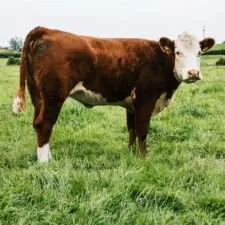
Fence law can be complicated but is not a topic for landowners to avoid. A common-sense agreement can help livestock producers and their neighbors to have confidence they have a good working relationship.

Roger McEowen, professor of agricultural law and taxation, Washburn University School of Law, Topeka, Kansas, says that fence law is difficult at times because different states have their own case precedents, so it is one reason he tries to help educate farmers and ranchers and encourage them to get agreements in writing. He says states throughout the West have different provisions, which is why finding an attorney well versed in agricultural law is critical.

In a recent Kansas Fence Law seminar with a subtitle of “what rural landowners (and county commissioners) should know,” the need to better understand fence laws went far beyond the state’s borders.

Headaches are created when livestock get out and cause damage, but McEowen says precedence and law are the best path for property owners and neighbors to follow.

Kansas is a fence-in theory state, which means livestock owners must keep their animals fenced in, the law professor said. Other states employ a fence-out theory, which means the landowner establishes a fence to keep other people’s livestock off their property.

At the beginning of his presentation, he said in Kansas a partition fence is, by definition, a fence that is on the boundary between adjacent tracts. But confusion occurs when a partition fence is not on the actual property line. By usage over a long enough period of time the misplaced fence can become the boundary by usage.

Problems can flare up when someone wants to purchase 20 or 40 acres alongside an agricultural operation and “they think a survey is gold” but that is not necessarily so because usage of the fence for 15 years makes it possible for that fence to become the legal boundary. This can happen under one of two theories. One of those theories applies when the parties know the fence is not on the boundary and one party continues to use an area that is known to belong to the other party. If that true owner doesn’t object and stop the usage within 15 years in Kansas, the other party can obtain ownership. This concept came from England centuries ago where it was known as “squatter’s rights.”

“You are not subverting (the use),” he said. The concept in practicality means “I farmed up to a line and the other property owner did not stop it.”

McEowen said another theory can apply when neither adjacent owner knows the location of the true boundary. Title can be obtained by acquiescence. Usage for 15 years can lead to the boundary that is being used becoming the true boundary.

The ag law professor said to avoid adverse conditions he believes having a written agreement can save a lot of conflict many years later.

If livestock escape a fence that is in good repair, the owner is generally not liable for any resulting damages absent a showing of negligence, McEowen said. Negligence is generally defined as gates being left open, a fence improperly constructed or maintained, knowledge that animals are in heat and the fence is incapable of holding them or knowledge that animals are out and the owner is not attempting to retrieve them.

The owner whose property was damaged by the trespassing animals has several ways to pursue relief. He can retain the animals until payment is made for damages plus reasonable costs, and the owner of the livestock needs to be notified with 24 hours. Once notice is given, he can only hold for five days without bringing legal action against the owner. Alternatively, the county sheriff can take the animals into custody and give notice.

If it is not known who owns the cattle, the sheriff is to be notified within 24 hours. The party caring for the livestock in the interim can be compensated for feed and care costs by filing a lien.

If the livestock owner owns land adjacent to a crop farmer who has no interest in sharing equally in the cost of building and maintaining a fence, that can create other challenges when the livestock get out, McEowen said. There may be limitations on the amount (if any) damages the crop farmer could receive.

If the non-livestock owner does not want his land enclosed, he cannot be forced to build or pay for an equal share of the partition fence if the adjoining tracts are used for the same purpose, such as crops. The statute only applies to relieve a landowner from the responsibility for sharing equally the cost of building and maintaining partition fences when the land is used in common (i.e., crop farming on both sides of the fence) and the complaining party does not want the fence.

If the parties cannot agree McEowen tells them to negotiate a fence agreement and have it recorded. Always try to settle disagreements privately. If no agreement can be reached, the dispute can be taken to the county commission or any two of them acting as fence viewers.

McEowen also notes that disputes can occur along county borders and that means representatives from each county form a fence viewing board and render a decision based on majority vote. That action will be recorded in the register of deeds offices in each county.

In Kansas there are several trigger points on how binding the decision is, he said, because the commissioners may act as a board collectively or any two of them may be appointed. The fence viewers only have jurisdiction over building and maintenance disputes, and they cannot order an existing fence to be moved. After a view, they will assign to each party, in writing, an equal share or part of the fence to build, maintain or repair.

If acting as “fence viewers,” a commission’s decision is final, conclusive, non-appealable and binding on parties and all succeeding occupants of the land. If the commissioners do not appoint “any two of the viewers” any decision is deemed to be a board decision and that triggers normal appeal rules that include notice must be filed within 30 days and appealing party must provide a bond and pay necessary costs.

McEowen said there is a provision for a penalty phase if one of the parties does not abide by the fence viewers’ decision and the costs can be significant. Kansas law allows for in the imposition of interest of up to 1% a month (12% in a year’s time) and any attorney fees.

McEowen went through several high-profile cases and how they worked through the appeal process. A legal fence in a county can be constructed in several ways, most notable is barbed wire with at least three wires, but there are exceptions based on statute that could include a rock, brook, river, creek ditch or other similar structure and a county commission can enact more stringent legal fencing requirements on a countywide basis.

McEowen said cattle can be moved on many public road-ways, but the rancher has to keep tight control on them and if damages occur he will be strictly liable for them.

For landowners who have land adjacent to a railroad, it is the responsibility of the railroad to build and maintain those fences, he said. Typically, the railroad company does not want to be in the fencing building business and as a result it will often allow the adjacent owner to build the fence and the landowner will need to submit a bill for payment.

For highway fences, such as at the side of an interstate or major highway, generally the farmer is responsible for the inner fence and the state department of transportation is responsible for maintaining the outer fence, which is the one closer to the roadway, he said. In the case of Kansas, the state’s department of transportation has a common law duty to keep the highways in a reasonably safe condition.

The land between fences, he said, can be a festering point because of weed pressure.

A county commission can also permit a gate and fence to be placed across certain public roads so the general public can continue to access roads.

As reported in the High Plains Journal.

2022 Organic Certification Cost Share Program Now Accepting Applications

0

MANHATTAN, Kansas — The Kansas Department of Agriculture has funds available for the National Organic Certification Cost Share Program (NOCCSP). Through this program, farms, ranches, and businesses that produce, process or package certified organic agricultural products may be reimbursed for eligible expenses.

The purpose of the NOCCSP is to defray the costs of receiving and maintaining organic certification under the National Organic Program. For Federal Fiscal Year 2022, the U.S. Department of Agriculture’s Farm Service Agency set the reimbursement amount at 50% of the certified organic operation’s eligible expenses, up to a maximum of $500 per scope. Scopes include the areas of crops, livestock, wild crops, and handling (i.e., processing). This change is due to a limited amount of funding available and will allow a larger number of certified organic operations to receive assistance.

FSA awards the NOCCSP funds to eligible state agencies that serve as administering entities who work directly with organic operations to reimburse organic certification costs. The current period of qualification for organic operations seeking reimbursements is from Oct. 1, 2021, through Sept. 30, 2022. Applications are now being accepted through November 1, 2022, or until all funds are expended, whichever comes first. Applications may be submitted either by mail or email.

It is the mission of KDA to support all facets of agriculture, including lending support to those who wish to market and sell their products as certified organic. For more information, go to the KDA website at agriculture.ks.gov/OrganicCostShare or contact KDA economist Tori Laird at [email protected] or 785-564-6726.