Saturday, March 28, 2026
Home Blog Page 957

Bucks Rewarded to Drivers Who Buckle Up

0

Safe Kids Kansas, State Farm and KDOT partner up for safety message

TOPEKA – Thousands of vehicles will travel the Kansas roadways during the Labor Day weekend. Many families will head out on one last trip or getaway as the school year begins. Safe Kids Kansas, sponsored in part by the Kansas Department of Health and Environment, State Farm and the Kansas Department of Transportation (KDOT), want to encourage families to buckle up and drive safely to protect their most valuable asset, their families.

This year, from August 27 through September 11, a safety belt awareness campaign called “Bucks for Buckles” is being held in 45 cities across Kansas. Local volunteers distribute dollars bills to drivers who have all occupants buckled up securely in their vehicle. Those riding unrestrained will receive educational materials about the effectiveness of seat belts and child safety seats in saving lives and reducing injuries.

“No one can predict when they will be involved in a motor vehicle crash, yet almost all of us will be involved in an automobile crash in our lifetime. In 2020, 426 people lost their lives on Kansas roadways, and 52 percent  were unbuckled,” said Cherie Sage, State Director for Safe Kids Kansas. “The single most effective means of protecting the lives of you and your passengers is wearing seat belts and using appropriate child restraints every time you ride in the vehicle – even short distances.”

According to the 2021 KDOT Seat Belt Survey, 85 percent of Kansans surveyed were wearing their seat belts. This compares to the national average is 90 percent. Kansas ranked 38 in belt use in 2021 among 50 states and the District of Columbia. Seat belts save more than 15,000 lives yearly and are the best defense against drunk, aggressive and distracted drivers.

“Seat belts are the single most effective device you can use to save your life during a vehicle crash,” said Sage. “They also reduce your chances of having a serious injury by as much as 50 percent. It’s such a simple thing, so take your life into your own hands and buckle up.”

For more information about safety belts or child safety seat use, call (785) 296-1223 or visit SafeKidsKansas.orgSafeKids.org and Facebook.com/safekidskansas.

Farm Pond Fishin’

0

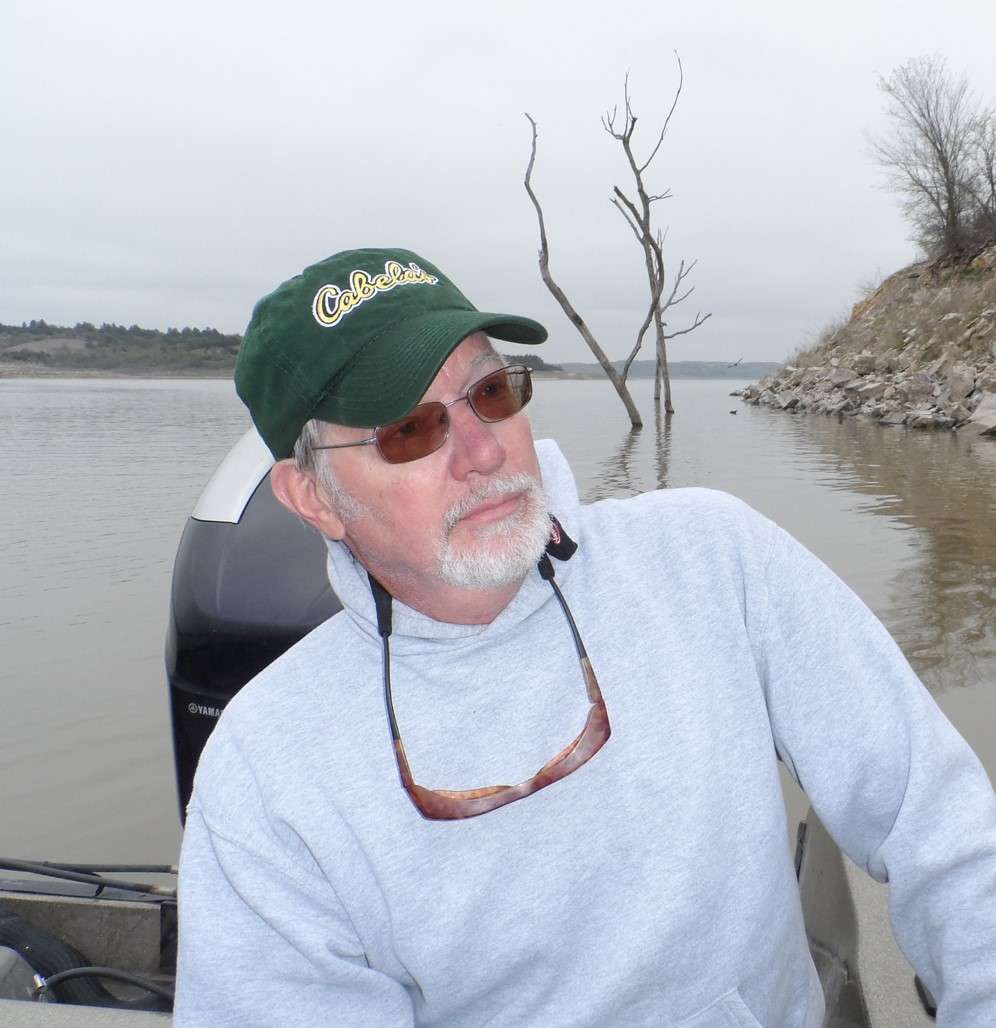
While driving the countryside lately, I’ve noticed that despite the ever-encroaching drought, some of the really nice farm ponds around still hold lots of water. Good farm ponds built in the correct place are hard to beat, and farm-pond fishing is often good. This brought to mind a farm-pond fishing adventure Joyce and I had a few years back about this time of year at a local pond.

With rods, bait and tackle boxes in hand we clamored down the side of the grassy overgrown dam and onto a roughly built but sturdy dock that put us ten feet out from the bank and four feet above the water. Hooks were baited and cast into the water before us, which rippled slightly with the breeze. That breeze, along with copious amounts of nasty spray, kept the ravenous mosquitoes at bay. The sun slid slowly behind nearby trees, leaving its beams to dance upon the rippling water and offering reprieve from the heat as it ushered in the cool evening. Barn swallows by the dozens strafed the pond, either scooping insects from the surface, or snagging them on the wing in mid-air. The deep “harumm” of granddaddy bullfrogs echoed back and forth from behind tufts of cattails. One line was baited with liver and fished on the bottom, while the other rig held a feisty Canadian night crawler suspended beneath a bobber. After twenty minutes with no action, I climbed the steep grassy bank to the truck to retrieve our ever-present cameras. As my back was turned to open the truck door, Joyce called to me “Did you bring the net?” I pondered why she would ask that question when we were fishing in a small farm pond, but when I spun around and saw the pole in her hands bent toward the water like a divining rod, the reason for her question became obvious. I scrambled back down the bank as she hoisted a dandy three pound channel cat up onto the dock…Welcome to the sport of farm pond fishing!

The agricultural land of central Kansas is dotted with small farm ponds, many out of sight along field drives or in the middle of pastures, and despite the beastly dry summer here, late spring rains have left many farm ponds in our neck of the woods with good water in them. The only down side I can see to fishing farm ponds is the lack of the large variety of fish species found in most Kansas reservoirs. Typically, farm ponds contain largemouth bass, channel catfish, bluegills and possibly bullheads. Most ponds are on privately owned property, meaning permission to fish there is required. Once permission is granted however, you will often have the whole place to yourself every time you’re there, because fishing pressure on these ponds is often nil. A boat is not usually needed, although a canoe, or one of the popular small two-person crafts can come in handy to get you out past any weeds or moss growing along the bank. The dock from which we fished was the perfect length to get us out beyond the cattails. Farm ponds are always fed either by springs or by run-off water, and since most of them are situated in pastures or otherwise grassy surroundings, the water in them is often well-filtered before reaching the pond, making them very clean.

So, if you’re used to big-lake fishing for walleye, crappie, white bass or stripers, if you love the drone of a big outboard motor as it pushes your big boat across a big lake, and if the presence of dozens of other fishermen all around you are an important part of your fishing experience, farm pond fishing may not be your gig. If, however you can be happy catching bluegills, channel catfish and largemouth bass from the bank or from a small boat and never see another human being in the process, farm pond fishing may be for you. Sign me up for choice number two! Continue to Explore Kansas Outdoors!

Steve can be contacted by email at [email protected].

Standing up for Myself

0

When we moved to a new town, I got a job after school. I worked afternoons and evenings as the soda jerk and also as waitress for the restaurant part of the business.
Working the restaurant part was sure different than being a soda jerk in the drug store but I soon learned to keep what each person ordered straight in my mind just as I could the soda fountain orders.
The restaurant sat on the East side of Main Street. The dining area was on the front facing the street. The entrance was on the South side of the building. There were booths down the West wall and then a counter with stools on the East wall. The counter had an opening in the middle to allow for flow in and out of the kitchen. On the north wall between the booths and the counter sat the large juke box, which took up most of the space there.
Through a wide square arch on the East wall behind the counter was the kitchen. The kitchen had a stainless counter that ran down the west wall, starting just inside the wide arch and all along the North wall with the huge grill in the middle.
Sitting in front of the grill was a large stainless steel island, 10 feet long and 5 feet wide, with shelves under it. It was closed on three sides and open on the side facing the grill. The shelves were used to store supplies and pots and pans.
Then through another wide arch and in the back of the building was the ice cream freezers, the soft serve machine and the soft drink machines that took up most of the room. The window where the kids could order without coming in was on the South wall of the kitchen. It was probably one of the first drive-up windows.
I worked there evenings and Saturdays through fall and winter and then the next summer I started working everyday as the soda jerk and waitress. I became good friends with the evening cook while working the evening shift.
The evening cook waited for the owner to leave every night and then would get a screw driver and open the juke box. She had figured out how to change something inside so we could punch the numbers and it would play without the change. If someone put money in it, it still worked like it should.
One evening the cook and I were talking in the kitchen and she told me about the night she was working alone and had trouble with a guy that kept coming into the kitchen. She told me she had something she wanted me to see and said I was to remember it was always there.
She said after she showed it to the guy one time it made a lasting impression on him and the word spread around town and no one bothered her after that. Now I was really curious as to what she had hidden in the kitchen.
We were standing between the grill and the island, while she was cooking a hamburger, during our conversation. She said, “This is my little equalizer. I always keep it under the island on the shelf.” She then reached in and picked up something to show me.
When she stood up she said, “This is my knife and it will always be under this counter.” The knife in her hand was a foot and half long and at the widest point was 3-4 inches across. I know one thing, it scared the heck out of me when I looked at it and I knew it would scare anyone stupid enough to come back into the kitchen when she told them not to.
Late one afternoon a month later the boss told me the evening cook was sick and he couldn’t work that evening either and asked if I could do the cooking and waitress by myself? The evenings were not usually that busy so I told him I could handle it, if not I would call my Mother and have her come over and help with the cooking.
We closed at 9:00 so at 8:00 I turned the volume up on the juke box and started to clean up. I had cleaned the booths and the counter area in the front and the back fountain area by 8:30 and was cleaning the kitchen when 4 men came in. A lot of men from out of state came to that county every year to work in the sugar beet fields. They were usually really polite and easy to deal with in the Dairy King.
I was cleaning the island by the grill when 4 men came in the door; three of them sat down immediately at the counter. The fourth one (tall and stocky built and wearing a white t-shirt and cut off jeans) started to walk behind the counter toward the kitchen. I told him to stay out of the kitchen; that I would be right out.
He said something and I didn’t understand what he mumbled so this time I yelled at him, “DO NOT COME INTO THE KITCHEN!!” He continued to walk toward me and when he was inside the kitchen he started to walk behind the island where I was standing.
At that point I remembered what the evening cook had told me and I bent over and reached for the equalizer she kept under the island. It was right where she said it would be and my hand closed around the handle on the first try.
I straightened up with the knife in my hand and held it waist high in front of me pointed straight at the guy. His eyes got big as saucers as he looked from the knife to my face and then back at the knife. He was trying to decide if I would follow through with my threat. When he took one more step toward me. I said to him in a calm voice, “Leave the kitchen now!”
He gave me a smug look and closed the distance between himself and the end of the knife. The point was 1/2 inch away from his stomach when he stopped moving. I had lost all patience with this guy at that point and moved the knife forward so it was touching his shirt.
He looked me in the eye and started to step toward me again. As soon as I saw his foot leave the floor I made a quick jab with the knife, this time he felt the tip against his stomach. It didn’t go through the t-shirt or cut his skin but it sure made a dent in his stomach and he finally knew I meant business.
He began to back away and when he was a safe distance away he turned and bolted out of the kitchen yelling at his buddies sitting at the counter about that crazy woman with a knife.
The three sitting on the stools had not moved a muscle or hardly breathed after the knife appeared but when he ran past them they bolted off the counter stools in unison, like they were conjoined triplets, and followed him out the door.
During the whole encounter I was very calm like I always am in the middle of a crisis; it is after the incident that I fall apart. I can only remember being angry that he wouldn’t listen to me and get out of the kitchen.
The word must have spread all over the county about the confrontation. From the day I learned to stand up for myself I didn’t have trouble with anyone that came into the Dairy King during my evening shift. To contact Sandy: [email protected]

A Real Interpretation of “The BBQ”

0
Thayne Cozart
Milo Yield

Ah, barbecuing meat, any kind of meat! It makes one’s mouth water just thinking about it — a slowly browning hunk of beef brisket with burnt ends; a savory slab of pork ribs or pork loin; a whole broiler chicken slowing turning and dripping on its spit in the BBQ; a standing rib roast of tender lamb or young goat slow cooking while you’re salivating over it; the grill covered in salty, flaky fish fillets that make your taste-buds tingle in anticipation.
Yep, there’s nuthin’ like a backyard or patio barbecue with family and friends. It’s the only type of cooking a real man will do. When a man volunteers to do the BBQ, the following chain of events are put into motion:
• Some woman — wife, daughter, grand-daughter, daughter-in-law, cousin, aunt, grandma, girlfriend, neighbor, or significant other — acquires the meat, the bag of charcoal, if needed, and all the accessorizing food.
• Some woman makes the salad, vegetables and dessert.
• Some woman prepares the meat for cooking, places it on a tray along with the necessary cooking utensils and sauces, and takes it to the man.
• Meanwhile, the man — who is lounging beside the grill, cold, refreshing drink in hand, BSing and communing with all the men and boys in attendance — is trying to get the charcoal lit and burning properly (after asking some woman if she will kindly fetch the charcoal starter and the matches), or else trying to light the propane-fueled grill without singeing himself, or setting the place on fire.
• The man haphazardly places the meat on the grill.
• Some woman goes inside to organize the plates and cutlery and check on the rest of the meal.
• Some woman comes out to tell the man that the meat is burning. He thanks her and asks if she will bring another drink while he deals with the situation.
• The man takes the meat off the grill, carelessly plops in on the plate or tray, and hands it to the woman. With luck, neither will have a burned hand.
• Some woman prepares the plates and brings them to the table or otherwise distributes them to all eaters.
• After eating, some woman clears the table and does the dishes, cleans the kitchen, scrapes and cleans the BBQ grill, puts the protective cover back on the grill and rolls the grill into its proper storage place.
• Everyone in attendance praises the man for the excellent meal, thanks him for his cooking efforts, and opens or pours another nightcap celebratory drink.
• After all the boisterous crowd leaves, in an appreciative moment of quiet reflection, the man asks the woman how she enjoyed “her night off.” And, upon seeing her annoyed reaction, concludes to himself that “There’s just no pleasing her!”
***
My report from the home-front is that it’s still dry, but the temperature has moderated into the comfortable range. I have cracks in the ground two inches wide.
The good news is that the grass has quit growing so I don’t have to mow for a while. Our tomatoes have finally started producing regularly, but we haven’t canned any yet. But we still plan to. Our good neighbor has provided us with some luscious cantelopes. I love ‘em and can’t grow ‘em so I appreciate his generosity.
The purple martins are preparing to leave for the winter. They arrived late this spring and so are leaving a bit later than usual. The barn swallows are gathering in bunches on the fences and high-line wires, an early indication that they’ll be on their way south soon. The hummingbirds are still actively fighting for their places at ol’ Nevah’s nectar feeders. The mourning doves are gathering, but I’ll bet most will be gone before the season opens on September 1. The Kansas dove season needs to open on Aug. 15 before the bulk of the doves migrate south.
On the flower front, our flower beds are filled with “pink, Naked Ladies.” They won’t last long in this weather pattern. Nevah had a cactus bloom this year for the first time. The blooms are a beautiful white and last prettily but for a single day. Hardly seems worth the effort of blooming, to me.
***
Nevah and I reached another milestone last week. We celebrated our 58th wedding anniversary. But, it wasn’t much of a celebration. In the morning we exchanged cards. That evening we ate out at Jacalito’s Mexican Restaurant in Strong City.
***
Overheard at the local coffee shop:
“I can’t figger why folks make fun of lazy people. They didn’t do anything.”
“No guts, no glory. No brain, same story
“You can only be young once, but you can be immature all your life.”
“If everything is going well, you don’t want know what the heck is going on”
***
Now my words of wisdom for the week: “I figgered out why they call our language the ‘Mother Tongue.” Fathers never get a change to use much of it.”
Have a good ‘un.

Equine Survey Points To Growth Potential For Horses In Animal Agriculture Industry

0
Frank J Buchman
Frank Buchman

“The Kansas equine sector provides many positive benefits to people in the state.”
Leah J. Tsoodle at the Kansas State University Agricultural Economics Department simply evaluated the 2021 Kansas Equine Survey.
For the Kansas Horse Council, the survey was conducted by the Ag Economics Department and the Kansas Department of Agriculture.
Justine Staten serves as executive director of the Kansas Horse Council headquartered in Manhattan. John Leatherman and Xianghong Li assisted Tsoodle in producing the 44-page glossy four-color hard copy final report.
“The Kansas horse industry is vast, representing many different types and uses of horses,” Tsoodle reiterated.
Kansas has a long-standing history with horses, as a major component of the ranching infrastructure in the state. Horses continue as a natural part of the rural landscape.
According to the survey, Kansas has sufficient horses and activities to maintain and offer industry growth potential, Tsoodle indicated.
The Kansas horse population is approximately 70,000 horses valued at $260 million.
“This population figure is probably underestimated based on one breed association’s number of registrations in Kansas last year,” Tsoodle said.
There are about 2,600 employees in the Kansas equine industry with about $150 million total income.
“Thus, the equine industry has about $280 million of total economic activity in Kansas,” Tsoodle tallied. “Our survey represents 11.5-percent of the total Kansas’ animal population.”
Full impact of the equine sector goes beyond the number of people employed and their wages. “A ‘ripple effect’ comes from buying and selling to other businesses and individuals in Kansas,” Tsoodle clarified.
Horses throughout Kansas provide broad services for both pleasure and work uses, Staten reported at the Kansas Ag Growth Summit.
Kansas has the third most farmland of any state, with 90 percent of the state devoted to agriculture. Horse operations demand relatively less land than other animal facilities.
“These two factors together equate to a relatively available and affordable base for expanding equine operations,” Staten said.
Kansas boasts many stables, arenas, horse breeders, farriers, veterinarians, trainers, and other professionals available to offer services to horse owners.
Facilities in Kansas City, Topeka, Kingman, and Salina among other locales are available for horse activities.
Kansas State University and Colby Community College offer extensive equine studies.
Despite these opportunities, there are many challenges facing equine industry growth in Kansas. They include lack of equine air transportation and high startup cost for undercapitalized equine entrepreneurs.
There are differing definitions within the equine industry under state statues creating taxation and liability confusion.
“In particular, there is inconsistency defining all equids, horses, mules, donkeys, and zebras as livestock,” Staten said.
Currently, no equine industry programs exist to promote, educate, and conduct research despite past efforts for a statewide feed checkoff program.
“Challenge in a feed bag checkoff is that distributors look at this as another ‘tax’ or paperwork obligation,” Staten said. “Thus, the industry may need to review an option on horse sales like the beef checkoff program for cattle.”
Since the last horse slaughter facility was closed, the horse market crashed. This created an explosion of unwanted horses that cannot be disposed of in any other manner.
“Animal welfare concerns developed for those unwanted, old and neglected animals’ excessively long trips to slaughter facilities,” State pointed out.
Kansas’ pari-mutuel licenses for horse racing lapsed and have been revoked since 2008.
The percentage paid by horse track slot machines to the state is 40-percent, higher than standalone casinos at 22-percent. As such, racetracks are not a viable business in their current condition.
“This has led to horse breeders exiting the state and reduced economic activity from horse breeding and racing,” Staten said.
With legalized sports betting, extra competition for betting dollars would negatively impact horse racing betting and reduce track purses. “Facing these multiple challenges, it’s unlikely Kansas will see resumed horse racing in this state,” Staten said.
Despite the availability of commercial insurance for equine-related business, premiums are often cost prohibitive, it was pointed out.
Many retailers do not offer farm sales tax exemption on equine products out of concern that sales are for hobbyists. The seller then becomes responsible for remittance.
Weather-related incidences, natural overgrowth, and trail use erosion, create an ongoing need for required attention and upkeep to equestrian trails. Governing agencies supply routine maintenance staff and volunteers make up the balance.
Due to the vastness of trails and ever-changing needs, there is a funding and staffing shortfall to maintain continuous oversight.
Additional opportunities for new trail development exist, but with concerns over trail maintenance challenges, these opportunities are not pursued ambitiously.
Still there have been key successes in the equine industry. Included are facility improvements at Hutchinson’s Kansas State Fairgrounds, Topeka’s Stormont Vail Events Center, and Kansas City’s American Royal.
Back County Horsemen of Kansas is developing new chapters for trail development and maintenance in the state.
Kansas equine industry leaders will continue collaborating development and implementation of long-term strategic growth strategy with key partners.
“We are working to enable an environment that encourages growth in the equine industry,” Staten said. “That includes eliminating barriers that prevent investment in equine facilities and enterprises.
“We hope to develop statewide equine exposition destinations ranging from world-class events to smaller activities with more specific needs.”