Saturday, March 28, 2026
Home Blog Page 962

KU News: Center created to support Kansas PreK-12 leaders; KU Student Housing move-in days Aug. 18 and 19

0

From the Office of Public Affairs | http://www.news.ku.edu

Headlines

Center for Evaluation and Educational Leadership will support PreK-12 district, building leaders
LAWRENCE — Inquiries from school districts across Kansas led the creation of the new Center for Evaluation and Educational Leadership (CEEL), whose mission is to support district- and building-level leaders to lead, organize and implement the most effective and equitable learning environments for PreK-12 students. Representatives of CEEL will meet with school district leaders to develop and implement strategic plans that lead to educational success and ensure all student populations have access to high-quality supports and services. Plans will be customized to a district’s specific need, while also adhering to the Kansas Education Systems Accreditation process and meeting the Kansas Legislature’s statutory requirements for a comprehensive needs assessment.

Heavy traffic anticipated Aug. 18 and 19 for KU Student Housing move-in days
LAWRENCE — KU Student Housing’s two-day move-in process for its residents takes place next week. Media are welcome to attend the event, but news vehicles will not be allowed to cross Irving Hill Bridge and enter the line of cars going to Daisy Hill.

Full stories below.

————————————————————————

Contact: Chance Dibben, [email protected]
Center for Evaluation and Educational Leadership will support PreK-12 district, building leaders
LAWRENCE — The Achievement & Assessment Institute (AAI) at the University of Kansas has announced the new Center for Evaluation and Educational Leadership (CEEL), whose mission is to support district- and building-level leaders to lead, organize and implement the most effective and equitable learning environments for PreK-12 students.

Neal Kingston, AAI director and University Distinguished Professor, said inquiries from school districts across Kansas led the creation of the new center.

“We received requests about a range of services that intersected with many areas of work at AAI but which required inquiries of multiple center directors,” Kingston said. “Schools needed a single best place to which they could reach out. As a result, we recognized both a need and an opportunity to further our mission of improving the lives of children and adults, especially students and educators.”

The Center for Evaluation and Educational Leadership draws on overlapping areas of expertise and research housed within AAI and with faculty within the School of Education & Human Sciences and creates a specific, service-minded focus.

Representatives of CEEL will meet with school district leaders to develop and implement strategic plans that lead to educational success and ensure all student populations have access to high-quality supports and services. Plans will be customized to a district’s specific need, while also adhering to the Kansas Education Systems Accreditation process and meeting the Kansas Legislature’s statutory requirements for a comprehensive needs assessment.

To help design the new center, AAI engaged the services of consulting firm Neuenswander Educational Consulting LLC, which worked with various interested parties, drawing on the latest research to help shape the scope of the new center.

“The new center will focus on the structures that surround education, since a child’s education is the result of several layers of input, such as the classroom itself, a school’s administrative practice, its district and the broader community in which the school resides,” said Rick Ginsberg, dean of the School of Education & Human Sciences.

“The main goal is to support educators at the district level, but we also want to involve the community in our process,” he said. “As such, in addition to needs assessments, strategic planning trainings and developing district plans, we envision community participation to be an important part of the center’s process.”

Kingston said, “Education has many influencing factors. With this new center, we aim to be a critical support for schools and districts throughout Kansas.”

School districts interested in engaging the new center can contact Neal Kingston at [email protected] or email [email protected].

-30-

————————————————————————
The official university Twitter account has changed to @UnivOfKansas.
Refollow @KUNews for KU News Service stories, discoveries and experts.


————————————————————————

Note to editor: Media are welcome to attend the event, but news vehicles will not be allowed to cross Irving Hill Bridge and enter the line of cars going to Daisy Hill.
Contact: Ranjit Arab, 785-864-7889, [email protected]
Heavy traffic anticipated Aug. 18 and 19 for KU Student Housing move-in days
LAWRENCE — University of Kansas employees and the Lawrence community should anticipate heavy traffic around 15th and Iowa streets on two days next week — Thursday, Aug. 18, and Friday, Aug. 19 — during KU Student Housing’s two-day move-in process for its residents.

An early move-in this Saturday, Aug. 13, for band members, sorority recruitment and other residents will affect the same areas listed below.

Traffic around Daisy Hill is expected to be heaviest from about 7 a.m. to 2 p.m. The following intersections are expected to be especially busy:

1. Clinton Parkway (23rd Street) and Crestline Drive: Students moving into Daisy Hill halls use this entrance before driving north on Constant Avenue to Irving Hill Road.
2. Bob Billings Parkway (15th Street) and Crestline Drive: Cars exiting Daisy Hill will use this intersection and park in the Lied Center of Kansas lot.
3.
There also may be increased traffic at:

1. 11th and Louisiana streets, location of GSP and Corbin halls.
2. 19th Street at both Ousdahl Road and Ellis Drive, which are the entrances for Downs Residence Hall and Stouffer Place apartments.

Maps of each area, which were emailed to incoming residents and their families, can be found at the KU Student Housing website.

For those who work in KU’s West District, expect cars traveling north on Constant Avenue toward Irving Hill Road. West District employees should be able to park in their regular parking lots.

If announcements are needed related to severe weather, tune to Kansas Public Radio at 91.5 FM.

-30-

————————————————————————

KU News Service
1450 Jayhawk Blvd.
Lawrence KS 66045
Phone: 785-864-3256
Fax: 785-864-3339
[email protected]
http://www.news.ku.edu

Erinn Barcomb-Peterson, director of news and media relations, [email protected]

Today’s News is a free service from the Office of Public Affairs

Wheat Scoop: Kansas 4-H Wheat Expo Marks Record Attendance in Stafford

0
Kansas Wheat

Contact: Marsha Boswell, [email protected]

For audio version, visit kswheat.com.

A record number of 4-Hers and their families drove to Stafford for the 2022 Kansas 4-H Wheat Expo on August 4 to show off exhibits, test their judging skills and learn more about the local agricultural industry. The one-day was sponsored by the Kansas Wheat Commission, Kansas Wheat Alliance, K-State Department of Grain Science and Industry and many other partners from across the state.

“The Kansas 4-H/FFA Wheat Expo is a great opportunity for youth to showcase their talents and skills in many projects while also focusing on what Kansas is known for–wheat,” said Kelsey Nordyke, Kansas 4-H ag sciences program specialist. “The Expo brings youth and from across the state together to compete in three project areas–plant science, food and nutrition and photography–and learn more about this valuable commodity produced in Kansas. The tours throughout the morning are also valuable tool that help promote agriculture and showcase our state’s diversity.”

The event was just $6 to attend, with the Market Wheat Show open to all 4-H and FFA members. This year’s 56 youth participants brought 96 entries in categories from one-quart jars of clean wheat, yeast rolls, cookies, muffins, wheat photography and wheat educational displays. Of particular note, the event included displays on two youth-led wheat variety plots and their related research. Youth also could submit bin run samples from a 4-H wheat test plot or “adopt a producer” plot to the Kansas State University Milling and Baking Laboratory for analysis and judging.

In addition to the exhibits, all participants could practice their judging skills by ranking classes of wheat, bread and photography as well as identifying common weeds. A separate judging content followed the Kansas State Fair rules for crops judging, exposing many younger participants to this contest.

At the end of the day, judges for each category awarded not only ribbons but also provided oral comments on each category – helping participants improve their projects for the next year.

In addition to the exhibits and judging contest, the event featured three tours of local agriculture. In the field where the crew was hand-picking watermelons, Osborne Fruit and Vegetables detailed the mechanics of their operation that sells cantaloupe, watermelon and pumpkins directly to Walmart. The family starts all their own seeds before planting them in the field. Drip irrigation keeps the plants growing throughout the year, but all of the final product is picked by hand and delivered same day to the store.

Further down the road, Spare Farms markets vegetables to farmers’ markets in surrounding areas. Owner Tim and his mother do all the picking on the operation, which is very labor intensive. Adding high tunnels has helped the family produce food for the market almost all year round. Minimizing spraying and adding flowering plants helps attract beneficial insects that help control bugs that would otherwise eat growing plants.

The final stop was Stafford County Flour Mills in Hudson, which produces Hudson Cream flour. The Kansas 4-H Wheat Expo was among the first to tour Stafford County Flour Mills following an upgrade of their milling equipment. The mill also now features a large-scale mural of its logo featuring a Jersey cow — representing that Hudson Cream Flour is the cream of the crop — which was projected onto the mill at four in the morning and painted like a color-by-number painting. The new equipment allows quality to be monitored six times a minute in addition to increased efficiency in monitoring and extraction.

Stafford County Flour Mills buys 95 percent of the wheat it mills from 15 to 20 miles of its elevators and employs 40 people in the small town of Hudson. The value-added flour produced by the short patent process is sold across the country, as far away as Hawaii for use in the public school system.

The combination of hands-on tours, interactive judging, showcasing wheat-focused exhibits and meeting other 4-H and FFA members from across the state made for a highly successful and educational event in Stafford.

The Kansas 4-H Wheat Expo rotates locations across the state, giving participants even more reason to return each year. Watch the Kansas 4-H website (https://www.kansas4-h.org/events-activities/conferences-events/wheat/index.html) next spring for information on next year’s event.

###

Written by Julia Debes for Kansas Wheat


HISTORICAL DETECTIVE

0

FOLLOWING THE LIGHT OF THE SUN, WE LEFT THE OLD WORLD.”

Christopher Columbus


Having been a Private Detective, the experience taught me new skills that help me as a historian and writer. My books require a lot of research and just plain asking questions because I write about Kansas and Kansans that are largely forgotten. Sometimes it is very hard to verify stories and I have to document where I get every fact. My bibliographies get real lengthy. So when a question of a historical event came into the office it was sent to me. Boy is this one intriguing. I will need your help.

The mystery takes place near Riverdale, Kansas. A family was camping just south of what would become Riverdale on a little hill. Two little girls were caught on fire by the campfire and died from their injuries. This would be sometime in the 1870’s. The two girls were buried and the family moved on. It is assumed that the family was traveling south towards Indian Territory, now Oklahoma. Since this is close to the Chisholm Trail it is not a far reach to assume the family was traveling south. The old trail was actually several miles wide because the herds coming up were following each other and they grazed as the cattle were slowly moved north. The old trail was an old highway for the native tribes and it was no accident that Jesse Chisholm staked the trail for J.R. Mead to establish trading posts. It is also near todays US 81 and I-35 Highways.

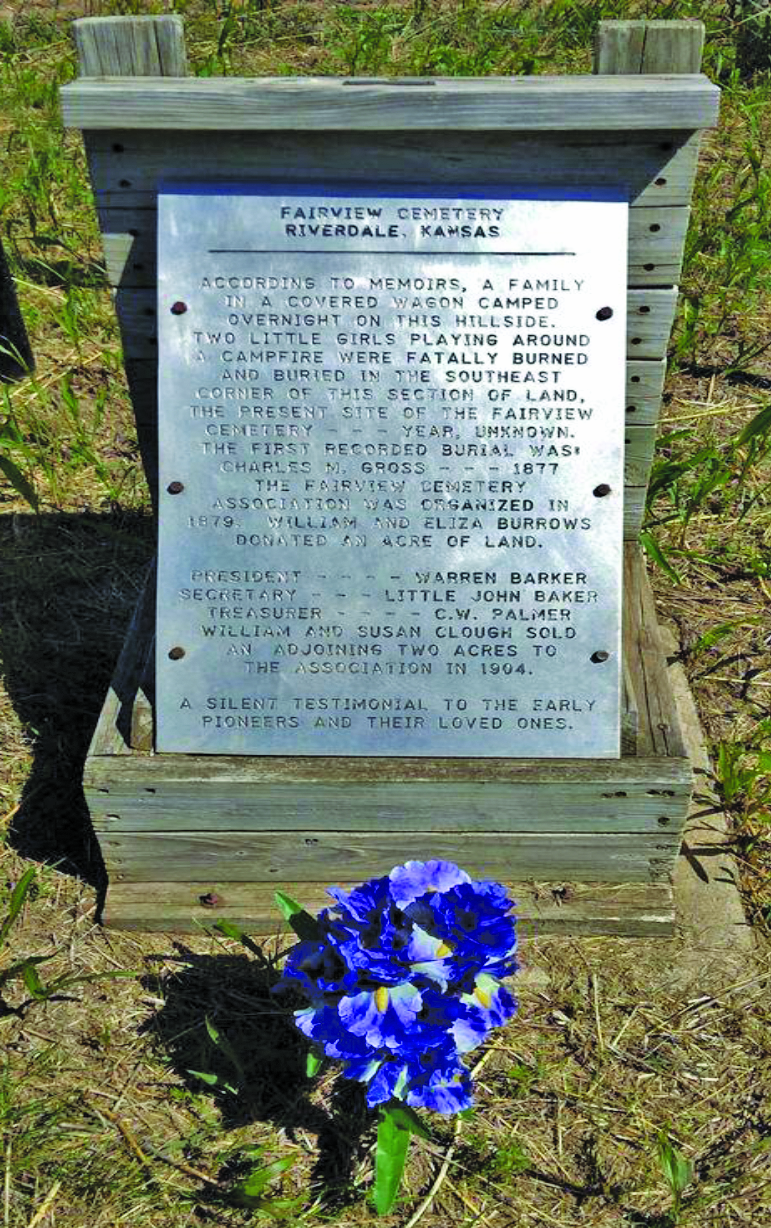
Local settlers soon had an acre of land donated by William and Eliza Burrows to establish Fairview Cemetery at this site. Later another two acres were added to the cemetery. There is a metal plaque at Fairview Cemetery giving the brief story of how the cemetery came to be there. They would like to find the names of the two girls lost tragically so that a monument can be placed there.

Americans have always been movers. That is how the continent was settled past the Appalachian Mountains and settled clear to the Pacific Ocean. The majority of people came to escape horrible living conditions and monarchs to create a new life in this far land. Most could not even believe that a person who was not born into the ‘landed gentry’ could claim a place that would be a home to grow and live free.

To get that dream the conditions were hard and the land unforgiving. Many paid a dear price to follow a dream. Some had to endure terrible hardships and this family was faced with the loss of two girls. They had no choice but to bury them and move on. Who were they and where did they go?

It is hoped that someone has an old family bible, journal, or diary that can identify who this family was and what the names of the girls were. Maybe this story will ring a bell that great-grandma or someone told over the years. If you have any idea who these people were, what happened to them, and where are the descendants today? You would be filling in some blanks of history.

If you can help get in touch through this paper or contact me at [email protected], or you can send me information: ROGER RINGER, 2261 NE WELL RD. MEDICINE LODGE, KS.  67104

Fairview Cemetery is located one mile west of US 81 Highway on 70th Ave. North in Sumner County. The old town of Riverdale is one mile north on the highway. This is north of Wellington.

Good News in the Paper

0

Dylan Yoder
Columnist

With the end of summer freedom, the guises of a new virus on the horizon, and the ongoing humanitarian crisis in Europe, it can be pretty easy to feel down on the current state of things in the world. However, as frustrating as all those things can be, it’s important to realize that there are good things that happen in the world on a day-to-day basis. The most obvious one that comes to mind is those mischievous kids going off to school again. Let them cause trouble in someone else’s area other than yours for once. Jokes aside though, not all the news in the world is bad and doomsayer-ish, rather if you look hard enough, you can find the good in just about anything. Without further ado, here’s the good news in our world.  Starting with a bit of local good news for a change. Yoder Heritage Days are coming up here soon in another week or so, meaning great food, events, and music for all. I don’t know about you, but I always do what I can to make it to the 6 am pancake and sausage feed that they have featured at the fair site. More than that too, are the tractor pulls, bake sales, and everything else that may be going on during the festivities. Not to mention the parade of all sorts of vehicles and rusty antique tractors to boot. Without a doubt, you do not want to miss the Yoder Days festivities.
Skipping back over to world news for that gruesome Europe conflict. The war in Ukraine continues to rage onwards with few developments in sight. However, even in the midst of this bloody battle is proof that peace can still exist. Pictures of nesting Storks have been circling around the region as a ‘symbol of hope’ for the country. Even in the midst of war-torn areas, these storks still make their homes and raise their younglings. Furthermore, the stork itself is a sacred creature to the citizens of Ukraine. With circumstances such as theirs, any symbol of hope is a miraculous thing indeed. Sometimes, all it takes is nature’s persistence to set things right.
Speaking of nature’s advances, animals all across the world have continued to make increasing rebounds in numbers even after COVID protocols and restrictions have been lifted. Tigers in Nepal have rebounded nearly 190% of their original endangered numbers, Georgia has set the record for the number of Loggerhead turtle eggs on their beach, and an incredibly rare hummingbird has recently been rediscovered in Columbia, before previously being thought of as extinct. Regardless, nature has definitely been making strong advances in many ways.
As I stated at the beginning of this article, it’s time for kids to start heading back to school. Who knows, for some of you this may be a good thing, and for others a bad. But we all know that it means more growth, and learning to be done by our lovely children. It’s always good to see them develop as their own people.
There are many more pieces of good news from across the world to be had as well as these selections. I have merely scratched the surface of good news that everyday individuals never encounter in their busy lives. I don’t know about you, but I would much rather have good news to wake up to in the news report each morning than the constant political propaganda spread throughout our everyday media. Good riddance I say, and let us pay more attention to the good news of the world, rather than the sad. With that, have a good morning and an even better day.

Diamond Creek Cow-Calf Operator Ornery Grinning Homebody Burton Buchman Helpful Friend To All

0

“Big grass, good fence and great bulls” were the Diamond Creek cowboy’s tools for success.
“Never be satisfied with your calf crop, and always work to make next year’s calves better.”
Big mischievous grin, Burton Buchman’s dedicated philosophy as a cow-calf producer who helped many others was widely recognized.
Never one to tout accomplishments, Buchman’s recent passing at 89-years-old brought work ethic praise from those who knew him.
Except for nearby tenant house when newly married, Buchman always lived in the same Chase County family home. Near Hymer on Diamond Creek, the operation has a Burdick address.
Hesitant calling theirs a “ranch,” the family through generations has reserved that title for vast Texas operations. Burton’s son Rex Buchman talked about his dad’s lifetime raising beef cattle.
The Buchman land was originally a part of the famed 101 Ranch. “Our home place was operated by the Burnett family and my grandpa Lou Buchman bought it in 1933,” Rex said.
Burton Buchman continued the cow-calf business with added Flint Hills acreages from cowherd profits throughout the decades.
While custom grazing other-owner’s yearling cattle for distant landowners is area tradition, Burton Buchman always had his own cowherd.
“Grandpa Lou told Dad he’d get $8 a day looking after another’s cattle, while losing $20 at home,” Rex remembered. “So, Dad raised cattle of his own, but always really enjoyed helping neighbors with their cattle roundups.
“When anybody needed help of any kind, Dad would generally stop what he was doing to assist them.” Rex said. “Lots of people came to Dad for advice in their operations.”
Behind every successful cowboy is a hardworking woman who was the neighbor cowboy Keith Davis’ daughter Mary.
“Dad and Mom grew up in the community and started dating as teenagers,” Rex noted. “They knew and appreciated life producing cattle in the Flint Hills and became a great team married 69 years. My sister Susie and I were raised knowing about and doing hard work involved in the cow business.”
Susie Harshman, Burton’s daughter now at nearby Cedar Point, verified “My daddy had a strong trust and faith in the Lord. He loved his life and would not have traded anyone else for his.
“Daddy always started his day with a prayer: ‘It’s a good day Lord. It’s a good life. I’m very thankful.’ He loved being a caretaker of the land, loved the Flint Hills, and especially Hymer.
“He loved his cattle and was always forward thinking and improving the quality of them. His one weakness was he could not turn down the purchase of another really good bull,” Susie pointed out.
“Daddy had a kindness and tenderness for anything living. He tended to the land his home and his family with great skill and tenderness,” Susie insisted. “Daddy had a heart for teaching young people how to grow, how to work, and how to treat others. He wanted everyone to succeed.
“Daddy was dedicated to starting the Diamond 4-H Club. He invested an entire season of his life to the next few generations,” Susie said. “Daddy wanted kids to develop socially, mentally, physically, and spiritually. He would give of his time and share his world with everyone.
“Daddy loved and adored my mom for 73 years,” Susie said. “He loved his family, prayed for them, and coached them constantly. He loved good cattle, good horses, Lawrence Welk music, his neighbors and most of all Jesus,” Susie continued. He was an active member and leader of the Wilsey Christian Church.
“His work was a gift from God. It was his livelihood, his hobby, his favorite blessing. He was devoted to pass on the joy of that to all of us,” Susie said. “One Bible verse best describes Daddy’s work ethic: ‘In all labor there is profit, but idle chatter leads only to poverty.’
“The verse he quoted most to be his favorite was Philippians 4:8. ‘Whatsoever things are true, whatsoever things are honest, whatsoever things are just, whatsoever things are pure, whatsoever things are lovely, whatsoever things are of good report; if there be any virtue, and if there be any praise, think on these things.’ Daddy lived in positivity.
“My favorite thing to be and will always be is ‘Daddy’s girl.’ There’s no greater mirror of my heavenly Father than the way my Daddy taught and loved me.
“Daddy was also the definition of fun and ornery. He had very little filter and excelled in being a prankster. His most famous characteristic was his wit and wisdom, and he was very free in sharing that,” Susie declared.
“Life was best with hard work, harvesting the results of that and finding joy in every moment. One of his favorite songs was ‘In His Time,’ and Daddy truly trusted God for his days.”
Burton and Mary both attended Kansas State University, where Burton, a fast runner played intramural football. “But Flint Hills work suited Dad more, so he came back to Chase County and raised cattle,” Rex said.
Foremost a cow man, Burton Buchman was a horseman, a cowboy with horses who earned their living in the Flint Hills.
“Dad broke horses in his younger years, starting colts riding bareback from the barn to the water tank,” Rex said. “It wasn’t an easy life being Dad’s horse. He rode them hard all day every day and the hair off their withers was the proof.”
Owning a number of good horses, Burton’s favorite was the gelding Stranger, fast and tough. However, Buchman later in life preferred mares to ride for their intelligence and endurance.
Live calves to sell at weaning time paid the bills. So, Burton Buchman went to all lengths making sure every cow weaned a calf every year. It was nothing for Buchman to check cows at all wee hours of the night and throughout the day.
“Dad claimed if a calf ever died at our place he wasn’t working hard enough,” Rex said. “A homebody all his life, Dad did go to bull sales sometimes. But it was hard to get Dad away from home, especially when cows were calving.”
Forever an entrepreneur and forward thinker, Burton sought advice from others but then made his own management decisions. “You must listen to yourself and the only one to blame is yourself Dad always said,” according to Rex.
Hay is a main cow herd feedstuff, but handling bales is no cowboy’s favorite job. “When big round balers came out, Dad bought one right off. It saved lots of work for all of us,” Rex noted.
Artificial insemination provided an opportunity to mate cows to the best bulls in the country. “Simmental cattle were one of the first exotic beef breeds around. Dad artificially bred cows to Simmental bulls which sure changed the look of his cowherd,” Rex noted.
Burton Buchman produced a 15/16-Simmental bull called Extra Black owned jointly with the Kansas Artificial Breeding Service (KABSU), Manhattan.
“Working with KABSU manager Charles Michaels, Extra Black semen was sold throughout the country,” Rex said. “The black bull later sold to another breeding service unit, but Extra Black sure helped Dad build his operation too.”
Demand for club calves provided additional income for Burton Buchman. “Dad sold steers that won more county fairs than he could remember,” Rex said. “At least two of his steers won the Kansas Junior Livestock Show, plus other major competitions, even Houston one time.”
Although Diamond Creek is in the heart of the Chase County Flint Hills, the name Burton Buchman became known and respected over a wide area.
Seldom was there quitting time for Burton Buchman. “After supper, Dad often insisted there’s still work to be done. So, we’d go back out to work until near midnight sometimes,” Rex said.
Such unrelenting work ethic became somewhat uncommon in many locales. Thus, families in the area would ask Burton to hire their boys to work for him.
“Dad had at least 22 different boys come to help him with the cow operation,” Rex said. “They initially thought it was hard work, but Dad worked right with them, and they got to enjoying it.
“Those boys are men now and have fond memories of working for Dad. They became sought after for employment because they knew how to work if they’d been at Burton Buchman’s place.”
When he was in high school years ago, Jay Whitney, Strong City, worked for Burton Buchman.
“I was living with my grandma at Hymer when Burton stopped by one day. He asked me to go around to look at cattle with him,” Whitney said. “I later went to work for Burton and what a super guy, such a hard worker.
“Burton and Mary were pretty much like parents to me. They were like peas-in-a-pod relating stories about their life together.”
Pasture management was especially important to Burton Buchman. “He was very particular about his fences and keeping brush out of the pastures,” Whitney said. “Burton was so conscientious about his cows and their calves.
“There wasn’t anything Burton couldn’t fix. If something broke, he knew how to fix it,” Whitney insisted. “I couldn’t keep up with Burton when he was 70. let alone when he was 40 years old.”
Kim Reyer, now of Strong City, lived neighbors to Burton Buchman four decades. “We were tickled when Burton and Mary started the Diamond 4-H Club. I was a charter member in 1968,” Reyer said. “There were about two dozen club members from all along Diamond Creek even from Cottonwood Falls.”
A clubhouse was built by Diamond 4-H Club members from the old depot at Hymer. “We had monthly meetings with Burton and Mary Buchman serving as community leaders,” Reyer added.
An arena was constructed by Burton Buchman for aspiring young cowboys and cowgirls to practice. “It was for roping, but after the cattle had been roped, we’d get on and ride them,” Reyer said. “Burton also had goats for practice tying. Even some donkeys to practice roping at one time. He’d then take us to the junior and 4-H rodeos around.”
Good friend neighbor Dr. Rachael Barr, MD, Burdick, insisted “That Burton Buchman was quite the prankster. He loved flowers, loved music, loved his family, and loved the Lord. But I learned to always watch out for his practical jokes.
‘’I remember John Senne, a PhD chemist, saying that Burton was one of the smartest men he had ever met. Burton loved the Flint Hills, its beauty, loved his work, an appreciative and thankful man,” Rachael said. “Burton enjoyed singing his favorite song on horseback: ‘He Makes All Things Beautiful In His Time.’
“Burton was one-of-a-kind true friend, who will be missed by everyone in the community and over a wide area,” Rachael said.
Her husband Ben Barr insisted: “Burton was a man of a thousand postholes. He was always building fence. Burton liked his place to look nice and he kept it up well. He was always working and did things at a trot or on a run.
“Burton was a good neighbor, honest, hard-working, faithful friend who loved and was devoted to his family,” Ben summarized.
Ben’s dad Gene Barr, 93-years-old, said: “Burton was a great cowman, honest in everything, hard-working. Hardly ever went to town because he was too busy. No loafing about Burton.
“Once I met Burton on the road horseback, snow all over him, driving a critter,” Gene continued. “Should have been inside but was working. That’s why he was so successful; Burton never quit.”
John and Martha Senne moved to their farm at Burdick neighboring Burton Buchman in 1974. “I didn’t know much about the cattle business, and Burton helped me develop our operation,” John credited. “He’d go to sales with me and advise on which bulls to buy. Burton was a great neighbor.”
Martha Senne pointed out, “That Burton was a joker. He would sometimes introduce himself: ‘Hi. I’m George.’ Everybody loved Burton. He was a great storyteller. Burton and Mary were great conversationalists.”
John Senne recalled two of Burton’s frequent comments. “He’d always say: ‘It’s worth being poor just to live out here.’
“Burton also often said, ‘If I was having any more fun, I couldn’t stand it.’ Burton lived that way enjoying life, such a wonderful friend,” John Senne insisted.
While majority of the cowherd was black at one point, today two-thirds are red cows with the other one-third black. Despite heart ailment and a stroke, Burton Buchman continued to work through the past winter.
“It required Mom and some other help,” Rex said. “But Dad was out every day feeding and looking after his cows until becoming incapacitated.”
Mary Buchman said, “It is such a loss for me and all our family. I grew up neighbors to Burton, we took dancing lessons and were good friends before dating. We’ve worked together raising our family and handling the cattle operation. Burton was my best friend.”
The Bar U brand has been identifying Buchman cattle for about a century on Diamond Creek. With Burton Buchman’s wife Mary, two children, seven grandchildren, two step grandchildren and 23 great-grandchildren, it will continue for generations to come.

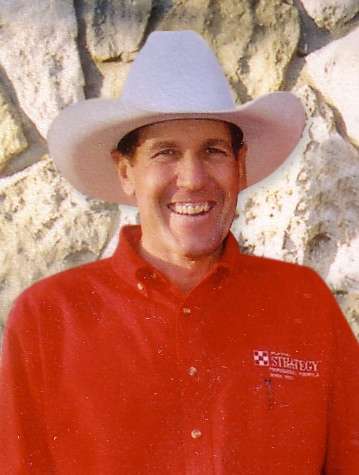
CUTLINE
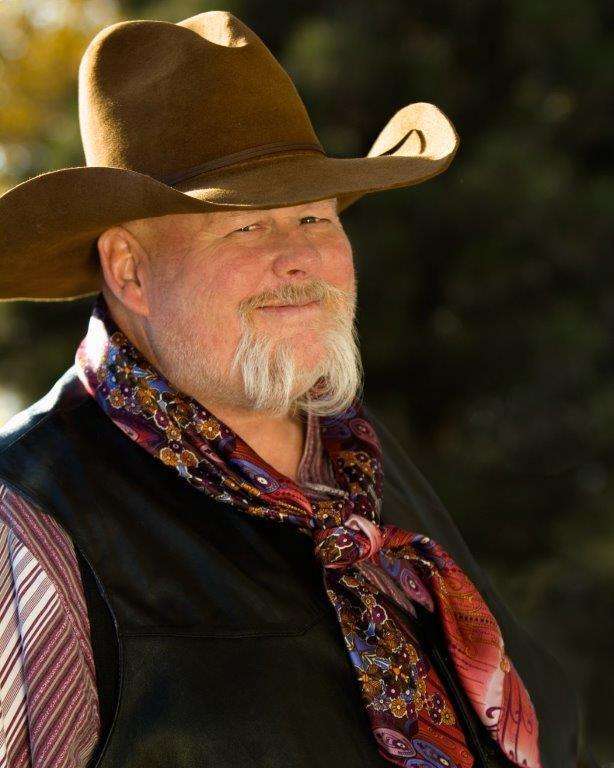
Burton Buchman was a renowned cowman dedicated to his faith, family, cow herd, the Flint Hills and helping others. (Buchman family photo)