Sunday, March 29, 2026
Home Blog Page 968

Uses of White Vinegar in the Garden

0

This is just another article of homemade tips for using products that we all have at home.

1. Use vinegar to keep the fruit fly out of your garden

Vinegar helps ward off insects that attack plants, such as the fruit fly, also known as Drosophila Melanogaster. You must be asking how you can use vinegar to ward off this pest. I advise you to do it as follows: mix in a bottle or can a cup of water, half of apple cider vinegar and half a cup of sugar. As this mixture is sweet, the flies will be entertained with this mixture and will move away from their fruit trees.

2. Use vinegar to keep animals out of your garden and garden

Cats, for example, cannot stand the smell of white wine vinegar, so you can use it to protect your plants. To do this, dip some rags of old cloth in white vinegar and create a kind of “fence” around your garden with them. You will see that it keeps away the most persistent intruders.

3. To water plants that need more acidity, use vinegar

As you may already know, not all plants have the same chemical and biological needs to grow and develop. Some plants need more acidic soil, and therefore you can use vinegar to acidify the medium. Have you tried watering your plants that need more acidity with apple cider vinegar?

For this purpose, I advise you to use the following recipe: a cup of apple cider vinegar for a proportion of three liters of water. But A LOT OF ATTENTION! Do not abuse this aqueous solution as not all plants can withstand a sudden increase in acidity in the soil (therefore, select well the plants where you will apply this homemade recipe). Also, avoid spraying on plants as it can kill many of them.

4. Eliminate weeds in your garden with vinegar

Vinegar can be considered a herbicide. This means that if you put a solution of water and vinegar previously prepared on the weed plants located on the walls or roadsides, they will eventually die. Want to know more about weed plants? Please read my article here.

5. Use vinegar to disinfect garden tools

Do you need to clean the devices you use for gardening or in your garden and need a quick and effective recipe? Use vinegar water for this purpose. You can also use this aqueous solution to disinfect tools, pots, and germination trays, thus preventing the transmission of fungi and diseases that can affect plant growth and development.

6. Remove slugs and snails from your garden

Slugs and snails die with white wine vinegar. How about placing vinegar traps throughout your yard? You can also spray this solution on these enemies in the garden. Do not forget that you should repeat this treatment whenever justified, as well as after rainy days. Also, check that this behavior does not affect the plants in the vicinity (check that the surrounding plants resist white vinegar). If you want to know more ways to end snails and slugs, see this article here.

7. Use vinegar to treat fungus or aphids on plants

Try using a mixture of vinegar with water (through a spray bottle) to remove aphids and other insects that manifest as actual pests on the leaves of plants. You can also use this solution to combat fungi attacks on trees (only if they are not sensitive to vinegar, of course).

8.  Cleaning the tools

Anyone who uses tools either for implantation or for maintenance of the garden or vegetable garden knows that they are super important. The problem is that many times, over time, these utensils end up rusting

9. Increasing the durability of cut flowers

An environment is always more charming when it is decorated with cut flowers. The problem is that these flowers, having been cut, have little durability. But would it be possible to add a solution that would increase the strength of these arrangements? Yes, there is, and for that, you will need white vinegar.
Iconic Kansas Wheat Shock unveiled in downtown Dodge City

0

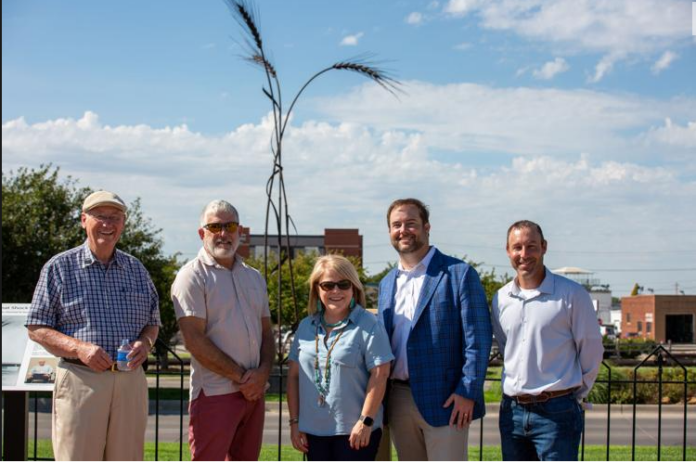
As reported in High Plains Journal, with the unveiling of a story board south of the Boot Hill Museum, an iconic public art sculpture moved to a new home to the loud applause of a large crowd that gathered Aug. 3 in downtown Dodge City, Kansas.

The story board tells the history of the 32-foot original art piece, known as the “Kansas Wheat Shock,” which has been relocated to a median grass strip along historic Wyatt Earp Boulevard. For 40 years the signature artwork welcomed visitors to the former home of High Plains Journal, 1500 E. Wyatt Earp Blvd.

When the publication moved to its new location this past February to 11142 Kliesen, HPJ owner Nelson “Spence” Spencer Jr. maintained his commitment to keeping the statue in a prominent location as a way to say thanks to past, current and future employees of the farm and ranch publication. In delivering on his promise he found an eager partner with the city of Dodge City and was pleased that it could be prominently displayed.

“It is an iconic piece of art and should be in an iconic landscape,” he said as he marveled at its new location. Donating the wheat statue was the right choice because it belongs to the community and Dodge City, which has been intertwined with HPJ, Spencer said. The publication was started in 1949 but its roots dates back to 1876.

Spencer said HPJ has been a success because of its employees and continues to have a bright future.

“There would be no legacy to build upon without our people,” he said.

Artist Hoss Haley, who now lives in Asheville, North Carolina, remains humble about the project as he remembers it would not have happened without the generosity of HPJ and others in the community who believed in his talents.

“It’s a real honor,” Haley said before festivities as he thought about the new location. “I didn’t look down the road 40 years ago to know where it would wind up being (where it is today).”

The public sculpture is an example of the generosity shown by the late HPJ Owner and Publisher Joe Berkely and the late HPJ Art Director Ted Carlson. Haley, a Dodge City native, was awarded a $5,000 commission to build the statue, which used Corten Steel, an all-weather product.

“I get the credit because I made it but it would not have happened without Joe’s and Ted’s vision,” Haley said. “Ted was a fabulous artist. He sketched out the idea and I took it and ran with it.”

He credited the late Lowell Tasset for his willingness to share his shop location, skills and expertise. Haley remembers building the sculpture horizontally. A deep hole had to be dug and a pad poured with five yards of concrete in preparation of it being placed south of the Journal’s headquarters. The first time it stood vertically was when it was put in the ground. His dad had a John Deere 4010 with what Hoss Haley remembered was a homemade-looking loader and the statue was put in place until its relocation.

He also credited Ford County Commissioner Kenny Snook, who had contacted Haley and told him the Kansas Wheat Shock needed to be preserved. Haley was appreciative to all the entities who worked together to keep the wheat statue preserved and visible as he noted the meticulous work of the city employees under the direction of Corey Keller, director of Dodge City’s public works department. The statue was his first piece of public art and will always have a place in Haley’s heart. “It was the piece that started my career.”

Michael Burns, Dodge City vice mayor, was honored to accept the statue as a gift on behalf of the city and its citizens. The wheat statue will serve as an anchor for the downtown and it is appropriate to be close to the historic Boot Hill Museum. Burns also noted the wheat sculpture captures the importance of agriculture to Dodge City and the region and also HPJ’s continued commitment and legacy to serving the industry.

Retired HPJ Publisher Duane Ross, who attended the ceremony, remembers the commitment HPJ had made for many years to the wheat industry and agriculture and the Kansas Wheat Shock captured perfectly.

“It is classic art piece and so appropriate to this region,” he said, adding he was appreciative that it could be preserved and enjoyed by many more people who want to visit Dodge City.

Ross is one of three publishers pictured on the story board. Also pictured are Berkely and Tom Taylor, who was unable to attend. HPJ Publisher Zac Stuckey and former Publisher Holly Martin were also recognized. Dodge City’s Miss Kitty (Christina Haselhorst) provided the welcome and introduced dignitaries in attendance. The Dodge City Area Chamber of Commerce conducted a ribbon cutting, and a reception followed in the Mariah Gallery of the Boot Hill Museum.

Bullfighters, birthday luck key to success for Fort Scott bull rider at Hickok Rodeo

0

Success during a rodeo doesn’t just mean a rider can stay on top of a bull for eight seconds, but it also means that the bull rider can walk away, ready to get bucked another day. Fortunately for one contestant at the Wild Bill Hickok Rodeo, he had success with both.

Hailing from Fort Scott, bull rider Coy Pollmeier competed during the Bulls, Broncs and Barrels show Wednesday night at the 76th annual Wild Bill Hickok Rodeo in Abilene, finishing the night with the best score heading into the weekend. Wednesday also happened to be Pollmeier’s 22nd birthday.

“Mom and dad came up to watch too,” Pollmeier said. “Anytime my dad gets to come up and help me, it’s pretty good.”

Pollmeier has riden since he was a kid, making it to Abilene for junior rodeo at the age of 8 or 9.

“I was riding junior steers and calves,” Pollmeier said. “Then I came back here in 2019 for my first time with the pro rodeo.”

Pollmeier has traveled with other riders throughout Kansas and other states this summer, keeping up a busy schedule. He drove with three other Kansans, Brylen Dees, also from Fort Scott; Cash Toews, from Canton; and Luke Mast, from Hutchinson.

“We were in Dodge City last night, we’ll go to Sidney, Iowa, tomorrow, Phillipsburg Friday and then we’ll be back in Dodge for the rodeo on Saturday,” Pollmeier said. “We all high school rodeoed together, so we know each other pretty well.”

Driving together lets the riders save money and hit up as many events as they can.

Pollmeier had a pretty wild ride Wednesday on a bull called The Kraken, staying on for the full eight seconds before falling and having The Kraken charge angrily toward him. Fortunately, bullfighter Blake Miller was able to get in the path and received the brunt of The Kraken’s impact, flipping into the air.

“I asked him if he was alright, afterward, and he seemed to be OK,” Pollmeier said.

Bullfighters, which are professional protectors, distract these bulls from the competitors after they fall, a crucial job when dealing with a sport as dangerous as rodeo.

Miller, who’s from Belton, Texas, worked as a bullfighter for six years, four of those as a professional. He said he got into this profession after being around the rodeo since he was little.

“This is really all I’ve ever known,” Miller said. “I have (a) business back home, so I don’t do (this) for the money; I do it ’cause I love it.”

Miller and his fellow fighter for this rodeo, Clint Lott, also from Texas, have both been at the Hickok Rodeo before.

“This is my third year being here,” Lott said. “Minus the COVID year, it’s my third in a row.”

Miller did a backflip off a barrel as a bull charged into it while Lott set up a larger innertube for the bull to charge and fling into the air.

While Miller and Lott attend shows around the country, both fighters said they enjoy Abilene and looked forward to the possibility of coming back in the future.

“It’s one of my favorite (rodeos),” Miller said. “The way that the committee and the community makes you feel (when you’re here), it makes you feel like you’re at home.”

As reported in The Salina Journal


Corn, soybean crops progressing despite heat, agronomist says

0

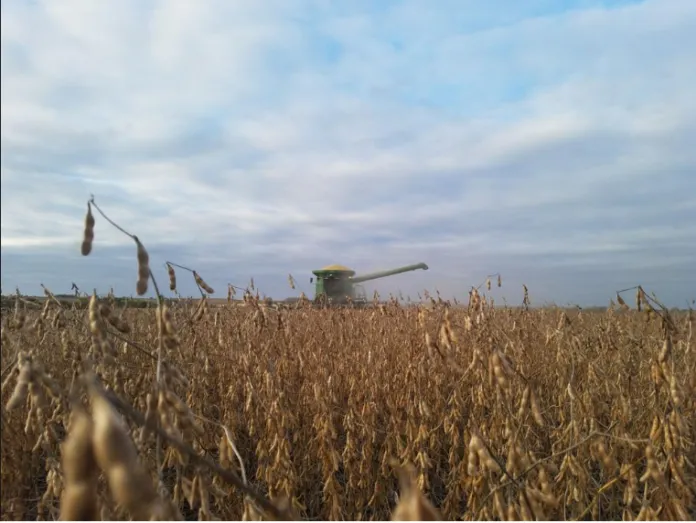
As reported in High Plains Journal, dryland corn and soybean producers in much of the central Plains have experienced an uphill battle this growing season as drought and heat will likely reduce crop production, according to one expert.

Holly Thrasher, a DEKALB Asgrow technical agronomist based in Stafford, Kansas, said on July 27 the high temperatures without rain were a double whammy at a critical time for plant development.

She recently scouted fields in the Pratt, Kansas, area, and the corn was extremely stressed but she could find some silver linings in some cases. “Walking through a field and looking hybrid by hybrid there is more corn than I thought.”

The summer’s drought and heat came on the heels of spring planting when moisture was below normal in many places, she added.

The lack of moisture may curb fungal diseases, although producers will have to be on the watch for spider mites in corn and soybeans as that pest can significantly reduce yields, Thrasher said. Also, the potential rises for aflatoxin in corn. A stressed plant will also be susceptible to smut in the ear.

The farther west she travels the condition worsens for dryland corn but she said there have been bands where rain did fall and that has helped those fields.

“The dryland acres are really struggling,” she said.

Even grain filling in irrigated fields will be stressed because nighttime temperatures stayed high and that impacts plant transpiration. Irrigators all have to weigh water allocations and timing of the application and at times that is a field-by-field decision, Thrasher said. She advised irrigators to look at the information about their hybrids and weigh that with other considerations including stress tolerance and soil quality.

“Growers will have good yields with irrigation (this year) but not great yields,” Thrasher said.

She has also received many calls from irrigators about water application on soybeans. The key for soybeans is there is still time for the pods to fill and August is a critical month in the central and western Plains.

“I’ll get asked, ‘Can I back off the water?’ On beans, no you can’t,” Thrasher said.

This year is shaping up to be similar to 2011 when growers last faced such stressful growing conditions. The pollination potential, crucial to yields, has taken a hit because of the heat, particularly when fields do not cool at night.

Also, the corn and soybean plants are shorter in stature, so while wind has less impact on yield potential it means that weed pressure may increase. Growers will need to take that nemesis into account as they also plan ahead to next year’s crop.

Thrasher said the heat and drought takes a mental toll. She knows of some growers (before the late July rains) in western Kansas who had not had any meaningful rain since June 2021.

“The mental fatigue is one of the toughest challenges” as producers plan for harvest, she said.

Growers can take solace that seed company experts are also learning from stressful conditions. The DEKALB hybrids she works with place a great emphasis on drought tolerance and that will continue. As for 2022 fall harvest, she encourages producers to stay positive.

“The finish line is getting closer,” Thrasher said. “The crop will move along and move quickly and we’re getting there. Hang in there.”

Increased gluten quality varieties coming soon to a wheat field near you

0

Type the word gluten—the protein found in wheat, barley and rye—into any internet search engine and the first web page that pops up is the Celiac Disease Foundation and questions such as What does gluten do to your body and what is gluten and why is it harmful.

Gluten has been labeled unhealthy or even dangerous over the last decade, however, it does not deserve this bad rap. While gluten is damaging to those who have celiac disease—an autoimmune disease that only 1% of the world population suffers from—for the other 99% of the world gluten is safe and provides fiber and nutrients.

Additionally, the American Heart Association published data in 2017 that concluded people who ate foods containing higher amounts of gluten were at lower risk of diabetes than those that did not and the Harvard School of Public Health released data from one of it studies that found the individuals who ate high-gluten diets were at decreased risk of health disease compared to other participants that ate low-gluten diets. What’s more, there is just no substitute that can equal the taste and texture of a perfectly baked pizza crust or flaky, buttery biscuit made with wheat flour. The summary for those consumers—gluten is healthy, natural and absolutely delicious.

In fact, Oklahoma State University Wheat Genetics Chair Brett Carver has been working tirelessly to develop new wheat varieties through OSU’s Wheat Improvement Team that have better gluten strength to produce higher quality bread products, while maintaining elevated yields and disease resistance. This combination could be a winner as many bread products need extra gluten added to the dough during the baking process to increase the gluten strength. These new varieties will not need additional gluten, adding value to the wheat and flour produced from it.

“Simply stated, a truly unique combination of wheat quality in a high-performance wheat variety provides value-capturing opportunities to farmers, millers, and bakers, as long as the genetics are maintained and delivered throughout the supply chain in its purest form,” Carver explained. “And, consumers will see value through a cleaner label on various wheat food products.”

Carver said the team currently has about a dozen candidates they have been studying. He plans to sort through all of the data collected during the 2021-22 crop season and combine that with data from the past four to six previous seasons. Several varieties will be selected to be released over the next two seasons—starting in fall 2022.

“The bar we normally set for gluten strength and overall dough quality places OSU varieties in a position of desirability among the millers and bakers,” Carver explained. “Some of the candidates, three to be exact, exhibit a level of gluten strength currently not present in any commercially available Hard Red Winter or Hard White wheat varieties. That is a higher bar than normal for us, but now that we know how high the bar can go, we will attempt to repeat this level of success in near-term releases, possibly over the next five years.”

Carver said OSU’s new line of wheat varieties were born from crossing the university’s popular Gallagher variety—known for its early maturity, disease resistance and exceptional forage yield—by Snowmass, a variety developed by Colorado State University.

“We chose Snowmass because it was confirmed to possess a novel, but naturally occurring glutenin subunit labeled Bx7oe,” Carver explained. “Snowmass’s agronomic performance was desirable in parts of Oklahoma, particularly in the far western regions. We considered Snowmass to be the most effective carrier of Bx7oe that would impose minimal decline to productivity in Oklahoma. Gallagher was one of four ‘recipient’ non-Bx7oe varieties considered to provide wide adaptation and above-average dough quality, and thus a suitable genetic background to deploy the gene conferring Bx7oe presence. Our intent was to squeeze as much yield potential out of the Gallagher background while maintaining the unusual level of gluten strength.”

A variety currently called “OK15MASBx7 ARS 8-29” was born from this crossing of Gallagher and Snowmass and is expected to have even higher yield than Gallagher with the increased gluten properties. Carver feels confident he has reached his goals with 8-29, but has made more advancements with four other derivatives of 8-29 that are being considered for release. He also said another recipient, an experimental line named OK10130, produced another super-strong gluten progeny called 6-8, that may be licensed and marketed alongside the 8-29 variety.

Carver said these new varieties have been in the works for about 10 to 11 years from the initial crossing stage to release. He said the first major challenge was that progenies confirmed by genetic markers to have the novel Bx7oe subunit did not necessarily result in added gluten strength.

“Once novel strength was thought to exist, more parties became involved in the quality testing phase to validate the level and utility of gluten strength,” he said. “For that, we relied on quality labs in the public and private sectors, and the results were not always consistent, and thus it took more tests to select the truly best genetic combinations. This level of quality testing was uncharted territory for us, even with the emphasis we traditionally place on wheat quality.”

After more than a decade, Carver is excited to introduce these new varieties to producers over the next few years and bring additional value to the wheat grown in Oklahoma and surrounding states.

“What really brings satisfaction to me is to show unending versatility of the Hard Red Winter wheat class, that with relatively small tweaks in the genetics can produce extremely surprising and valuable results to those who produce and process it,” Carver said. “We need more research in wheat molecular genetics to help us make those tweaks more efficiently.”

As for future wheat breeding developments, Carver plans to continue his streak of improved varieties that perform well in the High Plains environment.

“The next breeding cycle has already produced progenies of the 8-29 and 6-8 varieties, in which we will attempt to identify the same exceptional gluten strength combined with even higher yielding capability, and perhaps with other surprises added in for special effect,” he explained. “We can now expect that from Hard Red Winter wheat, a traditional U.S. wheat class with untraditional capability from farm to table.”

As reported in the High Plains Journal.