Tuesday, January 27, 2026
Home Blog Page 4564

Beginning Sewing at CRC

0

Cheney Rec Commission is hosting a beginning sewing class in February.  If you ever wanted to learn to sew;  this is your chance. If you have a sewing machine please bring it, if not there will be a few machines available for you to use.  Please call Diane Paneiko at The Wish List 542-0400 for a list of supplies needed for this class.  This is a great way to make a fun project and learn basic sewing at the same time.  Date may change, please check website for updates.

Date:                       Monday, February 16

Time:                      6:00-8:00 p.m.

Fee:                         $20.00

Location:                CRC Building

Deadline:                Friday, February 6

House Fire in Mt. Vernon

0
credit - Ada Be
Ada Be

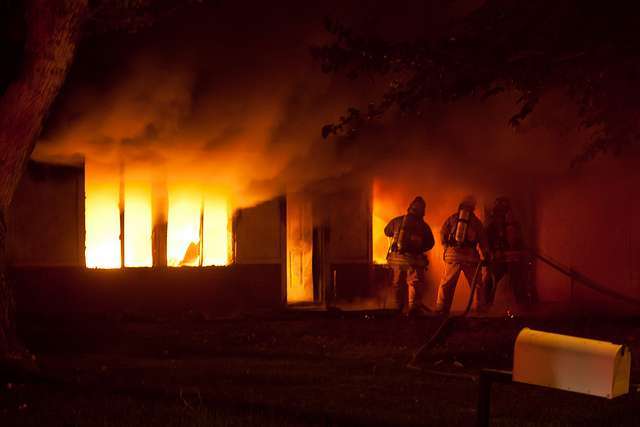
Cheney Fire responded to a house fire on Jan 22 in Mount Vernon.

The fire destroyed a 1930’s farmhouse owned by the Elpers  family.  No one was injured in the fire but the home was a total loss.

photo credit: Flickr: Ada Be’s

Buhler takes fifth at Salina Invitational

0

Buhler boy’s basketball places fifth  at the Salina Invitational Tournament. The Crusaders defeated Concordia 60-48 in the boys’ fifth place game on Saturday.

Controlling marestail in soybeans

0

By: Ryan Flaming, County Extension Agent, Agriculture & Natural Resources

Controlling glyphosate-resistant marestail in soybeans has been a big challenge for Kansas no-till producers in recent years. Because soybeans are generally planted later in the season, and marestail generally germinates in the fall or early spring, application timing and weed size are critical factors to successful control.

In the early spring, using a growth regulator herbicide like 2,4-D and/or dicamba is an inexpensive and effective option to control rosette marestail. Dicamba has provided better control than 2,4-D and will also provide some residual control, especially at higher use rates. A combination of the two will give broader spectrum weed control than either one alone. In addition, using a herbicide with longer residual control of marestail helps with weeds that germinate between treatment and soybean planting. Products that include Canopy EX, Autumn Super, Classic, FirstRate, Sharpen, metribuzin, or Valor can help provide residual control against several broadleaf species including marestail. However, it is very important to consult and follow the herbicide label guidelines for the required preplant intervals prior to planting soybeans.

As soybean planting nears, marestail control can become difficult because plants will have bolted and be considerably larger. Herbicides to apply as a burndown prior to planting include tank mixes of glyphosate with FirstRate, Classic, Sharpen, Optill, or  2,4-D. Be very careful to follow label directions when using 2,4-D prior to soybean planting because the plant-back restriction ahead of soybean can be from 7-30 days. Sharpen generally provides good marestail control and can be applied any time before soybean emergence. However, it is still most effective if applied before marestail starts to bolt, in a tank-mix with other herbicides, when used with methylated seed oil, and at spray volumes of 15 gallons per acre or more.

One additional herbicide to consider as a rescue burn down application to control bolting marestail prior to soybean planting is Liberty. Although, it would be better to control marestail at an earlier stage of growth, Liberty has been one of the most effective herbicides to control bolting marestail.  Liberty also has broad spectrum non-selective activity on other broadleaf and grass species if treated at a young growth stage. Liberty is primarily a contact herbicide, so a spray volume of 15 gallons per acre or greater generally provides the most consistent weed control. Liberty tends to work best under higher humidity and warm sunny conditions at application.
Controlling marestail in the growing soybean crop can be the biggest challenge for producers. Glyphosate alone is often not effective on larger plants or glyphosate-resistant marestail. The most successful treatments for large marestail in Roundup Ready soybeans have been with combinations of glyphosate + FirstRate, glyphosate + Classic, or glyphosate + Synchrony. However, some marestail may also be resistant to Classic, FirstRate, and Synchrony and control may be marginal.

Caddo Sugar Maples

0

Sugar maples often have significant problems with our Kansas weather.  Our hot, often dry summers and windy conditions can shorten the life of these trees.  However, some sugar maples are better adapted to Kansas conditions than others.  Our John C. Pair Horticulture Center has evaluated sugar maples for well more than 20 years and has identified selections that are much better adapted to Kansas.  Of particular interest are the Caddo sugar maples which originated from an isolated population in Caddo, County, Oklahoma. These are true sugar maples and are considered an ectotype and are more drought tolerant, better adapted to high pH soils and more resistant to leaf scorch and tatter than the norm.  Just how resistant to scorch is impressive.  The last three weeks of August in 2003 saw temperatures at our research station over 100 degrees each day with no rain for the month prior.  All other sugar maples in the trial had severely scorched leaves.  Not a single leaf of any of the caddo maples was scorched.  Leaf water potential readings taken pre-dawn showed all other trees in the trial past the wilting point while the Caddo maples were barely stressed.
Another interesting characteristic of caddo maples is that they tend to retain their leaves in the winter and therefore have been suggested as screens or for use in windbreaks.
Dr. John Pair, the late director of the Horticulture Center, selected and released two Caddo maples over 10 years ago.  Both these selections color early and have consistent good red fall color.  Drought tolerance and resistance to leaf scorch and leaf tatter are exceptional.  However, neither will do well in a heavy clay soil that is frequently saturated.  These trees can be damaged or killed if planted in wet sites.
The first selection, ‘Autumn Splendor’, has the traditional sugar maple growth pattern and needs plenty of room to mature. ‘John Pair’ is smaller and more compact and more likely to fit a residential
landscape.   This tree is also noted for a dense, uniform crown.  If you
are in the market for a sugar maple, consider these before making a final decision. (Ward Upham)