
We occasionally receive calls from gardeners who want to know how to treat an apple seed so it will germinate. Usually, the gardener is trying to reproduce an old apple tree that was special for some reason (good quality fruit, planted by grandparents, etc.) Unfortunately, apples grown from seed will not be like the parent. About 1 in every
80,000 apple trees grown from seed will be as good as the apples we are used to eating.
Apple trees grown from seed usually have small and inferior quality fruit. If you want a tree exactly like the parent, you must propagate that tree vegetatively. In the case of apples, this usually means grafting. Apple trees are actually quite easy to graft, even for novices. Don’t be afraid to try even if you haven’t grafted before. The step that needs to be done at this time of year is the choosing and cutting of scion wood or small branches that will be grafted on top of a rootstock.
See the accompanying article in this newsletter on how this is done. However, if you don’t have an existing tree to graft onto, you will need to plant a rootstock this year for grafting onto next. Fruit trees are normally grafted (or budded) onto specially selected rootstocks. These rootstocks usually reduce tree size. For example, a tree that normally would reach 25 feet tall will only reach 10 feet if it is grown on a certain rootstock. Dwarfing rootstocks also allow apples to bear fruit a year or more earlier.
A tree on its own roots normally takes 5 to 7 years before it will bear. Semi-dwarf trees bear in 4 to 5 years, and dwarf trees bear in 3 to 4 years. Unfortunately, not all dwarfing rootstocks are well adapted to Kansas. Semi-dwarf trees usually are a better choice for us. Note that rootstock reduces tree size, not fruit size. Therefore, a Golden Delicious tree that only reaches 8 feet tall due to a dwarfing rootstock, will bear the same size fruit as a Golden Delicious tree that is 25 feet tall.
Most nurseries only sell trees that are already grafted. A company that does sell rootstocks is Raintree Nursery, Morton, WA, (360) 496-6400, http://www.raintreenursery.
Another is Cummins Nursery, (865) 233-3539, http://www.cumminsnursery.com/
This information does not include the details of grafting or budding or subsequent care.
The Missouri Extension Service has an excellent publication on grafting at http://extension.missouri.edu/
Cloning Apple Trees
For The Love Of Horses: St. George Cowgirl Passionate About Others Learning Benefits Of Horses
By Frank J. Buchman
“No hour of life is wasted that is spent in the saddle.”
It’s an often repeated quotation originally credited to Winston Churchill.
Diane Haffener at the D-Bar Arena near St. George often restates the remark true to heart, believes, and most obviously lives it.
“Horses are my life,” Haffener stated emphatically.
Born and raised in the ranching life near her arena and related operations, Haffener explained, “I’m the third generation of my family involved in horses. I trained my first horse at the age of 13, developing my own training techniques, which led me to the journey I am on today.
“I have built everything I have from the ground up myself, both physically and financially,” she pointed out.
“Besides training my own horses, I’m a team roper, a header,” Haffener stated proudly.
Her collection of trophy saddles, buckles, payback checks and honors as champion of the all-girls roping event at K-State readily verify her cowgirl abilities.
But, the success has not been without setbacks, especially, considering that one of the many horses Haffener has trained in her lifetime injured her seriously.
“It was a double bred Hancock gelding that I had in training. I went to head a steer, and he cut loose, bucked me off and broke my back. I was in bed three months. There was nothing else I could do.
“But, it healed naturally. I never had surgery. Now, I’m able to ride, rope and compete again. That’s the main thing,” Haffener appreciated.
“As a matter of fact, eight months later, I recently won third in the Number 8, at a jackpot team roping north of Strong City,” Haffener related.
“It was both mentally and physically rewarding after that long, to come back and win a check,” she admitted.
The D-Bar property has a large outdoor arena, stalls with outdoor runs and outdoor pens. “I host three-day camps for children throughout the summer, but mostly I give Western riding lessons,” Haffener said.
Through her experiences in training horses and their riders, Haffener explained, “It’s essential to focus on timing, cues, respect for the horse, behavior of both horse and rider, and most importantly trust.
“A horse relies solely on our behavior and body language, and they must put their trust in us. As a rider, we must become one with them, to overcome what both the rider and the horse have been through in the past,” she emphasized.
No matter the age or experience of horse or rider, Haffener works with all levels and in varied disciplines.
“Riders range from age three, to college students, those serving in the Army, and adults from many professions,” she said. “The nice, natural sand outdoor arena permits riding much of the year, unless it’s too cold, or there’s snow.”
There are some who want to be involved with horses and riding, but just can’t have a horse of their own, either financially, facility wise, or for a variety of other situations. Haffener is well aware of the dilemma, and is anxious to accommodate them.
“Horses are available for lessons and riding by those who come to the arena. But, it’s really difficult to find horses that are of the caliber for beginning and inexperienced riders.
“I have worked very hard training these horses, so they readily adapt to riders of all levels. Safety is of utmost importance in everything we do here,” Haffener confirmed.
Working with about 14 students presently, Haffener explained, “The majority of them are younger ones, with maybe five or six that really take competition seriously and are dedicated to improving their horsemanship abilities and want to enter successfully in shows.”
D-Bar horses are often ridden by students during shows at the headquarters as well as at others shows in the area.
“Several students can compete on the same horse during the same show, because the riders are often in different age groups, and not always even entered in the same type of classes. Again, you can understand, it really requires a ‘special’ horse to work successfully in such situations,” Haffener acknowledged.
“We don’t do any English riding here, but about anything to do with the cowboy lifestyle. We show in rail and horsemanship classes, speed events like barrel racing and pole bending, along with, of course, team roping,” clarified Haffener, who has also been successful barrel racing in the past, but she’s dedicated personal competition to team roping at the present.
Roping steers and a roping machine that is pulled behind a four-wheeler are used for training rope horses.
“The machine is actually the best way to get a horse started, and also for the ropers to learn to ride, and rope, before trying to catch a live steer,” Haffener insisted.
Having trained horses from the very beginning to be all-around mounts, now Haffener generally will only take broke horses to make into team roping horses. “They must not have any buck whatsoever.
“I prefer a gelding that is cow bred, along with speed bred. Golden age of a horse is starting at six, because their experiences, mind and body have matured. A horse with a good attitude and is physically and mentally built for roping is the best.
“But, it’s not an overnight deal. I generally think it takes two years to make a finished rope horse. They’re not all the same, for sure, and most of them still require some tuning, unless they are the real exceptional ones,” Haffener evaluated.
“A well-bred, broke, seasoned horse always keeps its value in the competitive horse market,” she recognized.
“Everybody hopes to get their Number 1 Horse of a Lifetime. Mine was my champion team roping horse that got injured, but he still makes me money today using him for lessons. I recently purchased a horse out of Mexico, and he’s put me back winning in team roping, back to where I was before my injury,” Haffener said.
“I’m a header, but I’m going to train myself in heeling this year, so I can compete on both ends,” she promised.
Aside from riding and training, Haffener is also recognized for the custom crosses she makes.
“I started making these Southwest crosses when my prize horse got injured, while I was living and competing in Texas, and didn’t have much else to do. These crosses are unique and full of color. They are a great way to showcase beautiful artwork in your home, or for a gift for someone you love,” Haffener described.
“Each cross is made with old rustic barbed wire, some even more than 80-years-old, custom measured, hammered straight, then intertwined with baling wire, and even sometimes hot wire to enhance the effect,” she further detailed.
Hand-picked stones in a variety of colors can be selected to personalize the unique decorative art piece crosses.
Like horses, development of D-Bar Arena has been a continuing, but whole hearted process.
“Interest in horses is growing all of the time; there’s never any decline. I have a lot of ideas to continue to grow and spread my knowledge of horses and horsemanship. Certainly, ‘no hour of life is wasted that is spent in the saddle,’” summarized Diane Haffener at the D-Bar Arena.
Growers statewide to share on-farm research
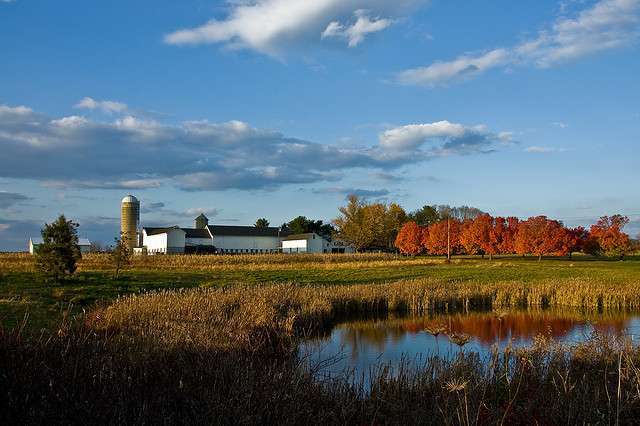
Lincoln, Neb., Jan. 27, 2015 Farm operators and agronomists from across the state are invited to attend the Nebraska On-Farm Research Network research update program Feb. 13 at the Hall County Extension Office located on the College Park Campus in Grand Island, Feb. 16 at the Lifelong Learning Center located on the Northeast Community College Campus in Norfolk, or Feb. 17 at the University of Nebraska’s Agricultural Research and Development Center (ARDC) near Mead.
Registration is at 9:00 a.m. and the program is from 9:30 a.m.-3:30 p.m. CDT at all locations. Producers will obtain valuable crop production-related information from on-farm research projects conducted on Nebraska farms by Nebraska farmers in partnership with University of Nebraska faculty.
The Nebraska On-Farm Research Network is a statewide, on-farm research program that addresses critical farmer production, profitability and natural resources questions. Growers take an active role in the on-farm research project sponsored by Nebraska Extension in partnership with the Nebraska Corn Growers Association, the Nebraska Corn Board and the Nebraska Soybean Board.
These February programs will provide an opportunity to hear growers who conducted on-farm research share their results from the 2014 growing season. Field length replicated treatment comparisons were completed in growers’ fields, using their equipment.
Five Certified Crop Advisor Credits are applied for and pending upon approval.
Preregistration is requested for meal planning purposes. Call (402)624-8000 or e-mail [email protected] to register for any of the three sites. To learn more about the Nebraska On-Farm Research Network and how to participate, visit http://cropwatch.unl.edu/farmresearch.
# # #
Source: Keith Glewen, extension educator, Nebraska Extension, 402-624-8030, [email protected]
K-State Presents Youth Animal Science Learning Opportunity
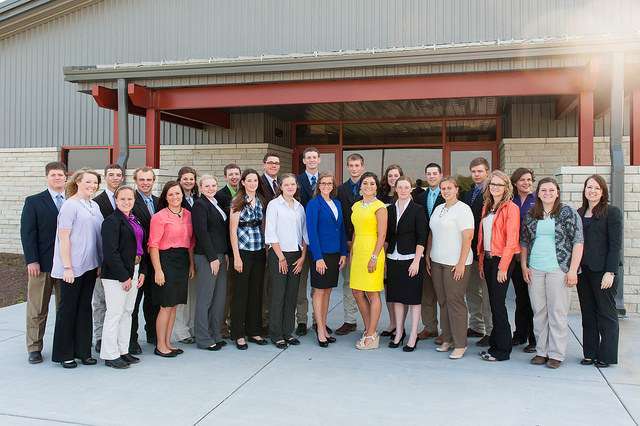
High school students can apply now for the Kansas State University Animal Sciences Leadership Academy’s 2015 class.

MANHATTAN, Kan. – Students from across the country with an interest in the livestock industry and related careers can apply now for the Kansas State University Animal Sciences Leadership Academy. The academy is an intensive four-day educational experience designed to enhance the leadership skills and animal science knowledge of students in ninth through 12th grades.
Hosted by the K-State Department of Animal Sciences and Industry and sponsored by the Livestock and Meat Industry Council, the academy’s goal is to develop young leaders within the livestock industry and prepare them for a successful future in this field.
“I highly recommend this experience to anyone,” said 2014 participant Brooke Jensen of Courtland, Kansas. “It opened my eyes to different aspects of the industry and caused me to think a lot about what I could do with my future.”
“We are pleased to announce that we will be expanding the program and offering two sessions in 2015,” said Ken Odde, head of the K-State Department of Animal Sciences and Industry.
Sessions will take place June 10-13 and June 17-20 in Manhattan. Students may apply for one or both dates as their schedule allows. Applications are due April 1, 2015, and can be found at http://www.YouthLivestock.KSU.
The program’s itinerary will feature interactive workshops, tours and faculty mentor time with animal science professors. Industry leaders will also join the participants frequently to share their knowledge and expertise. Throughout the week, participants will work in teams to evaluate current events within the animal science industry and educate others. This experience will culminate with team presentations and a closing reception on Saturday morning.
Only 20 students will be accepted for each session to ensure individualized attention from counselors, professors and industry leaders. Participants will stay on campus in university housing with program staff for the duration of the event. Transportation to and from the event is the responsibility of the participant, along with a $50 deposit to reserve his or her space. The Livestock and Meat Industry Council generously provides all other sponsorships. Please contact academy director Sharon Breiner with questions at [email protected]or 785-532-6533.
Spider plant

By: Scott Eckert, County Extension Agent, Horticulture
One of the most popular and durable houseplants is the unique Spider Plant. The botanical name is Chlorophytum comosum, however it is easier to grow and enjoy than that name sounds.
Spider or Airplane Plants have either one of three leaf color patterns: solid green leaves, green edges with a white variegated stripe down the center of the leaf blade or leaves with white edges and a green stripe down the center.
Basics: This easy to grow plant is more tolerant of extreme conditions than other houseplants, but it still has its climate preferences. Spider Plant thrives in cool to average home temperatures and partially dry to dry soil. Bright indirect light is best. Direct sunlight may cause leaf tip burn. Fertilizer may be applied monthly from March through September. A professional potting media containing sphagnum peat moss and little to no perlite is best.
Spider Plants store food reserves in adapted structures on the plants roots. These “swollen roots can actually push the plant up and out or even break the pot. Avoid over fertilizing to minimize this growth characteristic. Spider Plants are easy to propagate. Simply cut off one
of the “spiders” or plantlets and place in a pot. You may need to pin it down to the surface of the potting media to hold it in place until the roots grow and anchor it. A paper clip bent into an elongated U shape does the trick. Spider Plants are photoperiodic, that is they respond to long
uninterrupted periods of darkness (short day, long nights) by initiating flowering. Production of “spiders” follows flowering. This day length occurs naturally in the fall of each year. However, if you place your plant in a room where you have the lights on each evening, and artificially create a longer day, then they may not flower and you will have fewer spiders.
