Tuesday, January 27, 2026
Home Blog Page 4566

Women in agriculture conference to celebrate 30 years of programming

0

LINCOLN, Neb., Jan. 27, 2015 — Nebraska women will learn how to plan and make better business decisions for their farms and ranches, their communities, their families and themselves at the 30th Women in Agriculture Conference, the longest-running women’s conference of its kind in the country, Feb 26-27 at the Kearney Holiday Inn.

The theme of this year’s conference is “Our Heritage, Our Present and Our Future,” and it features a variety of workshops, “funshops” and speakers, including Rebecca Long-Chaney of Elwood, NE and Celeste Settrini from Salinas, CA.

Long-Chaney will be the keynote speaker Thursday morning with her talk, “Dare to Risk Life Change,” about her life-changing adventure working in the Australian Outback. Settrini will be the capstone lunchtime speaker on Friday as she presents “Channeling Your Inner Rock-Star!” a fun and humorous look at how to unleash that inner voice for agriculture. The Nebraska WIA Conference is celebrating its 30th anniversary of women’s agriculture programming in the state.

Also on Thursday will be Madeline Schultz from Iowa State University, the National Annie’s Program Leader, who will fill participants in on happenings in this exciting program and how they can work to bring this program to their county. The day will conclude with a celebration in the evening of the Women in Agriculture’s history and exciting future.

On Friday, the morning speaker will be Carla McCullough from the Department of Environmental Quality, who will present a department water division update. She will look at a few of the many programs DEQ monitors and some of the changes that will impact producers in 2015.

In between speakers, conference-goers can choose from 32 concurrent workshops spread over five sessions during the event. Topics include crop and livestock marketing, financial planning, estate planning, farm bill updates, crop and forage insurance, agronomy, beef nutrition, social media and apps, hydrology in Nebraska, GMO’s, community entrepreneurship, disaster preparation and Alzheimer’s Disease.

Thursday evening includes funshops for Twitter, Zumba and a demonstration from the Nebraska Beef Council.

Those interested can register online to wia.unl.edu where there is a link to the conference registration site, call 402-472-9053, or mail a completed registration form to UNL Marketplace, P.O. Box 830705, Lincoln NE 68583-0705. For more detailed information about Women in Agriculture and for a conference registration book, visit wia.unl.edu.

Early-bird registration fee is $110 for those registering by Feb. 13. Beginning Feb. 14, the fee is $130. Fee includes workshop materials, registration and all meals and breaks.

The conference is sponsored by the Institute of Agriculture and Natural Resources, Nebraska Extension and the Department of Agricultural Economics as well as Farm Credit Services of America, Reinke Irrigation, USDA Risk Management Agency and the Nebraska Department of Environmental Quality.

Lodging is available at the Kearney Holiday Inn, 110 2nd Ave. by calling 308-237-5971.

South Hutchinson City Calendar

0

Mystery meal can become culinary delight

0
Photo credit: Steven Depolo

Janet Hackert, Nutrition and Health Education Specialist, Harrison County, University of Missouri Extension

It’s time to eat. You open the fridge and find some brown rice, a small piece of meat, some leftover vegetables or all of the above. How can this possibly become a meal? Here are some tips on converting a mystery meal of leftovers into a culinary delight.

Start by considering what you have available. To minimize the grocery bill and prevent food from being wasted, check the leftovers first (but keep food safety guidelines in mind). Then see what is on hand in the pantry, refrigerator and freezer. Look for interesting ways to combine what you already have.

  • Choose a vegetable or combination of vegetables. Fresh, frozen or canned, vegetables are good sources for many nutrients.
  • Add a starch. It could be a starchy vegetable like potatoes or dried beans, or a grain like brown rice, whole wheat pasta or couscous.
  • Include a little meat, fish or eggs for some protein.
  • Dairy foods can be included to flavor the meal or as part of a sauce.

Next look for the spices, sauce or condiments that will make the ordinary meal into something extraordinary. Keep in mind that sauces can be ready-to-eat like a jar of spaghetti sauce, or easy-to-create by using ingredients on hand like cottage cheese or stewed tomatoes…

For additional tips, read the full version of this article at http://missourifamilies.org/features/nutritionarticles/nut471.htm

How to improve financial health

0

Michael Ravenscraft, MS, CPA, Financial Education Specialist, Jefferson County, University of Missouri Extension

Many consider the new year as a chance for renewal, giving us a fresh outlook. Often we are conscious of our physical health and changes we can make physically. In much the same way, we can use this time to focus more on our financial health to determine where our family money is going and why.

After facing one of the deepest recessions in recent history, many of us have a greater appreciation for the value of a dollar. We may realize we can do without some things we thought we needed as we better distinguish between our needs and wants.

Here are some steps to making powerful positive change in our financial lives by looking at what we’re doing right — and what we can improve.

  1. Gather information, and then write it down! When people make a decision to improve their physical health, one of the first things they do is to get on the scale. Why? Because they need to know what they currently weigh. Regarding our finances, we also need to know where we stand in our financial lives.
  2. Determine what you own. Make a list of assets, like bank accounts and investments, along with other items you own.
  3. Write down what you owe and to whom. This is the starting point, where you are today…

For the complete list of steps and additional tips, read the full version of this article at http://missourifamilies.org/features/financearticles/cfe65.htm

K-State Survey Indicates Lower Farmland Prices, More Non-Performing Loans in the Short-Term Outlook

0
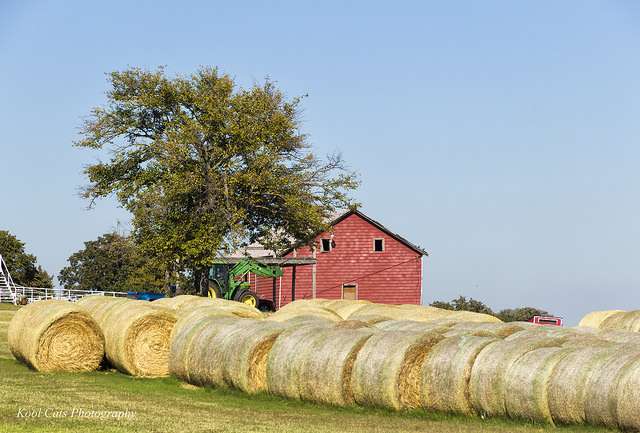
Photo credit: Kool Cats Photography

MANHATTAN, Kan. – The agricultural lender sentiment for the end of 2014 shows that lenders have decreased expectations for the short- and long-term outlook. Respondents of a Kansas State University Agricultural Lender Survey expect farmland prices to decline and non-performing loans to increase.

The five areas surveyed include farm loan interest rates, spread over cost of funds, farm loan volumes, non-performing loans and farmland values. Brady Brewer, agricultural economics doctoral candidate, outlined the major themes and implications for the agricultural sector that were found.

“One of these themes is the continued expectations that farmland values will decrease; growing sentiment that farmland values will decrease in the short- and long-term,” Brewer said.  “Additionally, only 2 percent more respondents indicated that land values in their service territory increased during the last quarter, indicating that values have already stagnated.”

Brewer pointed out that lenders expect interest rates to increase in the short- and long-term. Rising loan interest rates was expected on all loan types considered, operating, intermediate, and farm real estate.

“However, more lenders felt these increases would occur in two to five years instead of the coming year,” added Brian Briggeman, associate professor and director of the Arthur Capper Cooperative Center.

Another theme Brewer discovered is that while the long-term expectation for non-performing loans saw little change from the spring 2014 survey to the fall 2014 survey, more lenders expect non-performing loans to rise in the short term. Potentially, lenders are expecting tighter profit margins to strain loan repayment rates sooner than previously expected. However, it is important to recognize that non-performing loans are currently at a historically low level.

“The financial health of the livestock and crop sectors appears to be headed in different directions,” said Brewer. With lower commodity prices and higher farmland values, lenders expect non-performing loans to increase in the short- and long-term for crop sectors, while the livestock sectors, bolstered by high market prices and lower feed costs, are expected to see a decrease in non-performing loans.

“As with the spring 2014 survey, lenders continue to express less optimism than they did during 2013,” said Christine Wilson, professor and assistant dean of academic programs, for K-State’s College of Agriculture. “They continue to expect interest rates to increase, non-performing loans to increase, and farmland values to decrease. They do however also still expect farm loan volume to remain strong.”

The research and series of surveys was developed by Brewer, Briggeman, Wilson, and Allen Featherstone, department head and professor of the K-State Department of Agricultural Economics. For more information about the outlook for agricultural credit conditions and commentary on areas of concern within agriculture, go to the K-State Agricultural Lender Survey.