Saturday, January 24, 2026
Home Blog Page 4620

Give the gift of health

0
Jasleen Kaur

Janet Hackert, Nutrition and Health Education Specialist, Harrison County, University of Missouri Extension

What better way to show we care than by giving the gift of good health to our loved ones. Although we can’t actually give or guarantee good health, we can at least encourage one another toward healthier choices.

Physical Activity
Gifts that promote physical activity are a great way to encourage healthy habits, for you and your loved ones.

Being physically active has a positive influence on health in a number of ways. For example, being physically active can lower the risk of heart disease and stroke, high blood pressure and cholesterol, type 2 diabetes, and colon and breast cancer. It can help to maintain a healthy weight. Being active can also help older adults prevent falls, reduce depression and maintain cognitive function.

According to the Physical Activity Guidelines for Americans, adults should get at least 150 minutes per week of moderate cardiovascular activity and children 6-17 years old should get 60 minutes or more of aerobic activity per day. Both groups should also be doing muscle-strengthening activities three times a week. For children and youth, this can be part of their daily hour of activity. At any age, these activities can involve a sport, exercise or just moving for fun.

Helping oneself or a loved one meet these recommendations provides lots of great ideas for gift giving. Walking is an easy way to fit fitness in and a pedometer is one way to get motivated to walk more. They come in an assortment of styles from simple and inexpensive ones that clip on a waistband and just count steps to elaborate ones that can be worn as a bracelet and measure steps, heart rate, miles, location and may even have other useful features like a timer and music player. There are also apps for a mobile device that go along on a walk to map out a route for a desired distance or time.

For more great gift ideas that encourage ourselves and our loved ones to be physically active, to eat well and to keep up with preventative screenings, check out the full version of this article at http://missourifamilies.org/features/healtharticles/health129.htm

Master equine program provides training for those interested in horses

0

             LINCOLN, Neb. — The Master Equine Manager program offers participants a comprehensive educational series on horse management and riding and training concepts.


            A partnership of the University of Nebraska-Lincoln and Iowa State University, the course is available online at www.extension.state.edu/masterequine. A complete program description and registration information are available there.


            Kathy Anderson, UNL Extension horse specialist, said the program is designed to enhance the broad-based horse industry by informing and educating people on quality horse care and responsible horse ownership.


            Horse owners, enthusiasts, boarding facility managers and industry employees benefit from increased knowledge and networking with others in the horse industry. The program combines focused learning opportunities with a hands-on practical evaluation.

The learning modules and topics include:


            – Welfare of Horses: Understanding Horse Behavior, Facilities and Equipment, Equine Quality Assurance


            – Horse Nutrition: Forages for Horses, Feeds and Feeding


            – Horse Health: Equine Emergency Treatment, Vaccinations for Horses, Understanding Horse Parasites, and Hoof Care


            – Selection of Horses: Conformation and Evaluation, Unsoundness’s and Blemishes


            Cost is $325 for adults (19 and older), $250 for youths, who might be high school juniors or seniors.


            More information is available from Anderson, 402-472-6414, [email protected].


            Registrations are accepted from junior and senior high school students and adults with an interest in horses. Graduates of the program will become a certified Master Equine Manager and are encouraged to share their skills and knowledge with others. The program is approved by Professional Association of Therapeutic Horsemanship and Certified Horsemanship Association – Certified Riding Instructors for CE credit for recertification.

The Stiefel Theatre announces “80’s & 90s Rock Night” Saturday, Feb. 7 @ 8pm

0

The Stiefel Theatre announces : “80s & 90s Rock Night” on Saturday Feb. 7th @ 8:00pm with Paramount & Rockgarden


Paramount & Rockgarden are both high energy bands that have been playing summer festivals & larger venues across Kansas & will bring their dual show: “Tribute to 80s & 90s Rock” to the Stiefel Theatre.


Paramount features amazing dual lead vocals playing top 80s anthems from Journey to Guns n Roses. Paramount also features Salinan Kevin Rome on drums.

Rockgarden is a power trio focused on 90s Rock , nailing some of the eras top bands such as Pearl Jam, Red Hot Chili Peppers, Nirvana & others. Rockgarden features from Salina: Dru Davis, Lon Beffort & Blake Blackim.


Tickets go on sale Tuesday, December 16. Tickets are $15, $20 and $30.  To buy tickets stop by the Stiefel box office between 9-5pm or call the Stiefel at 785-827-1998 or go online to ticketmaster.com.


Health insurance smarts: How do I use health insurance?

0

Part 1: Health Insurance Smarts: Why the Need for Health Insurance?

Part 2: Health Insurance Smarts: How Does Health Insurance Work?


Important health benefits covered by most policies and information regarding provider networks

MANHATTAN, Kan. – People don’t tend to plan for illness or injury, but the unexpected does happen. Health insurance, like any other type of insurance, covers you for the unexpected. But it also can help improve your health if you use the many free preventive care benefits offered by your health insurance policy, said Roberta Riportella, Kansas Health Foundation professor of community health at Kansas State University.

The preventive services must be covered at no direct cost to you beyond your health insurance premium—the fixed monthly cost you pay for your health insurance policy. Preventive services include annual well-person exams, cancer screenings and many immunizations, as examples.

Preventive services makes up one of the “10 essential health benefits” covered by health insurance policies since the Affordable Care Act (ACA) was implemented, Riportella said. These health benefits are covered by policies in the Health Insurance Marketplace, in addition to most other policies obtained through an employer, a private insurer, TRICARE, Indian Health Service, Veteran’s Affairs, Medicare or KanCare, Kansas’ Medicaid program.

“Although referred to as benefits, they are actually items and services within 10 categories,” she said. “They include preventive services, outpatient care, trips to the emergency room, hospitalization, care before and after your baby is born, mental health and substance use disorder services, prescription drugs, services and devices to help you recover if you are injured or have a disability or chronic condition, lab tests, and pediatric services for children ages 0 to 19, including dental and vision care.”

Families might have other specific needs, and some policies provide additional coverage, Riportella said. Policies might also exclude specific procedures and services, such as vision and dental care for adults, which should be clearly spelled out in the policy. It’s important to pay attention to the benefit packages offered in the policies you are considering.
Provider networks

When selecting a health insurance plan that fits your needs and budget, make sure to look at the provider networks, Riportella said. To manage costs, insurers negotiate prices and contract with different doctors, hospitals, pharmacies, labs and other health care providers for services. These contracted providers will be considered “in the network” for your policy.

“This arrangement seems to work well for all involved,” Riportella said. “It works well to make sure that costs are managed for both the insurance company and you as an insured person. It also works well for the providers, because it channels patients their way.”

Some policies require that you see only network providers, she said, or the policies might require you to pay more or all of your medical fees if you visit a non-network provider.

“To keep your costs as low as possible, it is always best to see network providers,” Riportella said. “Check the policies you’re considering to see if your current provider is in the network, as well as the pharmacies and labs you normally use.”

In most cases, she said, providers will be in the network for the full plan year, but at times providers leave their contracts with insurance companies. This is why each time you make an appointment, ask the office staff to make sure that provider is still in the network.

If you want to see a specialist, some plans instruct you to visit a primary care provider before the specialist, Riportella said.

“In those plans, the primary care provider gives you a formal referral to a specialist if you need specialty care,” she said. “If you want the freedom to go directly to a specialist on your own, you will want a policy that does not require you to go through the primary care provider first. Pay attention to these differences in plans if this is important to you.”

If you are a frequent traveler, some plans allow you to use non-network providers in a medical emergency, but what qualifies as an emergency in the legal terms of the health insurance contract might not be what you consider an emergency, she said. Travelers might consider policies with national networks or expect to pay more if caught out of town when illness or injury strikes.
More information

The Centers for Medicare and Medicaid Services offer a “From Coverage to Care” consumer roadmap for obtaining and using health insurance.More information about the ACA in Kansas is available through K-State Research and Extension fact sheets. The Kansas Health Institute also has numerous resources on its website.

If obtaining insurance through the marketplace, log on to Healthcare.gov. To learn more about how to enroll in the marketplace or KanCare, call the marketplace, available 24/7, at 800-318-2596.

Kansas wheat yield calculator app available

0
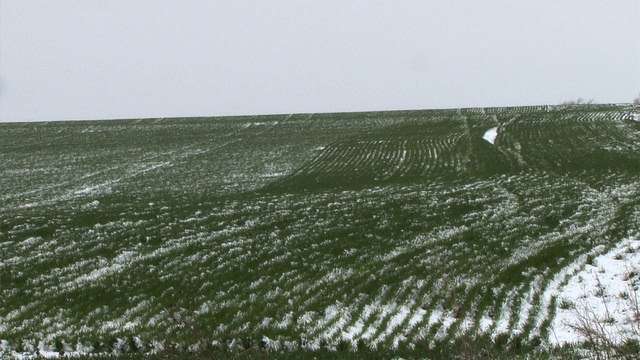
The Kansas Wheat Yield Calculator app, available for iPhone and Android devices, can be used to predict wheat yield at any time during the growing season.

The Kansas Wheat Calculator App allows growers to assess yield potential of their wheat stands during the growing season, even during winter dormancy.

MANHATTAN, Kan. – Imagine that a simple photo of your wheat, with just a few bits of additional information, can accurately predict future yield. A new app, called the Kansas Wheat Yield Calculator App, is allowing this to happen with ease from smart devices.

The app was produced by graduate researchers at Kansas State University and is available now in its basic form. Ray Asebedo, graduate student in the Department of Agronomy, and Trevor Rife, graduate student in the Department of Plant Pathology, developed the app with support from the Kansas Wheat Alliance.

Asebedo said although the app is available now for wheat growers to download, plans are in place to enhance its capabilities. The main goal of the app is to help growers year-round make agronomic and economic decisions. The app is free and available to anyone with iPhone and Android devices.

“We’ve designed it with the purpose that you can use it throughout the growing season,” Asebedo said. “In early fall, you can use it to assess your fall tillering. You can decide if enough tillers developed to meet your yield goals or if you need to make some strategic changes.”

“In the springtime and through heading, you can assess how your crop is developing and how that yield is changing under the different environmental conditions you might incur throughout the growing season,” he added.
How it works

When a grower opens the downloaded app, he or she must enter the field name, number of acres and county, Rife said. For each field, the grower can enter various samples. Each sample requires information on the feekes stage, row width and number of tillers per foot.

Then the growers can take a picture to add to that sample. Many samples can be taken throughout the field, he said, and equations built into the app produce estimations of yield for that specific field based on the entered samples. The app works with all wheat varieties.

“You can take multiple samples in a single field and also have multiple fields,” Rife said. “You can store each of those samples and get complete field averages across different fields at different locations.”

The app was designed to be easy for growers to use, Asebedo said, as many of them have a lot of acres to cover. The idea to is to assess more fields quickly and accurately.

“You don’t want to have an instruction manual to run it,” he said. “We’re trying to make it have as few screens as possible. As we continue updating this app, we’re changing the interface to make it even more intuitive.”

During the winter, growers can consider using the app to determine their top-dress nitrogen plans. If a lot of fall tillers are out there, odds are the grower has enough nitrogen in the soil, Asebedo said.

“You’ll have some wheat fields that have adequately tillered for 40 to 50 bushel (per acre) wheat,” he said. “They could have four to five tillers per plant, so the nitrogen management plan is working fine. (The growers) don’t necessarily need to top dress a lot to help spur spring tillers.”

“But, what we saw last year were a number of wheat fields did not tiller adequately in the fall due to being overly dry,” he continued. “I had many people wanting me to take a look at their fields and help them decide what to do in the spring. A lot of people like to top dress late February or early March, so usually it takes a little higher nitrogen application to help spur some additional spring tillers to make up for that gap and meet your end yield.”

Asebedo estimates an updated version of the app will be available in the spring of 2015. Growers interested in downloading the app now can search for “Kansas Wheat Yield Calculator” in their app store.