Friday, January 23, 2026
Home Blog Page 4630

Creating healthier holiday food and recipes

0

Adapted by Jessica Kovarik, RD, LD, former Extension Associate, from material by Susan Mills-Gray and Tammy Roberts, Nutrition and Health Education Specialists, University of Missouri Extension

With a little bit of planning and modification, you can create a healthier version of many holiday foods and recipes.

A recipe is actually a chemical formula and each ingredient has a function that results in the taste, texture and appearance of the end product. It’s important to know what each ingredient does, how it can be changed and by how much in order to keep the final product as close to the original as possible.

Research has shown that when more fiber is added, when fat and cholesterol is reduced, and/or when less sugar and salt is used, most people either don’t notice much difference between the original and healthier version or they accept the new product. So try out some of the suggestions below to makeover your favorite recipes, or try the recipes at the end of the article.

To add fiber
Adding whole grains may not be the first thing you’d consider changing in a recipe, but with the added nutrients such as fiber, potassium and magnesium, adding whole grains is one way to make a food more nutritious. To add more nutrients to your recipes, try baking with whole-grain flour. Be aware that whole grain flours can give a very dense, dry crumb, especially if you use too much.

To learn how to reduce sugar, fat, cholesterol and salt, view the full version of this article at http://missourifamilies.org/features/nutritionarticles/nut156.htm (includes recipes as well)

Check out the extensive list of healthy recipes (including holiday fare) from our MU Extension Nutrition and Health Education Specialists at http://missourifamilies.org/nutrition/recipes/

Inexpensive gifts can create chereished memories

0

Simple Christmases that are low on cost but high on meaning are possible according to Janet LaFon, family financial education specialist with University of Missouri Extension.

In fact, she says a $10 limit is possible if you carefully plan your holiday spending.

The first step to achieving a small holiday limit is to make the decision to hold down spending.

“Tell relatives and friends you can’t afford to exchange gifts. This can be hard to do, but you may find that keeping holiday spending down can pay off in some unexpected ways,” said LaFon.

Next, decide how to spend your budgeted Christmas funds. Will some be spent on the adults, or will it all be spent on the children?

GIFT OPTIONS

Be creative when shopping for inexpensive gifts. According to LaFon, it is amazing how many things you can find for children: balloons, bubble mixture, magnifying glasses, magnets, jump ropes, jacks, supplies for craft projects, crayons and glue.

Adults can exchange beautiful and often touching gifts which cost little or no money. Some ideas include an original poem, items which are home sewn, knitted, crocheted, needle pointed, built or painted, or coupon booklets for free meals or babysitting.

For more ways to avoid Christmas debt, check out the full version of this article at http://missourifamilies.org/features/financearticles/cfe43.htm

Tips for staying healthy

0

Melissa Bess, Nutrition and Health Education Specialist, Camden County, University of Missouri Extension

It seems like there’s always something that can make us sick or prevent us from feeling our best. Here are some important tips for staying healthy:

  1. Wash your hands often. Use hot, soapy water and wash for at least 20 seconds. Don’t forget fingernails and wrists. (December 7-13 is Hand Washing Awareness Week!)
  2. Be physically active as often as possible. Current recommendations for aerobic activity are 150 minutes of moderate or 75 minutes of vigorous activity weekly. If that is too much, start at a lower level and work toward the recommendation or break it up into 10 or 15 minute intervals. Strength training should be done at least two times a week, focusing on all the major muscle groups.
  3. Eat plenty of fruits and vegetables. Many fruits and vegetables have antioxidants, which help prevent diseases. They also contain different vitamins and minerals that help promote health. Try to eat a rainbow of different fruits and vegetables.
  4. Cough into a tissue or your elbow. When you cough into the air or on your hand, you can easily spread germs to others.
  5. Get enough sleep. Allow your body and mind the rest it needs to stay healthy year-round. Sleep needs vary among people, so if you feel drowsy during the day you probably need more rest.

Find more health tips in the full version of this article at http://missourifamilies.org/features/healtharticles/health103.htm

For The Love Of Horse: Rope In Hand All-Around Rodeo Champion Always A Cowboy

0

“Everywhere he went; there was a rope in his hand.”

That’s the way people always remember this all-around cowboy today.

“I’ve always been a cowboy,” claimed Troy Kitchener.

Nobody will question the comment, as those who can reflect more than three decades ago, first think of a little boy with lariat in hand often throwing it at whatever might be in sight.

“My first rodeo was actually in the junior steer riding at the Longford Rodeo, and I fell off. However, I guess that was a good thing, because I knew then I was going to be a roper. That’s what I am and always will be,” the Liberty, Missouri, cowboy insisted.

Not only a roper, but truly one of the very best in the country. Most recent verification came when Kitchener, who grew up in the Manhattan-Wamego area, was again crowned as all-around cowboy for the year in the United Rodeo Association (URA).

Those accolades recognized at conclusion the recent annual URA Finals Rodeo in Topeka are for collecting the most money for the year in multiple rodeo events. Of course, roping: team roping with J.D. Holland of Bucyrus as his partner, and in calf roping.

“I’ve had another good year, but there are ups and downs in this sport, that’s for sure,” Kitchener admitted.

Riding before he could walk, Kitchener has always been horseback whenever possible, trailing his dad Bob Kitchener of Manhattan helping gather and look after cattle in a wide part of the Flint Hills.

“Dad has always been a cowboy, anything to do with horses, sales, rodeos, you name it, so I guess you’d say it is in my blood,” Kitchener said.

Riding his first most memorable horse, a big sorrel gelding called Charlie Boy, today’s champion always tagged along. “Dad worked for the Sun Rock Ranch at Junction City, which had a horse and cattle operation, so that was just perfect for me.

“We got to help Dusty Anderson of Skiddy look after cattle, too. So, I guess you’d say Dusty was my first cowboy hero. You know Dusty; he was lots of little kids’ idols, wasn’t he?” Kitchener said.

Preferring to be horseback with rope in hand, Kitchener had to leave his lariat in the truck seat when he went to school. “My teachers frowned when I tried to practice roping during recess, instead of playing dodge ball with the girls,” he grinned.

However, as soon as the dismissal bell rang, Kitchener had lariat in hand. “I practiced all of the time, ever since I can remember actually. I must have roped the dummy a jillion times a day,” Kitchener claimed.

His first prize came in the calf scramble. “Of course, I always had my rope wherever we went, and I always entered the calf scramble, that was as close to the calf roping event as I could get for a while,” he said.

Big payoff came when the then little cowboy was eight years old. “I won the junior all-around title in the Morris County Youth Rodeo at Council Grove. I didn’t expect it. I hadn’t won any events, but had placed in them. So, that was a big deal for me. It really got me rolling,” Kitchener confessed.

In those days, all-around cowboy was certainly a misnomer for Kitchener. “I competed in every event that I could. Of course, roping, but barrel racing, pole bending, everything. Well, I wasn’t in calf riding and rough stock, I got my fill of it early on,” he pointed out.

That was just the beginning. “We had practice cattle at home and roped just about every day, went to a lot of jackpots, and I’d enter a junior rodeo if there was one anywhere around,” Kitchener continued.

“That first junior all-around rodeo championship was really big deal, but I really can’t remember all of the other ones as I was growing up. There were a bunch of them for sure,” he said.

By the time he enrolled in high school, Kitchener’s life on horseback with a lariat in hand made him one of the very best in Kansas and across the nation.

“I didn’t miss a high school rodeo in the state four years, won the team roping two years and the all-around when I was a senior, placed second in calf roping and steer wrestling two years,” Kitchener said.

Of course, those high yearend standings qualified the then-Manhattan cowboy to enter the National High School Finals every year. “We won a go round and placed in the team roping at the finals one year,” Kitchener tabulated.

Horses are always the key to cowboy success, and this champion has ridden lots of them. “There are plenty of horses, but finding good ones that fit to win aren’t that easy to come by. I’m fortunate to have had several top mounts through the years,” Kitchener conceded.

“There have been better horses for sure, but one of my favorites, probably because I was just getting started and could do everything on him, was a gray gelding I got from Charlie Koenig of Alma, who’s always been a good friend of mine and my dad. That helped make Gray more special too, I guess.

“Of course, the horse’s name was Gray. There have been lots of ‘Grays’ through the years, but he was still the ‘best,’” Kitchener verified.

Obviously, the high school champion was solicited to be on college rodeo teams throughout the Midwest, and Kitchener accepted a scholarship to attend Fort Scott Community College, then one of the top National Intercollegiate Rodeo Association schools in the country.

“I was still steer wrestling and also always competing in calf roping and team roping. We went to the National High School Finals Rodeo in Bozeman, Montana, two years,” Kitchener reflected.

After graduation, Kitchener continued full steam forward becoming a professional in the only life he’d ever really known: cowboy.

“I’d been riding colts since grade school, expanded that some, worked on finishing calf and team roping horses, traded and sold some horses, and went to every jackpot roping and rodeo there was,” Kitchener  calculated.

There were several amateur associations, including the URA, nearly always a filled calendar of competitions, but Kitchener went the biggest step qualifying to enter rodeos sanctioned by the Professional Rodeo Cowboys Association (PRCA).

“I filled my permit in calf roping and got my PRCA card at the Flint Hills Rodeo in Strong City in 1994,” Kitchener said.

So, if there is a roping anywhere, Kitchener is there, despite the grunts of his competition whenever they see his rig pull into the grounds.

“I’ve been to the Dodge Circuit (PRCA) Finals the past couple of years in Louisville, and placed second at the USTRC (United State Team Roping Circuit) Finals in Oklahoma City one year,” Kitchener tallied.

Really, it’s impossible for the cowboy to tabulate all of the awards he’s collected. “I don’t keep track. I must have won 30 saddles, sold a lot of them to pay entry fees at the next roping, and there’s a 100 or more buckles. I just don’t know,” Kitchener conceded.

Team roping is his main event. “I haven’t done any bulldogging to speak of since college. I do calf rope when there are good cattle, good ground conditions and I can use somebody’s good calf horse. But, you can tell, I’m pretty particular. I’m always in the team roping.

“I stick to the heading anymore. I was mostly a heeler in high school and college. But, I can rope either end, if somebody needs a partner,” Kitchener said.

Enroute to his URA all-around cowboy title, Kitchener collected $11,189.81 in team roping to also be the yearend URA team roping champion, with his additional money won in calf roping throughout the year.

As there have been thousands of roping competitions, there have been lots of partners for Kitchener through the years, and even several in just a week of entering events.

“I’ve been roping with J.D. Holland of Bucyrus. He’s an outstanding heeler, and we seem to make a good team,” Kitchener credited.

Collecting URA titles isn’t new for the cowboy either. Kitchener won the calf roping in 1998, and was champion in team roping in both 2008 and 2009, and also the all-around champion.

“I try to get to every URA rodeo that I can, but it gets hectic sometimes knowing which competition to enter. I try to figure out the economics and go to the ones with the best chances of making the most money,” Kitchener commented.

Again, none of this is possible without a horse. “I’ve been roping on a 13-year-old dun gelding called Tyrone Gold for about three years now. He takes care of business for me. We get along very well,” Kitchener said.

Now 41, Kitchener and his wife Carilee have the next generation cowboy: their seven-year-old son Tradyn.

“He’s a cowboy, too, that’s for sure. His horse is called Chocolate Chip, and Tradyn ropes just like I did when I was his age. He won his first dummy roping the other day. That was a really big deal for him, maybe even a bigger deal for me, his mom and his grandpa,” Kitchener declared.

Personal practice isn’t as important to the champion these days, but rather coaching others in the sport closest to his heart. “I help Tradyn every bit I can and anybody who needs assistance I’m willing to help,” Kitchener said.

Finishing rope horses is his off-road profession. “It all depends on the horse, but one that is broke, has athletic ability and wants to learn, I can make a good head or heel horse in four or five months. I have two customer horses I’m training now. I’ve had more sometimes, but it’s better not to have too many, especially in the summer when there’s a rodeo every day,” Kitchener said.

Again, exact number of ropings the champion enters annually seems impossible to count. “I probably average three or more a week, but sometimes there’s one every day. This is my down time right now. I haven’t been to one since the URA Finals,” he said.

That’s another misnomer, because even though he hasn’t been to a rodeo, Kitchener has competed in several jackpot team ropings, and has several on his agenda in days ahead. “I try to go to any that are around close, and then enter up as often as I can to try to win some,” he continued.

But, in clarification, the rodeo competition for the next season kicks off with the New Year’s Rodeo in Kansas City. “That’s my next rodeo, and it’s always a big deal to get started winning for the season,” Kitchener said.

“I’ve always been a cowboy. I’ll always be a cowboy. That’s for sure,” the champion all-around cowboy concluded

Election and onward: Notes and comment

0
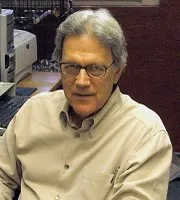
john marshal

IN MCPHERSON County and other paper ballot locations, voters
sign in at each polling station with pen and ink in a large book
that lists all registered voters. After the polls close, the votes are
counted and compared with the number of signatures. The numbers
must match or there has been a mistake. The certified paper
records do not lie.
In counties with electronic voting, citizens sign in electronically
on a screen. There is no paper trail, no way to count the number of
votes and verify with a paper record of the number of signatures,
no way top know how many Republicans or Democrats voted.
There are many ways, as any rudimentary hacker knows, to
change an electronic record. There is no way to fiddle with the
paper record in a registration book. (And get away with it.)
*
OVERHEARD on election night: “The best thing about Pat
Roberts’ election victory is that we probably won’t see him in
Kansas for another six years.”
*
WE’RE WAITING for the bill, promised by Roberts more times
than we can count, to repeal the Affordable Care Act. There is
time, in the waning days of this congress, to get something in the
hopper. Taking our cue from among Pat’s many other campaign
promises, we also begin the countdown for sealing our borders –
building that border wall and deporting at least most of the 11 or
12 million illegal aliens now in our country. Get it done. We don’t
expect them to be gone tomorrow – the day after is soon enough.
The clock is ticking.
With new majorities in Washington, we expect Republicans
there to get busy. Besides junking the Affordable Care Act, we
have promises to outlaw all abortions, without exception, before
the second trimester, to move ahead with the Keystone Pipeline
and shut down the EPA, or most of it, for starters.
Now that power comes with the promise, there is no reason to
expect anything but results.
*
THE ELECTORATE has granted Kris Kobach another four-year
term as Kansas Secretary of State, and already he’s dusting off his
Napoleon’s wish list, insisting that he must have more power. We
still see no alien hordes slithering into our polling places and onto
the registration lists, but Kobach has a special vision. Although
it’s never been proved, voter fraud is alive and well in Kansas.
Just ask Kris.
Legislators blindly followed the lie two years ago, granting Kris
permission to write Jim Crow back into our voting laws, creating
two-tier elections in Kansas – one for those who can wind their
way through a fogbound maze to prove their clean bloodlines
and ancestry, and another separate election for those who cannot.
Put another way, state and federal elections for the white establishment,
and federal ballots only for the non-members – the people
who don’t check “Caucasian” on their census forms.
Now that we’ve reestablished ethnic cleansing as part of Kansas
voter registration, Kobach wants sole power to prosecute those
who seek to sully the process. “It’s the final piece in the puzzle
in terms of preventing voter fraud,” Kobach told the Associated
Press.
Those who point out that Kansas has never suffered an outbreak
of voter fraud are laughed away, consigned to the ranks of killjoys
and undesirables, the same naysayers who might suggest that the
attorney general has all the power and expertise we need to pursue
irregularities at the polls, if or when there are any.
But power is an intoxicant and Kobach a special case. He and
his loyalists, by denying certain truths, reveal their intense intolerance,
an almost pathological hatred of truth and learning. They
embrace that special politics founded on the fanning of hatred, the
first and last resort of demagogues, and the suppression of truths
(and voters) so inconvenient to their cause.
*
ELECTRONIC VOTING machines, as hinted at the beginning of
this commentary, are anything but good for our elections. Years
ago, the people who make the machines rolled into town, furled
the canvass at the back of the wagon and, as the rubes gathered
‘round, began their pitch. It took only a moment to make the first
sale. Since then, the cure for our imagined headache has become
the headache.
Consider Saline County. During the November election, a “malfunction”
left voting machines spluttering away, spitting more than
5,200 votes into the cyber netherworld, vanished into the mists. A
50 percent voter turnout became 35 percent – until the “malfunction”
was discovered in a “triple-check” on November 10, nearly
a week after the polls had closed and the races decided.
Officials said the error was relatively harmless because no races
were close enough to have been affected. How can we be sure?
Saline County Commission Chairman Randy Duncan said the
foulup was “scary. That makes me wonder about voting machines,”
he told the Salina Journal. “Should we go back to paper ballots?”
Electronic voting is a fool’s choice and a crook’s dream. It also
is reason to wonder if those pre-election polls – the ones that forecast
far different results – were so far wrong, after all.
We shouldn’t need to wonder. And we wouldn’t, with paper
ballots.
*
THREE WEEKS after the November 4 election, Gov. Sam
Brownback said he was surprised that the state is deep in red ink
– a current budget shortfall of $279 Million, which will grow to
more than $700 million by the end of next fiscal year. This was all
news to him, the governor said.
Is the governor lying, or is he a halfwit?
Brownback promoted and signed legislation eliminating income
taxes for small business owners and dramatically cutting income
taxes for the upper bracket incomes. He has, for four years, championed
his infamous “Glide Path to Zero,” the course to eliminating
all state income taxes, on grounds that new business will
stampede into the state, creating countless new jobs and bolster
the economy, which so far has been anything but bolstered. (We’re
still not sure where the state wins with all these new jobs, since the
payrolls will go un-taxed.)
Nonetheless, the governor’s economics, and the state’s downward
financial spiral, were central issues in the recent gubernatorial
campaign, yet Brownback claims he knew nothing about any
red ink.
And that campaign issue, the state’s drowning in red ink?
Garbage, the governor said. “They’re just trying to paint a
‘Chicken Little Sky is Falling’ situation, which is not true. It’s a
bunch of lies,” he said in October.
The chicken has hatched. Legislators now face tides of accumulating
red ink over the next 18 months. Because the constitution
says Kansas cannot spend money it doesn’t have, a $279 million
shortfall must be resolved by more cuts in state programs, or
enhanced revenues (tax increases), or a combination of both. With
no action, the deficit could grow to $715 million for the 2015 fiscal
year, which begins July 1.
How could a governor miss that much red ink?
Brownback expects the citizenry to believe that he could, truly,
let it slip by. We’ve believed his other … stories, like our soaring
economy, all those new factories and jobs, how the wealthy are
crushed by taxes and the poor are suffocated by regulations, how
both corporations and fetuses are real people, among others.
We believed all those stories, and we reelected the man. He must
be telling the truth.
*
WITH ELECTIONS, we must learn the old lessons over and over
again, like learning a fugue.
Among them:
– Politicians reach public office not because they are diligent, or
candid, or even honest. Nor do they make it by merit alone. They
are chosen mostly for their power to impress and enchant the intellectually
underprivileged. How else can we explain our governor,
our legislature?
– Politicians promise every man, woman and child in the country
whatever he, she or it wants. They look for ways to make the
poor rich and the rich, poor, to cure warts by saying words over
them, to turn deficit into surplus with money that no one will have
to earn, and to turn truth to fiction and fiction to truth with a simple
waving of tea leaves and a curtsey to the tea party.
– A politician once told the writer and critic H.L. Mencken that
in politics, man must learn to rise above principle. (And) when the
water reaches the upper deck, he said, “follow the rats.”
– JOHN MARSHALL