One great place to put a native plant bed is the base of a tree. It creates what is called a ‘soft landing’ for caterpillars that need to transition from the tree to pupating on the ground.
Paula Diaz’s efforts to garden for wildlife pay off, sometimes spectacularly.
Late in summer 2023, she took her 4-year-old granddaughter, Olivia, for an early-morning stroll in her suburban yard near Kansas City. About 100 monarch butterflies fluttered out of the trees, delighting them both.
“They had roosted overnight,” she said. “It was so magical … we just were in awe.”
These visitors illustrated the impact of gardeners like Diaz who are determined to challenge the standard approach to lawn and garden that has squeezed fireflies, bumblebees, butterflies and many other animals out of suburbs and cities.
Homeowners are replacing exotic plants and lawns with native flowers, shrubs and trees to feed insects and birds.
Diaz changed her approach to gardening about 15 years ago.
She took classes to become a master gardener and learned that insects thrive on the native plants they evolved with — and sometimes need them so exclusively that they perish without them.
“It was just like a lightbulb moment,” she said, “where you just thunk yourself on the forehead and go, ‘That’s so logical.’”
By the time that throng of migrating monarchs used her yard as a bed and breakfast, Diaz had filled it with liatris and other irresistible, nectar-rich blooms.
“I’ve had 12 monarchs on one liatris plant,” she said. “They will push each other off the bloom to get to it. It’s so funny to watch them.”
Diaz finds joy in her yard year-round.
“There’s always a bird that’s singing or frogs that are croaking,” she said. “Even in the wintertime when it’s just the brown stems … I know that the bees are making their nests in there.”
Diaz shared tips in the latest episode of the environmental podcast Up From Dust on how to replace some lawn with a native plant garden. Below, we’ve compiled some of the websites, books and programs that can make it easier to get started.
Easing the environmental impact of lawns
Concerns that Americans have gone overboard with a love of lawns has led to movements like No Mow May – where people don’t mow for a month, or don’t mow much throughout springtime, in hopes of helping early-season pollinators.
It has given rise to bee lawns, too, where people mix short flowers with grass to achieve similar goals.
Another related movement is Homegrown National Park, spurred by the popularity of bug scientist Doug Tallamy’s books.
If Americans replaced half of the nation’s lawns with native trees, bushes, grasses and flowers, he wrote in “Nature’s Best Hope,” it would create about 20 million acres of habitat.
That’s bigger than the biggest of national parks, he noted.
An interactive map on the Homegrown National Park website allows people to set targets for adding native plants to their yards.
Local Facebook groups devoted to the concept – such as the one that Diaz administers for Kansas City – are places to chat about creating wildlife-friendly neighborhoods.
Consider creating a ‘soft landing’
Trying to decide where to remove some turf and create a native flower bed?
Plantings along fences and foundations are popular. But Diaz highlighted another option: building flower beds around the trunks of trees – especially if you have a native tree in your yard.
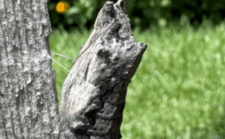
Most caterpillars leave their host plants to build a chrysalis. This black swallowtail marched across turf until it found an exposed wooden beam to latch onto, where it didn’t survive. Shrinking a lawn and planting more native trees, shrubs and flowers offers caterpillars more places to pupate.
Many moths and butterflies lay their eggs on these trees. The caterpillars eat their fill of leaves and then drop to the ground, where many species must survive for a time in a cocoon or chrysalis.
When caterpillars fall onto turf, they get run over or can’t find anywhere to wiggle into the soil for winter. Other times, they get raked up with leaves and thrown away.
If the caterpillars instead fall into a bed of plants such as columbines, phlox and sedges, it ups their chances of survival.
“They can fall to the ground as they’re meant to do,” Diaz said, “and not be chopped by the lawnmower.”
Biologist Heather Holm has created a website with tips and pictures to help gardeners create “soft landing” areas around trees.
In addition to helping moths and butterflies that lay eggs on trees, this benefits many other caterpillars, fireflies, bees and beetles.
Where to buy native plants?
Most traditional nurseries and garden centers offer few native species beyond a handful of the most popular options, such as purple coneflower and little bluestem.
Often these are sold in the form of cultivars, also known as “nativars” and the subject of much unresolved debate.
But the Midwest has a few large outfits that specialize in selling a wide variety of native, non-cultivar plants. Smaller nurseries continue to spring up in many cities, too.
GrowNative.org, a project of the Missouri Prairie Foundation, is the best place to find these sellers in the lower Midwest. Some will mail seeds or plants.
Don’t live in the lower Midwest? Diaz recommended reaching out to the native plant society in your state to seek regional advice.
Pop-up sales in parking lots and at other outdoor sites happen each spring and fall in some cities. The Deep Roots KC and GrowNative websites list such events each spring and fall. Monarch Watch and the Grassland Heritage Foundation in Lawrence, as well as Dyck Arboretum in Hesston, hold native plant sales, too.
Native plants have become so popular the past few years that nurseries sell out of many items in the spring.
“It’s wonderful and terrible at the same time,” said Diaz, who has volunteered at native plant sales for a decade and has watched suppliers trying to keep up with a surge in demand. “You run out of plants too soon and then people get frustrated.”
The Kansas Forest Service and Missouri Department of Conservation sell native trees and shrubs in batches, for landowners working on larger projects.
For gardeners trying to make their dollars stretch, Diaz recommended buying seeds or small plugs, or searching Facebook for native plant swapping groups.
“We have a Kansas City-area native plant exchange,” she said. “People are always happy to share things that they have extras of.”
Perennials grown from seed will take a few years to look good, so Diaz recommended buying just a few larger plants, if possible. A particularly cost-effective option is to buy a packet of fast-growing annual seeds as a placeholder.
I’ll throw zinnia seeds in a bed while things are becoming established,” she said. “It’s popular with the insects. It’s colorful and pretty and it’s recognizable to the neighbors.”
Diaz said a placeholder like this can help signal that an area that is no longer manicured turf will be properly maintained as a flower bed.
How to pick the right plants for your yard
Unsure which plants to choose? Let the conditions of your yard narrow the options for you, Diaz said.
“The sun exposure and how moist the soil is,” she said. “Which kind of soil do I have?”
GrowNative.org offers Top 10 lists for many different needs. Whether you’re looking for flowers that thrive in clay, bushes that form a native hedge or a short tree that won’t mess with power lines, this website can help.
Deep Roots KC offers a Sweet 16 list of relatively easy-to-find plants that perform well under a wide range of soil, light and water conditions.
For a deeper dive, pick up a book by landscape architect Alan Branhagen, formerly of Powell Gardens in Kansas City and the Minnesota Landscape Arboretum. Branhagen offers two guides curated for gardeners – a primer with 225 Midwest species and a longer book of 500 species.
Diaz said field guides organized by color can also help homeowners pick.
How to kill lawn and lay out a flower bed
Many options exist for killing a patch of grass turf.
“You can take a weed-eater and just weed-eat whatever grass is there down to the soil level,” Diaz said. “Cover it with cardboard.”
That’s one popular approach. A few books, like “Prairie Up” and “Nature’s Action Guide,” explain this and other options for small and large projects, such as laying down plastic or renting a sod cutter.
Once it’s time to plant, some experts swear by planting densely – for example, one native flower or grass every 12 or 18 inches to mimic natural competition.
But Diaz said to consider your site, species and budget. It’s OK to let a flower bed fill in gradually over several years. Ultimately, though, the plants should fill the space.
“Plants want to touch each other,” she said. “They don’t want acres of mulch in between them.”
Planting layers is good for wildlife and keeps weeds at bay. In a woodland garden, plant shrubs under trees. Put woodland flowers under those shrubs. In a full-sun area, mix short grasses and flowers with tall ones.
GrowNative.org posts native landscape plans for small-scale gardens to help homeowners get started.
Also, groups such as Deep Roots and the Audubon Society in St. Louis will visit homeowners in their yards to talk about how to make the space wildlife-friendly.
Rethinking fall and winter yard routines
Conservationists encourage homeowners not to rake leaves and throw them away. You’ll likely kill overwintering insects, such as butterflies. Shredding the leaves poses similar risks.
Instead, they recommend embracing the look of leaves in the yard or else moving fallen leaves from grass turf to flower beds.
Experts also recommend leaving native flowers and bushes intact for much of the cold season to support the animals that eat them and shelter in them.
“The seeds are there for the creatures,” Diaz said. “The stems are there for the stem-nesting bees.”
She said leaving the bottom foot or two of plant stems may offer a compromise for people who feel compelled to tidy up the garden. This may still help some insects and will retain some insulation to protect the soil.
Celia Llopis-Jepsen is the environment reporter for the Kansas News Service and host of the environmental podcast Up From Dust. You can follow her on Bluesky or email her at celia (at) kcur (dot) org.