Friday, January 23, 2026
Home Blog Page 172

Just a Little Light: Dandelions, Reaching toward the Sun

0

Dawn Phelps
Columnist

In June of 2009 four of my sisters and our husbands drove to Alaska, traveling the ALCAN Highway through Canada, a 1,700 stretch of road from the U.S. to Alaska.  We drove long days on mountainous, winding roads, over roads with rough patches from the freezing and thawing of sub-zero winter temperatures.

We drove above the timberline.  We drove in the rain.  It was a long hard trip, but it also had its rewards.  What a thrill it was to see mountain goats and mountain sheep up close!

We saw baby bears with their mothers.  Once when we stopped to take pictures from the car of a mother bear with her twin cubs, the mother bear threatenedly ran toward our car.  She was fast!  (Black bears can run up to 30 miles per hour—faster than a man can run.)

When we saw her charging toward our car, I was afraid and cried out to Tom to “Go, go!” as I frantically rolled up my window.  Our car moved forward just as the mother bear reached the edge of the blacktop—we were safe! 

But one of the most remarkable things about the high country of Canada was the dandelions.  At first, we were not sure what we were seeing!  The tall, bright yellow flowers resembled dandelions, but it was difficult to believe that they were!  They were so tall and so big—growing in such unlikely places as they reached for the sun!  

But they were dandelions—the tallest, most beautiful dandelions we had ever seen, at least 12 inches tall and taller!  If there had been no dandelions, there would have been no flowers or bright colors at all in that cool, thin air.

They were growing in patches, above the tree line, surrounded by dry, rocky land where there was little other vegetation—where the winters reach forty below.  Right there at the top of the world the dandelions provided splotches of bright yellow color as they stood proud and strong! 

The dandelions were a bright sight to see in contrast to the dry, barren, brown mountainside!  They had survived where no other flowers were growing!  If it were not for them, there would have no color, no “flowers” high in the mountains!

After that trip through Canada, I have not looked at dandelions in the same way.  I used to only think of them as pesky weeds that mar the beauty of a freshly mowed lawn as their fluffy heads replace their yellow blooms.  But now I have new admiration for the lowly dandelion.  They are resilient; they can add beauty!

Dandelions which are related to sunflowers are tenacious, and their bright flowers are pleasing to the eyes of young children.  They provide intrigue and entertainment for small children who pick little bouquets for their moms or blow away their fuzzy white heads after they have bloomed and gone to seeds.

But dandelions have other valuable uses.  They sometimes provide the first food for honeybees.  All parts of the dandelion are edible and contain Vitamins K and A.  They can be eaten in salads or cooked as greens.  

During wars when food was scarce, dandelions were used as food, and the roots can be used to make tea or coffee.  And people in concentration camps were known to reach through the fence and pick dandelions to help them stay alive.  And birds like to munch on the seeds.

Even though we may not appreciate the appearance of dandelions in our yards, they can still contribute to the world in unique ways and situations.  Similarly, there are ways that any of us can contribute to the world around us as well.

So be tenacious and add some color to the world!  Be deliberate as you sink your roots deep into life.  Every day is a gift, so look for ways to contribute to the good of others.  Like those dandelions in Canada, regardless of your age and circumstances, you too can add beauty to those around you!  

So, stand tall as you share kindness with others while you reach toward the sun!

 

[email protected]

Good Friday Spent with Family

0

Lovina’s Amish Kitchen
Lovina Eitcher,
Old Order Amish
Cook, Wife &
Mother of Eight


It’s a cool April evening with a temperature of 53 degrees. The wind makes it feel colder than that though. I washed clothes and they dried on the lines. It was a challenge trying to keep the clothes on the lines with the wind. Daughter Verena had a doctor appointment this afternoon. She needed someone to go with her to load and unload her mobility scooter so I went with her. 

This will be a busy week with the garage sale for sister Verena being held here this Saturday, April 26th. The pole barn is packed with many useful items. Plans are to have a barbeque chicken benefit drive the same day. Proceeds will go towards a handicap accessible buggy for son Kevin, age 19. We only have son Benjamin here to lift him into the buggy when we want to leave. Sometimes Benjamin has other plans and then Kevin doesn’t have a way to leave. The handicap accessible buggy will have a lift like daughter Loretta and Dustin’s buggy has. This will make it possible for anyone to take him to church or wherever we need to go. Kevin is over 6 feet tall so it’s not an easy task to lift him into a buggy. It will make it easier on him too. Do I thank God enough to have the ability to care for myself and not depend on others? It takes patience on both ends, his and the caregiver. So often we take our health for granted. Kevin keeps a good attitude towards life and does well to accept his handicap. I think he would love to hear from others that are also disabled and face the challenge of not being able to walk. God doesn’t give us more than we can handle. We take one day at a time and sometimes even an hour at a time. Sometimes I catch myself watching other boys Kevin’s age and what all they can do than I think what could’ve been. God has a plan for each of us and we need to accept what his plan is. 

The grass is lush green now and rhubarb, asparagus, tulips, and other spring dandies are popping up everywhere. I love this time of the year. Sunday was Easter reminding us of Jesus dying on the cross for our sins. In the afternoon Joe and I attended the ordination of a new minister in our neighboring church district. Six men were in the lot with it falling on the youngest of six. May God help him accept his new place in the church. A potluck supper followed afterwards but Joe and I came back home. Our church district took in the food for the potluck. I fried chicken for our supper and made mac and cheese. Dustin, Loretta, and children also attended the ordination then joined us here for supper. 

On Good Friday we had a very nice day. Our whole family of twenty-nine came for the day. It was precious and we made more memories. I love cooking for the whole family. Joe and the men grilled twenty-five pounds of chicken. Besides that, the menu consisted of mashed potatoes, gravy, dressing, lettuce salad, deviled eggs, colored hard-boiled eggs, cheese, hot peppers, celery, carrot sticks, onions, and dessert was ice cream, brownies, cookies, zucchini bread, and jello. 

The eggs were colored by Denzel and Byron. This was their first attempt at coloring eggs. I’m sure their parents have more than one story they could tell from that experience. Haha! After lunch the candy filled eggs were hidden around the yard. The children closed all the curtains so they wouldn’t be tempted to peek where the eggs were being hidden. We gave them Easter baskets I made for them so they were entertained while the eggs were being hidden.

Then the fun began, turning thirteen children loose to go look for eggs. Well three-month-old Kylie needed help yet. Smile. They were all happy for what they got. How precious when you hear the little children tell each other what Easter stands for in their sweet innocence. 

I hope your Easter was blessed! May God bless you every day!

Lovina will have a book signing at Kankakee Public Library, 201 E Merchant St, Kankakee, IL
on May 2 from 3-5 and at Shipshewana on the Road, Lake County Fairgrounds 4H Building,
889 S Court St, Crown Point, IN on May 3 from 9-3.

RHUBARB DELIGHT PUDDING

2 cups rhubarb, cut fine

4 tablespoon water 

½ cup sugar

1 three-ounce box cherry gelatin 

2 cups whipped topping


Lovina’s Amish Kitchen is written by Lovina Eicher, Old Order Amish writer, cook, wife, and mother of eight. Her three cookbooks, The Cherished Table, The Essential Amish Cookbook, and Amish Family Recipes, are available wherever books are sold. Readers can write to Eicher at Lovina’s Amish Kitchen, PO Box 234, Sturgis, MI 49091 (please include a self-addressed stamped envelope for a reply); or email [email protected] and your message will be passed on to her to read. She does not personally respond to emails.

Prehistoric-looking river creatures ‘settling in’ after first Kansas reintroduction

0

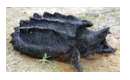
More than six months after their first reintroduction into Kansas waterways, the alligator snapping turtles seem to be settling into their new home.

Before 40 of the creatures were released into the Neosho River in September, the snapping turtle breed was not seen in the Kansas wild since 1991. But a reintroduction program by the Kansas Department of Wildlife and Parks aims to change that.

Daren Riedle, diversity wildlife coordinator with the KDWP, has been working on this project for almost 30 years.

Alligator snapping turtles — known for their large size, hook-shaped jaw and powerful bite — were first identified as endangered in Kansas in 1974. The state’s population wasn’t alone either, alligator snapping turtle numbers declined across the U.S. in the 60s and 70s.

“[Snapping turtles in the] entire southeastern U.S. were harvested for personal and commercial food markets and … because of that, a lot of populations declined,” Riedle said.

At the same time, main drainages where the alligator snapping turtles could be found were being altered, affecting their environment and hastening their decline.

In response to these declines, a captive breeding program was created by the U.S. Fish and Wildlife Service at a hatchery facility in Tishomingo, Okla., in 1999. Since then, alligator snapping turtles have been reintroduced to Illinois, Tennessee, Louisiana and Oklahoma , where Riedle first began his work.

“The whole idea was to … breed and hop scotch them over the dams to repopulate those river segments where they weren’t there anymore,” he said. “We’ve slowly been doing that in Oklahoma since about 2008.”

Those efforts then moved to Kansas.

“[We thought] ‘well, let’s keep going,’” Riedle said. “With me moving to Kansas … let’s keep moving. Let’s move up the Neosho and Verdigris drainages in Kansas, and just keep moving northward to trying to re-establish some of these populations.”

The release of the 40 turtles in the Neosho River in September was KDWP’s first, and as far as the department can tell, they’ve been doing well.

“They seem to have settled down pretty well,” Riedle said. “[We’ve seen them] come up in the shallow waters on a warm day, kind of bask.”

According to the Smithsonian, alligator snapping turtles play a vital role in their environments by controlling certain populations, especially of fish, and removing animal remains.

The KDWP is contracting with Missouri State University to track the reintroduced population. To do so, officials use transmitters, but also make in-person visits to areas.

Out of the 40 turtles released in September, there’s been one mortality.

“We don’t know the cause of the mortality at all,” Riedle said.

The next release is scheduled for early May in the Neosho River in eastern Kansas. That reintroduction will include 60 turtles.

Then, officials will watch and wait.

“We’re just going to kind of wait and track them, and see how they do for a couple years,” Riedle said.

If the second reintroduction goes well, Riedle said there’s a possibility that KDWP will release turtles in the Verdigris River in Kansas in the future.

How are alligator snapping turtles different?

If you’ve seen a snapping turtle in Kansas, it’s more than likely a common snapping turtle. There are specific traits to look for that can help you with identification between the varieties.

The main difference is the size, Riedle said. Common snapping turtles can usually reach around 30 to 40 pounds. In Kansas, the largest alligator snapping turtle recorded was 138 pounds.

“You know, further south when you get into like Mississippi, Alabama down in there they are recording up to 200 pound turtles,” Riedle said.

While both types of snappers have rigid shells, alligator snapping turtles have an extra layer of scales on the top shell compared to common snapping turtles. Alligator snapping turtles’ beaks also have more of a hook.

Both common snapping turtles and alligator snapping turtles are found in fresh water, with alligator snapping turtles mainly preferring the deeper portions. Meanwhile, common snapping turtles can also be found in brackish water with muddy floors, which offer a way for them to blend in.

What should I do if I see an alligator snapping turtle in Kansas?

If you see an alligator snapping turtle, be sure to leave it alone. The turtles have a strong bite that can break through bone, but usually only bite when provoked.

If a turtle gets caught in a fishing line, Riedle said to cut the line and set the turtle free without touching it.

If you want to help with the department’s mission to reintroduce the alligator snapper, you can take a photo of the turtle and send it via email to [email protected] . The department can identify the turtle, and if it is an alligator snapping turtle, they can use data you provide to continue tracking efforts.

As reported in the Wichita Eagle

Warmer Weather is Near! Get Ready for a Boating and Fishing Weekend.

0

With warmer weather around the corner, it’s the perfect time to head outdoors and spend time on the water boating and fishing. It’s easy to purchase your fishing license and renew your boating registration online.

Whether you’re a seasoned pro or just starting out, you’ll find plenty of options to cast your line and reel in some impressive catches. From tranquil lakes to winding rivers, the state boasts a variety of water access locations to take your boat.

Do you have everything you need for this upcoming boating season?

Upgrade to a durable card for a convenient, weatherproof registration that you can keep on the boat, in your vehicle, or in your wallet so you’re never without it. Make sure to check that your vessel registration is still active. Log in to Go Outdoors Kansas to manage your account.


Getting behind a push mower can bring new perspective in real world | Opinion

0

How do I love mowing? Let me count the ways. I’m not just ripping off an Elizabeth Barrett Browning sonnet; I actually mean it. And if you don’t already enjoy it, I think you would if you understood all the benefits it has to offer.

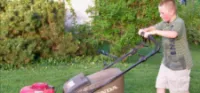
There aren’t many things that sound better to me than the first pull of a mower’s cord turning into that steady hum. That hum is like a symphony to me, drowning out the cacophony of work calls, email notifications and office hustle.

Long before being elected county attorney, I discovered the mental, physical and emotional benefits of mowing back when I was a teenager. I’d mow my grandparents’ yard, which felt like a mountain, even if it was just a steep, sprawling hill.

No riding lawn mower, no self-propelled mower, just me, my push mower and my thoughts as I switchbacked across that 45-degree incline for hours every weekend. No music, no earbuds, just that rhythmic sound of the blades spinning.

Yes, I know this sounds unbelievable. And yes, this will be the story I tell my kids, just like my dad’s tale of how he had to walk barefoot to school in six feet of snow.

Even as a kid, mowing gave me a deeper appreciation for people like my dad and so many others who worked with their hands like him. My few hours working on the weekend paled in comparison to my dad’s pouring and finishing concrete under the relentless sun. The contrast stuck with me.

In a world that often celebrates digital and intellectual accomplishments, we tend to overlook those who keep the real world running, people like my dad. These are the people who roll up their sleeves, fix what’s broken, build what’s needed and tend to what machines still cannot.

They show up, do the job, and let the results speak for themselves. They are the true backbones of our nation.

At the same time, mowing offers a kind of refuge for those of us tied to phones and desks — and for me, a courtroom. It’s a chance to disconnect. Nobody can call you. Nobody can interrupt you. It’s just you and the yard. It’s meditative. The right balance of physical effort and mental space.

It’s not exhausting, but it’s enough to let your mind wander. That wander is where the magic happens, problems untangle and ideas connect, like the insights that come to you before falling asleep or while in the shower.

Physically, mowing gets your heart pumping and gives you a healthy dose of vitamin D. Science has also shown that just the smell of grass can boost your mood and reduce stress through a compound called cis-3-Hexenal.

Mowing provides a much-needed break from digital overload. It builds focus, calms your thoughts and gives you that immediate sense of accomplishment. Like checking off a to-do list, which fuels you to keep going. It gives you a small win — and who doesn’t need a win from time to time.

So who wouldn’t want to get outside and tame that wild mane of a lawn into a clean-cut buzz? Soak in the sun, stretch your legs, breathe the fresh air and escape for a while. Now if only this story convinces my wife to take a turn now and then.

Todd Thompson is the Leavenworth County attorney.