Friday, January 23, 2026
Home Blog Page 173

Kansas governor issues a new plea to vaccinate amid measles outbreak

0

The state has identified 37 measles cases, mostly among children. That prompted Kelly to appear in Garden City and urge people to take action.

GARDEN CITY, Kansas — Gov. Laura Kelly visited southwest Kansas Tuesday amid a measles outbreak to urge people in the region to vaccinate themselves and their children.

State health officials have been racing to keep up with the outbreak that may be connected to ongoing measles cases in Texas.

The Kansas Department of Health and Environment first reported a measles case in Stevens County in March, stating it was the first measles case in Kansas since 2018. The agency later identified earlier cases starting in January.

“I can’t stress how important it is that this message get out to people all over southwest Kansas,” Kelly said at an event in Garden City. “How important it is that we be proactive in our approach to this.”

The state has confirmed 37 cases of measles since the beginning of the year across eight southwest Kansas counties, most of which have been children.

“Particularly as we move through this school year and into the next, we need to make sure that our kids are entering our schools and our day cares fully vaccinated,” Kelly said.

For the public to be safe from the measles, about 95% of the community needs to be vaccinated against the disease, according to the CDC. About 90% of Kansans are vaccinated for measles.

Experts say if you suspect you or your child has measles, it’s best for them to stay home away from other people.

The potential for the spread of the infectious disease worsened after Kansas health officials sounded the alarm about measles exposure at the Clarion Inn hotel in Garden City.

A spokesperson for the hotel said only one employee tested positive for measles, and that employee took measures to isolate themselves. They also said it’s unfair to single out the business in a public alert.

But the Kansas Department of Health and Environment said in an email that the agency names businesses when there isn’t a way to notify everyone who might have been exposed. That’s what happened in Garden City.

KDHE said people who were at Clarion Inn in Garden City between April 8 and April 10 should watch for symptoms of measles for 21 days.

Chief Medical Officer for KDHE Derrick Totten said of the 37 confirmed cases of measles in the state, 30 of the individuals had not been vaccinated.

“If one person has measles and exposes others, nine in 10 people who are not immune will catch measles. The key word there being immune,” Totten said.

Totten said the only two ways to become immune to measles are through vaccination or being infected.

The Center for Disease Control and Prevention says that the MMR vaccine for measles is 93% effective against measles after one dose, and 97% effective after two doses.

Kelly and state health officials said they felt it is necessary to emphasize the importance of how to prevent measles, before the outbreak worsens.

The CDC classifies a measles outbreak as three or more cases linked to each other. This makes Kansas one of the most recent states combating the disease. Texas has the largest outbreak, with more than 600 cases. Health experts say measles can lead to serious complications, hospitalization or death.

Southwest Kansas has a large Spanish-speaking population. Hispanic Kansans have a higher uninsured rate, 20 %, than the rate for non-Hispanic White Kansans. They are also less likely to see a doctor.

State health officials say they are hoping to combat this through the help of targeted efforts by local health departments.

State Sen. Bill Clifford, a physician from Garden City, said some local clinics work directly with meatpacking plants that employ thousands in the region.

“We welcome immigrants to our community. Folks don’t have access to care or vaccinations where they come from, so that’s a big emphasis. The health department is instrumental for providing vaccinations for their families,” Clifford said.

Calen Moore covers western Kansas for High Plains Public Radio and the Kansas News Service. You can email him at [email protected].

The Kansas News Service is a collaboration of KCUR, Kansas Public Radio, KMUW and High Plains Public Radio focused on health, the social determinants of health and their connection to public policy.

Kansas’s Sunflower Summer program accepting applications after funding scare

0

Kansas’s Sunflower Summer program is returning despite concerns about cuts during the budgeting process.

The Kansas Department of Commerce announced that the program, which covers costs for eligible students and a parent or guardian to visit museums, historic sites, zoos and arts venues, will take applications for the program through the end of the month.

“The Sunflower Summer initiative is a great opportunity for our young and growing Kansans to explore all the things that make our state great,” Lt. Gov. and Secretary of Commerce David Toland said. “While encouraging exploration, the program also drives tourism, ushering in new dollars and new memories for families and communities alike.”

The future’s program was on shaky ground in February, when the House Appropriations Committee proposed cutting funding for the program by $2.5 million, leaving the program with just $1 million in funding. The final budget still cut the program by $500,000.

The reduced funding is impacting the program, which will now operate for fewer days than it has in the past.

“This program relies on funding from the Kansas State Legislature to operate. The amount approved for this summer’s program only allows for a shortened timeline. Please note that we may have to adjust the length of the program based on the amount of use,” Sunflower Summer’s website says.

A budget proviso also limits how many adults can get a ticket under the program, allowing just one adult per transaction. The state is also limiting reimbursements to “venues in counties with a population of 15,000 or more that do not charge an admission fee.”

Participating attractions will be announced in June, and Sunflower Summer said not all attractions from last year will return while some new attractions will be added.

When funding was at stake, advocates said more than 150,000 families signed up for Sunflower Summer and that it benefited the economy across Kansas. A petition to save the program collected over 30,000 signatures.

“For every $1 the state invests, Sunflower Summer generates an estimated $5, supporting jobs, small businesses, and sales tax revenues across the entire state,” the petition says.

Sen. Stephen Owens, R-Hesston, said in a Facebook post that he and Sen. Kenny Titus, R-Manhattan, proposed totally restoring funding for the program.

Sorghum silage: Rising star of dairy feed

0

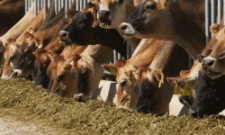
Driving through the heart of dairy country in the High Plains this past summer, one thing became clear—sorghum silage acres are up.

With irrigation water from the Ogallala Aquifer dwindling, dairies and feedyards are searching for more drought-tolerant alternatives to corn. Sorghum is stepping up to the plate.

For years, sorghum silage was primarily used for heifers and dry cows, but now it’s making its way into rations for lactating cows. Dairies are exploring two innovative approaches—male sterile sorghum and advanced kernel processing—to improve feed efficiency. These breakthroughs could redefine how sorghum silage is utilized in modern dairy operations.

Male sterile sorghum: More sugar, less starch

One of the biggest shifts in silage production is the growing use of male sterile sorghum. Unlike traditional sorghum, male sterile varieties don’t produce pollen, meaning no grain is formed in the panicle. The result? Silage with less starch but significantly more water-soluble carbohydrates—essentially, a higher sugar content in the forage.

While research on optimal harvest timing is ongoing, current recommendations suggest waiting four to 10 weeks after heading for direct cutting, or wilting, if needed, to achieve the right moisture levels for ensiling.

A recent dairy trial conducted by Texas A&M specialists Juan Piñeiro and Douglas Duhatschek examined the impact of replacing corn silage with brown midrib male sterile forage sorghum. Their findings were impressive: When 25% of the corn silage in a ration was replaced with sorghum, and inclusion of other feed ingredients was adjusted, energy-corrected milk yield increased by 10%.

Even with a 50% replacement, ECM still rose by 8%. These results suggest that male sterile sorghum could be a game-changer for dairy nutrition.

Breaking barriers with advanced kernel processing and starch availability

One of the most exciting advancements in years in sorghum silage is the development of kernel processing technology specifically designed for sorghum. Traditional processing methods often left sorghum kernels intact, making starch utilization inefficient for livestock. But that’s changing, thanks to new sorghum kernel processing technology called DurraCut developed by Scherer Inc.

This technology dramatically improves kernel cracking, boosting starch digestibility and maximizing the energy derived from sorghum silage. In another Texas A&M study, rumen in-situ starch digestibility after seven days (isSD7) went from 25.8% to 65.9% starch following an ensiling period of 90 days (see table).

Katie Raver, of Rock River Laboratories, Inc., recently shared compelling data showcasing this breakthrough. In 2024, the lab tested 300 commercial sorghum silage samples for berry (kernel) processing (BPS) using a 2.36 mm screen. The results? An average BPS score of 43%—more than double the 20% average recorded in 2022. Additionally, the starch content of these samples averaged 25%, a significant improvement over previous year.

Looking ahead: a new era for sorghum silage

While laboratory results are promising, the ultimate test will be in real-world milk production. With thousands of tons of sorghum silage harvested using this new processing technology in 2024, the industry eagerly awaits data on how it impacts dairy performance.

As we move into a future where water conservation and efficiency are more critical than ever, sorghum silage is proving to be more than just an alternative—it’s becoming a necessity. With male sterile varieties enhancing digestibility and advanced processing unlocking more energy from each kernel, sorghum’s time has truly come.

Editor’s note: Brent Bean, Ph.D., is the Sorghum Checkoff director of agronomy, Lubbock, Texas. For more information, visit www.sorghumcheckoff.com.

Kansas Tractor Club Tractor Drive Open To All

0

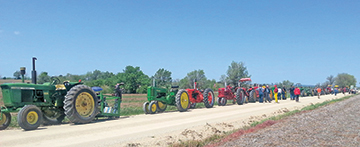
The Kansas Tractor Club, formed in 2012, is a non-profit group of people with a common interest in antique tractors. Many members purchase, restore and show our tractors at local events. We want to pass on this love of collecting tractors and other farm equipment to preserve and educate future generations about America’s agricultural heritage. In the spring of each year, the club awards a $1,000 scholarship to a student interested in an ag related career. You may find more information about the club, including upcoming events, on the Kansas Tractor Club website.
The Kansas Tractor Club has set May 3rd for our spring drive. In case of rain, the drive will be held on May 10.
Everyone is welcome to bring any tractor for this drive. You don’t have to be a member of the club.
We will be unloading at Chuck Henry’s place located on Old Highway 40, at the east side of Solomon. The drive will begin at 9:30 AM. Try to unload and attend the drivers meeting at 9:15 AM to go over the rules and details of the drive.
There will be no entry fee for this drive.
Lunch (bring your own) will be at Eisenhower Park in Abilene.
The club will provide water and a bathroom on the drive.
We will take an early break just after the start of the drive to tour Gail Rodda’s restored antique tractors, Model Ts’ & Model A. We will have another break on the afternoon trip back to Solomon.
RULES:
Your tractor must be able to maintain a 10 MPH speed or better. No riders are allowed unless there is a safe place for them to sit. If someone is moving too slow and falling behind the others, pass safely. Someone in a pickup will be available to assist them if they need help. If you do break down and can’t be repaired, someone will be available to take you back to Solomon to get your trailer. Someone will assist in loading your tractor. Other details will be addressed during the drivers meeting the morning of the drive.
Let your family and friends know about the drive. All are welcome!!!
Any donations offered will go to cover the cost of the drive and/or to the Kansas Tractor Club Scholarship fund.

Planning a picnic? Food safety should be part of the party

0

K-State food scientist shares tips for preparing foods safely

As warmer days become more common, so does the itch to get outside.

If outdoor time means picnic time, Kansas State University food scientist Karen Blakeslee said food safety’s four principles – Clean, Separate, Cook and Chill – are still in play.

“Wash your hands, separate food items, (and) keep raw meats away from ready-to-eat foods,” said Blakeslee, who is also coordinator of K-State’s Rapid Response Center for food science. “When preparing food, make sure you’re keeping knives and cutting boards separate so you’re not causing any cross contamination issues.”

Blakeslee also reminds consumers to pack their food thermometer to assure meats and other foods are cooked properly. Hamburgers steaks, roasts and chops should be cooked to an internal temperature of 145 degrees Fahrenheit; ground meat (such as beef, pork and lamb) to 160F; and all poultry to 165F.

“Don’t rely on color to determine if a food is cooked properly,” she said. “K-State meat scientists have done a lot of research over the years that shows that a food may look pink, but is done, and vice versa: a meat may look brown inside but may not be cooked to the proper temperature.”

Cold foods should be kept at 40F or colder, Blakeslee said.

“One suggestion I would give is to have a couple of ice chests,” she said. “One is for beverages, because that is the one that is opened most often. The other one can contain all of the food that you may pack, including raw meat of any sort, like hamburgers. Pack raw meats separately to prevent cross contamination.”

Blakeslee said ice should surround the food. Pack ice on the bottom of the cooler – underneath food – then pack ice over the side and top of food, as well.

More tips from Blakeslee:

  • Bring a plastic tablecloth. “Picnic tables are in public places that are used by everybody. Plus, there are critters that run around and crawl on those tables.”
  • Bring wash rags and extra water. Keeping hands clean during outdoor gatherings can be a challenge. Blakeslee suggests packing wet wash rags with soap on them in plastic bags, disposable hand wipes, or extra water and hand soap. “Hand sanitizer is okay, but it really doesn’t work well unless your hands are clean first,” she said. “They’re good in a pinch, but even better after you’ve washed your hands.”
  • Share the responsibility for bringing food. Potlucks are fine, but often people bring many of the same foods. “Assign different foods to different people,” Blakeslee said. “Some people can bring a salad, others can bring a dessert and so on. This helps reduce the stress on everyone.”

Blakeslee publishes a monthly newsletter called You Asked It! that provides numerous tips on being safe and healthy. More information is also available from local extension offices in Kansas.