Saturday, January 24, 2026
Home Blog Page 187

K-State food scientist shares tips on safely canning homegrown foods

0

Choose the right equipment for the food being preserved, says Blakeslee

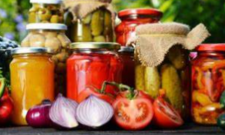
Home canning is a popular way to preserve the freshness of homegrown food. Kansas State University food scientist Karen Blakeslee says that when done correctly, home food preservation also can save money by reducing food waste.

“Those with health issues can preserve some foods without sugar or salt,” Blakeslee said. “But most of all, those who preserve food get the satisfaction that they have preserved their homegrown food.”

However, when improper practices and unsafe food handling techniques are used, the food can cause foodborne illness.

Blakeslee, naturally, advocates for safety. She recently offered a few tips to help prepare for success.

Learn how to use equipment properly

Blakeslee urges home canners to read and follow all manufacturer usage instruction for equipment before they use it. “Any deviation from usage instructions can lead to equipment failure or food not preserved safely,” she said.

Also, maintain equipment by checking for wear and tear of canners or other equipment. Replacement parts are available for some equipment.

“Dial gauges on pressure canner brands Presto, National, Maid of Honor and Magic Seal should be tested annually for accuracy,” Blakeslee said. “Rubber seals should be checked for cracks or dryness and replaced, if necessary.”

Many extension offices in Kansas offer free testing of dial gauges for the brands she lists. Check with your local office to ask if this service is offered.

Follow reliable recipes

Blakeslee said a reliable recipe is one that has been developed with research to verify the safety of the process.

“These include any university extension recipe source, the USDA Complete Guide to Home Canning, and the National Center for Home Food Preservation,” she said.

More information also is available online from the K-State Rapid Response Center for Food Science.

Use the proper method for the food being canned

Blakeslee said there are two canning methods: water bath canning, and pressure canning. The method used depends on the food being canned.

“The water bath canning method can be used for high acid foods such as jams and jellies, pickles, most fruits and most tomato products,” Blakeslee said. “Pressure canning must be used for low acid foods, such as plain vegetables, meat, poultry and seafood.”

There are a few foods – including some tomato products – that can be processed with either method. Blakeslee said further guidance is available on the website, Preserve if Fresh, Preserve it Safe. That website, she notes, also has an option to sign up for a monthly food preservation newsletter delivered to your email inbox.

Blakeslee, who also is coordinator of K-State’s Rapid Response Center for Food Science, publishes a monthly newsletter called You Asked It! that provides numerous tips on being safe and healthy. More information is also available from local extension offices in Kansas.

Beets: how to grow it

0

Beets are commonly grown for their bulbous roots, but their tops can also be harvested for greens, and they are an excellent source of Vitamin A as well as calcium. Beet juice is sometimes used in flavoring and for coloring ketchup and tomato juice. Swiss chard is a very close relative. Both are the species Beta vulgaris.

Types: Red beets are the common garden type, also known as table beet. Edible beets can also be golden, white or internally striped (as in the Chiogga beet). There are other types of beets, such as sugar beets or forage beets, but these are not consumed by humans.

Planting

Timeline: Beets grow best in the cooler temperatures of spring or fall. The plants can tolerate light frosts. For a continuous supply of tender beet greens and roots, sow every two weeks until late May. Plant again in mid- to late-August for a fall harvest. In gardens, beet roots can grow 3-to-4 feet deep in good soil. However, because of their small size, beets can easily be grown in containers or raised beds.

Sowing and Transplants: Plant beet seed directly into the soil once soil temperatures have reached 45° Fahrenheit. Light or loamy soil is preferred. Heavy clay soil should be amended with compost or other organic matter. Plant seeds ½ inch deep and one inch apart. Each beet seed will produce 2-to-6 plants, which will need to be thinned.

Alternatively, beets can be sown indoors about 5- to-6 weeks before transplanting. Transplants should be set 3 inches apart. Transplanting reduces the time to harvest by 2-to-3-weeks. If grown in a container, or in wide rows, there should be between 5 and 9 beet plants per square feet.

Thinning: Thin beets once their tops reach a usable size, about 3-to-4 inches tall. The plants should be thinned to 2-to-3 inches apart.

Plant Care

Watering:

  • Beets need to be well-irrigated for best quality, but they should also have good drainage.
  • Make sure the soil is thoroughly wetted after each watering.
  • Once plants are several inches high, let the top half-inch or so dry before watering again.

Fertilizing:

  • Nitrogen: Apply ¾ to 1 cup of urea per 100 square-feet.
  • Phosphorus and Potassium: Apply according to soil test recommendations.

Weeding:

  • Frequent shallow cultivation is recommended to keep weeds under control.

    Pests and Diseases

    Major Pests

    • Flea Beetles: Flea beetles chew small, round holes in leaves. They can heavily damage the crop, especially when the plants are very young. Planting mustard greens, such as arugula or radishes near the beets can sometimes act as a trap crop.

    Major Diseases

    • Cercospora Leaf Spot: Avoid this disease by not planting beets in the same spot two years in a row and by removing any remaining plant debris after harvest.

    Minor Problems

    • All Tops: All tops with no roots or small roots is a condition usually caused by planting too close or by not thinning plants. Excessive nitrogen fertilization can also contribute to extensive top growth at the expense of root growth.
    • Tough Roots: Tough roots can be caused by drought or too high soil temperature, along with white interior rings.

    Harvest

    Harvest: Thinned plants can be cooked with the root and top together. Beet greens can be harvested as soon as they are large enough, but if the gardener wants to harvest roots also, only one or two leaves should be taken from each plant.

    Mature roots are generally ready to harvest 6-to-8 weeks after planting, when they have reached the size of a golf ball. They can be dug with a potato fork or similar tool.

    Average Yield: 10 pounds per a 10-foot row.

    Storage and Preparation

    Storage: Roots will keep 2 weeks or more under refrigeration; beet greens 1-to-2 days. Cut off tops and store beets in a cool, humid place with temperatures ranging from 32°to 40° Farenheit. Do not allow them to freeze.

    Cooking Tips: For information on preparing beets, see our Pick it! Try it! Like it! resource for beets.

    Nutrition Facts: Beets are a low-calorie food. One cup of cooked beets contains about 75 calories. Beets are an excellent source of folate (this can vary by variety) along with vitamins A and K and dietary fiber. Some studies suggest that red beets may also have considerable cancer-fighting properties.


KDHE Announces the Beginning of the Harmful Algal Bloom Season

0

The Kansas Department of Health and Environment (KDHE) and the Kansas Department of Wildlife and Parks (KDWP) are announcing the beginning of the Harmful Algal Bloom season.

The water recreation season in Kansas officially runs from April 1 to October 31, as do the harmful algae blooms (HAB) response program’s active operations. Kansans should remain vigilant while engaging in activities taking place in or on the water, such as swimming, boating, and fishing.

A harmful algal bloom (HAB) may look like foam, scum or paint floating on the water and be colored blue, bright green, brown or red. Blooms can develop rapidly; if the water appears suspicious or there is decaying algae on the shore, avoid contact and keep dogs away. These toxins can be absorbed by ingestion, inhalation of aerosols and even skin contact. Symptoms vary depending upon the type of exposure (e.g., direct contact, ingestion, inhalation) but can include rash, vomiting, diarrhea, fever, sore throat, and headache.

If you, or your pets, come into contact with algae rinse the area with clean, fresh water. Suspected HAB-related health incidents, whether human or animal, regardless of season, should be reported as soon as possible at kdhe.ks.gov/1163.

Kansas recognizes three advisory levels:

Hazard status indicates that a HAB is present, and extreme conditions exist.

When a hazard is issued, KDHE recommends the following precautions be taken:

  • Signage should be posted at all public access locations.
  • It is recommended that either a portion of the lake or the entire lake or zone, be closed to the public.
  • In some cases, the adjacent land should be closed as well. Actual setback distances will be determined on a site-specific basis, if necessary.
  • In zoned lakes, if a lake zone is issued at a Hazard level, all other adjacent lake zones may be recommended for an advisory status dependent on lake conditions.

Warning status indicates that a HAB is expected or present.

When a warning is issued, KDHE recommends the following precautions be taken:

  • Signage should be posted at all public access locations.
  • Inhalation of spray or aerosols may be harmful.
  • Lake water is not safe to drink for pets or livestock.
  • Lake water, regardless of blue-green algae status, should never be consumed by humans.
  • Water contact should be avoided.
  • Fish may be eaten if they are rinsed with clean water and only the fillet portion is consumed, while all other parts are discarded.
  • Do not allow pets to eat dried algae.
  • If lake water contacts skin, wash with clean water as soon as possible.
  • Avoid areas of visible algae accumulation.

Watch status means that a HAB is possible and may be present.

During the watch status, KDHE recommends the following precautions be taken:

  • Signage should be posted at all public access locations.
  • Water may be unsafe for humans/animals.
  • Avoid areas of algae accumulation and do not let people/pets eat dried algae or drink contaminated water.
  • Swimming, wading, skiing, and jet skiing are discouraged near visible blooms.
  • Boating and fishing are safe. However, inhalation of the spray may affect some individuals. Avoid direct contact with water, and wash with clean water after any contact.
  • Clean fish well with potable water and eat fillet portion only.

Advisories are Lifted when cell densities and toxin concentrations dissipate to levels below the Watch thresholds.

KDHE investigates publicly accessible bodies of water for blue-green algae when the agency receives reports of potential algae blooms in Kansas lakes. Based on credible field observation and sampling results, KDHE and KDWP report on potentially harmful conditions.

If you observe a scum or paint-like surface on the water, small floating blue-green clumps, or filaments in the water, or if the water is an opaque green, avoid contact and keep pets away. These are indications that a harmful bloom may be present. Pet owners should be aware that animals that swim in or drink water affected by a HAB or eat dried algae along the shore may become seriously ill or die.

For information on blue-green algae and reporting potential HAB’s, please visit kdhe.ks.gov/HAB and view our interactive story and informative video.

In late 2024, the KDHE HAB response program identified a new and evolving health concern at a Kansas public waterbody associated with another species and growth form of blue-green algae, Harmful Algal Mats (HAMs). HAMs are blue-green algae that grow attached to the bottom of the waterbody or other surfaces. However, these blue-green algae mats can become detached and float or wash up on shore. In addition, HAMs can be mixed with non-harmful green algae and other aquatic vegetation.

HABs and HAMs can produce the same toxins, but their growth types are different, as do the advisory messages and signage issued for them. HABs are composed of high densities of usually small, microscopic blue-green algae dispersed in the water column that can change the color of water and often form a surface scum, especially during warmer months. HABs can be unpredictable, and conditions can change rapidly. On the other hand, HAMs can reside in water that looks clear and clean and may often appear as excess growth that is brown or black in color that carpets the bottom of the waterbody or other surfaces. HAMs may continue to persist and grow year-round in affected waterbodies.

The health risk from HAMs is greatest when exposure occurs through ingestion and when contact or disturbance of algal mat material occurs (particularly for small children and dogs). KDHE HAB Response Program will notify public waterbody managers if HAMs are detected at the waterbody while responding to algae bloom complaints and recommend that signage be posted.

If you notice HAM signage posted at the waterbody or excess algal growth that appears black or brown in color, be aware that potential health risks may be present when engaging in recreational activities. KDHE HAB Response Program recommends the following precautions be taken at HAM affected waters:

  • Do not allow people or pets to eat algal mats or ingest lake water.
  • Do not touch or contact algal mats. Use caution when engaging in recreational activities, especially primary contact recreation, such as swimming. Wash with clean water after skin contact with lake water.
  • Do not transport algal mats to other waterbodies and follow KDWP’s guidance for cleaning boats and equipment.

For more information on Harmful Algal Mats, please visit:www.kdhe.ks.gov/HAM

Reno County Department of Aging launches collaboration series

0

The Reno County Department of Aging has announced that they will have a series of presentations of interest to Reno County citizens.

The series of presentations begins on Friday, April 4 and is on each Friday in the Month of April.  The presentations are at the Department of Aging and begin at 9:30 a.m.

The topics of the presentations are:

Friday, April 5 – Using Nutrition to prevent Alzheimer’s, Diabetes, Cancer and Auto-Immune Diseases.

Friday, April 11 – Dementia – It’s just losing your keys.

Friday, April 18 – Managing stress.

Friday, April 25 – Caregiver burnout and resources.

The goal of each presentation is to provide information on the services and providers that can assist with the topics covered.

To reserve a seat at any of these presentations, please Call Cara Conaway at 620-694-2911 or you can email her at [email protected]

These like all the services of the Reno County Department of Aging are free to the public.

Just a Little Light: 113 Years Ago

0


Dawn Phelps
Columnist


April 15 brings back haunting reminders of what happened on that day 113 years ago in 1912.  That is when the Titanic, built in Belfast, Ireland, set sail on her maiden voyage from Southampton, England, to New York City with 2,224 on board (Wikipedia).

It was the largest, most luxurious ship of its time, and it was believed to be unsinkable.  It was 850 feet long, 92 feet wide and 64 feet high—larger than the measurements for Noah’s ark of 450 feet high, 75 feet wide, and 45 feet high.  

The ship left England on April 10, carrying some of the very richest and some of the poorest.  Many of the passengers in third class were immigrants bound for America, hoping for a better life.  

Only four days into the journey, the Titanic struck an iceberg about 375 miles south of Newfoundland on the evening of April 14.  It was a dark, calm, moonless night when Frederick Fleet, a watchman on the Titanic spotted an iceberg in the path of the ship—it was too late to avoid it!

But there was a major problem.  The Titanic carried 20 lifeboats, space for about one third of those on board the ship.  

As the ship began to fill with water, some of the passengers were evacuated into the too-few lifeboats.  But some of the lifeboats were not filled to capacity before they were lowered into the Atlantic Ocean.  Preference was given to those in the ship’s first-class section, and women and children were boarded first.


After about two and a half hours, the ship sank to the bottom of the ocean after breaking into two pieces.  A total of 1,514 people died with most of them freezing in the 28–30-degree water.  Only 710 survived.


The survivors on the lifeboats were picked up by the Carpathia, a ship that arrived a few hours too late in response to the Titanic’s distress calls.  Over three hundred bodies from the Titanic were retrieved by ships from Canada which were dispatched to the site, carrying embalming supplies, undertakers, and clergy.  Embalming was required before the bodies could be taken on land.

The task of embalming so many bodies proved too great, so some of the bodies were buried at sea.  Some bodies were returned to America or Europe, and 150 were buried in Nova Scotia, Canada.

Even though the sinking of the Titanic was horrible, the loss of life could have been even greater.  Records show that the Titanic could have held up to 2,566 passengers, but only 1,317 passengers were booked on the ship, partially due to a coal strike in the United Kingdom.  

For various reasons, about 50 people had cancelled their trips, and one crewman sneaked off the ship when the ship temporarily docked in Queenstown, the last stop before the fateful journey across the Atlantic. 

The sinking of the Titanic was such a tragedy, and many died.  But something good did come from the sinking of the Titanic.  

When U.S. Senator William Alden Smith led an investigation into the disaster, he found the ship had failed to take proper heed of iceberg warnings.  There were not enough lifeboats, and the ship had steamed into a dangerous area at too high a speed. 

The inquisition into the disaster uncovered some other problems which resulted in the development of regulations to help prevent future maritime disasters.  Here are a few more findings:

  • The ship was sinkable, and over confidence can be dangerous.  
  • Speed is not as important as safety.
  • The crew did not properly interpret warnings that icebergs were in the water.  Binoculars might have been helpful, but the binoculars were locked away on the Titanic, but there was no key. 
  • Space in the lifeboats was not fully utilized.
  • The staff needed more training on how to deal with catastrophes.

After the sinking of the Titanic, safety regulations were initiated, and an International Ice Patrol was set up to monitor icebergs in the North Atlantic.  Hopefully, other tragic maritime events have been avoided because of the Titanic’s fateful voyage. 

On April 15 we still remember those who died 113 years ago.  May they rest in peace.