Saturday, January 24, 2026
Home Blog Page 186

This Kansas photographer’s view of the Flint Hills tells of ‘fire and death and rebirth’

0

Jim Richardson had a distinguished career making images for National Geographic Magazine stories on cultural, environmental and scientific issues. His work on the Flint Hills introduced the uniquely American landscape to an international audience.

When photographer Jim Richardson first pitched National Geographic Magazine on a story about his home state of Kansas, his editors at the time were focused on covering some of the most dramatic scenery in America.

“The biggies were getting all the attention,” Richardson remembers, almost two decades later. “The Grand Canyon, Zion National Park, and all the rest of those places that get inundated every summer with tourists.”

“I thought, why not propose something on the Flint Hills?” he says.

National Geographic is best known for photography, in-depth articles, and coverage of science, geography, history and global culture. At its peak, the magazine had a global circulation of more than 10 million copies per issue.

“You really had to be on your game for the pictures to rise to the level that they would make it into the pages of National Geographic,” Richardson says. “You were looking for great weather, great drama.”

His assignment in the Flint Hills was a high-profile chance to spotlight one of the last remaining tallgrass prairie ecosystems in the world — a 4.5 million acre grassland spanning eastern Kansas and into north-central Oklahoma — and it was practically in Richardson’s backyard.

After more than five decades making pictures all over the world, Richardson’s been looking back at his Flint Hills project as he painstakingly digitizes his work.

His images from the Flint Hills gives Kansans a chance to experience an annual ritual that most will never have a chance to experience up close.

“When you put a painting on the gallery wall behind the red velvet ropes, you figuratively tell people to look at this — ‘Isn’t this something?’” Richardson says. “That was what we did with the National Geographic story, was to get it to the place that we could say to people both inside and outside of Kansas, you know, ‘This is something.’”

On a 12-week assignment for National Geographic, Richardson would often shoot a thousand rolls of film. Those 36,000 images would be edited down to just a handful of photographs in the magazine. Each image had to be powerful enough to make an impression.

“It was never just sort of random shooting to keep the button going, but always trying to elevate the images,” Richardson says. “Many of those pictures would be redundant, because I went back to the same place over and over again, trying to get it to the place where you found something transcendent, so that eventually those really good images call out to you.”

Richardson’s years working for the magazine spanned a time when a shelf of National Geographic issues in American schools, libraries, and households was a mark of interest in a wider world.

“It was a very clear sign of the era and that you were not just locked into the limits of where you lived, but that you could reach out further and understand things on a grander scale,” he says.

‘Fire and death and rebirth’

Like on any assignment, in the Flint Hills Richardson was looking to capture moments in time that were more than just a bunch of pretty pictures. They had to tell a bigger story.

“I wanted the seasons, but it wouldn’t be the seasons of summer or spring, but seasons like fire and death and rebirth — almost biblical, life-cycle seasons,” he says.

As fire season reaches its apex in late March and early April, billowing clouds of smoke often hang over Chase County, in the heart of the Flint Hills. The fires play a critical role in the life cycle of the prairie ecosystem.

“These grasses have evolved with fire,” Richardson says. “By February, they’re brown, they’re like standing tinder. They are meant to burn, and they burn ferociously well.”

The region plays host to between 400 and 600 different species of plants — mostly grasses but also many broadleaf varieties and wildflowers. Fire suppresses the growth of woody plants and stimulates the growth of native grasses like big bluestem, little bluestem, and Indian grass. The spring blazes also ignite a cycle of renewal, welcoming the return of insects, small mammals, birds and grazers.

“There’s actually a rather dynamic battle going on there and, by burning, they beat back all their enemies,” Richardson says. “You have to understand the trees are the enemy of the prairie and enemy of the grasses.”

What follows close on the heels of fire are brand new shoots of grass that gleam in the sun and feed the bison and cattle that graze there.

“There’s an amazing phenomenon after the burn,” he says. “You can go out sometimes the next morning, look across to the hills that are now blackened, and you see this faint greenish glow on the cusp of the hills.”

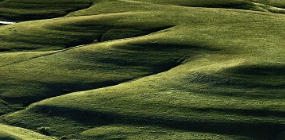
“Within five or six weeks, what had been blackened hills is the most verdant, emerald green of any green on the planet,” Richardson says.
Organizing the images of a lifetime

These days, when Richardson isn’t on the speaking circuit lecturing on his long career in photojournalism, he’s perched at a light table poring over a lifetime of images in his neatly-appointed office on North Main Street in the small, central Kansas town of Lindsborg.

“The tedious part is finding all those negatives, finding the right one, and digitizing it, all of which is a huge time suck,” Richardson says. “It just takes huge amounts of time.”

He’s been busy organizing the many thousands of images to ensure his vast photo archive is accessible long after he is gone. It’s important work that will preserve his photographs for future generations.

Richardson has a strong presence on the web and almost all of his work is available online. He also owns Small World Gallery in Lindsborg with his wife, Kathy, and displays his photographs as fine art prints, posters and greeting cards.

“There comes a point in which the organization of all that stuff has an impact on whether or not it is going to live,” he said. “Photographs that don’t get seen are like the tree in the forest that falls and no one’s there to hear it,” he said.

This article was reported during a weeklong artist-in-residence program hosted by the Raymer Society, which preserves The Red Barn Studio in Lindsborg, Kansas, as a museum and provides cultural programming.

Kansas drivers now required to move over for more vehicles. What a new law covers

0

A new law requires drivers to “move over” and give an additional lane of safety to more motorists.

The bill, signed into law March 23, expands the requirement to all stalled vehicles along Kansas roadways , and says when approaching a vehicle with its hazard lights on, drivers must move over to the nonadjacent lane, if possible.

“If the driver of the motor vehicle is traveling on a highway that consists of at least two lanes that carry traffic in the same direction of travel as that of the driver’s motor vehicle, the driver shall proceed with due caution and, if possible … shall change lanes into a lane that is not adjacent to that of the stationary vehicle,” the law reads.

If moving over isn’t possible, the driver must slow their speed and proceed to pass with caution.

“If the driver is traveling on a highway of that type but it is not possible to change lanes or if to do so would be unsafe, the driver shall proceed with due caution, reduce the speed of the motor vehicle and maintain a safe speed for the road, weather and traffic conditions,” the law reads.

To safely change lanes, drivers should turn on their blinker, check their blind spot and keep a consistent speed while switching to the other lane.


Previously, move-over laws only applied to emergency personnel and vehicles like tow trucks, road service providers and utility vehicles. Unlawfully passing a stopped emergency vehicle could result in a fine of $75.

Thanks to this commonsense bill, all drivers will now be required to move over or slow down if there is a vehicle on the side of the road with flashing lights,” Kansas Gov. Laura Kelly said in a March 24 press release. “This bill will improve safety and will make it easier to educate the driving public.”

According to the press release, 82 crashes happened from 2018 to 2023 that involved a stalled vehicle on the side of the road.

According to Wichita’s municipal court, failing to move over when the law requires could result in a $50 fine and court costs equaling $71.50, a $121.50 total cost.

There are several laws that went into effect Jan. 1, including the elimination of state sales tax on grocery items , a law that allows retailers in the state to add a surcharge fee to credit card transactions and a law that allows people who can’t afford to pay a traffic ticket to petition the court to waive and reduce the fees.


Lawn Maintenance

0
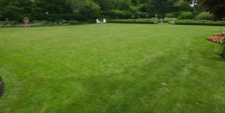
 Following best practice recommendations in every aspect of gardening can help save you time and money. The lawn is no different. Here are some guidelines for proper lawncare:
  • Mowing height is dependent on turf variety, usage and time of year. Improve drought resistance by mowing at the taller end of the recommended range for your turf variety.
  • No more than one-third of the height should be removed at each cutting. If the lawn has become overgrown you will need to cut it gradually over several days.
  • Maintain a sharp mower blade to give a clean cut for the blades.
  • Use a different mowing pattern each time to prevent soil compaction and wear from the mower wheels.
  • Cultivate the soil around trees to prevent grass from growing close to the trunk so mowing equipment will not risk damaging the bark.
  • Water in the early morning.
  • Wait as long as possible between watering.
  • Soak the soil to a depth of 6-8 inches when watering.
  • Fertilize only to maintain moderately green color during favorable weather. Over-fertilizing increases water and mowing needs.
  • Do not fertilize when heavy rain is expected.
  • Time fertilizer based on variety:
    • Fescue and bluegrass – September and November (optional in May)
    • Bermudagrass and Zoysiagrass – between May and August
    • Buffalograss – June

Act Now to Prevent Summer Weeds

0

Weed prevention is an important step in helping your lawn and garden be more drought resistant. Weeds compete with desirable plants for water and nutrients. This problem worsens in periods of drought when these resources are limited. Now is the time to act to apply pre-emergent products in order to prevent summer weeds before they become an issue.

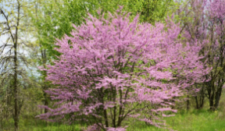
Pre-emergents must be applied before summer weeds begin to grow, so application timing is critical. Look for 1″ soil temperatures to average 55oF, or look for the purple flowers of the Eastern Redbud tree to tell you when to apply weed control pre-emergent. Once the redbud trees begin to bloom, it’s best to apply a pre-emergent within the next two weeks.

Crabgrass, grassy sandbur, goosegrass, and spurge are all weeds we commonly see in lawns & flowerbeds, all of which can be controlled this month with a pre-emergent product. While there are many pre-emergent products available, two products are available for summer-long weed prevention:

o  Dimension (active ingredient = dithiopyr)

o  Barricade (active ingredient = prodiamine)

Other products available will typically need repeat applications throughout the summer, so be sure to read and follow the label instructions. Most products are not safe to use when planting seeds. If you plan to plant seeds in your lawn or garden this spring or summer, most pre-emergent products will kill desirable seeds as well as weed seeds and should not be used in these areas. Always read and follow the label instructions before applying any of these products.

Can night vision hunting solve coyote problems in Kansas? Majority support expanding it

0

Kansas created the night vision hunting season for coyotes in 2021. Hunters say it’s a great option and want it expanded, but some property owners and regulators have concerns.

MEADE COUNTY, Kansas — Hours after the sun has set for the day, it’s pitch black in the middle of Meade County. As David Hampton stands invisible in a southwest Kansas field scanning the landscape for coyotes, the only sounds are the crunch of dry grass underfoot and calls of coyotes in the distance.

He has a handheld night vision monocular. He also has a night vision scope on his gun. He spins in a circle quietly in the darkness waiting for coyotes to pop up.

“My dad used to drop me off when I was 10 years old in the sticks to go deer hunting,” Hampton said. “One thing I am not is afraid of the dark.”

Strapped around his neck he has the remote to an electronic calling device. It can mimic coyote howls or the sounds of coyote prey in distress.

Hampton is an experienced coyote hunter, and enjoys trying his luck at night vision hunting, which regulators allowed  in Kansas for coyotes back in 2021. The season lasts the first three months of the year, with the hope of controlling exploding coyote populations and giving hunters more opportunities.

Now, that policy is under review. Regulators held a series of meetings across the state to hear from hunters and others, and will decide whether the season should be continued or modified by possibly expanding or reducing it.

But coyotes still thrive in Kansas no matter what people throw at them. Coyotes are incredibly resilient and eat about anything available. They also respond to hunting pressure by having larger litters, making them even harder to control.

After a few hours of hearing the coyotes howl, Hampton had only heard them, but didn’t see any, and called it a night. He said that’s the nature of hunting smart predators.

In the truck on the way back, Hampton said difficulty of coyote hunting is part of the appeal.

“When you shoot a coyote and miss, we call that educating a coyote because they’re smart, keen animals,” Hampton said.

Night vision is the latest example of new technology being used to help hunters control predators in Kansas.

This venture goes back centuries in this region. As Europeans expanded west into Kansas and Nebraska, they have continually battled with coyotes.

In fact, settlers’ expansion has allowed coyotes to expand themselves. When people moved, they killed off animals like wolves and mountain lions, which used to keep coyotes in check.

Cutting down forests to create farms gave coyotes more habitat. Now, they are the most abundant large predator in the country.

Kansas ranks fourth in the nation in coyote populations.

They’re a concern because they prey on livestock. Coyotes cost Kansas ranchers roughly $4 million annually in livestock losses. They also can damage crops and harm pets.

Predators cause roughly 5% of calf deaths in Kansas, and coyotes are blamed for nearly all of them.

Cattle rancher Nick Zerr in Gove County has been a huge advocate for the use of night vision in coyote hunting.

“There’s not as much wildlife out here and newborn calves are an easy target,” Zerr said. “This is my livelihood. I can’t lose money on predators if I can help it.”

A cattle rancher could lose $750 to $1000 per newborn calf to coyotes, and that can be a big impact on ranchers with smaller herds.

This has led the state to advocate for hunting to control their populations. And hunters see even more success at night.

“At night I had some hunters turn on their callers near my cattle and seven coyotes came running,” Zerr said. “You don’t really see that during the day.”

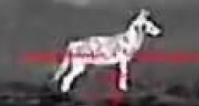
To try and give hunters an upper hand, Kansas allows night vision and thermal vision that helps hunters see coyotes before being spotted by the animals. This equipment is expensive. Getting started could cost hunters thousands of dollars.

Hunters also need a night vision equipment permit which costs $2.50.

The Kansas Department of Wildlife held meetings around the state last month to gather opinions on the night season.

From the rancher’s perspective, coyotes are pest animals that threaten their livelihoods.

Andrew Enfield, a hunter from Norton, Kansas, spoke in favor of expanding the night season to control predators during the late spring when newborn calves are vulnerable.

“I have several landowners, cattle farmers, that call myself and others when they are calving and having issues with coyotes,” Enfield said.

Enfield would like to see the night season expanded further into the spring to help better protect livestock herds. Others want it expanded year-round.

Geoff Nemnich is a professional coyote hunter in the Midwest. He hosts a Youtube series called “The Last Stand” where he teaches hunting tips.

“At night, there’s less traffic, less people out so the coyotes move around a lot more,” Nemnich said. “As a hunter, you can usually have a little more success, because the coyotes are just naturally up running around.”

Nemnich has shot up to 23 coyotes in a single night hunt.

The other advantage is it gives hunters with families and dayjobs more opportunities. Nemnich said it’s helping attract younger hunters

“Hunters can run out and hunt from eight at night till midnight, come back, get some sleep, and get up and go to work,” Nemnich said.

But some Kansans are not fully on board. Tad Kramar and his wife Margaret strongly opposed the night vision season at a meeting in Topeka. They live in rural Douglas County. They worry it will lead to hunting other animals out of season and be a disturbance.

“It’s more dangerous to do this at night,” Tad Kramar said. “Also, as a rural resident, I would find it very disturbing to hear loud gunshots and see bright lights throughout the night.”

Law enforcement groups have also opposed the night season over fears of people using firearms at night and the possibility of deer poaching, which remains an issue in Kansas.

Some meeting attendees suggested moving the night coyote season so it doesn’t overlap with deer and elk seasons. They said that might reduce the likelihood of illegally using night vision for those species.

Secretary of the Kansas Department of Wildlife and Parks, Chris Kennedy, went over the results of public comments from the state meetings.

“Overall, a majority support the expansion across all user groups based on our data,” Kennedy said.

But several wildlife commissioners were hesitant to expand the season.

“My initial hesitance to expand to year round still stands from a personal standpoint. I do appreciate seasons. I do appreciate management,” Commissioner Whitney Damron said.

There’s more discussion on the issue ahead and a decision could come later this year.

Calen Moore covers western Kansas for High Plains Public Radio and the Kansas News Service. You can email him at [email protected].