
- Matador Network recently released a list of the top 60 campsites with the best views in the United States.
- The list includes sites from 36 states and two territories, compiled using data from The Dyrt, a website containing crowd-sourced reviews of campsites.
- Kansas was excluded from the list, prompting suggestions from The Capital-Journal for potential additions, including Tuttle Creek State Park Campground, Wilson State Park Campground and Clinton State Park Campground.
- These Kansas campgrounds offer scenic views, spacious sites and various outdoor activities like fishing, swimming and hiking.
Camping places in 36 states and two territories made a list recently put out by the online travel guide Matador Network identifying the 60 Campsites With the Best Views Across the United States.
Central states sites on the list include Fort Kearny State Recreation Area, Nebraska; Animas Parks Ghost Town, Colorado; and Silver Bell Campground, Colorado.
But the list contains no camping places in Kansas.
Matador Network created the list with input from the The Dyrt, a website that publishes crowd-sourced reviews of public and private campsites.
The Capital-Journal suggests Matador Network should have considered any of these five Kansas camping sites, all of which have positive reviews from The Dyrt.
Tuttle Creek State Park Campground
Tuttle Creek State Park Campground near Manhattan is “a fantastic spot for campers looking to enjoy the great outdoors year-round,” according to The Dyrt.
“With spacious sites that come equipped with picnic tables and fire rings, it’s perfect for those cozy evenings spent around the campfire,” the site says.
In addition to camping, visitors may fish and swim in Tuttle Creek Reservoir, hike or bike through the scenic Flint Hills on various trails and enjoy picnic areas, an 18-hole disc golf course, volleyball courts, horseshoe pits, a rifle range and an archery range, according to the Kansas Department of Wildlife and Parks.
Wilson State Park Campground
Wilson State Park in Russell County in north-central Kansas is considered by many to be Kansas’ most beautiful state park, says the KDWP.
The park’s campground is a “fantastic spot for those looking to enjoy the great outdoors with a stunning backdrop,” says The Dyrt, which ranks it as the second-best campground in Kansas. “With a beautiful lake view and spacious sites, it’s perfect for everything from tent camping to RV stays.”
In addition to camping, visitors may fish and swim in Wilson Reservoir, view wildlife in Wilson Wildlife Area, hike on the one-mile Cedar Trail and ride on the 24.5-mile-long Switchgrass Bike Trail.
Clinton State Park Campground
Clinton State Park Campground near Lawrence “is a solid choice for those looking to enjoy the great outdoors without straying too far from town,” according to The Dyrt.
“This campground offers a mix of tent, RV, and cabin accommodations, making it suitable for various camping styles,” says that website, which ranks it as the best campground in Kansas.
In addition to camping, the park’s offerings include fishing and swimming in Clinton Reservoir, trails, an archery range, disc golf and a sand volleyball court.
The Dyrt also ranked Clinton State Park’s Bloomington East location as the sixth best campground in Kansas.
Lake Shawnee Campground
Lake Shawnee Campground near Topeka is “a fantastic spot for campers looking to enjoy a mix of relaxation and outdoor activities,” according to The Dyrt.
“With sites that are clean and well-kept, it’s a great place to unwind by the beautiful lake,” says that site, which ranked the Lake Shawnee location as the seventh-best campground in Kansas.
In addition to camping, the site’s offerings include fishing and swimming in Lake Shawnee and a seven-mile, paved trail surrounding the lake, according to the campground’s website.
Prairie Dog Campground in Prairie Dog State Park
Prairie Dog State Park near Norton in northwest Kansas is known for its prairie dog town, which has an estimated 300 prairie dogs, according to the travelks.com website maintained by the Kansas Department of Commerce.
These Kansas campsites have reason to be mentioned among best in the U.S.

People Drive From All Over Kansas For The Homemade Pies At This Mom-And-Pop Restaurant
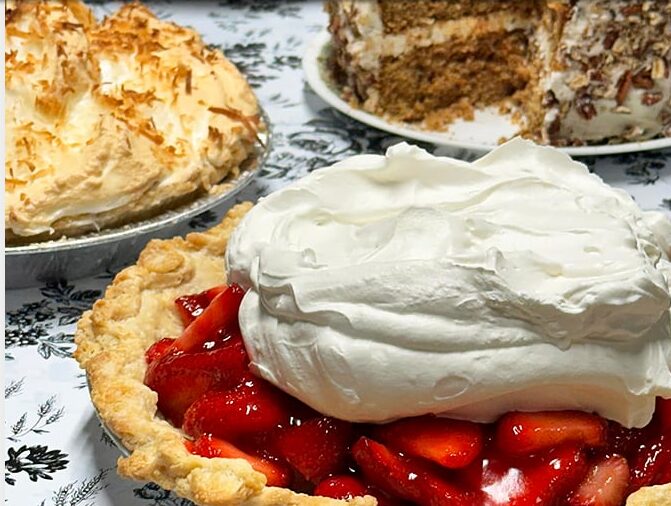
In the heart of rural Kansas sits a white two-story building that looks like it was plucked straight from a Norman Rockwell painting – Sommerset Hall Café in Dover, where pilgrims of pie travel from every corner of the Sunflower State seeking dessert enlightenment.
I’ve eaten desserts on five continents, from gelato in Italy to pastries in Paris, but there’s something almost mystical happening in this modest kitchen that defies explanation and demands reverence.
The first thing you notice when approaching Sommerset Hall Café is its charming simplicity – unassuming white clapboard exterior, American flag fluttering gently, and simple picnic tables outside that seem to whisper, “Take your time, neighbor.”
No neon signs promising the world’s best anything, no flashy gimmicks – just quiet confidence in what awaits inside.
That’s the thing about truly exceptional food – it doesn’t need a marketing team.
Step through the front door and you’re transported to a place where time seems to move at a different pace.
The interior welcomes you with straightforward charm – practical tables and chairs that have supported generations of hungry visitors, ceiling fans spinning lazily overhead, and walls adorned with local memorabilia and photographs.
Bookshelves line the walls, filled with an eclectic collection that serves as a community archive and conversation starter.
The decor isn’t trying to manufacture nostalgia; it’s genuinely lived it.
There’s something profoundly comforting about a dining establishment that hasn’t been redesigned based on the latest restaurant trends or Instagram aesthetics.
Instead, Sommerset Hall Café has evolved organically over the years, accumulating character the way good cast iron accumulates seasoning – slowly, authentically, and with better results than any shortcut could produce.
The dining room has a soundtrack all its own – the gentle clink of forks against plates, the murmur of conversation that rises and falls like wheat in the Kansas wind, and the occasional burst of laughter that ripples across the room.
It’s the sound of community happening in real-time, unfiltered and unscripted.
You might notice regulars greeting each other with the easy familiarity of people whose lives have intersected over countless meals.
ables of farmers discussing rainfall totals and crop rotations sit near families celebrating birthdays, while solo diners read newspapers (yes, actual physical newspapers) while waiting for their orders.
But let’s cut to the chase – you’re here for the pies, and rightfully so.
These legendary creations have inspired road trips from Wichita, detours from I-70, and pilgrimages from pie enthusiasts across the Midwest who heard whispers of pastry perfection in Dover, Kansas.
The pie menu rotates, showcasing seasonal fruits and traditional favorites, but each offering shares the same foundation of excellence – a crust that should be in a museum of culinary achievement.
This isn’t hyperbole – the crusts at Sommerset Hall Café represent pie-making at its zenith.
Perfectly golden with just the right amount of give before shattering into flaky shards that melt on your tongue, these crusts achieve the near-impossible balance between structure and tenderness.
They’re the result of hands that have made thousands of pies, understanding the dough not by following a recipe but by feel, intuition, and generations of passed-down wisdom.
The fruit pies showcase Kansas’ agricultural bounty with fillings that respect their ingredients.
The apple pie features fruit that maintains its integrity – tender but not mushy, sweet but still tasting distinctly of apple rather than just sugar.
The cinnamon and nutmeg notes complement without overwhelming, creating harmony rather than competition on your palate.
Cherry pie here is a revelation for those accustomed to the canned filling variety.
Tart cherries provide a brightness that cuts through the sweetness, creating a complex flavor profile that keeps you coming back for “just one more bite” until somehow, mysteriously, your plate is empty.
Their peach pie, available when the fruit is in season, captures summer sunshine in dessert form – juicy, aromatic, and so fresh you can almost feel the fuzz on the fruit.
But it’s the cream pies that have achieved particular fame, inspiring dedicated fans to drive hours just for a single slice.
The coconut cream pie reaches toward the heavens with a meringue that defies gravity – billowy, perfectly toasted clouds hiding a rich, velvety filling studded with coconut.
The banana cream achieves what few others do – highlighting the fruit’s flavor without turning soggy or brown, suspended in a vanilla custard that’s rich without being cloying.
Then there’s the sour cream and raisin pie, a Midwestern classic that Sommerset Hall Café has elevated to art form status.
The contrast between the tangy sour cream filling and the sweet, plump raisins creates a tug-of-war on your taste buds that somehow resolves into perfect harmony.
Topped with a dusting of nutmeg, it’s a sensory experience that makes first-timers’ eyes widen with surprise before narrowing with pleasure.
It’s not the most photogenic dessert – it won’t rack up Instagram likes like a rainbow-colored unicorn shake might – but it represents something far more valuable: authentic regional cuisine made exceptional through care and skill.
While the pies might be the headliners that draw visitors from across state lines, the supporting cast of breakfast and lunch offerings deserves its own standing ovation.
Morning at Sommerset means eggs cooked precisely to order, from delicate over-easy with runny yolks perfect for toast-dipping to scrambled so light and fluffy they seem to defy physics.
The pancakes arrive at your table looking like they belong on a magazine cover – golden-brown, perfectly round, and so light they almost float above the plate.
Topped with real butter that melts into every crevice and genuine maple syrup (none of that artificially flavored corn syrup business), they’re a reminder of how transcendent simple food can be when made with care.
Their hash browns achieve the textural holy grail – shatteringly crisp exterior giving way to tender potatoes within, seasoned subtly but confidently.
Bacon arrives neither flabby nor burnt but in that perfect middle ground – substantial enough to provide a satisfying chew but rendering enough fat to create the ideal crisp-chewy texture that makes bacon one of humanity’s greatest creations.
Lunch brings a parade of comfort classics executed with the same attention to detail as their famous pies.
The hand-breaded chicken strips shatter audibly when bitten, revealing juicy meat beneath a perfectly seasoned coating.
Served alongside golden Texas toast with crisp edges and a buttery soft center, it’s proof that straightforward food can be extraordinary when done right.
Their cheeseburgers start with hand-formed patties – never frozen, never mass-produced – cooked on a flat-top grill that’s developed the kind of seasoning only decades of use can create.
The beef develops a beautiful crust while remaining juicy within, served on buns that have the perfect give-to-structure ratio.
The seasoned grilled chicken salad offers a fresher option without sacrificing flavor – slices of juicy chicken breast seasoned with a proprietary blend of spices atop crisp romaine with bell peppers, tomatoes, and yes, bacon, because this is Kansas and protein deserves more protein as a garnish.
The quesadillas come stuffed generously with your choice of chicken or steak along with onions and tomatoes, the tortillas achieving that ideal crisp-chewy texture that holds everything together while still yielding easily to your bite.
What makes Sommerset Hall Café truly special extends beyond what’s on the plate.
It’s the sense of place that you can’t manufacture or franchise – an authentic community hub where generations of Dover residents have marked milestones, made memories, and maintained connections.
This is where local high school sports victories are celebrated, where farmers discuss crop prices over coffee, where families gather after Sunday services, and where everyone eventually intersects.
The servers don’t just take your order – they welcome you into this community, even if just temporarily.
They’ll likely remember what you ordered last time if you’re a repeat visitor, ask about your family if you’re a regular, and make sure your coffee cup never reaches empty.
It’s service that stems not from corporate training manuals but from genuine hospitality and pride in their establishment.
In an age of restaurant chains designed by marketing teams to appear authentic, Sommerset Hall Café offers the increasingly rare experience of the real thing – a place with roots so deep in its community that they’re inextricable from the town’s identity.
The walls themselves tell stories if you take the time to look – photographs chronicling decades of local history, newspaper clippings of notable events, and memorabilia that charts the evolution of Dover and the surrounding area.
These aren’t curated displays but organic accumulations of community history, making the café as much a living museum as a restaurant.
For travelers passing through Kansas or locals seeking a reliable meal, Sommerset Hall Café offers something increasingly precious – authenticity in an age of imitation, substance where style often dominates, and food made with pride rather than processed with efficiency.
To find out more about operating hours or special menu offerings, check out their website and Facebook page where updates are regularly posted.
Navigate your way to this slice of Americana – where the journey through rural Kansas roads becomes part of the experience itself.
In Dover’s Sommerset Hall Café, pie isn’t just dessert; it’s the exclamation point on a dining experience that reminds us why food made with heart will always be worth the drive.
All 10 Kansas measles cases are children who are unvaccinated or under-vaxxed

- Kansas has 10 confirmed cases of measles, all children who were unvaccinated or under-vaccinated.
- The southwest Kansas outbreak comes amid a nationwide outbreak that started in west Texas.
- Kansas health officials are urging residents to get vaccinated against measles, especially in affected counties.
- Measles is highly contagious, and additional cases are expected in Kansas and surrounding areas.
Kansas is now up to 10 confirmed cases of measles, all of which have been children who are either unvaccinated or under-vaxxed.
The Kansas Department of Health and Environment on Monday reported 10 cases of measles, spread across Grant, Morton and Stevens counties. The update came through the Kansas Health Alert Network.
The alert said all 10 cases are children ages birth to 17 years old. Nine weren’t vaccinated, while one child was under-vaccinated with only one of the two recommended doses of the MMR vaccine.
“Due to the highly contagious nature of measles, additional cases are likely to occur in the outbreak area in Kansas and in surrounding counties, especially among those that are unvaccinated,” the KDHE alert said.
Local health departments in Morton and Grant counties reported three cases in each county, all linked to a case in Stevens County. The local health department in Stevens County reported it is up to four cases, and, “We do have pending cases at this time.”
Theses are the first cases of measles in Kansas since 2018.
The Kansas measles outbreak comes as several states have recorded cases following an outbreak that started in west Texas. The KDHE alert said that as of Friday, the Centers for Disease Control and Prevention had reported 378 measles cases across 17 states.
“Most of these cases are occurring in children (76%) and almost all are either unvaccinated or have an unknown vaccination status (95%),” the alert said. “Fifty (50) persons have been hospitalized and two (2) have died.”
One death was an unvaccinated school-aged child in Texas, and the other was an unvaccinated patient in New Mexico. No measles hospitalizations or deaths have been recorded in Kansas.
Kansas officials told The Capital-Journal last week that epidemiologists have not been able to establish a link to the outbreak affecting west Texas. The three Kansas counties with cases are all in the southwest corner of Kansas, about 375 miles from the outbreak epicenter of Gaines County in the Texas panhandle.
The CDC said earlier this month that “this outbreak continues to expand rapidly.”
Kansas public health officials recommend MMR vaccine
Public health officials recommend that two doses of the MMR vaccine for children, with the first dose administered at age 12-15 months and the second dose at age 4-6 years, before entering school. Adults are generally recommended to get one dose. Two doses are recommended for adults working in health care or attending higher education, due to the higher risk of exposure and transmission.
In a previous alert earlier this month, KDHE noted that Kansas is “below the herd immunity threshold” of at least a 95% vaccination rate. That rate, measured by estimated MMR immunization rates for Kansas kindergarten students during the 2023-24 school year, was 90.2% in 2023-24, down from 94.5% in 2019-20.
Some school districts have immunization rates substantially lower than the herd immunity threshold.
KDHE makes vaccination recommendations for southwest Kansas
In Grant, Morton and Stevens counties, as well as adjacent counties in southwest Kansas, KDHE is recommending an early dose of the MMR vaccine. Also known as an infant dose, that dose is recommended for infants ages 6-11 months.
For children in those counties who are older than 12 months and have not been vaccinated, KDHE recommends “one dose immediately and follow with a second dose at least 28 days after.” Children older than 12 months who have already gotten a first dose “should receive an early second dose.”
KDHE is also advising teenagers and adults who have previously been vaccinated with one dose should receive a second dose.
Adjacent counties include Stanton, Hamilton, Kearney, Finney, Haskell and Seward. That includes southwest Kansas population centers of Garden City and Liberal.
Kansas advises public health providers and departments
KDHE advised health care providers “to be on high alert” for patients showing symptoms consistent with measles — especially among unvaccinated patients, people who recently traveled to areas with ongoing outbreaks or people in “frequent contact with unimmunized individuals in a congregate setting,” such as attending day care.
It is recommended by KDHE that providers submit specimens of suspected measles patients to the KDHE lab for measles testing. The state lab has a turnaround time of one to two business days after receiving the samples.
People suspected of having measles should be told to stay home in isolation until receiving their test results, KDHE said. People with measles should isolate at home, except when seeking medical care, for four days after the onset of rash.
KDHE advised local health departments to share the alert, order testing and shipping supplies and report suspected cases to the state. Mandated reporters are required to report all suspected cases to KDHE.
Local health departments and the Stevens County Hospital are asking patients with measles symptoms or a suspected exposure to call before going to a clinic or emergency room so that providers can take steps to prevent further spread.
As reported in the Topeka Capital Journal
Ten rules for planting trees this spring
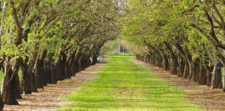
If you’re planning to plant a tree in your yard this spring, there are some steps you can take to make sure your new landscape has its best chance of success.
Kansas State University horticulture expert Cynthia Domenghini shares the following 10 rules for planting trees:
Select the right tree for the site.
To avoid serious problems, choose trees that are adapted to your location. Consider whether the tree produces nuisance fruit or if there are disease-resistant varieties available. For example, there are a number of crabapple varieties that are resistant to apple scab and rust diseases. Also consider the mature size of a tree to be sure you have enough room. Your local extension office and garden center can make tree recommendations for your region.
Keep the tree well watered and in a shady location until planting.
When moving the tree, lift it by the root ball or pot and not by the trunk.
Before planting, remove all wires, labels, cords or anything else tied to the plant.
If left on, they may eventually girdle the branch to which they are attached.
Dig a proper hole.
Make the hole deep enough so the root flare (point where the trunk and roots meet) is visible when planted. Plant the tree on solid ground, not fill dirt. In other words, don’t dig the hole too deep and then add soil back to the hole before placing the tree.
The width of the planting hole is very important. It should be three times the width of the root ball. Loosening the soil outside the hole so it is five times the diameter of the root ball will allow the tree to spread its roots faster.
Remove all containers from the root ball.
Cut away plastic and peat pots; roll burlap and wire baskets back into the hole, cutting as much of the excess away as possible. If you can remove the wire basket without disturbing the root ball, do it. If roots have been circling around in the container, cut them and fluff them out so they do not continue growing in a circle inside the hole becoming girdling roots later.
Backfill the hole with the same soil that was removed.
Amendments such as peat moss likely do more harm than good. Make sure the soil that goes back is loosened – no clods or clumps. Add water as you fill to ensure good root to soil contact and prevent air pockets. There is no need to fertilize at planting.
Minimize pruning after planting.
Foliage is necessary for manufacturing energy to support a healthy tree. Heavy pruning reduces the number of leaves and consequently the amount of energy generated. Corrective pruning can be done at planting to remove dead, damaged or diseased branches or branches that are rubbing against each other.
Water the tree thoroughly.
Then, water once a week for the first season if there is insufficient rainfall.
Mulch around the tree.
Mulch should be 2-4 inches deep and cover an area 2 to 3 times the diameter of the root ball. Avoid mulching right up to the trunk of the tree. Leave a 3 to 6-inch gap between the mulch and the trunk to prevent damaging the tree. Mulching reduces competition from other plants, conserves moisture and moderates soil temperature.
Stake only when necessary.
Larger trees or those in windy locations may need to be staked the first year. Movement is necessary for the trunk and roots to develop properly. Staking should be designed to limit movement of the root ball rather than immobilize the trunk.
Domenghini and her colleagues in K-State’s Department of Horticulture and Natural Resources produce a weekly Horticulture Newsletter with tips for maintaining home landscapes and gardens.
Interested persons can subscribe to the newsletter, as well as send their garden and yard-related questions to [email protected], or contact your local K-State Research and Extension office. K-State Research and Extension news service
Spot a bird feather in your Kansas yard? Why picking it up could land you in court
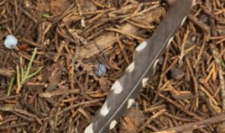
Possessing bird feathers could get a person cooped up in prison.
The possession of feathers and other parts of native North American birds without a permit is banned by the Migratory Bird Treaty Act of 1918, says the website of the U..S. Fish & Wildlife Service.
That act “protects wild birds by preventing their killing by collectors and the commercial trade in their feathers, and extends to all feathers, regardless of how they were obtained,” that site adds. “There is no exemption for molted feathers or those taken from road- or window-killed birds.”
What are the penalties?
For each unauthorized take of a protected bird or one of its parts, a violator of the MTBA may be subject to penalties of a fine of up to $15,000, imprisonment for up to six months, or both.
“Obviously, the law is not intended to prosecute kids for keeping a Blue Jay ( Cyanocitta cristata ) feather found in their yard, although it is technically illegal to do so,” says the website of the Atlanta-based Fernbank Science Center .
The Fish & Wildlife Service is permitted to use discretion in enforcing the act, meaning it may choose not to prosecute apparent technical violations.
How did the act come about?
The MBTA, which took effect in 1918, implements international conservation treaties the U.S. reached in 1916 with Canada, in 1936 with Mexico, in 1972 with Japan and in 1976 with Russia, according to the Fish & Wildlife Service .
The act was initially targeted at protecting birds at a time when some species were being hunted nearly to extinction to satisfy the demand for big, wide women’s hats adorned with exotic bird plumes.
The act includes bans on possessing “feathers in your yard, a dead bird on the road or even a bird nest on your front porch,” the Fernbank Center website says.
“The law was made very strict, with few or no loopholes, so that ‘plume hunters’ as they were called at the time, could not simply say, ‘I found these feathers’ or, ‘The bird was already dead,'” it says. “Such proclamations would not matter since it is illegal to possess or sell any part of a bird, no matter how it was obtained. The strictness of the law gave it some teeth when it came time to prosecute offenders.”
The MTBA outlived the popularity of feathered hats
Feathered hats eventually went of style, due largely to the MBTA, the Fernbank Center website said.
“Unfortunately, the MBTA is still quite relevant today as wildlife officials deal with the overwhelming problem of illegal trade of wild birds and other animals,” it said.
The MBTA has been interpreted to cover any bird that can be proven to naturally occur in the United States or its territories, according to the Fernbank Center website .
“Several conventions and amendments to the original Act have been added over the years and with the Migratory Bird Treaty Reform Act of 2004 all species native to the United States or its territories, which are those that occur as a result of natural biological or ecological processes were added to the official list of protected species,” it said.
Which native species are protected?
The Fish & Wildlife Service website offer a list of birds for which the MTBA bans the public from possessing their feathers without authorization.
Species on that list include cuckoos, loons, falcons, woodpeckers and perching birds , which are the most common order.
Legally hunted waterfowl that include species of geese and swans are among species on the government’s list of birds to which the act does not apply .
The feathers possession ban also doesn’t extend to non-native birds such as peacocks .
Possessing feathers shed by a peacock is legal, though killing peacocks for their feathers is not.
What other exceptions are there?
The government also allows exceptions to the MTBA for the authorized use of feathers by Native Americans.
Registered members of federally recognized tribes may possess the feathers of native birds for cultural and religious use, the Fish & Wildlife Service website says.
Such feathers may not be sold or traded, it adds.
“People or institutions wishing to use bird feathers, bones, or whole specimens for educational or research purposes must apply for permits from the U.S. Fish and Wildlife Service and their state wildlife or natural resource agency,” the Fish & Wildlife Service website says .
Lacey Act was violated in 2009 in Lawrence
The MBTA’s enactment came 18 years after the passage in 1900 of the Lacey Act, which makes it illegal to transport or sell a bird in one state that was illegally hunted in another.
Federal officials said an Oklahoma man violated the Lacey Act in 2009 when he tried to sell an undercover Fish and Wildlife Service agent parts of a bald eagle, a gold eagle and a crested caracara, as well as a Native American dance bustle containing hawk feathers.
The man was sentenced in 2013 in Wichita to a year on federal probation
Feathers seized in the case were sent to the Fish and Wildlife Service’s National Eagle Repository in Colorado, which provides eagle feathers to Native Americans for use in Indian religious and cultural ceremonies..
How is the MTBA ban worded?
The MBTA specifically says that the public, unless permitted by regulations, may not “pursue, hunt, take, capture, kill, attempt to take, capture or kill, possess, offer for sale, sell, offer to purchase, purchase, deliver for shipment, ship, cause to be shipped, deliver for transportation, transport, cause to be transported, carry, or cause to be carried by any means whatever, receive for shipment, transportation or carriage, or export, at any time, or in any manner, any migratory bird or any part, nest, or egg of any such bird.”
As reported in the Topeka Capital Journal
