

Lettuce Eat Local: From A to Za’atar

Amanda Miller
Columnist
Lettuce Eat Local
“Big Z, little z, what begins with Z?” I knew Dr. Seuss and I would follow the same queries in our alphabet journey, although our answers would always be different. While my ABCs might not have been everyone’s piece of cake, at any rate mine didn’t result in things like Silly Sammy Slick sipping his six sodas and getting sick sick sick. (Well, at least I didn’t hear that any of you suffered illness after trying my recipes….)
I could have borrowed a page from Jerry Jordan’s jelly jar and jam beginning with J, and Benson wouldn’t have minded if we followed David Donald Doo and dreamed up a dozen doughnuts, even if they came with a duck-dog too. I often feel like Young Yolanda Yorgenson, wondering if the chaos level would actually be less if I were merely yelling on the back of a yawning yellow yak.
But I don’t need to make up characters like the Zizzer-Zazzer-Zuzz for my Z — although at first glance you might think I am. Zucchini would have been the obvious choice here, but you know me. We’re going with Za’atar instead! You can say it “zah-tar,” and a more authentic pronunciation would put the emphasis on the first syllable, and give that r a little roll.
What is it, though? That’s a two-fold answer, as za’atar is both a Middle Eastern spice blend and an herb traditionally contained within that blend. The plant itself, also known as hyssop or Syrian oregano, has flavors similar to thyme and oregano, so in commercial blends on this side of the Atlantic they typically stand in its stead.
Ironic, right; most za’atar does not contain za’atar. To be fair, I just wrote about wasabi that rarely ever has wasabi in it; and have you ever had popcorn shrimp with even a single piece of popcorn? Oh wait, that’s different.
Anyway, in addition to the dried herbs, za’atar also contains sesame seeds and sumac (a tart, lemony spice ground from dried red sumac berries). The ingredient list might stop there, or have a few more regional or personal additions, like marjoram, dill, or even orange zest. It’s often paired with meats, hummus, labneh, salads, and flatbreads.
While za’atar isn’t very common in these parts, it is possible to seek and find it even here in central Kansas; I have at least two different blends in my cupboard. That said, it’s likely easier to just make your own mix — which, incidentally, I’ll be sharing with you as this week’s recipe.
But making za’atar does no good if you don’t know how to use it. Even though I have a couple jars of it and love the flavor, I have to admit that I rarely ever eat it. Zucchini is by far and away the more common Z in my cookbook indices. While I clearly don’t stick to following recipes, I ordinarily look at one/some and go from there; so if za’atar isn’t mentioned, I often forget it. If I’m just looking for “something something” as I spin my spice cabinet shelves, there are scores of other blends to catch my eye (baharat, tandoori, berbere…and so forth and so on). And I just realized my za’atar is on an inside row since it’s in a big jar, meaning I don’t see it as quickly.
So I need to do some rearranging, because I do love za’atar and need to remember to use it. And it doesn’t even require a zizzer-zazzer-zuzz, so that should help.
Homemade Za’atar
Za’atar is from the South West Asia and North Africa region, so it pairs well with flavors and dishes from those countries, but it could turn into your new favorite all-around seasoning. Herby, lemony, nutty…it’s got it all. There’s even an International Za’atar Day on September 23, so start practicing now incorporating it into your table. Adding it to a Super Bowl appetizer this weekend would be a perfect start.
Prep tips: Remember this is a blend that you can personalize, so try this basic equal-parts ratio, but adjust to your preferences. If you can’t find sumac, try drying and crushing some lemon zest and using that instead.
1 tablespoon dried thyme
1 tablespoon dried oregano
1 tablespoon sumac
1 tablespoon toasted sesame seeds
Mix all ingredients. Most blends don’t include salt, but to increase the ease of using as a sprinkle-on-anything seasoning, you can add a teaspoon of coarse salt. Use liberally.
“AEOs”
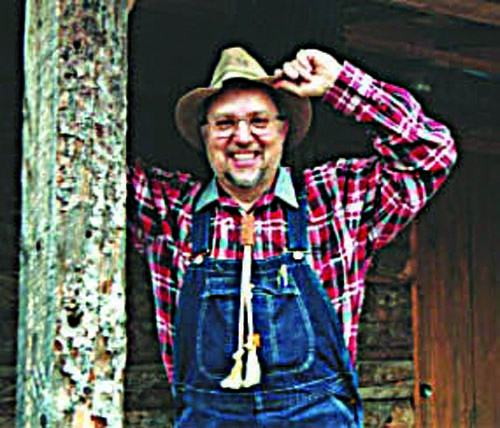
From what I hear and see on the news, the Executive Order has reached it’s all-time pinnacle of federal governing power. In the past two weeks, hundreds of EOs, “Executive Orders,” have been signed with the highly publicized purposes of solving myriad national economic and political problems, including knocking rampant inflation in the head.
Which got me to thinking about ways executive orders might affect U.S. agriculture. As stated repeatedly in the media and elsewhere, two major national problems in agriculture that influence inflation — and have the public laser focused on –are the skyrocketing prices of eggs and beef to consumers. Consumers are really sensitive about the high prices of both these products.
So, how effectively might executive orders solve those two high priority problems? For convenience sake, let’s call them AEOs, “Aggie Executive Orders.”
To me, the rules of basic science are more powerful than the rules of Aggie Executive Orders.
The solution to get lower egg prices is getting more eggs through hens and into the supermarket. And, I don’t think there is any Aggie Executive Order than will make a baby chick hatch any faster than 21 days, or make hens lay more than one egg per day, or make a new pullet start laying eggs any faster than five and a half to six months.
Likewise, the solution to get lower beef prices is more beef in the supermarket. To get more beef requires more calf-producing heifers and cows. Again, I don’t think there is any Aggie Executive Order than can mature a heifer to calf-bearing age in fewer than 18 months, nor speed up the bovine gestation period faster than the biologic norm of 279-292 days.
So, to me it looks like consumers need to realize it will take time to bring about actual production of more eggs and beef. Aggie Executive Orders can’t solve the problem.
***
Okay, let’s switch from animal science to soil science. Thanks to a kindly reader from Burlingame, Kan., for submitting this humor. Here it is:
One day a group of young, up-and-coming scientists got together and decided that mankind had come such a long way with computerization and artificial intelligence that it no longer needed the Divine. So, to get their scientific logic out in the public, the group got selected to have a slot on the agenda of a multi-faith conference on religion in Rome.
Out on the stage and in front of the television cameras, the group’s spokesman announced, “Science has brought us to the point that mankind no longer needs religion. We’re to the point now where we can clone people, manipulate genes, and do many miraculous things, so next time you pray, tell your deities to just butt out.”
“Oh, really?” said one priest, stepping forward. “Well, we’ll just see what they have to say about that.” Then he looked to the heavens, bowed his head, murmured a quiet prayer, and genuflected. And, sure enough, in the blink of an eye the sky opened up and a thunderous voice rang out. “I challenge you to a man-making contest,” the voice said.
The eager scientists conferred and readily agreed.
“Now, we’re going to do this just like I did in the old days,” the voice added.
“OK, no problem,” said the lead scientist, bending down to scoop up some earth.
“No, no, no,” said the voice. “You go get your own dirt.”
***
Now that the U.S. has an official Department of Government Efficiency (DOGE), a kindly Oklahoma reader submitted a first project for the DOGE folks to tackle. Here it is:
There’s an old saying that “When you find that you’re riding a dead horse … get off.” But we note that in certain government administrative manuals, there’s a whole range of far more advanced strategies as possibilities when confronted by a dead horse:
1. Buy a stronger whip.
2. Change riders.
3. Appoint a committee to study the horse.
4. Lower the standards so dead horses can be included.
5. Reclassify the dead horse as “living impaired.”
6. Retain outside contractors to ride the dead horse.
7. Harness several dead horses together to increase mass and velocity.
8. Provide additional training/funding to enhance the dead horse’s performance.
9. Declare that as the dead horse does not have to be fed, it is less costly, carries lower overhead and thus contributes substantially more to the economic bottom line than do live horses.
10. Promote the dead horse to a supervisory position.
***
As I write this column on my 82nd birthday, Jan. 30, and Nevah’s milestone 80th birthday, she has left me — for just four days. She, her twin sister, three daughters, and three nieces have left on a Florida celebration of the twin’s birthday.
So, I’ll be batching for a few days and to celebrate I’m hosting the Old Geezer Gang Coffee Group to enjoy a vegetable/beef lunch here at Damphewer Acres. I betcha we have a good time.
***
This week launches my 52nd year of writing this column. I ain’t promising nuthin’ for the future but I’ll try to stay the course.
Words of wisdom for the week: “Mother Nature makes us endure February to get to March and Spring, but remember, Mother Nature never lets February block the gate into March.” Have a good ‘un.
Creamed soups and etc

I am going to ‘try’ not to chat so much in this column and provide you with 3 ‘small’ guides that may end up inside the spice cabinet door. It’s what I did way back in the day. After you’ve been cooking a ‘long’ time, you won’t need these guides, but until it becomes second nature, these will come in handy.
Last week I left you with ironing, sewing, & cooking on the homefront. Suffice it to say I finely wrapped those projects up on Saturday, along with 2 new tablecloths, so I can see my dining room again! For those who don’t know, I enjoy making simple tablescapes, especially when we entertain. I now have a solid red quilt on the dining table with a red ‘ticking’ look topper over it. The center is winter greenery, pine cones and a lantern. I’ll be adding hearts and implementing fresh flowers for our dinner party.
This weekend I did lots of food prep to make some of our weekend meals a lot less work and time, something I love doing. Since I still work I try to do bulk cooking on the weekend, so there’s leftovers for our work lunches. If Ervin, my spouse, is out on a bus trip, (school bus driver) I tend to just skip cooking at night and reach for a fried egg or a pbj! That’s also when I take on little home projects.
Tonight I’m doing a new dish called Sausage, potato leek soup. I’ll try to run it for you next week, who knows, it might become your new ‘Super Bowl Dish’. Our family is having a thick bowl of chili for the Super Bowl. I have some desserts to make next weekend for our Valentine dinner, so I need to keep it simple.
Something that is not easy for many novice cooks is learning how to thicken things. There are still times when I don’t have quite enough thickening agent, and have to reach for more. No matter how many years in the kitchen, this can still occur. What I’m going to give you below are 2-3 samples of thickenings. The First one is not mine, it came from ‘Grit Magazine’, (my favorite read). The second one will be my mom’s cream base for her stuffed baked potatoes with peas, ham and mushrooms. Here we go:
Cream of Anything
Yields 1 ½ pints or 3.5 cups
2 tablespoons of preferred fat
¼ cup diced onion
½ cup diced mushrooms
½ teaspoon salt
1 pint or 2 cups broth
4 ounces heavy cream or cream cheese
Melt fat over medium heat in a sturdy pot. Add the onions and mushrooms and saute until the onions are translucent. Add the salt & broth and simmer for 5 minutes. Using a immersion blender, pulse the mixture til it’s smooth. Stir in the heavy cream or cream cheese. Stir & heat thoroughly
Here is my mom’s mixture:
Cream Base for soups, etc., Betty Dance
1/3 cup butter or your choice preferred fat
½ cup finely chopped onion
6 tablespoons flour
½ teaspoon dry mustard\
½ teaspoon black pepper or more
Salt to taste
3 ½ cups milk, usually 2 %
8 ounces creamed cheese
Much like the first mixture from Grit magazine: Melt the butter in a sturdy saucepan, saute onion until translucent. As if you are making a dry roux, which you are, work the flour into the mixture. Add dry mustard, black pepper and any additional spices you may choose, including the salt. ‘Sometimes’ at this point I’ll work softened cream cheese into this mixture along with the milk, added gradually. Garlic powder, onion powder, paprikas, chili powders and other spices can be added. Continually stir bringing heat up until the mixture boils.
This guideline and the one from Grit are good for a macaroni and cheese base too.
Perfect gravy
Preferred fat whether butter, bacon grease or sausage drippings 2-3 tablespoons
3 ½ cups flour
2 ½ cups milk
I also add dry mustard, peppers, etc. in my gravy base.
Melt fat and work flour into the fat and or sausage gravy, cook as long as you can without burning the flour, add spices and gradually pour in milk to thicken. This is enough gravy for 2-3 persons.
Remember if you switch to cornstarch instead of flour you will use only half the amount of thickening agent.
Wildlife Math; Count the Tracks and Divide by Four

Our main deer hunting is done NW of Inman, and several hunters in that area this year experienced the same thing as us, that during regular firearms season, deer were much scarcer than on normal years. The thing that seemed to belie that fact was the numerous deer tracks all around the area.
A few years ago, when I began trapping beavers, one particular bend in a stream taught me a valuable lesson about wildlife sign. It was along a rutted dirt road somewhere between the middle of nowhere and the end of the line where an old bridge spanned the stream as it meandered through a sand hill pasture thick with cedars. Cottonwoods of various sizes grew near the stream, and from the truck I could see that several of the bigger ones had been severely gnawed by beavers. The owner had told me of fresh beaver chewings along this creek, but I hadn’t expected the amount I was seeing. I donned chest waders and shoulder length gloves, and with traps and stakes in hand headed for the stream. In a sharp bend ahead of me a scraggly brushy tree had toppled from the high bank above and lay intact in a deep pool in the creek below. I was pretty sure its thick mass of roots sheltered a beaver den dug deeply into the mud beneath, because cleanly stripped sticks floated around the edges of the pool, and pine boughs lay on the banks nearby. The water around the uprooted tree was too deep to wade into, so I went a ways in both directions from the den, set four traps and headed home with visions of 4 beavers the next day. After all, given the amount of fresh sign, beavers had to be thick in this creek… or were they? Four days later, I had only1 large beaver to show for my enthusiasm. That year, I learned a valuable lesson about beaver trapping that I had long ago learned about hunting and trapping other species; the amount of sign left by our four- legged quarry is seldom a true picture of the number of critters.
Some weeks after that, following a good tracking snow, I headed for the woods to see what the fresh snow could show me. My first stop was a 30-acre soybean stubble field nestled along the river and surrounded by hedge trees on all sides. There were quite literally thousands of deer tracks criss-crossing that field! It looked like an elementary school playground after recess. Now I know there are lots of deer there, but are there thousands? Look under any bridge that crosses a stream and you’ll find literally hundreds of raccoon tracks in the mud. There are lots of raccoons in this part of Kansas, but again, do hundreds visit that bridge? I’m learning that the same is true of signs left by beavers along any waterway. Severed branches floating everywhere and chewed & toppled trees by the dozens do not mean dozens of beavers.
For starters, we need to consider that all mammals we hunt and trap have 4 legs, and 4 feet can leave a multitude of tracks in one night’s time. Secondly, animal’s lives revolve around survival, and a major part of that survival is foraging for food. Lots of steps are taken each night in pursuit of that, two- legged birds included. All of you who have watched deer browse or raccoons waddle along a stream know that they don’t stand in one place very long. Multiply their movements by eight hours or more and that’s a lot of tracks! If we were to freshly paint the floors and isles of our workplaces then observe the number of shoe prints there at the end of an eight-hour shift, we’d be amazed how many tracks just a few of us would make. Or if we could somehow count the number of human footprints in just one isle at the grocery store in one days’ time as shoppers wondered the
store, it would be astounding, but would not be a true estimation of the number of shoppers.
As a side note, I was recently asked how to tell the difference between a large dog track and the track of a big cat. Canine tracks, which include dogs, coyotes and foxes, are slightly long and narrow, and will show claw marks in the mud or snow, while any cat track will be rounder (look at the paw of a house or barn cat) and will show NO claw marks as all cats have retractable claws, and walk with them retracted.
In the end, this all amounts to a few animals leaving a multitude of life-signs of various kinds. When scouting there is no better find than tracks and other signs left by our four- legged quarry. And while it is true that the more tracks and other signs you see, the more animals there are using that particular area, we just need to consider all the above when estimating wildlife numbers. So, to be on the conservative side, count the number of wildlife tracks and divide by four! Continue to Explore Kansas Outdoors.
Steve can be contacted by email at [email protected].
