Thursday, January 29, 2026
Home Blog Page 262

A Lotta Dough

0
lee pitts

We were in the middle of a bell-ringer of a bull sale with one guy in my section bidding on every bull that came in the ring. None of us ringside had ever seen him before so we figured he must be a big bull buyer from out of state but he really didn’t look the part. He was wearing a blue shirt with a name patch over his heart with “Frenchy” embroidered on it so he looked more like an auto mechanic than he did a rancher. Later a friend told me he saw Frenchy getting out of a bread delivery truck which meant Mr. Frenchy Bread had a lot of dough… but it turned out to be the wrong kind of dough.

Something just didn’t feel right about the guy. I didn’t like the fact that he stood in the very back of the barn. Serious bidders usually camp closer to the ring where their bids can be easier to spot and they can look at the animal. (But real pros NEVER sit in the front row where it’s easier to get doused with fecal matter by bovines with manure soaked mops for tails.)

Mr. Frenchy sure seemed to be enjoying all the attention directed his way and the comely daughter of the breeder kept him well supplied with donuts and soft drinks. It worked because at this point Frenchy was the contending bidder on several bulls that sold for over $8,000 when the average was closer to $3,000.

At that point I got nervous so I sent a brief note to the auctioneer that suggested, “Sell the guy a bull.” The auctioneer must have had his doubts too and shortly thereafter a bull entered the ring that was a the perfect candidate. He looked like he was put together by a committee with one right foot pointed north and the other due west. His numbers were mediocre at best and the bull had such a sour attitude that mother’s drew their small children to their bosoms and grown men cowered in fear.

The second Frenchy raised his hand to open the bidding the auctioneer quick-hammered his gavel and said “SOLD!”

When he was announced as the winning bidder Frenchy turned whiter than North Dakota in a blizzard and he snuck out the back of the barn as I expected he might. I finally ran him down to get his bidder number as he was trying to leak into the landscape. I finally caught up with him at the door of his bread truck and said, “I need your bidder number.”

Then he uttered the most feared words in the auction business… “Oh, I was just trying to help.”

It seems Frenchy was the much dreaded auction junkie who had seen a poster for the sale on a telephone pole and followed the signs to the sale. Frenchy got hot flashes by living vicariously by seeing how many times he could bid without getting caught. It was a game and I’d encountered his kind before.

Meanwhile I dragged my tail back into the barn where everyone was waiting on me before we could proceed. Instead of being smart and yelling out, “The guy was just swatting at flies,” or, “He was just scratching his nose,” I pulled a dumb stunt and told the truth: “The guy said he was just trying to help.”

A brouhaha ensued when all the buyers realized that they’d just paid an inflated amount for their bulls because a bread truck driver ran the price up. Naturally the bull buyers wondered if there’d been some sort of foul play but the breeder insisted that Frenchy was not a member of his immediate family.

If you see Frenchy at a sale please be advised that he’s a wanted man, both by the authorities and a bunch of ranchers who’ve formed their own posse and would like nothing better than to string Frenchy up at a necktie party.

Since I was blamed by the conspiracy theorists for my role in the incident I took the first opportunity to leak out of the landscape too so I don’t know if the breeder made a price adjustment or not but I did notice the following year we had a light crowd and there was a sign at the ranch entrance that read, “NO HELP WANTED.”

Imagine saving the Kansas River from literal tons of trash. This group is making it happen

0
Friends of the Kaw volunteers dig 2 to 6 tons of battery cases out of sandbars each year. They tackle items as big as septic tanks. Now they’re eyeing an ambitious cleanup target for 2030.

Bill Hughes has his eyes on a hot tub.

The Valley Falls resident isn’t planning a bathroom remodel, though. He’s part of a volunteer group that helps clean up the Kansas River.

The hot tub is lodged in the river bottom and it’s too large to lug away. It pops into view during dry spells, when the water level drops.

Each time that happens, Hughes and other volunteers with Friends of the Kaw take another literal whack at removing it.

“Piece by piece,” he said. “Whatever you can get above the waterline.”

They grab a chainsaw and paddle kayaks about three-quarters of a mile downstream from Ogden. Then they lop the exposed parts of the tub into manageable chunks, stack them on the back of their kayaks and ferry them away.

When trying to clean up an entire river, patience is the name of the game. It’s paying off.

Since 2018, Friends of the Kaw volunteers have dug 30 tons of vehicle battery cases out of sandbars. They’ve heaved about 3,500 tires from the water, often enlisting help from city governments, state agencies and private companies that own boats, trucks and heavy equipment.

So dramatic is the progress that the group now wants to finish clearing all of the Kansas River’s decades-old trash sites by 2030 — a goal that would have felt unreachable in the past.

“Sandbars are a lot cleaner now,” Hughes said. “We can do this – if we can have enough volunteers and we can keep at it.”

Decades-old sites

Thousands of the battery cases have jutted out of sand south of Manhattan for 60 years, marring the world’s longest prairie-based river.

Friends of the Kaw’s trained volunteers, who are called river guides because they are experienced kayakers who also teach the public about paddling and river ecology, started removing the cases six years ago.

Even after removing 30 tons, they continue to pry out 2 to 6 tons of the cases each year.

This battery case graveyard is just one example of the sites slated to be finished by 2030 — places along the river where very specific kinds of garbage accumulated decades ago and laid untouched until recently.

“I’m not leaving those (sites) to my grandkids,” said Dawn Buehler, executive director of the 33-year-old nonprofit group. “I’m not leaving those to the next generation.”

The origin stories behind these garbage collections are often murky, but they don’t always involve illegal dumping. Some stem from practices that were once common but make little sense in hindsight.

Construction crews used to, for example, receive marching orders to simply dump old bridges into the water after tearing them down. And farmers used to tie tires to streambanks, hoping to hold onto precious soil during storms.

It turned out the tires didn’t help — and floods ripped them from their tethering. They washed downstream, often into large clusters of several hundred that Friends of the Kaw inspects by drone when gameplanning how to tackle them.

Floodwaters may also explain the car and truck battery cases. The empty cases made of heavy rubber were left after batteries were removed for recycling. They came from Fort Riley and were stored close to the river.

Tackling garbage on such a large scale doesn’t just require persistence. It takes skill, cooperation and muscle.

“What we do is hard work,” Buehler said. “It is hard labor.”

Below Bowersock Dam, in Lawrence, dozens of people took advantage of low water levels in 2017 to remove the metal beams of an old bridge lodged in a sandbar island.

Utility company Evergy sent its Green Team to cut up the beams with hot saws. Friends of the Kaw then transported the pieces by boat from the sandbar to the banks, where more Evergy employees waited with a boom truck and skid steers to haul these up the banks and load them into trucks.

City and county governments often help on such projects, too. The Kansas Department of Wildlife and Parks sends game wardens with airboats. Kansas Backcountry Hunters and Anglers adds a jon boat and extra hands to the mix. And college groups, such as the Students for Environmental Action at Kansas State University, pitch in.

Eddies full of plastic

Sometimes people take large appliances and other items to the Kansas River and dump them illegally. Volunteers come across freshly dumped refrigerators and water heaters.

As frustrating as that is, the river guides have found that smaller trash has become the bigger problem.

Although people continue to toss litter from car windows, plastic often finds its way to the Kansas River in other ways. A gust of wind might knock over a row of recycling bins on a suburban street. Or an overflowing gas station trash can could shed a steady stream of candy wrappers.

In a typical year, Friends of the Kaw coordinates up to a dozen cleanups, from Junction City to Kansas City, Kansas. Participation is sometimes limited to experienced paddlers for safety reasons.

But many cleanups, like a September event at Kaw Point, are public occasions that draw hundreds of people to pick up litter on land along the river that would otherwise blow into the water on the next gusty day.

Even items discarded far from the banks of the Kansas River can gradually make their way there. Rains sweep them to the nearest stormwater drain, then into a creek or stream that leads to the river.

Downstream from each city, volunteers find telltale eddies filled with plastic.

Eddies are pockets of the river that swirl. Soda bottles, packaging, tennis balls and children’s toys accumulate in the circular movement. There they bob and float until the next storm flushes them further downstream.

Eventually, they flow to the Missouri River, down the Mississippi River and into the plastic-laden Gulf of Mexico.

Buehler grew up on a farm along the Kansas River. She holds the title of Kansas riverkeeper. Riverkeepers are public advocates that focus on specific watersheds.

The Kansas River supports threatened species, like the plains minnow. It is home to 27 pairs of nesting bald eagles. In 2019, Friends of the Kaw confirmed the presence of river otters, a species that disappeared for decades from much of its range, including Kansas, because of hunting and other human activity.

The many people who put hands to work cleaning the Kansas River want to help such wildlife and protect the river that provides drinking water to more than 800,000 northeast Kansans.

They’re also motivated by their love of its scenery.

“I want to get to the point where you go down the Kansas River,” Buehler said, “and you appreciate this beautiful, braided sandbar prairie river — and don’t see all the trash.”


Brooke Rollins nominated for Secretary of Agriculture

0

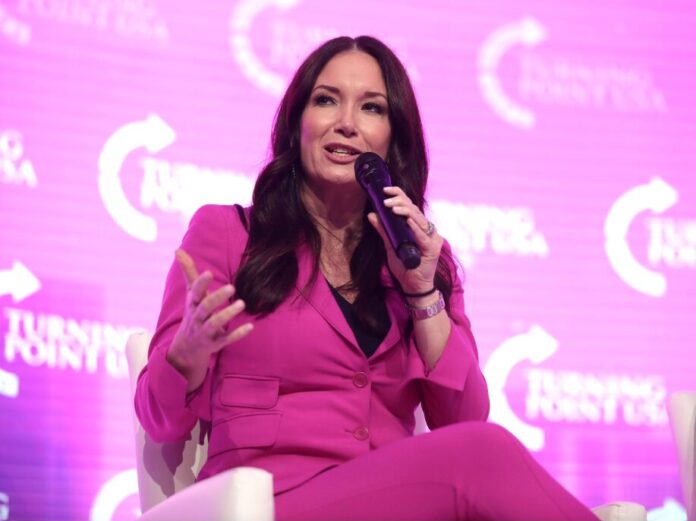
President-elect Donald J. Trump has nominated Brooke Rollins to serve as U.S. Secretary of Agriculture. Rollins is a former director of the Domestic Policy Council and the Office of American Innovation. She currently serves as president and CEO of the America First Policy Institute.

Rollins is a graduate of Texas A&M University, where she earned a bachelor’s degree in agriculture development. Rollins also received a law degree from the University of Texas.

“From her upbringing in the small and agriculture-centered town of Glen Rose, Texas, to her years of leadership involvement with FFA and 4-H, to her generational family farming background, to guiding her four kids in their show cattle careers, Brooke has a practitioner’s experience, along with deep policy credentials in both non-profit and government leadership at the state and national levels,” Trump said.

If Rollins ultimately steps into the role of secretary of agriculture, passing a new farm bill will be the first item on the agenda. Although the current Democratic-led Senate proposed a farm bill draft on Nov. 18, it is unlikely that bill will be passed before the calendar year runs out. If a farm bill is still in limbo when Rollins takes office, she will need to work with Congress to find common ground and pass a bill that benefits agriculture.

“As our next Secretary of Agriculture, Brooke will spearhead the effort to protect American farmers, who are truly the backbone of our country,” Trump said. “Brooke’s commitment to support the American farmer, defense of American food self-sufficiency, and the restoration of agriculture-dependent American small towns is second to none.”

If Rollins is confirmed by the Senate, she will be the second woman to serve as secretary of agriculture. The first woman to lead the U.S. Department of Agriculture was Ann Veneman, who served under President George W. Bush.

Lacey Vilhauer can be reached at 620-227-1871 or [email protected].

FREE DENTAL CLINIC IN HUTCHINSON

0

The Kansas Dental Charitable Foundation is planning to host its twenty-fourth
Kansas Mission of Mercy free dental clinic at the Kansas State Fairgrounds Meadowlark
Building in Hutchinson, KS on January 17-18, 2025, with clinic doors opening at 5:30 a.m. both days.  Local dentists Drs. Todd Esau and Jared Dye have volunteered to chair the 2025 event.

Support for this project comes entirely from donations and grants and uses no state or federal funding. Local coordinators are making contacts within the community to gain monetary and in-kind support for the project, as well as recruiting the hundreds of community volunteers necessary to make the Kansas Mission of Mercy possible. This project will cost nearly $170,000 but will leave behind nearly $1M of donated dental care in return.

There are no appointments or reservations, and patients will be seen on a first come, first served basis. Treatment options include cleanings, fillings, extractions, and dental hygiene education.

The clinic will include an estimated 100 dental chairs and it is expected that nearly 1,000
volunteers, consisting of dentists, hygienists, dental assistants, medical personnel, and
community volunteers will donate their talents to treat patients. Volunteer registration will open on December 2 and can be done online at www.ksdentalfoundation.org
Since its inception in 2003, the Kansas Mission of Mercy has provided free care to 32,942
patients with a value of $23,173,915.

Let’s talk turkey! Six poultry preparation pointers

0
Photo courtesy: plainville farms

it’s time to talk turkey! Because of the increased number of turkeys prepared during the holidays, food-borne illnesses often increase. If not handled, thawed, and cooked properly, turkey and all poultry can carry Salmonella, a common type of bacteria that can cause food-borne illness. Consider these tips for preparing a safe and succulent turkey this year.

  1. Properly thaw the turkey. This is the first and most important food safety step. The best way to do this is in the refrigerator. Make sure the turkey is still in its original wrapper, and place a tray underneath it to catch juices and prevent cross-contamination. For every 4 to 5 pounds of turkey, you will need 24 hours of thawing time, so be sure to give yourself enough time to thaw it properly. Once thawed, refrigerate and cook it within 1 to 2 days.
  2. If you need to thaw the turkey more quickly, use the cold-water method. Place the turkey in an airtight package or leak-proof bag. Submerge the turkey in cold water for 30 minutes per pound, changing the water every half-hour so it stays cold. Cook immediately.
  3. If you purchased a smaller turkey, it may be possible to thaw it in the microwave if it will fit. Check the manufacturer’s instructions for the size of the turkey, minutes per pound, and the power level for thawing. Roast it immediately after thawing.
  4. It is never safe to thaw turkey and other meat on the counter. Doing so puts the meat in what food safety experts call the danger zone, 40 to 140 F, where bacteria multiply rapidly. Under ideal conditions, bacteria can double every 10 to 20 minutes. That means one cell can increase to more than 16 million cells in 8 hours. For this reason, all perishable foods such as poultry should never be held at room temperature for more than 2 hours.
  5. To roast a turkey, set the oven temperature no lower than 325 F. Despite what you may hear, cooking a turkey for a lengthy time, such as overnight, at a very low temperature is not safe. This encourages bacterial growth. To check for doneness, use a meat thermometer inserted into the thigh. Do not rely on the pop-up thermometer alone. Meat thermometers are available at reasonable prices in most supermarkets and variety stores. For safety, the thigh meat should reach 165 F. If the bird is stuffed, stuffing should reach 165 F as well.
  6. After the meal, promptly refrigerate leftovers in shallow containers. Some people leave turkey and other perishable items out for guests to enjoy all day, but this practice is unsafe. Place perishable items in the refrigerator. If people want to snack, they can take the food out of the refrigerator.

For more information on turkey preparation and storage, contact USDA’s Meat and Poultry Hotline at 888-674-6854.