

A passing fancy
Washington recently survived a brief flutter over ethics with an eye on Supreme Court Justices, some of them with peculiar friends and favors.
In Kansas, the matter of ethics in government is consigned to history and rarely discussed these days, a topic left to a remote dusty shelf. It has been nearly 30 years since ethics was a serious matter in Topeka, one that made a lot of people uncomfortable.
In early 1996, the House Governmental Organization and Elections Committee began discussion of House Bill 3000, which proposed the most dramatic change in state ethics laws in decades. The 56-page reform was seen as the blueprint for legislation to be written by the committee. The committee chair, Rep. Carol Dawson, R-Russell, was prepared for trouble but hoped the panel could craft a “significant and forceful bill” and send it to the full House for debate.
The original measure was designed to cramp a lucrative campaign finance network among lobbyists and legislators. One section banned elected officials from serving on the boards of political action committees; another forbade legislators or government employees from lobbying for one year after leaving public service. And for the first time, a provision banned the use of state or local tax funds in lobbying efforts.
Other provisions would:
‒ Ban state employees from doing business with the state or state-regulated agencies;
‒ Ban “referral fees” (kickbacks), the potential for reimbursement when legislators act as matchmakers for lobbyists and clients with business before the state;
‒ Bring cities, counties, school districts and other local entities under jurisdiction of new campaign finance, disclosure and conflict of interest laws.
There was more, including a ban on sluicing contributions from several campaign committees to one candidate (to sidestep contribution limits); and a ban on nepotism, especially in powerful state agencies.
*
The bill immediately drew fire because it had undressed Topeka’s culture of secrecy and gratification by offering to police it. In proposing certain regulations it exposed curious practices. It unmasked codes and strictures running through the legislative channels, the workplaces of powerful agencies, the culture of lobbying at the Capitol. The bill wasn’t about illegal activity in Kansas, it was about what was still legal.
The reforms fueled strong opposition. Many lobbyists, especially those financed with money from school districts, cities or counties, were critical. They were joined by colleagues who represented corporations or associations that donated heavily to political action committees.
Many legislators, especially those who controlled or benefited largely from political action committees, were annoyed. The bill would throttle their power to manage large donations and control the spigots to campaigns for rank and file legislators.
*
The bill was ultimately watered down, stripped of significance and consigned
to the nether world of inattention. Since then, the U.S. Supreme Court has added its own stamp of secrecy and privacy. The money and power of Washington-based cause lobbies has muscled over the force of local parties and political organizations.
Ethics in government is now a matter of history, one for the books, something that matters only to those who bother to look it up and read about a moment that passed.
Horticulture 2024 Newsletter No. 39

1712 Claflin, 2021 Throckmorton Plant Science Center
Manhattan, KS 66506 (785) 532-6173
Download and print the Hort Newsletter
(Downloadable version)
HNR Website access: https://hnr.k-state.edu/extension/horticulture-resource-center/horticulture-newsletter/
ANNOUNCEMENTS:
K-State Garden Hour – Evergreens in Kansas
Wednesday, October 2, 2024
12:00-1:00 PM (CST)
Plants in the landscape that can provide true year-round interest may be few and far between, but for evergreens it is an easy feat. Join Dr. Jason Griffin, K-State Research and Extension Woody Ornamentals Specialist, as he discusses which evergreens will perform best for you in the state of Kansas.
Register for the K-State Garden Hour webinar series: https://ksu.zoom.us/webinar/register/WN_lXljvtedRu-pvfFA6Kzvxw#/registration
The Kansas Forest Service’s Conservation Tree Planting Program offers tree and shrub seedlings, as well as other items for use in conservation plantings. Plantings may function as wildlife habitat, windbreaks, wood lots, timber plantations, or educational and riparian (streambank) plantings. Find out more and order trees by visiting: https://www.kansasforests.org/conservation_trees/
The 74th Annual Kansas Turf & Landscape Conference will be held on December 4 & 5 (Wednesday & Thursday) at the Hilton Garden Inn,
Manhattan. The conference is an excellent way to learn about turf and
landscape management, visit with old friends, network with new ones, and see all the latest products and supplies from local and national vendors.
The conference has been approved for commercial pesticide recertification hours:
1 Core hour
3A – 7 hours
3B – 7hours
GCSAA education points and International Society of Arboriculture CEUS will also be available by attending the conference. For more information, visit:
https://www.kansasturfgrassfoundation.com/
VIDEO OF THE WEEK:
Cleaning up the Garden for Fall
You may be ready for a break from gardening but before packing away your gloves and rakes,
there are a few jobs to complete to set your garden up for success next year.
GARDEN TO-DO
Remove plant debris from garden, compost healthy material
Prepare houseplants to bring indoors
Dig sweet potatoes before first frost
VEGETABLES
Fall Planting: Asparagus & Rhubarb
Asparagus and rhubarb are traditionally transplanted in mid-March through mid-April. However, they can be moved successfully in the fall if you wait until the tops have turned brown.
After frost hits and the asparagus and rhubarb tops turn brown, cut them back to the ground and prepare the soil as you would for spring planting. Dig the plants and relocate as needed. Water well and add mulch to the rhubarb so the roots do not heave out of the soil during winter. Since asparagus is planted deeper it does not require mulch.
If you are purchasing new asparagus plants, they can be planted from early October through mid-November. Begin with healthy crowns from a reputable source.
Visit these K-State resources for more information:
Asparagus: http://www.bookstore.ksre.ksu.edu/pubs/mf319.pdf
Rhubarb: http://www.bookstore.ksre.ksu.edu/pubs/ep99.pdf
Peppers from the Garden
Peppers from the garden can last several weeks stored in the fridge especially if they are kept moist. They can also be frozen for longer term storage. Cut the peppers into slices or chunks and place in a single layer on a baking sheet. Freeze for one hour. This is called “flash freezing”. The pepper pieces can now be stored in a freezer bag and won’t stick together in a clump. Although frozen peppers may be soft or even mushy when defrosted, they maintain their flavor and work great for cooking.
TURF
Should You Let Turf Grow Tall in the Fall?
Some people believe taller grass in the winter provides insulation for the plant crowns protecting them through freezing temperatures. This practice can cause problems when the tall grass blades fall over and create a matted environment perfect for winter diseases.
The best practice for preparing turf for winter is to provide adequate care and ensure your plants are healthy. This requires action year-round including fertilizing, watering and mowing. Follow recommendations for the variety of turf you are growing, but overall, maintaining the proper height throughout the year is best.
These are the recommended mowing height ranges (in inches) for home lawns in Kansas:
Tall fescue: 2.5 -3.5
Kentucky bluegrass: 2-3
Buffalograss: 2-3
Bermudagrass: 1-2
Zoysiagrass: 1-2
It may be beneficial to adjust mowing height within these recommendations at specific times. For example, warm-season grasses may be mowed taller during late summer and early fall so they can store more carbohydrates for the winter. It may also help to reduce the occurrence of cool-weather diseases. However, the taller height should still be within the recommendation.
MISCELLANEOUS
Finding an Arborist
Unfortunately, part of growing plants is dealing with damage and death. For trees, this often requires professional help due to the plant size and safety concerns. Extension agents and specialists across the state get many questions each week about whether or not a tree with damage from storms or other stress can be saved. Extension agents can support homeowners by helping to identify problems with trees but when large limbs threaten to drop, especially over structures, parking and areas people are present, it’s time to consult a certified arborist for advice.
Certified arborists are professionally trained and have practical experience managing trees in the landscape. The continuing education required ensures they are up to date on current techniques, problems and strategies. They also have the insurance necessary to support their decisions.
Whether you are facing tree removal or not, pay attention to your property’s canopy. If you have mature trees, consider adding younger trees to the area. This will take away some of the sting as trees need to be removed allowing the younger trees to take their place. Managing the existing trees properly and choosing the right trees for your landscape are important aspects to protect your investment.
Locate a certified Kansas arborist: Kansas Certified Arborists
Learn more about why hiring an arborist is important: Trees are Good
QUESTION of the WEEK
Unripe remaining tomatoes
What should I do with the tomatoes that remain on my plants but aren’t ripening?
Remaining tomatoes can be left on the vine to ripen as long as there isn’t a frost in the forecast, but ripening is slow at this time of year.
Green tomatoes that are full-sized can be harvested and placed in a paper bag to continue ripening indoors. You may notice a white, star-shape on the bottom of mature green tomatoes. Green tomatoes that aren’t mature will not continue to ripen, but can be used for a variety of recipes.
Tomatoes with blemishes or cracks in the skin should be discarded to avoid contaminating others. Store ripe tomatoes on cardboard trays with newspaper between layers if stacked. If possible, keep the temperature close to 55 degrees F. Check periodically for rotting and remove tomatoes as needed.
Contributors:
Cynthia Domenghini, Instructor and Horticulture Extension Specialist
K-State Turfgrass Extension
Kansas Garden Guide
Division of Horticulture
1712 Claflin, 2021 Throckmorton
Manhattan, KS 66506
(785) 532-6173
For questions or further information, contact your local extension agency.
This newsletter is also available on the World Wide Web at:
http://hnr.k-state.edu/extension/info-center/newsletters/index.html
The web version includes color images that illustrate subjects discussed. To subscribe to this newsletter electronically, send an e-mail message to [email protected] listing your e-mail address in the message.
Brand names appearing in this newsletter are for product identification purposes only. No endorsement is intended, nor is criticism implied of similar products not mentioned.
K-State Research and Extension is committed to making its services, activities and programs accessible to all participants. If you have special requirements due to a physical, vision or hearing disability, or a dietary restriction please contact Extension Horticulture at (785) 532-6173.
Cynthia Domenghini, Ph.D.
Instructor; Horticulture Extension Specialist
Department of Horticulture and Natural Resources
Kansas State University
1712 Claflin Rd.
Manhattan, KS 66503
785-340-3013
[email protected]
Fall is lawn time!
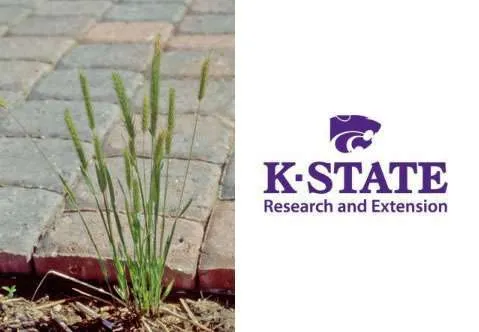
Fall is lawn time! When planning to seed or reseed a lawn, it is important to remember that most preemergence herbicides will also kill young plants as they emerge. After a preemergence herbicide is applied, there is a waiting interval before grass can be safely seeded or reseeded. Check the label to determine the length of the waiting period. The only homeowner product that can be used at the time of seeding or reseeding cool-season grasses is Tupersan (siduron). It is most commonly available in fertilizers labeled for crabgrass control in new lawns. It should only be used in this form when seeding is done in the spring.
The waiting interval varies with the product used, rate, and number of applications. Higher rates and repeat applications may require a longer waiting period before reseeding.
Do not use preemergence herbicides after seeding (except Tupersan) until the new grass has been mowed three times. Preemergence herbicides will prevent growth of grass seed that has not yet germinated at the time of application. However, some products with Dimension (dithiopyr) can be treated two weeks after Kentucky bluegrass, perennial ryegrass, and/or tall fescue have emerged.
Do not apply broadleaf herbicides within 4 to 6 weeks before seeding. After seeding, do not apply them until the new grass has been mowed three times. The first application of a broadleaf herbicide on new grass should be at a reduced rate.
During the establishment period, mow, water, and fertilize properly so the grass will fill in and mature as rapidly as possible. Mowing frequently will keep most weeds in check until an herbicide can be used.
Medicare Open Enrollment Period: Oct 15-Dec 7 2024
The Medicare Open Enrollment period (OEP) is just around the corner! Each year from October 15 to December 7, Medicare beneficiaries may compare plans and make changes in their drug plan (Part D) or Medicare Advantage plan during this OEP. Elected changes will take effect on January 1, 2025.
Medicare drug plans are allowed to change their cost and coverage rules annually so it is important to read the Annual Notice of Change or Evidence of Coverage received each year to see if the plan still meets your needs. You should be receiving this in the mail by Sep 30th of each year.
Plan changes may affect your monthly premium, deductible, drug co-pays, and your pharmacy, doctor or hospital choices. It is important that you review your plan options each year during open enrollment to make sure you are receiving the most affordable price and minimize out-of-pocket costs.
Upcoming changes for the 2025 year that apply to all beneficiaries regardless of plan type include the elimination of the coverage gap, leading to an annual out of pocket limit of $2000 for Part D prescription drugs. Additionally, the option of a voluntary payment plan to help manage medication costs is new. This program does not lower or reduce medication prices. By answering a few questions, you can find out if this would be a good option for you here: https://www.medicare.gov/prescription-payment-plan/will-this-help-me or by consulting with a counselor.
There are several trained senior health insurance counselors at the K-State Research & Extension Office in Newton and around Harvey County who are ready to help you free of charge and provide unbiased information. Please contact one of the offices below to schedule an appointment to review your Medicare Part D drug plan or Medicare Advantage plan. (some locations may not be ready to take appointments yet, but should be able to let you know when they will be able to). K-State Research and Extension – Harvey County Office
316-284-6930
Harvey Co Dept on Aging
316-284-6880
Grand Central Senior Center (Newton)
316-283-2222
Sedgwick Senior Center
316-772-0393
Hesston Senior Center
620-327-5099
Kidron Bethel
316-284-2900
Newton Presbyterian Manor
316-217-9119
Halstead Senior Center
316-835-2283
Trinity Heights UMC
316-283-6410
