Saturday, January 31, 2026
Home Blog Page 290

Moths and More Moths

0

We’ve received reports of an abundance of moths in and around homes. Two species
commonly found this time of year are the green cloverworm and army cutworm moths.

Green cloverworm moths are small and gray-black/brown with dark, mottled markings on the wings. The wingspan is about one-inch and when folded, the wings make a triangular shape. At rest, you may notice snout-like mouthparts protruding from the head. Green cloverworm larvae are typically not able to overwinter in Kansas, so the fact that the moths are present now does not indicate an infestation is likely next year.

Army cutworm moths, sometimes referenced as miller moths, vary in color and
patterning. Females are mostly gray; males are primarily brown. When disturbed, the wings drop scales leaving behind a dusty substance. Miller moths migrate to Kansas
this time of year to lay eggs which hatch in fall and early winter. On warmer winter days, larvae will feed on available hosts, burrowing back into the soil as temperatures drop. However, K-State Entomology specialists do not see this to be a major problem homeowners should be concerned with due to the short season and minimal damage.

The larvae of these moths are common crop pests. Moths are a pest primarily due to
their attraction to lights at nighttime. They are able to fit into tiny crevices making it
difficult to exclude them. Rest assured, as the temperature drops, the number of moths
will decrease as well.

 

Control Broadleaf Weeds in Lawns in Late October-early November

0

The best defense against common turfgrass weeds is a dense, healthy lawn achieved by proper maintenance year-round. A dense lawn restricts light from reaching the soil preventing weed seeds from germinating. Homeowners who choose the right grass species and then maintain it properly are less likely to have serious issues with weeds.

If weeds do pop up in small areas, manual removal is recommended. For taproots, such as dandelions, use a tool to help pry the deep root from the soil. In some cases, chemical
removal may be warranted to keep the lawn healthy and prevent the problem from spreading.

The next step for weed control, after proper lawncare, is weed identification. If you don’t
know what weed(s) you’re trying to control, you won’t be able to develop an efficient
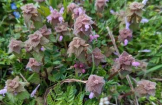
plan. This time of year, the common weeds are dandelions, henbit and chickweed.
Treating the area when the weeds are small will provide the best control. For any
chemicals applied, always read and follow the label carefully. Only apply chemicals on a
day that is wind-free and at least 50 degrees F.

For help identifying weeds in your lawn and developing an action plan for controlling
them, contact your local Extension agency.

Storing Summer Bulbs through Winter

0

Summer flowering “bulbs” typically do not survive the winter if left in the ground. Though
commonly lumped into the category of “bulbs” canna and calla lilies are actually grown
from rhizomes. Caladiums and tuberous begonias are tubers. Gladiolas grow from
corms and dahlias are tuberous rooted plants. Each of these plants is sensitive to cold
weather and usually don’t survive if left in the ground through winter.

After the foliage has turned brown from frost, dig up the entire plant including the root structure. Store them in a protected area for about one week. Once dry, clean the soil off the roots and package them individually in a soilless mix. Store through winter in
an area that remains as close as possible to 40 degrees F. Caladiums should be stored at 50-60 degrees F.


Keep your Pumpkins Longer

0

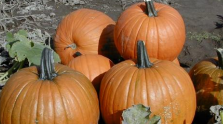
Pumpkins that are harvested before they fully ripen will rot more quickly than those harvested at peak maturity. A mature pumpkin will have a hard rind that
is solid in color. The pumpkin should also make a hollow sound when thumped. Mature pumpkins will have a waxy coating which protects them from drying out.

After harvesting, keep your pumpkins cool and out of direct sunlight to increase longevity. Carved pumpkins have a much shorter shelf-life, sometimes only a few days up to a week before noticeable rotting occurs.

To extend the life of carved pumpkins clean the inside thoroughly, removing all seeds and loose string. Soak the inside of the pumpkin in a 10% bleach-water solution for several hours. Avoid using a real candle inside the pumpkin since the heat will speed up rotting. Pumpkins have a high-water concentration, so if there’s a freeze in the forecast, bring your jack-o-lanterns inside.

Farm to school movement has exploded across the U.S.

0
Farm to School is a win for students, a win for farmers, and a win for communities. It strengthens our food system and our local economies, and it provides opportunities for students to develop new skills, such as agricultural or livestock production, and marketing, business, and entrepreneurship.
Over the past decade, the farm to school movement has exploded across the U.S., reaching millions of students in all 50 states, Washington, D.C., and U.S. territories. School gardens, school farms, high tunnels, and farm field trips have expanded the classroom and hands-on learning for students.
Students and farmers alike are growing local food for cafeteria trays, and farm to school practices help children learn about where food comes from and make healthier choices while also creating new markets for local and regional farmers. Farm to school also helps more students explore careers in food systems, farming, and agriculture to which they might not otherwise be exposed.
Many states celebrate National Farm to School Month with special events, such as holding local food tastings like the Great Apple Crunch, launching a Harvest of the Month program, introducing local meats and proteins, or organizing a weeklong series of activities. These special events are providing even more opportunities to get involved this October and bring the farm right into school.
Find out how your state celebrates by exploring the National Farm to School Month Events Calendar at farmtoschoolmonth.org#events
# # #
Established in 1973, the Center for Rural Affairs is a private, nonprofit organization working to strengthen small businesses, family farms and ranches, and rural communities through action oriented programs addressing social, economic, and environmental issues.