Sunday, February 1, 2026
Home Blog Page 305

Fate of former Pomona Lake cove illustrates how silt hurts Kansas reservoirs, water supply

0

A small, lakefront cove provided a pleasant place to swim, fish and ice skate not far from the house where B.D. and Mary Ehler moved their family in May 1976 at Osage County’s Pomona Lake.

The water in the cove stood 5 to 7 feet deep, recalled B.D. Ehler, now 90, who still lives there with Mary Ehler.

About six docks stood along the cove, with most residents using walking paths to get there, Ehler told The Capital-Journal on Sept. 9.

“It was a pretty decent-sized cove,” he said. “But eventually, it started silting in.”

Today, that cove is gone.

Its former entrance is completely covered by silt, a fine type of sand, clay, or other material carried by running water and deposited as sediment. The cove’s docks have been long since removed.

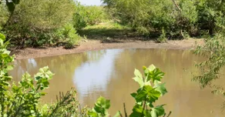
The cove’s only remnants that could be seen Sept. 9 were a shallow inland pond, a broken tackle box, an iron bar that appeared to have been part of a gate and a U.S. Army Corps of Engineers marker, which stood where a dock would have extended to the water’s edge.

How much water supply has silt cost Kansas reservoirs?

The cove’s fate helps illustrate how silt coming from upstream has hurt Kansas reservoirs in ways that include reducing their storage capacity and available recreation space.

Reservoirs have lost more than 400,000 acre-feet of “water supply stored” to sedimentation, according to the Kansas Water Office’s 2022 Kansas Water Plan. An acre-foot is 328,581 gallons, according to a graphic included in that plan.

Tuttle Creek Reservoir in Riley and Pottawatomie counties has been hit hardest, losing more than 200,000 acre-feet to sediment, with roughly 225,000 acre-feet in projected water supply volume remaining, that graphic said.

How do reservoirs lose storage capacity to silt?

The state of Kansas is home to 24 large, man-made reservoirs, all built by the federal government between 1940 and 1982

Those reservoirs continually lose storage capacity to sedimentation from upstream waterways, the water plan said.

“Lands within the watersheds of reservoirs lose soil, which is then transported to the reservoirs as a result of varied precipitation events,” it said.

Soil becomes trapped in the reservoirs, reducing available water supply, the plan said.

Couple drove across bottom of Pomona Lake before it became a lake.

B.D. and Mary Ehler, who both graduated in 1952 from Topeka’s Highland Park High School, recalled how, in about 1963, they drove in a 1958 Ford Thunderbird across what would later become the bottom of Pomona Lake.

That lake then opened in 1964.

An avid fisherman, B.D. Ehler is retired as director of pharmacy services for Topeka’s Menninger Clinic. The Ehlers and their three children moved from Topeka to a house just south of Pomona Lake in 1976.

That reservoir has effectively controlled flooding downstream but has increasingly silted in over the years, Ehler said.

He showed The Capital-Journal photos illustrating how the cove near his home grew smaller as time passed.

The Army Corps of Engineers knew that was going to happen, Ehler said.

“The corps anticipated when they built this reservoir that in 50 years it would be 50% silted in,” he said.

Laura A. Totten acknowledged this past week that when the Kansas reservoirs were built, the Army Corps of Engineers made estimates regarding the specific lifespans each would see.

Those estimates took into account the effects of sedimentation as well as the lifespan of the lake infrastructure, said Totten, who is project manager and planner for the corps’ Kansas City, Missouri, District.

Many of those reservoirs are doing better than was anticipated, Totten said.

At Pomona Lake, water supply storage lost to sedimentation amounts to less than half the projected water supply volume remaining, according to a graphic that’s part of the 2022 Kansas Water Plan.

Still, the years have taken their toll on those reservoirs, that plan said.

“With many of these reservoirs now over 40 years old, recent and historic bathymetric surveys are showing that reservoir storage capacity is being lost in a trend similar to the initial projections for several Kansas river basins,” it said.

The plan added: “There is a projected and observed loss of storage as sediment carried by inflowing rivers and creeks is trapped within the reservoirs, with some Kansas reservoirs trapping over 98% of the sediment carried from their upstream watersheds. Future conflicts may arise where the amount of water able to be retained in reservoir storage will be insufficient to meet the demands of multiple user groups and puts the state in the position of being unable to supply adequate amounts of water for anticipated future uses.”

Here’s what a ‘Blue Ribbon’ task force says needs to be done.

The Kansas Water Plan noted that a state-created Blue Ribbon Funding Task Force in 2015 put out a report sharing its long-term vision for the future of the state’s water supply.

That report concluded the state must adequately reduce sedimentation rates to protect future water supply, and identified “a funding need of $21 million per year to support conservation and remediation activities to secure future reservoir water supplies,” the water plan said.

It said the state needs to more effectively:

  • “Quantify the sedimentation issue through updated reservoir bathymetric surveys and surface water monitoring where feasible.”
  • Identify alternative sediment, nutrient, and basin management strategies to reduce impacts to reservoirs, while avoiding downstream impacts.
  • And “gauge and identify if the reservoirs are losing storage capacity at rates as initially projected and potential changes to these rates from behavioral changes within the watersheds.”

Steps have been taken upstream from Kansas reservoirs to help deal with silt problems, the water plan said.

“Targeted investments have included implementation of best management practices such as streambank stabilization projects, watershed dam construction, and increased support for soil health initiatives,” it said. “However, the acres of agricultural lands that have had conservation practices implemented and the number of streambank stabilization sites completed, with past and current levels of funding, have not remediated reservoir sedimentation issues.”

Corps of Engineers official: Sediment problem is being tackled.

Much is being done otherwise to mitigate silt-related problems in Kansas reservoirs, Totten said.

She manages a project for which the Army Corps of Engineers plans beginning next spring to do $6 million worth of dredging at Tuttle Creek Reservoir, where pressurized water will be used to lift sediment from the base of the lake and push it downstream into the Kansas River.

Totten said other steps being taken include:

  • Forming the Kansas Reservoir Sedimentation Task Force — made up of representatives from the U.S. Army Corps of Engineers Kansas City and Tulsa districts, the Kansas governor’s office and the Kansas Water Office — which began meeting in January to find solutions for dealing with sedimentation in reservoirs across the Kansas River Basin.
  • Recently completing a Kansas River Reservoirs Flood and Sediment Study, “a watershed study which included extensive work related to this issue and the impacts it causes to the multiple uses of our reservoirs such as water quality, water supply, recreation, flood control, etc.”
  • And initiating multiple “planning assistance to states” studies through which the Army Corps of Engineers and the state of Kansas are investigating the issues and determining recommendations for managing sediment.
What does the Old Farmer’s Almanac say about winter in Kansas?

0

Winter in Kansas could be above average temperatures.

The Old Farmer’s Almanac is predicting temperatures will be “up and snowfall down throughout most of the United States,” the Almanac’s editor in chief Carol Connare said.

The Almanac predicts a warmer than normal winter throughout the area, with the coldest months occurring during late January and early and late February for Kansas and the Heartland region.

What the Almanac says about precipitation and snowfall in Kansas?

Precipitation and snowfall will be below normal, the Almanac said.

Most snow will fall when temperatures are coldest in late January as well as early and late February.

What will the upcoming months look like?

USA TODAY reports the north-central states — which include Kansas, Colorado, Iowa, Missouri, Minnesota, Montana, Nebraska, North Dakota, South Dakota and Wyoming — will get a gusty Halloween and then snow in the Rockies at the start of November.

An early November storm is predicted to bring heavy snow and, after it clears, very cold temperatures. After a rainy, snowy Thanksgiving, more storms will kick off in December. But a “generally fair, dry, very cold” Christmas is forecast.

Unseasonably cold temperatures are predicted to arrive in late January.

“This is where we are saying winter feels a little bit more like winter, with the coldest temperatures of the season and average snowfall,” Farmers Almanac editor Sandi Duncan said.

Expect a lot of snow in February, with some generated by that storm forecast for Idaho.

A mid-February snowstorm predicted in the Plains could dump heaviest in Kansas, USA TODAY reported.

As reported in the Topeka Capital Journal

What did Kansas look like 150 years ago? A KU professor’s photo book shows the drastic change

0

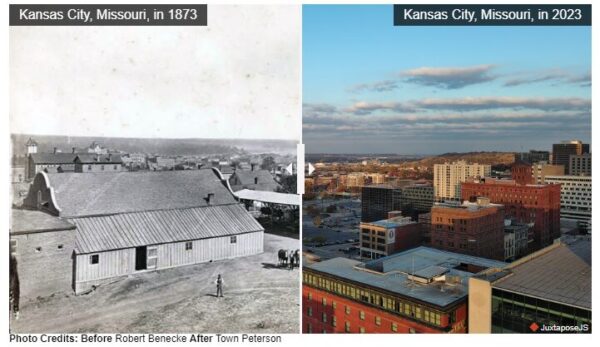
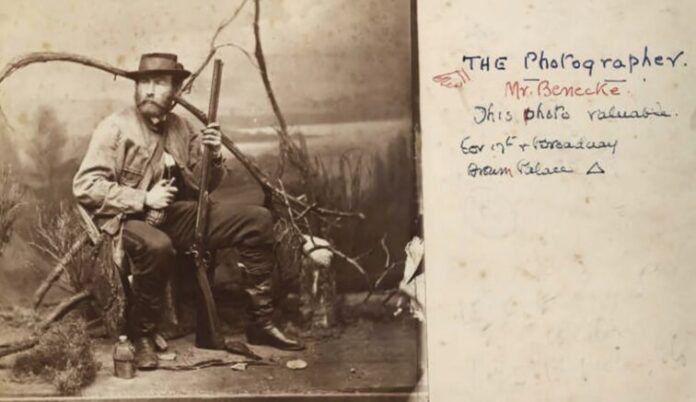
German-born photographer Robert Benecke, shown here in an undated self-portrait, traveled across Kansas taking scenic photographs at nearly every major stop in 1873 for the Kansas Pacific Railway. KU ecology and biology professor Town Peterson followed Benecke’s footsteps 150 years later to reveal startling changes to the prairie landscape.

Robert Benecke captured 19th-century western Kansas landscapes before massive European migrations to the area transformed them. In the intervening years, the dust bowl, mass extinction of bison, and expansion of mechanized agriculture have all led to a profusion of trees, ponds and lakes across the Sunflower State.

When railroad companies hired Robert Benecke to help advertise Kansas land for sale in the 1870s, the German-born photographer captured a unique window into life on the Great Plains at a very early time in the state’s history.

A century and a half later, University of Kansas professor of ecology and evolutionary biology Town Peterson sees Benecke’s images as a chance to investigate the impact of human settlement.

Peterson first became aware of a trove of Benecke’s images preserved in the digital collections of Southern Methodist University during the pandemic, and he set out to re-photograph the scenes and see what changed over the course of time.

It’s all part of the curiosity process in science, Peterson says.

“You go out there with a tingle in your right ear and you play around for a bit,” he explains. “You learn some lessons and that leads you to the next curiosity.”

Peterson’s years-long effort has led to his new book, “One Hundred and Fifty Years of Change on the Great Plains,” available for free as a PDF or in hard-copy format on demand. It pairs Benecke’s historic landscapes with Peterson’s new photographs of the same views.

The juxtaposition, Peterson says, can show how the region has changed.

“I use these photo comparisons as a way of exploring and thinking about things,” the Ohio native says. “This particular set of photographs was really neat because it goes back to 1873, which is pretty much at the beginning of what I would call mobile photography.”

The 1873 Kansas Pacific Railway assignment took the St. Louis-based Benecke between Kansas City and Denver, taking photographs along the tracks all the way. Benecke would eventually travel all 600 miles of Kansas Pacific’s tracks, taking photographs at nearly every major stop and using a railcar darkroom to process his glass plate negatives.

Benecke captured a moment before the massive migrations into Western Kansas, when cities like Lawrence and Manhattan were just small European settlements. His images help chronicle the disappearance of the bison, the dust bowl, and the expansion of mechanized agriculture, ranching, irrigation, fire suppression and more.

Peterson’s modern images display what’s changed in the intervening years. They show a contemporary Kansas in color, sometimes from the ground and other times from a drone.

The project, which scientists call “repeat photography,” took Peterson across the state to find and photograph 50 different Benecke vantage points.

Each photograph presented its own challenges. While Benecke offered some detail about where each photo was taken, exact locations were often difficult to find.

“Locating the sites was months of work,” Peterson says, noting the hunt often left him spinning his wheels.

“Then it was two summers of driving back and forth between Denver and Kansas City getting into the fine details of where these sites were,” he says.

One of Peterson’s first observations was that many of the sites from 1873 are now covered by trees that have taken over the landscape. They often made the rephotographing process difficult and, when trees obscured the view, Peterson had to make compromises.

“If I can’t see anything because I’m in trees, then what do I do about this site?” Peterson says. “How do I take a photograph that’s meaningful in showing how this site is similar or different?”

Finding so many trees wasn’t exactly a surprise for the ecologist.

“I certainly have been aware of the afforestation process.” Peterson says. “If you look out my office window, it’s a forested landscape, and if you look at the depictions of Lawrence in the 1800s, it wasn’t, so I had some expectations.”

But he wasn’t entirely prepared for what he found either.

“West of Manhattan in the 1873 photos, you see essentially no trees,” Peterson says. “To me, the contrast is just astounding.”

Photography commissioned in the age of steam

Benecke’s 19th-century photographs were originally commissioned by railroad companies to lure white European settlers out west.

“The U.S. government incentivized building railroads that would connect, essentially, the east to the west of the country,” Peterson says.

Between 1850 and 1872 the federal government granted millions of acres of public lands to railroad companies in order to promote railroad construction, disregarding indigenous populations already living on the land in the process. Railroad companies commonly received 20 miles on either side of track that was built.

“It was very much in the Kansas Pacific railroad’s interest to get people to move out there,” Peterson says. “If they could depict the Great Plains as this wonderland where you can have land very cheap and prosper with your family, they could make tons of money.”

And they did. According to the Library of Congress, most western railroads had established as early as 1868 profitable land departments and European bureaus of immigration to sell land and promote foreign settlement in states like Kansas.

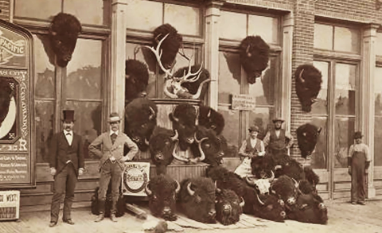
The No. 2. Taxidermist’s Department of the Kansas Pacific Railway, photographed by Benecke in 1873 to help advertise bison heads during the so-called “Great Slaughter,” from 1820 to 1880. The loss of the massive herds of grazing bison was one reason for the expansion of trees on the Great Plains.

Early steam locomotives ran on wood and water so there had to be a settlement every few miles, and refueling stations were built every 15 or 20 miles. On the often arid plains, a permanent source of water was also necessary, so the railroads built ponds and lakes along the lines to keep the engines running.

The new infrastructure encouraged development across the state, but also had an impact on the land in the form of new wetlands.

“Kansas didn’t have much in the way of wetlands in the 1800s,” Peterson says.

Environmental transformations like that substantiate the scientific merit in returning to these sites to track the changing land, he says, and ecological studies are often revisited at five, 10 and 20-year intervals.

“This is all an effort to get a longer term view of a landscape,” Peterson says. “And sure, some of it is just fun and some of it is that kind of pre-science curiosity that turns into neat questions down the line.”

Peterson has included in his book precise geographical coordinates of each image to help facilitate the next curious photographer.

“So much is going to change in the next 30 or 40 years,” Peterson says. “The idea is this is kind of our long term anchor point for being able to understand how the landscape changes here.”

Peterson also has some advice for that future photographer who may someday retrace his and Benecke’s journey.

“Get everything possible done between March and early June, and then October and November,” Peterson says. “Because, as much as I love Kansas landscapes, the ticks, the chiggers, the poison ivy, the mosquitoes, stinging nettles — you have to use early spring and late fall.”

As Kansas farms grow bigger, more people leave and rural life gets lonelier

0
Kansas farms have expanded their operations and are now bigger than ever, which has led to an economic boom. But that also means fewer farmers, and that has contributed to depopulation in rural parts of the state that were socially isolated to begin with.

LARNED, Kansas — Tom Giessel vividly remembers growing up in the 1960s as a Kansas farm kid on the High Plains.

In his memories, this place that some refer to as “the middle of nowhere” was teeming with life. It was a place where nature and his family interacted directly.

He viewed farming as integrated. There were different kinds of livestock, siblings and grandparents and neighbors. There were native wildlife and other critters that also played a role on the farm.

“I always said the health of a farm is directly related to how many beating hearts are on that farm,” Giessel said. “That translates into creating community.”

But that’s not what a lot of Kansas farms look like today.

Kansas farms are more specialized, sticking to large-scale farming of one or two commodity crops. There are government incentives for these crops, and bigger farms get more federal dollars.

That economic efficiency might actually be hurting smaller towns, exacerbating some of the health challenges rural Kansans already face. Larger farms push out smaller farms and lead to less people staying in a community. With less people there’s less resources for them like hospitals and schools.

The changes have happened over years, a period that also saw death by suicide rates rise in rural areas

Mental health access is already hard to come by in western Kansas, but suicide rates are even higher if you work in agriculture.

Agriculture to Agribusiness

At Giessel’s secluded farmhouse, he and his wife Cheryl are miles from town, and without each other it could get lonely. Giessel walks down his narrow hallway where he has collected historical farming mementos.

After farming most of his life, Giessel is starting to ask himself and others why Kansans farm. He fears that the shifting answers have been detrimental to rural communities.

After taking over pieces of his parents’ land, and renting some land, Giessel and his brother formed a partnership and expanded their operation, wanting to see it grow. He remembers the feeling of competition, wanting to keep up with the changing environment around him.

But now, he is more concerned about the health of farmers, and sees them more as an exploited worker. Even down to the language used to refer to them as “producers.”

“That’s why my business card still just says ‘Tom Giessel, Farmer’ because now we just say producers, which is really impersonal,” Giessel said. “It desensitizes you to what you do.”

As Kansas has embraced grain production and beef production, the costly equipment needed to farm at such a large scale tends to make the distance between your neighbors further.

A study by the Journal of Agromedicine found that in Kansas, farm workers are three times more likely to die by suicide than other professions. The financial pressures, stress, and social isolation are driving factors.

Tim Davis, rural mental health expert at Fort Hays State University, said this is one of the aspects that has undermined mental health in rural communities.

“What we have today is not agriculture, what we have is agribusiness,” Davis said. “It’s a much different mindset, because it’s no longer kind of that ‘we’re in this together’ mentality.”

Davis also grew up on a farm in northwest Kansas. He thinks that outside of access to mental health services, the culture surrounding farming also stresses other rural mental health challenges.

“People are more focused on the individual. There’s good in that. There’s perseverance, but our communities have atrophied,” Davis said. “One of the reasons is because we have kind of lost the interdependence that we have on each other.”

Farm consolidation usually refers to the term “corporate farming” which is when ag corporations buy up farm land. But Kansas actually has had laws that prevent corporations owning land since 1931.

The law prohibited corporate farming for the purpose of growing various grains and the milking of cows. But today more small dairies are going out of business. So what changed?

The law has since seen heavy amendments. In the 1990s, “family farm corporations” and “family farm limited liability agricultural companies” could own and acquire farm land.

Before the dust bowl, there were over 166,000 farms across the state. Today, there are about 55,000.

The average size of a farm has increased by 40% since Giessel first started farming his own land.

This has allowed farms to focus on fewer things, going from raising multiple types of livestock and growing different crops, to growing mostly commodity crops at a large scale.

But large farms are more of a byproduct of the current farming system.

Mark Nelson is the director of commodities for the Kansas Farm Bureau, which represents small and large farms. From a business perspective, he said farmers operate on a margin, and it makes sense to get bigger.

“That farmer who can increase acres,” he said, “the ones who can better do that succeed.”

Farming in Kansas comes with huge costs. Nelson said there is some pressure to expand your farm operation to keep up with the costs of equipment like tractors and weed management.

Larger farms make more money, and if you want your business to succeed, you will need to produce more grain.

According to a report from the Economic Research Service, federal subsidies to farms are increasingly going to larger farms, thus supporting the cycle of the big getting bigger.

“The big get bigger, the small get smaller or they get pushed out,” executive director for the Kansas Farmers Union, Nick Levendofsky, said.

Levendofsky’s priority is supporting farmers, especially disadvantaged ones like small, new or minority farmers.

The average age for farmers in Kansas is almost 60, and as large farm operations pop up around aging farmers, the pressure to compete or sell your land can weigh heavy.

Levendofsky said giving up land that has been with you for multiple generations can feel like losing a member of your family.

What this means for rural Kansans

In western Kansas, counties with the largest farms are projected to see population losses in the next 70 years according to economists at Wichita State University.

Social isolation has been linked to serious health conditions like depression, dementia, and increased risk of heart failure.

Mary Hendrickson is a rural sociologist at the University of Missouri. She has spent the last 25 years studying the effects of food production consolidation on small towns.

Some of the other negative mental health impacts come from how workers engage in their operations today, sitting alone in a tractor or studying spreadsheets.

“It’s different now, when you have much more repetitive work,” Hendrickson said. “It has its roots in what happened with the consolidation of agriculture, with the structure of agriculture.”

Hendrickson said that the consolidation of food production leads to fewer choices for farmers.

According to a study she was a part of, just four companies control the market share of major aspects of the industry including beef production, seeds and fertilizer.

Hendrickson also thinks a loss of relationships is inevitable with this kind of consolidation.

“The economic relationships start to span larger distances, and so you start to also lose some of those social relationships,” Hendrickson said.

In order to slow the expansion of farms, both Hendrickson and Nelson agreed that communities need to be more present in dictating what their local agriculture looks like. Supporting local farmers, both with business and with providing health services would make a difference.

Especially since a lot of children are no longer inheriting the family farm. Kansas State University estimates that about half of Kansas farmland is rented. When land is rented, the health of that land usually comes second to its profit.

But Hendrickson and other policy analysts say that local communities can only make a limited amount of progress. Long-term changes would need to come at a federal level like the farm bill.

Those policies can change what is incentivized, and how smaller Kansas farms could thrive. It echoes the words that Farmer Giessel wrote.

Back at the kitchen table in Larned, Giessel’s wife, Cheryl, lovingly read from an essay he’d written years ago.

“We are not called to isolation, rather, we are called to be good neighbors and cultivate connections,” Cheryl said.

Calen Moore covers western Kansas for High Plains Public Radio and the Kansas News Service. You can email him at [email protected].

Courtesy of The Kansas News Service 


A Life Well Lived

0
lee pitts

I am just a humble human who never saw a Star Wars movie, never drove faster than 85 miles per hour, never rode a motorcycle, a D 9 Cat or a one ton bull for eight seconds. ( I never got on one either.) I’ve only owned one foreign car for a very brief time and I hate myself for my unpatriotic deed.

I’ve never been in jail other than that one time my Den Mother mom took all of us Cub Scouts to the police station and the cops locked us all in a jail cell to scare us straight. It left a lasting impression on me and I’ve never been back in jail again.

I’ve never been unfaithful to my wife of 50 years, never had a practice wife and never had the thrill of paying alimony or child support.

I’ve never called in sick when I really wasn’t and never caused a wreck, although I’ve been in three. The most memorable was after I picked up my wife from work at ten p.m. and we were stopped in our Chevy truck at the only stoplight in town at the time when WHAMO! Some young man who was high as a kite on dope plowed into our truck’s very substantial back bumper in his dinky Japanese car. It totaled his poor excuse for a vehicle and we got nary a scratch.

I’ve never hit a horse, dog or any other animal in anger although I have swatted my share of flies. I’ve never met a baby I didn’t immediately fall in love with even though they all had a tendency to burp, poop and pee on my shoulder.

I’ve never puffed on anything other than the candy cigarettes I “smoked” as a kid. I’ve never smoked a cigar, cigarette or marijuana and have always wondered what the allure was about cigarettes that made you smell like a bar, cost a fortune and killed you prematurely.

I never drank more than one sip of coffee in my life so I can spend my money at the Ace hardware store instead of Starbucks. I readily admit that I did drink copious amounts of tea the year we lived in Australia and when I traveled extensively in Texas I developed an ice tea habit that I continue to enjoy daily.

I’ve never been a registered Democrat and have not served in any political capacity since my college days. After several days of indoctrination as a 12 year old I did become a member of the Methodist church in town but I haven’t been back since our very married preacher ran off with our very married choir director and they took the Sunday collection with them.

Despite having a second home in Nevada for awhile I haven’t pulled on a slot machine or rolled any dice in many, many years. I never buy lottery tickets even when the jackpot exceeds a billion dollars because I have no idea what I’d do with the money and I think it could very well ruin the wonderful life I have now.

I’ve never owned a cell phone, played a video game on my computer and we’ve always paid off our credit card in full every month.

I’ve never deliberately cut a fence so my cattle could chow down on my neighbor’s abundant grass and I’ve never served chicken at my branding.

Despite writing a weekly column for 45 years along with thousands of feature stories I’ve never been accused of plagiarism nor have I been sued for libel or slander, although I did have to make a minor correction two times.

Despite having lived such a perfect life I do have some regrets. I’ve always wanted to go to James Herriott’s Yorkshire dales but I’ve never been to Europe. I never learned how to barbecue nor did I learn how to drive a team of horses. I’m sorry to say I never owned a team of Clydesdales or mules, much to my regret. I never got my pilot’s license, never bought a 1952 Chevy pickup, never sold my novel nor have I won a Pulitzer Prize. I’ve never owned a black cowboy hat or a black Lab and I’m sad to say we never could have kids, of the human or the goat variety.

All in all I’d say it’s been a life well lived.