
“It’s summer cattle roundup time in the Flint Hills of Kansas.”
Cowboys and cowgirls are gathering short-season, double-stocked, intensely grazed native grassland pastures.
It’s a different scenario than as recent as just a few decades ago. In years gone by, cattle were grazed on Flint Hills grassland full season about five months.
Generally, lightweight cattle, quite often steers, were turned out on lush, fast growing, high protein pastures in late April.
Stringent stocking rates were followed so cattle did not overgraze the grasslands providing there was sufficient moisture for prairie growth.
Cattle were grazed throughout the summer and gathered in late September or early October, the prime grass growing season. Depending on a number of quite variable conditions, cattle weight gains determined profitability of the grazing operation.
Different pasture operators have their own goals, with a gain of three pounds per day often considered sufficient for profit. Of course, the more the better.
Change in rangeland management philosophy came when ranchers determined grasslands didn’t have sufficient time to recover from full season grazing. When native prairie is grazed into the ground so to speak, there’s very little grass remaining.
It takes time for regrowth of the grass and the root system. Because it was autumn, conditions were often reduced such the prairie was not sufficiently recovered for the next grazing season.
Range management specialists developed an intensive early stocking program that transformed both the calendar and the cash flow on ranches.
The traditional season-long program had cattle on the grass for 150 days at a stocking rate around four acres per animal.
In contrast, intensive early stocking takes advantage of the fact that the greatest gain is in the first part of the season. After mid-July, the grass quality declines as nutrients are transferred to the roots.
By doubling and even tripling the traditional stocking rates, cattle are ready to move to feedlots after grazing just 90 days. Studies found the more intensive approach resulted in the production of an additional 35 pounds of beef per acre.
So many ranches shifted to intensive early grazing with cattle coming off grass in July. Prairies then have ample time to recover for bountiful grazing the next year.
That’s why summer cattle roundups have become commonplace.
Reminded of Isiah 60:7: “And yes, a great roundup as I engulf in splendor.”
+++ALLELUIA++
XVIII–31–7-29-2024
Rounding Up Grazing Cattle
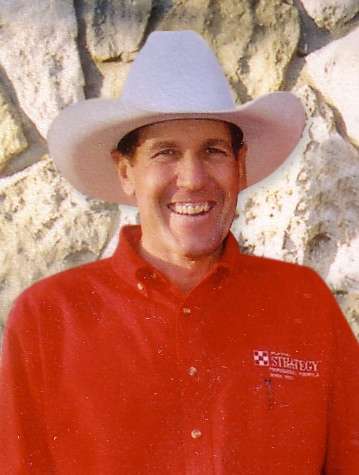
Council Grove Youth Rodeo To Be August 3

A youth rodeo is scheduled Saturday evening, Aug. 3, at 6 o’clock, in the Morris County Rodeo Arena east of Council Grove.
Sponsored by the Morris County Youth Rodeo Association, divisions are planned for juniors, eight and under; intermediate, nine to 13; and seniors, 14 to 19, said Lisa Wainwright, entry coordinator.
Events include steer riding, goat tail untying, goat tying, breakaway roping, barrel racing, pole bending, chute dogging, calf roping, and team roping.
A $3 entry fee per contestant in each event is to be charged. There will be no payback, but working prizes will be awarded to the top four placing participants in each competition.
All-around cowgirl and cowboy are to receive special awards in all divisions.
A $5 admission donation will be accepted at the gate for entrance by all contestants, parents, and spectators.
The strict dress code of Western hat or helmet, boots, and long-sleeved shirt will be followed.
There will be no slack with a one-minute time limit in all events.
Entries with payment and signed release form are required in advance to Lisa Wainwright, 1379 Old Highway 4, Council Grove, Kansas, 66846. Information is available at [email protected].
CUTLINE
Cowboys and cowgirls from throughout the Midwest are expected for the youth rodeo sponsored by the Morris County Youth Rodeo Association Saturday evening, Aug. 3, at Council Grove.
A farmer’s unusual will
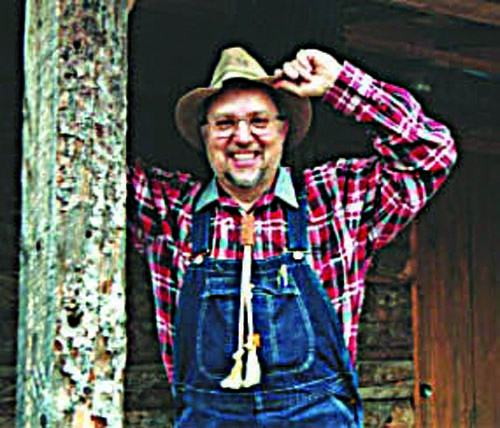
I heard about an elderly farmer who wuz constantly harassed by family members to complete his will before he died. Finally, just to keep peace in the family, he went to his lawyer and they sat down to work out the particulars of his last will and testament.
They worked out how to divide his land, dispose of his livestock and machinery, who in the family wuz to receive special family heirlooms, etc.
Finally the lawyer said, “Well, sir, we haven’t discussed yet how you want your body to be handled and burial instructions after you are deceased.”
The farmer brightened up, put a smile on his face, and said, “I’ve given my burial a lot of thought. I want a huge hole dug for my grave and I want to buried sitting up in my old, trusty pickup truck.”
The attorney wuz taken aback a bit, but gathered his wits and asked his client, “why such a strange burial request?”
The farmer jauntily replied, “Becuz I’ve never gotten in a hole so deep that my ol’ pickup couldn’t get me out of!”
***
A little farm kid wuz attending children’s bible study in his rural church. The subject that Sunday morning wuz the study of the biblical character Lot and his family.
His Sunday school teacher said, “I’ll tell you what happened to Lot’s wife. She looked back when she shouldn’t have done so and turned into a pillar of salt.”
The farm kid raised his hand and volunteered, “My mother is a lot like Lot’s wife. Last week during wheat harvest she wuz driving the grain truck to the co-op to unload, but she looked back when she shouldn’t have and turned into the ditch and hit an electric pole.”
***
Here’s a little story I should have used during June — the Dairy Month. But, as they say, better late than never. A city kid came to visit his cousin who lived on a dairy farm. He spent a week. When he got home, his mother asked him if he enjoyed drinking milk fresh from the cows.
Her son replied, “But, mom, I drank a lot of fresh milk, but it all wuz ‘pasturized.’ They grazed the cows in the pasture every day all day long before they milked them in the evening.”
***
It’s luscious corn-on-the-cob season. Ol’ Nevah and I have been eating juicy corn-on-the-cob about every day. We even had corn-on-the-cob for a family meal one evening.
That’s when I noticed that about everyone had a preferred way to eat corn-on-the-cob. My preference is what I call the “manual typewriter method.” I start on the left side and gnaw off four row of corn horizontally to the right across the cob. Then I return to the left for the next four rows of corn.
Other members of the family prefer to eat their corn-on-the-cob with what I call the “round and round” method. They start on the left end of the ear and gnaw in the same place as they slowly turn the cob around clockwise. When they finish a rotation, they move their mouth to the right and start another circle.
Corn-on-the-cob eating techniques, while interesting, are really unimportant. Any way is fine as long as you get the luscious sweet corn down your gullet.
***
Continuing the topic of sweet corn, Nevah and I know there’ll be no fresh sweet corn next winter. And, the next best thing is frozen sweet corn from our freezer. So, to that end, we’ve frozen about 50 pints of sweet corn for next winter. And, we bought the ears locally, because I didn’t plant enuf sweet corn in my garden for preservation, only daily eating.
However, the green beans have excelled. We’ve canned more than 60 pints for ourselves and family. There’s also six pints of peas frozen in the deep freeze. We ain’t started canning tomatoes, but will get started soon. But, we’ve been munching on our garden ‘maters for three weeks.
Our garden potatoes are excellent this year. We’ve plenty for all family members and for sharing with neighbors. Other veggies producing now are okra, zucchini, carrots, leaf lettuce, bell peppers and jalapeno peppers. So, we’ve also enjoying fresh salsa, too. Ain’t nuthin’ better than garden fresh veggies that you grow yourself.
***
Yesterday, one of my new Riley friends, ol’ “Dub” L. Dee, and I went back to my old haunts in Chase County to the Old Boar’s Breakfast Club in Saffordville. Dub picked me up before 6 a.m. and we made it in plenty of time for breakfast. We surprised the group by showing up unannounced. We enjoyed a great breakfast garnished with plenty of gossip and BS-ing. It wuz good to see old friends again and, better yet, one old friend pickup up our tab for breakfast.
After breakfast, Dub and I fished in two of my all-time favorite watershed lakes. The fishing wuz rather poor, but we landed enuf for a couple of fish fillet suppers sometime.
Coming home, we crossed what I call “The Bermuda Triangle of Kansas.” It’s so desolate you might well disappear there forever. But, we made it through on dusty gravel roads and even crossed the ancient ruts of the Santa Fe Trail. We had so much fun, we might do it again this fall when the fishing probably will be better.
***
America averted a tragedy last week in Pennsylvania when a deranged idiot tried, but narrowly failed, to kill Donald Trump at a campaign rally. We should all be thankful.
***
My personal words of meaning for the week. To the best of my recollection, not a single perpetrator of a senseless mass shooting in the U.S. has been identified as an avid hunter or a member of the National Rifle Association or the Gun Owners of America.
Have a good ‘un.
Champions Named At Santa Fe Trail Ranch Rodeo
Cowboys from throughout the Midwest came to Council Grove for the Santa Fe Trail Ranch Rodeo sponsored by the Morris County Youth Rodeo Association.
In the Working Ranch Cowboys Association (WRCA) competitions with 15 teams Friday and Saturday evenings, the Rocking P Cattle/S&P Cattle team from Latham was declared champion for the combined scores from both performances.
Hat Creek Cattle Company, Mount Vernon, won the WRCA Youth Ranch Rodeo with the top total points out of eight teams.
Both top teams are now qualified to compete in their respective divisions at the 29th annual World Championship Ranch Rodeo in Amarillo, Texas, November 14-17.
Members of the Rocking P/S&P team are Chris Potter, Colton Potter, Carlee Potter, Justin Peterson, Jake Peterson, and Dillon Sherrick.
The Hat Creek Cattle youth team is composed of Blaine Roberts, Kasen Brewer, Luke Campbell, Jared Campbell, and Branch Horn.
There was a tie for second place in the two-performance open rodeo between Lonesome Pine Ranch, Cedar Point, and Buford Ranches Rock Creek Division, Adair, Oklahoma. The teams split the winning payback.
Riding for Lonesome Pine Ranch were Bud Higgs, Troy Higgs, MaKenzie Higgs, Frank Higgs, Bob Krueger, and Brett Cloud.
Buford Ranches team members include Ty Davenport, Slade Davenport, Lucas Langenderfer, Ty Scott, Ethan Hill, and Gabe Wiedel.
Fourth place team was Beachner Brothers Livestock/Mill Creek Ranch, Erie and Fort Scott, with members including Calvin Kendall, Cody Kendall, Caden Kendall, Coy Hyer, Logan Delinte, and Gary Herrin.
Riding for the open Hat Creek Cattle Company team, Blaine Roberts was named recipient of the Top Hand Award.
Sooner Cattle, Pawhuska, Oklahoma, was second in the youth ranch rodeo with team including Ian Dyck, Dax Godsey, Brodie Godsey, Tagen Carney, and Tripp Carney. Since the first place junior team Hat Creek Cattle had already qualified for the national finals rodeo, Sooner Cattle became eligible to compete.
Third place junior team was California Creek Ranch, Delaware, Oklahoma, with team members Owen Dean, Brody Grisgby, Nathan Dean, Casden May, and Briar Horn.
The 3:16 Ranch team composed of Corbin Bailey, Dylan Chrisman, Wyatt Walker, Jaden Bartosch, and Clancey Jones placed fourth in the junior ranch rodeo.
CUTLINES
Representing the Rocking P Cattle/S&P Cattle championship team from Latham at the Working Ranch Cowboys Association Santa Fe Trail Ranch Rodeo in Council Grove were Justin Peterson, Jake Peterson, Chris Potter, Colton Potter with the new Morris County Youth Rodeo Association Queen Rylee Williams. (Amy Allen photo)
Hat Creek Cattle Company, Mount Vernon, won the Santa Fe Trail Working Ranch Cowboys Association Youth Ranch Rodeo at Council Grove. (Amy Allen photo)
Riding for the open Hat Creek Cattle Company team, Mount Vernon, Blaine Roberts was named recipient of the Top Hand Award at the Santa Fe Trail Ranch Rodeo at Council Grove. (Amy Allen photo)
Rain Slows Hay Harvest
“Make hay when the sun shines.”
It’s a common often repeated old time saying that is always proven true best Biblical advice.
Rain is essential for growth of grass to make hay but moisture at the wrong time deteriorates the crop.
Weather forecasts are followed closely before mowing grass to make hay. While the predictions are often inaccurate, it is still important to prevent hay spoilage as is possible.
Once grass has been mowed, time is required for it to dry before being baled into hay. Drying depends on weather conditions with bright hot sun and light wind typically being the fastest.
Cool, cloudy weather with no breeze slows the drying time sometimes to the point of requiring several days.
Worst case scenario is when the mowed grass is rained on and that extra water must dry out too. It slows down the haying process that is always a hurry up and get it done operation.
Turning the wettened grass with a hay rake in the windrow helps speed up hay drying time. This also requires additional labor and equipment usage.
It does vary with the situation, but usually hay quality deteriorates when there is rain on the mowed grass. The hay will generally be lower in protein content and off-colored rather than the desired green.
Of course, Mother Nature has the power to control the sun and the rain. So. farmers and ranchers must do their best to work with and around her actions.
There is constant complaining and additional worries about the crop waiting to be baled. At least before mowing, the grass is growing and increasing yield.
Too much rain can sometimes create problems with farm work, but it is always better to have moisture than none.
Getting grass wet from rain before it can be baled is not good, yet far better than not having hay.
So far this year, there has been enough moisture, so most fields have enough grass for a sufficient hay crop. That contrasts with some recent years and is certainly appreciated by farmers and ranchers and their livestock.
Despite the uncontrollable detriments that arise from harvesting and baling hay, it is still usually easier than growing other crops.
Reminded again of Proverbs 10:5: “Make hay while the sun shines, that’s smart. But going fishing during harvest, that’s senseless.”
+++ALLELUIA+++
XVIII–30–22-2024
