Thursday, February 5, 2026
Home Blog Page 370

Tomato is the vegetable that everyone likes to plant

0
KSU horticulture

Remember when I said there are about 10,000 varieties of tomatoes to choose from so you should be able to find one that works best for you here in Kansas? Tomato is the vegetable that everyone likes to plant. It’s also the garden crop that is easy to grow but seems to have about 1,000 problems for the home gardener, however we usually end up getting them to grow anyway!


Like why won’t my tomatoes produce? There are lots of reasons why so here is just one.


With the high daytime temperatures, you may notice your otherwise healthy tomato plants failing to produce fruit. When daytime temperatures reach above 85 degrees F it interferes with pollination and can cause the plants to abort their flowers. The optimal temperature for tomatoes to fruit is between 70 and 85 degrees F. Once the weather returns to more moderate temperatures the plants will resume fruit production. During the period of slowed fruiting, ensure plants are receiving proper care to reduce the amount of stress.

There are some varieties of tomatoes that are less sensitive to the heat including cherry tomatoes and some larger, slicing tomatoes, but the heat tolerance is only a few degrees different.

Increased Activity of Vector-Borne Diseases Identified in Kansas

0

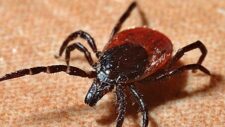
While ticks and mosquitoes are a natural part of our environment, it is important to know that some may transmit harmful diseases. The Kansas Department of Health and Environment (KDHE) tracks illnesses caused by ticks and mosquitoes, and as of May 29, 2024, has received over 200 laboratory reports of tickborne diseases. Additionally, KDHE has received several reports of tick bites and complaints of high numbers of ticks, which indicates that tick activity and density are increasing and are occurring earlier in the season this year.

Numerous tickborne diseases caused by bacteria are present in Kansas. These include Ehrlichiosis, Rocky Mountain Spotted Fever and other Spotted Fever Group Rickettsioses (SFGR), and Tularemia. Two rare tickborne viruses, Heartland virus and Bourbon virus, have also been identified in Kansas in both humans and ticks. All of these tickborne diseases are transmitted by the Lone Star tick, the most abundant tick in Kansas. Lone Star ticks can be found widely throughout at least the eastern two-thirds of the state in a variety of habitats and are aggressive human biters. This year alone, KDHE has investigated several tickborne disease cases with severe health outcomes, including hospitalizations due to Rocky Mountain Spotted Fever and Tularemia, and a fatal case of Bourbon virus.

“Vector-borne diseases, both those that are transmitted by ticks and those transmitted by mosquitoes are extremely active this year,” Dr. Erin Petro, KDHE State Public Health Veterinarian, said. “I really encourage people to take the risk of vector-borne diseases seriously and take personal protective measures for themselves and their pets to reduce their chance of acquiring an illness from a tick or mosquito bite. We’re also seeing emerging tick-associated conditions, like Alpha-gal syndrome, which can have lifelong consequences for those affected, which is why bite prevention is so important.”

In addition to increased tickborne diseases being reported to KDHE, there have been increased case reports of West Nile Virus (WNV), which is a reportable disease. While WNV cases occur every year in Kansas, the concerning trend this year is how early it’s being seen. Cases of WNV typically start in late July to early August. However, KDHE has already had two cases of WNV reported.

These cases serve as an important reminder to take precautions as you enjoy the outdoors this summer. Ticks are commonly found at the edge of trails, on tall grasses and in wooded, shaded areas. Mosquitoes are often more common at dawn and dusk and can breed in small amounts of standing water.

To reduce the risk of contracting a vector-borne disease, take the following steps:

  • Use an EPA-registered insect repellent such as DEET, picaridin, oil of lemon eucalyptus or IR3535 on all exposed skin. If going camping or hiking, treat clothing and gear with products containing 0.5 percent permethrin.
  • When doing yardwork, hiking, camping or recreating in areas where ticks and mosquitoes may be found, wear long pants tucked into socks or boots, if possible. Additionally, light colored clothing can make it easier to spot ticks.
  • Take steps to control mosquitoes indoors and outdoors, such as emptying standing water, particularly in old tires, tarps and flowerpots. Empty bird baths at least once a week to disrupt the mosquito life cycle.
  • Ensure pets remain tick free by consulting with a veterinarian about tick prevention products.
  • After spending time outdoors, shower and check for ticks again (some can be hard to spot). The vital areas to check are in and around the hair and ears, under the arms, inside the belly button, around the waist, between the legs and the back of the knees.
  • If a tick has bitten you, don’t squeeze it. Remove it with tweezers by grasping the tick as close to the skin’s surface as possible, then pull outward. Dispose of the tick by flushing it down the toilet. Don’t forget to check pets for ticks.
  • Pay attention to common signs and symptoms of vector-borne illness such as fever/chills, body aches and/or rash. If any of these symptoms are present within a few weeks of spending time outdoors in areas that may have ticks or mosquitoes, it’s important to talk with a doctor about being tested for vector-borne illnesses.

For more information, visit KDHE’s Tickborne Disease Data Stories to learn more about tickborne diseases, signs and symptoms specific to each disease, tick bite prevention and tick distribution. CDC also has additional information about vector-borne diseases on their website.

Reno County Public Town Hall Meetings

0

Reno County has scheduled three Town Hall meetings, and we were hoping you would be able to share this information.

Reno County has scheduled three Town Hall meetings, in District 1 and District 2, to gather feedback regarding possible expansion of County Wide Zoning and Solar in the unzoned areas of the county.

Town Hall Meetings Schedule:

Monday, July 8, 2024 in the Nickerson Community Center, 11 N. Nickerson St., Nickerson, at 6:30 pm

Monday, July 22 , 2024 in the Arlington City Hall, 900 W. Main Street, Arlington, at 6:30 pm

Tuesday, July 23, 2024 in the Pretty Prairie City Office, 119 W Main St, Pretty Prairie, at 6:30 pm

The Town Halls will all be attended by Reno County Public Works Director Don Brittain, Reno County Planner Mark Vonachen, Reno County Administrator Randy Partington and Reno County Commissioners Randy Parks and Ron Hirst, regarding possible expansion of County Wide Zoning and also Solar in the unzoned areas of Reno County. The informal meetings will start with information about what planning and zoning is and what it would mean to residents in the rural parts of Reno County and then gather their comments about zoning. Officials will look for feedback to see if there is any interest in commercial solar farms, either the prohibition or allowance of these farms, from people living in the unzoned areas of Reno County. This meeting is open to the public.

Hutchinson High 20 year Reunion

0

Hutchinson High School Class of 2004 to Celebrate 20-Year Reunion at the
Kansas Cosmosphere Hutchinson, KS – June 20, 2024 – The Hutchinson High School graduating class of 2004 is excited to announce its 20-year reunion, set to take place on Saturday, October 5th, 2024, at the Kansas Cosmosphere.

Salthawks from the class of 2004 are invited to reconnect with old friends and reminisce
about their high school days at this special event. The reunion will be held in the
Cosmosphere’s banquet room, offering a unique and memorable setting for the
celebration.

The reunion will feature a catered meal, non-alcoholic drinks, and the opportunity
to catch up with old friends. Early bird tickets are available now for $49 per person until August 5th. After August 5th, tickets will be $59 per person. Tickets must be purchased online in advancemat hhsclassof04.com.

Don’t miss this opportunity to reconnect with your Hutchinson High School classmates
and celebrate 20 years of memories. Get your tickets today! About Hutchinson High School Class of 2004 Reunion The Hutchinson High School Class of 2004 Reunion will feature events from Friday, October 4th through Saturday, October 5th celebrating the 20th anniversary of the class’s graduation. Stay tuned for the full schedule!

The reunion will be held on October 5th, 2024, at the Kansas Cosmosphere. Tickets
can be purchased online at hhsclassof04.com.
Contact:
Matt Adrian
[email protected]
714-253-2886
HHSClassof04.com

Tips to keep tomatoes, from ‘breakers’ to ripened red

0

One of the simple joys of summer is access to great-tasting tomatoes.

Whether grown and picked at “color break” from a home garden or bought fully ripened at a local farmers market or grocery store, tomatoes are a treat.

There are some tips and tricks to help you get the most from your tomato harvest or purchase, according to a Texas A&M AgriLife Extension Service expert. Joe Masabni, Ph.D., AgriLife Extension small-acreage horticulturist at the Texas A&M AgriLife Research and Extension Center in Dallas and professor in the Department of Horticultural Sciences, shared his expert advice on storing and extending the life of tomatoes without compromising taste.

Timing is everything

Nothing will taste as great as a tomato at its peak, so timing is a major factor to consider when ripening tomatoes.

They can ripen in days or weeks, depending on the variety and stage at which they were picked, so buy or pick accordingly.

If all your tomato plants are full simultaneously and there is no possible way to eat them as fast as they need to be picked, there are ways to space out the ripening process to allow for extended use.

Any tomato reaching the “breaker stage” will continue to ripen off the vine, Masabni said. This is the stage where the bottom of the tomato has started to change from green to yellow.

The best place to let tomatoes ripen is on your kitchen counter. Ideally, ripe or ripening tomatoes prefer temperatures around the mid-60s, but Masabni said room temperature in most homes is fine.

However, breaker-stage tomatoes can be stored in a refrigerator to halt the ripening process. This allows you to pull them from the fridge and let them ripen as needed.

Once the tomatoes are at room temperature again, they will usually continue the ripening process over several days.

If you’ve picked an entirely green tomato, it will not ever ripen. It’s best to use these for a favorite recipe, like a relish or fried green tomatoes.

Vine ripening, or not

Once a tomato is at the breaker stage, it can be classified as vine ripened. Even though it doesn’t look ripe yet, it has all the sugars and essential compounds necessary for it to reach its mature color and full flavor.

“Once it’s physiologically ripe, it is considered vine ripened and can be picked and marketed as such,” Masabni said.

For gardeners, while it may seem like a good idea to keep the tomato on the vine until you are ready to eat it, the longer it is on the vine, the more likely it is to be eaten by birds or bugs.

If you can protect your tomato plants from pests that is best, but don’t have any qualms about picking your tomatoes and allowing them to finish ripening off the vine, because they will still have that same wonderful flavor.

Best way to store tomatoes

Make sure you store the tomatoes with a little space between them on the counter or in a container to allow air circulation, Masabni said.

“Tomatoes should be stored how you see them at the market – out in the open,” he said. “Consumers often do it wrong – they treat onions like tomatoes and tomatoes like onions when it comes to storage. Keep your onions in the refrigerator, not the counter or the pantry.”

Do not keep tomatoes in a closed bag unless you want to hasten the ripening process. Ethylene gas produced by tomatoes ripens them quicker when held in the bag.

Tomatoes will also ripen more quickly if left in warmer temperatures, like on a porch or in an outbuilding. This can happen quickly, so you’ll want to check on them daily in temperatures above 80 degrees.

Refrigeration can alter taste

As a rule of thumb, Masabni suggested not refrigerating ripe tomatoes whenever possible.

“Do not refrigerate ripe tomatoes unless you just can’t eat them,” Masabni said. “Refrigerators can affect the taste and texture of a ripe tomato, so let them ripen on a counter and then eat or cook with them.”

But for gardeners who have more than they can eat or share with friends and family, refrigeration is a way to extend the shelf life.

Let no tomato go to waste

If you have more tomatoes than you can eat, consider using them in salsa and other recipes. If they are just a little past their prime, they can also be turned into sauces.

Romas can be used to make tomato paste, but detecting if a Roma is still good is tough since they stay firm even after they go bad inside. Whole tomatoes may also be frozen to use in stews or cooked dishes.

“The only time a tomato is garbage is if it’s starting to be mushy,” he said.