Friday, February 6, 2026
Home Blog Page 372

Homelessness is rising in Kansas and state lawmakers aren’t doing much to help

0
A bill in the Kansas Legislature would have provided millions of dollars to build homeless shelters across the state. But lawmakers let the bill stall in committee and left Topeka for the year without taking any meaningful action to address the growing problem.

LEAVENWORTH, Kansas — About 20 people who are without homes gather in a shelter each day in the relatively rural community of Leavenworth off the Missouri river in Northeast Kansas.

On any given day, that number of people is close to filling up the shelter’s day center space that’s a little larger than a home living room. Then at night, as many as 50 homeless people — including families with young children — will seek out a place to sleep at the night shelter operated by the Leavenworth Interfaith Community of Hope.

Myranda Agnew, the executive director for the shelter, said since the shelter opened about six years ago, more and more people are seeking help.

“There are some days where we are completely full,” Agnew said. “It’s even harder to be in here when we have kids.”

Homelessness in Kansas is growing. Federal data shows the state’s number of people without housing grew by 10% between 2022 and 2023. It’s not only rising in the large urban areas, but in smaller, tucked away towns like Leavenworth — a community of a little more than 35,000 people.

Critics argue the state isn’t doing enough to help and is leaving local communities and advocacy groups without enough resources to tackle the problem. There’s also a divide among rural and urban lawmakers. Some rural Legislators aren’t interested in spending state dollars on an issue they see only pertaining to urban areas like Wichita and Topeka.

Surveys show that at any one time, more than 2,000 people are homeless around the state. But that does not count people who may be sleeping on a friend’s couch or otherwise don’t have stable housing.

A bill in the Kansas Legislature aimed to help communities like Leavenworth by providing $40 million worth of grants to build new infrastructure, like shelters and day centers. But it also came with some caveats, like barring homeless encampments on public land.

That idea didn’t sit well with groups that serve people without homes. Some groups serving homeless individuals are growing frustrated with the state’s lack of action. Christy McMurphy, with the Kansas Statewide Homeless Coalition, said there is a need for the state to help.

“There are gaps that the state could help us fill,” McMurphy said.

Urban vs Rural

 Republican Representative Leah Howell pitched the $40 million funding plan. She said she has a sibling who has faced homelessness in the past.

The Wichita-area lawmaker said the state helping build shelters would be a good place to start its involvement in addressing the growing problem, because only cities and counties are currently funding these projects.

“That was an area that was really more of a statewide need,” Howell said. 

The bill would have provided grant funding for cities and counties to apply for and use toward building and expanding homeless shelters. But the bill never made it out of the House committee. A similar bill in the Senate didn’t make it much further. 

Howell said part of the reason the bill stalled is because some rural lawmakers think homelessness only affects urban areas.

Republican Representative Duane Droge of Eureka, a rural town of just 3,000 people, said during a hearing on the bill that rural residents don’t want their taxes going to cities that fail to enforce local laws on homeless populations. He said examples include vandalism and jaywalking.

“Why do they have to step in and help,” Droge said, “if the urban area is basically not doing the things that most of Kansas thinks they should do?”

But the Leavenworth shelter shows that smaller towns support people without homes, too. Agnew said there are likely homeless people in many rural communities throughout the state, but residents don’t see them. They may be sleeping in their cars or bouncing around sleeping on the couches of friends and family.

In her community, some locals argue the shelter is taking in outsiders, but Agnew said that’s not true.

“Everybody we serve here has some connection to Leavenworth,” Agnew said. “Many went to school here. These are our local residents.”

‘Criminalizing homelessness’

Howell said she tried to address the concerns of rural lawmakers with a provision requiring cities and counties to enforce local ordinances, like barring people camping on public land, or else they would lose the funding.

She said during a hearing that giving the funding to local governments also makes sure that voters have oversight of how the funds are used and holds local leaders accountable.

Howell also believes barring homeless encampments is the right thing to do.

“I firmly believe that they are not acceptable ways for human beings to live,” Howell said. “I know some people really disagree with me.”

Addressing minor crimes committed by people without housing was also a sticking point for lawmakers when they began working on the issue last year. Republican Rep. Francis Awerkamp, who represents the small town of St. Marys, proposed a bill in 2023 that would punish local governments for allowing camping on public lands by taking away state funds.

Groups from across the state opposed that bill, with some calling it a statewide mandate to criminalize homelessness. That bill also died in committee.

McMurphy said cracking down on minor offenses leads to jails filling up, and does not help address the underlying causes. She said trading that for the state’s funding is not worth it.

“If they’re going to be harmful,” McMurphy said, “we don’t need them to help us.”

Needs beyond space

While space is an important commodity for groups that serve homeless people, it’s not the only area of need. Agnew said her organization would apply for every grant available. But she would want to use those funds for more than just building shelter — particularly funding a larger staff.

Currently, the Leavenworth shelter employs the equivalent of five full time positions. They are responsible for staffing the shelter 24 hours a day.

“We need people,” Agnew said. “We need to have (staff) here to ensure people are being seen.”

Advocates also believe the state needs to do more to prevent residents from ever becoming homeless.

Christina Ashie Guidry, director of policy and planning for the United Community Services of Johnson County, said lawmakers could do that by taking a proactive approach. She suggests the state help fund the development of more affordable housing and more transitional housing for people getting out of homelessness.

The bottom line, she said, is that Kansas needs more homes.

“Homelessness is a problem in Kansas, but it’s very solvable,” Ashie Guidry said. “And we know that underlying all of this is the fact that there isn’t enough housing in Kansas.”

While lawmakers have yet to take significant action, Ashie Guidry said she’s hopeful that better help is coming because each year more lawmakers are interested in finding solutions.

The entire Kansas Legislature is up for election this fall and that will likely lead to some new faces considering the issue in the future.

“I expect that as we continue this work and as our legislators listen to their own experts in the state of Kansas,” Ashie Guidry said,“they will be able to effectively craft legislation that better addresses these issues.”

Kansas News Service  ksnewsservice.org.
Kansas feedyard water filtration and reclamation effort with demonstration

0

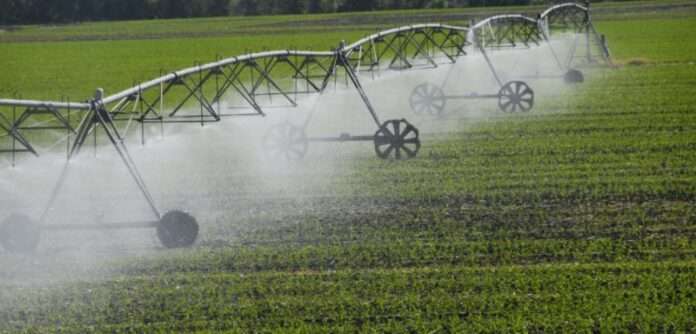
ANNOUNCEMENT: Groundwater is the lifeline of western Kansas, and water reclamation could be a promising solution to increase the number of times each gallon of water can be used after it’s removed from the Ogallala aquifer, offering hope for a sustainable future. The Irsik & Doll Feedyard in Garden City is hosting a water filtration and reclamation demonstration event on Tuesday, July 9, supported by the Kansas Water Institute and the Kansas Livestock Association.

The demonstration will use the Mobile Education Water Lab and will involve processing feedyard lagoon water through multiple types and sizes of filters. Users will experience firsthand how each filter works and see the results of this water reclamation process.

Media members attending the demonstration will be able to ask questions and learn more about work taking place between Kansas feedlots and dairy producers and Aimpoint Research to develop methods for the Kansas beef and dairy industries to conserve water supplies in the region and safeguard food security for the U.S. and the world.

SCHEDULE OF EVENTS: Media are invited to attend a demonstration and interviews opportunities at 8 a.m. and 3 p.m. Tuesday, July 9. Irsik & Doll Feedyard is at 8220 E. Highway 50 in Garden City.

ARRANGEMENTS: Media members attending should RSVP with their chosen session time to [email protected] by 2 p.m. Monday, July 8.

MEDIA AVAILABILITY: The following individuals are available for interview:
   • Brandon Depenbush, Irsik & Doll Feedyard
• Kristen Dickey, Aimpoint Research
• Susan Metzger, Kansas State University’s Kansas Water Institute
• Jonathan Aguilar, Kansas State University
• 
Clayton Huseman, Kansas Livestock Association
• 
Weston McCary, Kansas Water Office

QUESTIONS: Please contact staff with K-State News and Communications Services at 785-532-2535 or [email protected] with questions.

Barbecue index’ details inflation’s effects on consumers, producers

0

Enjoy your barbecue with family and friends this July 4; it will probably be the last one you will see under $100 for 10 people for the foreseeable future.

That was the conclusion of a panel of commodity experts from RaboBank, who presented their traditional annual “barbecue index” June 26 as an informal way of assessing prices and consumer behavior. The RaboBank team assumed a guest list of 10 people and analyzed prices for beverages, beef, buns, chicken, cheese, potatoes, lettuce and tomatoes, with avocados included this year. Pickles and corn were not included. The team calculated the total cost at $99.

While overall inflation is back to something like normal, said Tom Bailey, senior analyst of consumer foods, “the devil is in the details” for consumers. While financial markets and the stock market are doing well, ordinary consumers are disconnected from that success and continue to be squeezed by higher food prices. Average wages have risen 29% since 2019, but food prices have risen by 30%. “Food prices are as good as they are going to get for some time,” he concluded. Consumer sentiment is slightly improving in recent months, but consumers “have thrown in the white flag.”

Consumers now have to work nine hours for that 10-person barbecue, an 8.32% increase from 2019. It is five times more expensive to eat out than at home. Demand for food services is down, while value groceries are doing well; Aldi revenues are up 14% in the past year. Food service still makes up 56% of total consumer food spending, with groceries at 44%, but “a shift is coming,” Bailey said.

The total cost of the hypothetical barbecue was up by 2% from last year, and up by 29% from 2019. Beer made up the single biggest portion of the barbecue expense, at 40% of the total cost, with beef making up 14%. Chicken prices actually went down 3% from the same time last year, and lettuce was down 2%. Ground beef was up 4%, and white bread or buns were up by 1.7%.

Beef trends

Senior beef analysis Lance Zimmerman discussed the multi-year cycling behind beef prices. Cow herds have been trending steadily downward since 1994, due to a variety of factors, including input costs of production, geopolitical trends, drought, the COVID lockdowns and supply chain whipsaws and the woes of restaurants. Now the move is to install “slow but consistent incentives to rebuild herds,” Zimmerman said.

In the last 12 months, beef supplies have been relatively steady, with prices kept high by expanding domestic demand. One reason is an increase in carcass weights, by 30%, as producers feed cows longer. Beef exports have also declined, partly due to increased demand and partly to the strong U.S. dollar. Finally, an increase in beef imports from Canada, Australia, Peru and Brazil have contributed to a 3 to 4% increase in per capita beef supply for April.

U.S. consumers are enjoying the highest-quality beef ever, Zimmerman said, with growth in demand for many premium cuts. Although consumers have to work more hours for a pound of beef, prices are nowhere near the pain points of 2014, he said. Beef is still a good value overall, and more of the beef dollar is finding its way to the farmgate.

Beef culling down

In response to a question about the H5N1 virus, the RaboBank team said that while H5N1 is highly pathogenic to bird populations, it is considered lowly pathogenic in cattle and humans alike. Cowherd liquidation in both beef and milk cow populations is actually down throughout 2024. The year-to-date culling rate for the U.S. beef cow herd is at 10.1%, compared to 11.4% last year. The U.S. milk cow culling rate is at 30.2% compared to 34.6% in that same period last year.

Animal protein analyst Christine McCracken added that chicken and pork remain good options for the grill. Beef is three times the price of chicken per pound, and pork is twice the per-pound price of chicken. She said retail chicken promotions were up this year.

Dairy trends

The overall dairy Consumer Price Index is lower than at this time last year, but prices have risen for many dairy products, said dairy analyst Lucas Fuess. Fluid milk prices are lower, but prices for cheese and ice cream are slightly higher than last year.

Weaker cheddar output and exports have elevated cheese prices, and increasing domestic demand for butter—which is used to make ice cream—has driven up ice cream prices. Ice cream is also losing market share to other frozen treats as competition picks up in the frozen treat sector. “Ice cream doesn’t always win” in competition with other frozen treats, he said.

Generational shift in beer?

Beverage analyst Jim Watson noted beer’s weak market position, as he said beer volumes are not responding to the lower prices of the past 18 months.

“The beer industry has structural problems,” he said. Beermakers are still trying to clear a massive inventory overhang from the COVID lockdowns. Persistent price increases going back about 15 years have separated beer trend lines from those of wine and spirits. This has led to a “generational difference” in how beer is viewed by emerging consumers. Brands matter, however; the two most popular imported beers, Modelo and Corona, continue to enjoy solid numbers.

Big 12 Football Preseason Media Poll: Utah, Kansas State picked to finish top of league in 2024

0

Less than one day after the new Big 12 went into effect, the 2024 Big 12 Football Preseason Media Poll was released and to no surprise, it came with a different look at the top.

Fresh off of winning leaving the Pac-12, Utah was tabbed as the preseason favorite to win the Big 12 Conference in its first season by the media. The Utes finished 8-5 last season with notable wins against now-Big 12 foe Baylor, then-No. 22 UCLA and then-No. 18 USC.

Kansas State (19), Oklahoma State (14), Kansas (5) and Arizona (3) rounded out the top five in the preseason poll, with each receiving first-place votes.

Led by first-year starter sophomore Avery Johnson, the Wildcats were picked to finish second in the Big 12 by the media for the second consecutive season. As Will Howard’s back-up last year, Johnson was a considerable amount of playing time as K-State utilized the then-freshman quarterback’s running ability and game as he finished with 296 rushing yards on 52 carries with seven rushing touchdowns on top of completing 37-of-66 pass attempts for 429 yards and five touchdowns.

Deion Sanders’ Colorado Buffaloes came in No. 10 in the preseason poll. Led under center by Coach Prime’s son, Shedeur Sanders, Colorado lost eight of its final nine games last season after starting the season 3-0 with wins coming against TCU, Nebraska and Colorado State.

Oklahoma State running back Ollie Gordon was named the Big 12 Preseason Offensive Player of the Year. Gordon ran for 1,732 yards on 285 carries last season for the Cowboys while finishing with 21 rushing touchdowns. Colorado’s Travis Hunter was named the Big 12 Preseason Defensive Player of the Year while UCF’ freshman quarterback KJ Jefferson was named the Big 12 Preseason Newcomer of the Year.