Friday, January 16, 2026
Home Blog Page 4693

EPA finds neonicotinoid seed treatments of little or no benefit to U.S. soybean production

0
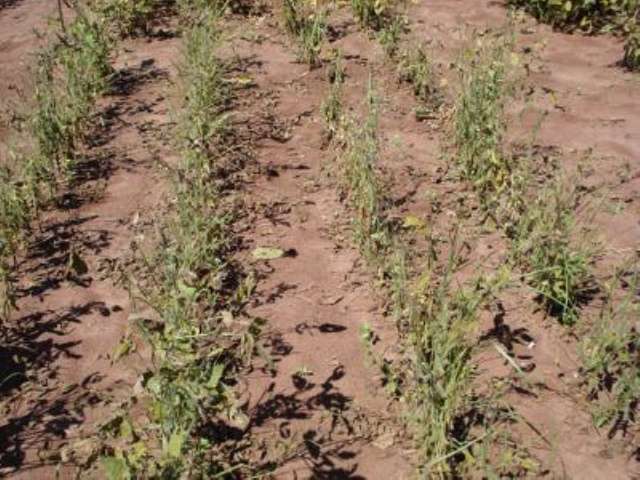
Soybeans with Rust
Soybean plants infected with soybean rust in soybean experimental plot. (IITA)

Washington — Today, the U.S. Environmental Protection Agency (EPA) released an analysis of the benefits of neonicotinoid seed treatments for insect control in soybeans. Neonicotinoid pesticides are a class of insecticides widely used on U.S. crops that EPA is reviewing with particular emphasis for their impact on pollinators. The analysis concluded that there is little or no increase in soybean yields using most neonicotinoid seed treatments when compared to using no pest control at all. A Federal Register notice inviting the public to comment on the analysis will publish in the near future.

“We have made the review of neonicotinoid pesticides a high priority,” said Jim Jones, assistant administrator for EPA’s Office of Chemical Safety and Pollution Prevention. “In our analysis of the economic benefits of this use we concluded that, on a national scale, U.S. soybean farmers see little or no benefit from neonicotinoid seed treatments.”

During the review of the neonicotinoids, EPA found that many scientific publications claim that treating soybean seeds has little value. Part of our assessment examined the effectiveness of these seed treatments for pest control and estimated the impacts on crop yields and quality, as well as financial losses and gains. The law requires EPA to consider the benefits of using pesticides as well as the risks.

The analysis concluded that:

  • There is no increase in soybean yield using most neonicotinoid seed treatments when compared to using no pest control at all.
  • Alternative insecticides applied as sprays are available and effective.
  • All major alternatives are comparable in cost.
  • Neonicotinoid seed treatment could provide an insurance benefit against sporadic and unpredictable insect pests, but this potential benefit is not likely to be large or widespread throughout the United States.

This analysis is an important part of the science EPA will use to move forward with the assessment of the risks and benefits under registration review for the neonicotinoid pesticides. Registration review — the periodic re-evaluation of pesticides to determine if they continue to meet the safety standard — can result in EPA discontinuing certain uses, placing limits on the pesticide registration, and requiring other label changes.

Sign up for pesticide program updates to be notified by email when the EPA opens the docket and invites comment on its analysis of the benefits of neonicotinoid seed treatments on soybeans.

EPA Announces Final Decision to Register Enlist Duo, Herbicide Containing 2, 4-D and Glyphosate/Risk assessment ensures protection of human health, including infants, children

0

Contact Information: Cathy Milbourn (News Media Only) [email protected] 202-564-7849 202-564-4355 703-308-8162 (Other Inquiries)

WASHINGTON–The EPA is registering the herbicide, Enlist Duo with first-time ever restrictions to manage the problem of resistant weeds. The pesticide is for use in controlling weeds in corn and soybeans genetically-engineered (GE) to tolerate 2,4-D and glyphosate. The agency’s decision reflects a large body of science and an understanding of the risk of pesticides to human health and the environment.

The herbicides 2,4-D and glyphosate are two of the most widely used herbicides in the world for controlling weeds. Dozens of other countries including Canada, Mexico, Japan and 26 European Union Members have approved these pesticides for use on numerous crops and residential lawns. Last year, Canada approved the use of Enlist Duo for the same uses that EPA is authorizing.

EPA scientists used highly conservative and protective assumptions to evaluate human health and ecological risks for the new uses of 2,4-D in Enlist Duo. The assessments confirm that these uses meet the safety standards for pesticide registration and, as approved, will be protective of the public, agricultural workers, and non-target species, including endangered species.

The agency evaluated the risks to all age groups, from infants to the elderly, and took into account exposures through food, water, pesticide drift, and as a result of use around homes. The decision meets the rigorous Food Quality Protection Act standard of “reasonable certainty of no harm” to human health.

The approved formulation contains the choline salt of 2,4-D which is less prone to drift than the other forms of 2,4-D. The Agency has also put in place restrictions to avoid pesticide drift, including a 30-foot in-field “no spray” buffer zone around the application area, no pesticide application when the wind speed is over 15 mph, and only ground applications are permitted. This action provides an additional tool for the agricultural community to manage resistant weeds.

To ensure that weeds will not become resistant to 2,4-D and continue increased herbicide use, EPA is imposing a new, robust set of requirements on the registrant. These requirements include extensive surveying and reporting to EPA, grower education and remediation plans. The registration will expire in six years, allowing EPA to revisit the issue of resistance. In the future, the agency intends to apply this approach to weed resistance management for all existing and new herbicides used on herbicide tolerant crops.

This assessment is the third time in recent years that EPA has evaluated the safety of 2,4-D and the safety finding is consistent with past assessments that EPA has performed for 2,4-D. EPA comprehensively reviewed 2,4-D in 2005, and once more in 2012 and now again in 2014 in response to the current application.

EPA is registering the pesticide in six states: Ill., Ind., Iowa, Ohio, SD., and Wis. The agency is accepting comments until Nov. 14, 2014 (30 days) on whether to register Enlist Duo in ten more states: Ark., Kan., La., Minn., Mo., Miss., Neb., Okla., Tenn., and ND.

The EPA’s final regulatory decision document is available in EPA docket EPA-HQ-OPP-2014-0195 at www.regulations.gov

Questions and Answers about this final regulatory decision are available at:
www2.epa.gov/ingredients-used-pesticide-products/registration-enlist-duo .

Kansas reaches agreements on Republican River Compact disputes

0
CHRIS NEAL / THE CAPTIAL-JOURNAL
Kansas, Colorado and Nebraska officials announced Wednesday that the three states have signed agreements resolving several Republican River Compact issues.


MANHATTAN, Kansas – Kansas, Colorado and Nebraska officials announced Wednesday that the three states have signed agreements resolving several Republican River Compact issues. One of the agreements ensures that the Kansas Bostwick Irrigation District in north central Kansas will have a viable irrigation water supply for the 2015 growing season while providing Nebraska certainty of the effectiveness of its compact compliance efforts. The other agreement ensures that Colorado and Kansas will work towards improving Kansas’ water supply on the South Fork Republican River while authorizing Colorado to receive credit in the Compact accounting for operating its augmentation project on the North Fork Republican River.

“I’m pleased with the agreements we’ve come to with our neighbors in Nebraska and Colorado. There is still work to be done to strengthen our relationships and to administer the Compact together, but today’s agreements are very important steps towards a much better long-term situation,” Jackie McClaskey, Kansas Secretary of Agriculture said.

Kansas Gov. Brownback understands how important water is to the citizens of Kansas and is willing to fight for the water needs of the state and has directed his administration to work with Colorado and Nebraska to reach an agreement.

The two resolutions finalizing the agreements were unanimously approved in a special meeting of the Republican River Compact Administration held Wednesday in Denver, Colorado.

“The Kansas team worked hard with our neighbors in Nebraska and Colorado to develop common-sense proposals that protect Kansas’ rights under the Compact while balancing certainty and flexibility for all three states. We are encouraged by these agreements and will continue to work with Nebraska and Colorado to resolve the Republican River issues that still separate us. This is what the water users of Kansas, Nebraska and Colorado rightly expect of us,” McClaskey said.

Officials from the Kansas Department of Agriculture and the Kansas Water Office will be holding informational meetings in the areas affected in the Republican River Basin over the next few months to update local stakeholders on the current agreements between the states and to learn more about local needs and concerns.

The recent agreements between the states can be found online at HERE.

Source: Kansas Department of Agriculture

My first world series

0
Sandra Pugh
Sandra Pugh

In Memory of Mr. Keith Chadd

The first game of the World Series is going on and I am remembering back to the seventh grade. The year was 1959. It was a time of can cans under full skirts, saddle shoes, and pixie hair cuts.

Our teacher that year was Mr. Chadd. He was the first male teacher I had ever met, but was undoubtedly one of the best and the nicest teachers I had in all my school days. Mr. Chadd was an avid baseball fan, and although I can’t remember which team he was pulling for that year, I can clearly remember the games played during that series.

On the first day of the series, he came into the room after lunch and told us to put our books away. The rest of the week we were going to listen to the World Series when it came on. Before the first game, Mr. Chadd told the first two rows of kids on the right side of the room to push their desks closer together and over to the side of the room. Then the two on the left were to get closer together and move their desks a little closer to the window. Then he told the ones on the right side of the room that they were to yell for the Yankees and the other side of the room to yell for the Pirates. I did not know anything about major league baseball, and didn’t even know the names of the teams, but I was on the right hand side of the room, so my team was the Yankee’s.

The games were routed to the room through the school intercom system. The intercom was a large wooden box about 12 inches square that hung at the front of the room near the ceiling. Normally the announcements we heard over the intercom were not anything good, but this was wonderful. We did not have televisions in the classroom, and no one carried radios or cell phones, so it was the only way to hear the game. I don’t know if any of the other classes got to listen to the games, but we made enough noise for the whole school.

It did not take us long to get into the series and begin to cheer for our team.  We would yell and scream even if we didn’t understand what was going on all the time. Mr. Chadd would explain all the plays and rules that we didn’t understand and we all became avid baseball fans that year. I believe that there was a prize for the side whose team won. It was probably a candy bar or a coke at the soda fountain. The reason I don’t remember for sure is because the Yankees lost in the 9th inning of the 7th game, so I didn’t get a prize.

Mr. Chadd even let us bring our milk cartons back to the room and drink them there during the game so we wouldn’t miss anything, and I don’t think anyone wanted to take time out and go out for recess. We had become consumed with the games.

That year I discovered Mickey Mantle, and he became one of my all time favorite players. Roger Maris had joined the team that spring. Their competition of the most home runs each season began that year.

For some reason I did not like Roger Maris and was always hoping that Mantle would win the race. In 1960 Mantle had 41 home runs and Maris had 39 .In 1961 they both set a new record for baseball, with Mantle hitting 56 and Maris hitting 61. Mickey Mantle was with the Yankees his whole career, which spanned the years of 1951 to 1968. Maris was with the Yankees from 1959 to 1966.

I know one little gal became a Yankee fan that year and all these years later, I still back the Yankee’s even though I live deep in enemy territory. But you can always find someone to argue with over the games when you live in Royal country.

So as I watch the games this year, I will remember what it was like to be that child and enjoying my first World Series. Somewhat like the feeling a rookie player must have if it is their first trip to the series.

I found out while visiting Mr. Chadd, a few years before he died, that he was a Yankee fan, and that is the reason we were allowed to listen to the games that year. He also told me that he had been a semi pro baseball player, a pitcher I think, but was injured and had to retire from the game. Thank you Mr. Chadd for teaching me to love baseball, and just like my teacher I am an avid Yankee fan.  To email Sandy: [email protected]


Laugh tracks in the dust

0
Thayne Cozart
Milo Yield

       What will the world’s plant and animal population be comprised of 1,000 years from now? No one knows, of course, but I have some strong candidates with the survival skills to subjugate, and then take over the world, from us dummy humans, who seem intent upon destroying ourselves in multiple ways.

My first candidate from the plant world is the lowly bindweed. Slowly, and maybe surely, bindweed is taking over flyover country. Right here at Damphewmore Acres, despite my best efforts to till and spray the bindweed into oblivion, there’s more of it growing that when we bought the place 10 years ago.

I found it interesting that one of the very first agricultural research projects of the newly formed Kansas State College of Agriculture and Applied Mechanics (now Kansas State University) way back in the 1800s wuz to find a way to control and/or eliminate bindweed. Well, here we are 150 years later, and bindweed is still thriving. Give bindweed another 850 years, and we humans had better find a way to eat it and like it.

Another candidate for plant immortality is human-introduced sericea lespedeza. It, too, despite the best efforts of mankind to eradicate it, is steadily expanding its range. Every rain and flood spreads the seeds, as do pickup tires, farm machinery, birds, wildlife, and gum boots, brogans, sneakers and cowboy boots traipsing through the countryside.

Two trees earn dishonorable mention as candidates to dominate the emerging new landscape 10 centuries from now. They are the eastern redcedar tree and the hedge tree (osage orange/bois d’arc). Both are rampant and aggressive in expanding their range and they’re adept at squeezing out desirable plant populations and sucking up precious soil moisture at prodigious rates. And, sad as it is to say it, we humans gave both these voracious trees a kick-start.

In the next millennium, a few other seemingly indestructible plants probably will find a niche to survive and thrive. They are multiflora rose, Johnsongrass, kudzu, and the ubiquitous cocklebur and sandbur.

As for the future animal kingdom, I’m putting my bet on Asian carp, green sunfish, and bullhead catfish to take over the waters and for the insects to dominate the land. Perhaps those humans who already have insects and carp in their diets, are ahead of the rest of us in the survival game.

***

My, my, my! My Kansas City Royals are two games into the World Series and have evened their record at 1-1. The odds are against them becoming World Champions, but that outcome would not be stranger than the team’s oddesy to get where it is today. So, my hope lingers on and by the time most folks read this column, the die will be cast.

***

When you’ve lived more than seven decades, as I have, your life path will cross paths with folks who society has tabbed as “famous” or “important.” For some reason, I recently got to thinking about folks in those two categories with whom I’ve crossed paths.

Folks on the list of “famous or important” persons that I’ve actually conversed with, include (at the top of the list) country music legend Willie Nelson; Roy Clark, former Country Music Entertainer of the Year, with whom I’ve hunted quail, and Nobel Peace Prize winner, agronomist Norman Borlaug, the “Father of the Green Revolution.”

Other notables that I can quickly recall conversations with are: H. L. Hunt, patriarch of the Hunt ketchup empire; Mrs. Walgreen, founder of the Walgreen drug chain; Jim “Catfish” Hunter, the famous baseball pitcher, and rural comedian Jerry Clower, “The Mouth of the South.”

Entertainers that I’ve conversed with at one time or the other are: country music singer T. G. Shepherd, with whom I played gin rummy on his tour bus; Country Music Female Vocalist of the Year Janie Fricke, and I’d throw in my friend cowboy poet Baxter Black, probably the most popular entertainer in rural America.

Politicians with whom I’ve conversed are U.S. Senators Bob Dole, Pat Roberts, Chuck Grassley, Tom Harkin, Henry Bellmon and Sam Irwin, who brought President Nixon down. Throw in Hodding Carter III.

Governors on the list include Robert Docking, Sam Brownback and Terry Branstad.

Secretaries of Agriculture include: Earl Butz, Robert Bergland, John Block, Dan Glickman, and Ann Veneman.

The most obnoxious national journalist I ever had the misfortune to speak with was CBS New’s Dan Rather.

I’ve never spoken to a U.S. president, but the ones I’ve laid my old eyes on go way back to Dwight D. Eisenhower and Richard M. Nixon.

All those folks sure don’t make me important, but they do indicate that I’m well-traveled — within the confines of the U.S.

***

Since I’ve mentioned travel, I’ll quit for the week with these wise words about travel. Saint Augustine said, “The World is a book, and those who do not travel read only a page.” And Chinese philosopher said, “No one realizes how beautiful it is to travel until he comes home and rests his head on his old, familiar pillow.”

That last quote describes me perfectly. Travel is fun, but home’s better. So, travel or stay home as you wish, but have a good ‘un.