
The City of Cheney is holding an online auction featuring 1988 Chevrolet Silverado 1500 flatbed pickup truck and 1985 Case IH 1685 tractor.
More information can be found at Purple Wave Auctions

The City of Cheney is holding an online auction featuring 1988 Chevrolet Silverado 1500 flatbed pickup truck and 1985 Case IH 1685 tractor.
More information can be found at Purple Wave Auctions
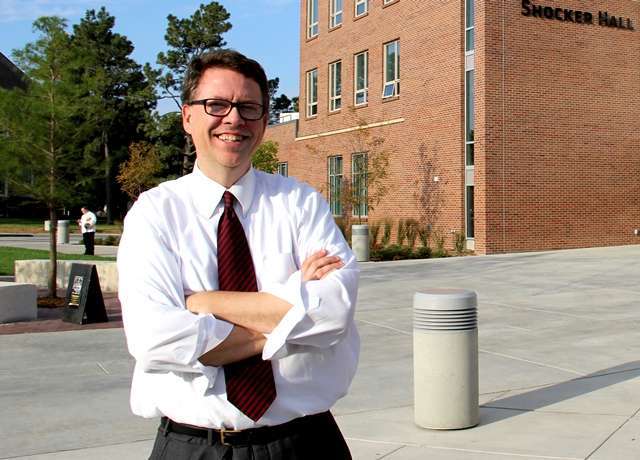
 Wichita State University has created a new position dedicated to guiding high-achieving students through the daunting process of applying for competitive national fellowships and scholarships, such as Fulbright, Rhodes, Truman, Marshall and Goldwater awards.
Jeffrey Stephens started his job in WSU’s Honors College as academic advisor and coordinator of national scholarships and fellowships on Sept. 2.
Stephens’s position focuses on the scholarship application process for students who are competing against hundreds of others from large universities with rich traditions of receiving these scholarships.
“WSU has had success in the past with various scholarship-winning students, but the procedure was not centralized,” Stephens says. “The position is necessary these days — and it really is the national trend to have at least one person to coordinate the scholarship applications — because it is a very daunting task for a student who has an enormous number of other commitments to deal with the application procedures for a major scholarship.”
Stephens says now is a good time for this move, with the recent development of the university’s new Honors College. But, he points out, all WSU students who meet award guidelines are eligible to apply for the scholarships/fellowships.
“We have recruited a strong class into the new Honors College, and we know we have many qualified students across campus,” he says.
A less intimidating process
The process of applying for these highly competitive awards is difficult and stressful for students who are already busy with school and other commitments. Stephens says many students start the process, but get overwhelmed and give up before completing the application requirements.
“With a campus resource dedicated to assisting students with the applications, the task can be much easier,” Stephens says.
At many universities like Wichita State, faculty mentors identify candidates and help them through the process. But faculty members are busy, Stephens says, and don’t always have a complete view of all the scholarship options available to students.
“And the number of scholarships and fellowships available to qualified students continues to grow,” he says.
Stephens will reach out to students in their first and second years at Wichita State, work with faculty who have identified junior and senior prospects, and serve as a liaison between those students and the various scholarship/fellowship foundations and organizations.
“Ultimately, students who are identified as prospects on campus here need a support network while tackling such things as essays and the like,” he says. “The goal is to create a nurturing environment for prospective candidates and to make the application procedure less intimidating.”
ISSN: 1949-1840
Released October 1, 2014, by the National Agricultural Statistics Service
(NASS), Agricultural Statistics Board, United States Department of
Agriculture (USDA).
Broiler-Type Eggs Set in the United States Up 2 Percent
Hatcheries in the United States weekly program set 209 million eggs in
incubators during the week ending September 27, 2014, up 2 percent from a
year ago. Hatcheries in the 19 State weekly program set 202 million eggs in
incubators during the week ending September 27, 2014, up 2 percent from the
year earlier. Average hatchability for chicks hatched during the week in the
United States was 83 percent. Average hatchability is calculated by dividing
chicks hatched during the week by eggs set three weeks earlier.
Broiler-Type Chicks Placed in the United States Up 2 Percent
Broiler growers in the United States weekly program placed 170 million
chicks for meat production during the week ending September 27, 2014, up 2
percent from a year ago. Broiler growers in the 19 State weekly program
placed
165 million chicks for meat production during the week ending September 27,
2014, up 2 percent from the year earlier. Cumulative placements from
December 29, 2013 through September 27, 2014 for the United States were 6.72
billion.
Cumulative placements were up slightly from the same period a year earlier.
Broiler-Type Eggs Set – 19 Selected States and United States: 2014
——————————
——————————
: Week
ending
State
:—————————–
——–
: August 23, : August 30, :September 6,
:September 13,:September 20,:September 27,
: 2014 : 2014 : 2014 :
2014 : 2014 : 2014
——————————
——————————
: 1,000
eggs
:
Alabama ………………….: 28,733 28,729 28,027
28,578 26,497 27,904
Arkansas …………………: 21,553 21,592 21,725
21,399 20,107 21,484
Delaware …………………: 4,567 4,400 4,416
4,424 4,504 4,531
Florida ………………….: 1,222 1,225 1,224
1,222 917 1,225
Georgia ………………….: 34,589 34,363 34,459
33,795 33,847 33,608
Kentucky …………………: 8,020 7,823 7,836
7,845 7,675 7,927
Louisiana ………………..: 3,817 3,787 3,585
3,787 3,605 3,605
Maryland …………………: 7,579 7,806 7,218
7,125 7,123 7,738
Mississippi ………………: 18,017 17,536 16,758
17,529 16,784 17,369
Missouri …………………: 8,474 8,354 8,533
8,503 7,893 8,181
:
North Carolina ……………: 21,053 20,681 20,550
19,027 20,150 20,516
Oklahoma …………………: 6,662 6,615 6,700
6,259 6,572 6,617
Pennsylvania ……………..: 4,419 4,480 4,422
4,585 4,280 4,396
South Carolina ……………: 5,166 5,123 5,416
5,037 5,158 5,217
Texas ……………………: 14,394 14,267 13,596
14,543 14,449 13,982
Virginia …………………: 6,444 6,447 6,461
6,393 6,495 6,562
California, Tennessee, :
and West Virginia ………..: 10,806 10,880 11,096
10,935 10,273 10,682
:
19 State total ……………: 205,515 204,108 202,022
200,986 196,329 201,544
Percent of previous year …..: 101 101 103
103 102 102
:
Other States ……………..: 7,913 7,845 7,757
7,746 7,491 7,295
:
United States …………….: 213,428 211,953 209,779
208,732 203,820 208,839
Percent of previous year …..: 101 101 103
103 102 102
——————————
——————————
Broiler-Type Chicks Placed – 19 Selected States and United States: 2014
——————————
——————————
: Week
ending
State
:—————————–
——–
: August 23, : August 30, :September 6,
:September 13,:September 20,:September 27,
: 2014 : 2014 : 2014 :
2014 : 2014 : 2014
——————————
——————————
: 1,000
chicks
:
Alabama ………………….: 21,132 21,175 21,639
22,194 22,042 21,343
Arkansas …………………: 19,097 19,869 19,343
19,315 20,851 20,489
Delaware …………………: 4,621 4,790 4,985
5,547 4,651 4,487
Florida ………………….: 1,534 1,375 1,290
1,182 1,265 1,178
Georgia ………………….: 27,243 27,761 26,957
27,767 27,086 26,685
Kentucky …………………: 6,415 6,646 6,713
6,703 6,039 6,094
Louisiana ………………..: 3,318 3,331 3,395
3,404 3,352 3,218
Maryland …………………: 6,337 6,336 6,419
4,814 6,065 6,655
Mississippi ………………: 15,142 15,217 15,095
15,009 14,478 14,068
Missouri …………………: 6,196 5,989 6,082
6,166 5,605 5,633
:
North Carolina ……………: 15,813 16,588 16,315
16,250 16,347 15,550
Oklahoma …………………: 4,501 4,033 4,342
4,387 3,706 4,207
Pennsylvania ……………..: 3,511 3,519 3,349
3,545 3,666 3,577
South Carolina ……………: 4,923 4,621 4,507
4,539 4,583 5,261
Texas ……………………: 11,994 11,913 12,289
11,988 11,318 10,965
Virginia …………………: 5,495 5,395 4,673
5,868 5,399 4,981
California, Tennessee, :
and West Virginia ………..: 10,894 9,574 10,389
9,753 10,687 10,421
:
19 State total ……………: 168,166 168,132 167,782
168,431 167,140 164,812
Percent of previous year …..: 102 100 101
101 101 102
:
Other States ……………..: 6,216 5,988 6,030
6,109 6,084 5,683
:
United States …………….: 174,382 174,120 173,812
174,540 173,224 170,495
Percent of previous year …..: 102 101 101
101 101 102


Between the ages of 6 and 11, children experience many physical changes. Children’s arm and leg coordination increases, their ability to use their fingers and hands for crafts and writing improves, and their interest in games with rules and organized sports grows. Unfortunately, many of today’s youth do not get enough exercise. Did you know that…
Parents, teachers, and fitness professionals all have a role to play in promoting physical fitness among children. However, the parents’ role is the most important. Children model their parents’ behavior, so parents must be physically active too. So, what can parents do to promote physical activity among their children?
Get tips for keeping your kids active — read the full version of this article at http://missourifamilies.org/

Hutchinson Theatre Guild holds annual fundraiser Talking Tombstones
Hutchinson, Kan. – October 11th, 2014, marks the Hutchinson Theatre Guild’s fundraiser: Talking Tombstones. Talking Tombstones is a yearly event for the Hutchinson Theatre Guild. Eastside Cemetery, located across from the Hutchinson Correctional Facility on Severance Street, will be serving as the location for the fundraiser.
Talking Tombstones will be held Saturday, October 11 at 5:30 p.m. in the mausoleum and again at 7:30 p.m. for the walking tour. Actors, volunteering their time and talents, portray local residents of Hutchinson who have passed away and are buried in Hutchinson’s Eastside Cemetery.
Tickets are $20 and may be purchased in advance at the Hutchinson Theatre Guild’s ticket outlet, Apron Strings (Sherman and Main) or online at www.hutchtheatre.com. Patrons may choose to purchase tickets the day of the event at Eastside Cemetery’s mausoleum 30 minutes prior to the 5:30 and 7:30 pm events.
Fundraiser Description:
Join us at Eastside Cemetery for a moonlit stroll through Hutchinson’s colorful history. Meet some of the city’s most auspicious and perhaps notorious former residents as they tell the tales of their lives from beyond the grave. This year’s tour will include Minnie Rayl, wealthy widow of a former Hutchinson politician and successful farmer, who, at the ripe old age of 62, participated (or did she?) in the robbery of an Oklahoma bank and was arrested when police officers discovered the $19,000 in her car. You’ll also hear from Samuel Teter, who lived through the 1874 Grasshopper Invasion, Thomas Jennings, Hutchinson’s beloved sheriff who died in a tragic car accident (his funeral was one of the largest in Hutchinson history), and a few others.
Patrons with physical challenges are encouraged to come to the 5:30 pm performance at the mausoleum as seating will be provided. The 7:30 pm performance will feature a walking tour of the cemetery where participants will be led by guides to the residents (and their respective tombstones around the cemetery) being featured in this year’s fundraiser.
Talking Tombstones is a partnership with several local organizations. The characters in the fundraiser are researched by the Reno County Genealogical Society throughout the year. Hutchinson Theatre Guild Board of Director member Deidre Mattox, who is in charge of the event this year, took the information researched to write scripts, audition actors and prepare their performances. The Hutchinson Municipal Band will be assisting by donating the use of their chairs for the 5:30 pm performance in Eastside’s mausoleum. Finally, RSVP graciously provides volunteers whom assist in leading people on the 7:30 pm tour of the cemetery.
If you have any questions or would like to schedule an interview, please contact Charles Johnston, Production Coordinator for the Hutchinson Theatre Guild.
© Rural Messenger
