Tuesday, January 27, 2026
Home Blog Page 223

This Underrated State Park In Kansas Is So Little-Known, You’ll Practically Have It All To Yourself

0

Imagine a place where the prairie stretches as far as the eye can see, and the only thing more abundant than grass is… well, more grass.

Welcome to Prairie Dog State Park, Kansas’s best-kept secret!

Prairie Dog State Park is the hidden gem you never knew you needed in your life.

It’s like the introvert of state parks – quiet, unassuming, and surprisingly delightful once you get to know it.

Now, I know what you’re thinking.

“A park named after prairie dogs? What’s next, a theme park dedicated to earthworms?”

But hold onto your skepticism, folks, because this place is about to blow your socks off – or at least gently nudge them off with a cool prairie breeze.

Let’s start with the obvious: the prairie dogs.

These little guys are the unofficial mayors of the park, and let me tell you, they run a tight ship.

You’ll see them popping up from their burrows like furry little whack-a-moles, chattering away about the latest gossip in the prairie dog world.

“Did you hear about Betty? She’s dating a gopher now. Scandalous!”

But don’t let their cuteness fool you.

These prairie dogs are tough cookies.

They’ve survived everything from coyotes to drought, and they still manage to look adorable doing it.

It’s like they’ve mastered the art of the “I woke up like this” look, but with more dirt.

Now, let’s talk about the park itself.

Prairie Dog State Park spans over 1,150 acres, which is basically like having your own private Kansas to explore.

The centerpiece of the park is Keith Sebelius Reservoir, a 2,180-acre lake that’s perfect for fishing, boating, and pretending you’re the captain of your own ship.

Just don’t let the power go to your head – the fish aren’t impressed by your sailor’s hat.

Speaking of fishing, if you’re an angler, you’re in for a treat.

The reservoir is stocked with walleye, crappie, and channel catfish.

It’s like an all-you-can-eat buffet for fish enthusiasts, minus the questionable potato salad that’s been sitting out too long.

And let’s not forget about the white bass.

These feisty little guys put up a fight that’ll make you feel like you’re starring in your own fishing show.

“Today on ‘Extreme Bass Fishing in Kansas’ – can our hero reel in the mighty 2-pound white bass without spilling his beer?”

But fishing isn’t the only water activity on offer.

You can also go swimming, water skiing, or just float around on a tube pretending you’re in a tropical paradise.

Sure, the Kansas prairie might not have palm trees or coconuts, but squint hard enough and that tumbleweed could almost pass for a pineapple.

Almost.

For those who prefer to keep their feet on solid ground, the park offers plenty of hiking and nature trails.

You can wander through native grasslands, spotting wildlife and pretending you’re a rugged explorer discovering new lands.

Just don’t plant any flags – the prairie dogs get pretty territorial.

One of the most popular trails is the Prairie Trail, a 1.5-mile loop that takes you through the heart of the park.

It’s like a greatest hits tour of Kansas landscapes – prairie, woodlands, and lakeside views all rolled into one.

It’s perfect for those days when you can’t decide if you want to be a cowboy, a lumberjack, or a beach bum.

As you hike, keep your eyes peeled for the park’s diverse wildlife.

Besides the titular prairie dogs, you might spot deer, wild turkeys, and a variety of birds.

It’s like a real-life version of “Where’s Waldo?”, but instead of looking for a guy in a striped shirt, you’re searching for creatures that are actually trying to hide from you.

Birdwatchers, get ready to add some new entries to your life list.

The park is home to everything from majestic bald eagles to tiny, chattering kingfishers.

It’s like a feathered United Nations up in those trees.

Just don’t expect them to solve any world peace issues – they’re too busy arguing over who has the best nest.

Now, let’s talk about camping.

Prairie Dog State Park offers both primitive and modern campgrounds, so whether you’re a “roughing it” purist or more of a “glamping” enthusiast, they’ve got you covered.

The modern campground has electrical hookups, hot showers, and flush toilets.

It’s like bringing a little slice of civilization into the wilderness, minus the traffic jams and overpriced coffee shops.

The primitive campground, on the other hand, is for those who want to really commune with nature.

No electricity, no running water – just you, your tent, and about a million stars overhead.

It’s the perfect place to ponder life’s big questions, like “Why didn’t I pack more bug spray?” and “Is that a coyote or just a really ambitious raccoon?”

But here’s the best part about camping at Prairie Dog State Park – the solitude.

This place is so off the beaten path, you might just have the whole campground to yourself.

It’s like having your own private wilderness retreat, complete with a soundtrack of crickets and the occasional prairie dog alarm call.

(They take their neighborhood watch duties very seriously.)

For history buffs, the park has a little surprise in store.

Tucked away near the lake is the Bogan Cabin, a restored 1890s homestead.

It’s like stepping into a time machine, minus the flux capacitor and the risk of accidentally becoming your own grandfather.

The cabin gives you a glimpse into the lives of early Kansas settlers.

Let me tell you, after seeing how they lived, you’ll never complain about your Wi-Fi being slow again.

These folks were tough as nails, surviving harsh winters, crop failures, and a severe lack of Netflix.

It really puts things in perspective.

Now, I know what you’re thinking.

“This all sounds great, but what about the amenities?”

Well, fear not, my comfort-loving friends.

Prairie Dog State Park has got you covered.

There’s a marina where you can rent boats, buy bait, and stock up on snacks.

Because let’s face it, nothing works up an appetite quite like watching prairie dogs all day.

The park also has several picnic areas, perfect for when you want to enjoy your lunch with a side of panoramic views.

Just be prepared to share – those prairie dogs have excellent noses and zero shame when it comes to begging for food.

(Pro tip: They’re particularly fond of carrots. Don’t ask me how I know this.)

For the kiddos (or the young at heart), there’s a playground near the campground.

It’s a great place for the little ones to burn off some energy while you recover from your “strenuous” day of lounging by the lake.

And let’s not forget about the beach.

Yes, you read that right – a beach in Kansas.

It might not be Waikiki, but it’s got sand, water, and plenty of space to work on your prairie tan.

Just don’t forget your sunscreen – that Kansas sun is no joke, and “lobster red” is not a good look on anyone.

One of the best things about Prairie Dog State Park is its accessibility.

It’s open year-round, so you can experience the magic of the prairie in every season.

Spring brings wildflowers and baby animals, summer is perfect for water activities, fall paints the landscape in warm hues, and winter… well, winter is for the truly adventurous.

Or those who really, really love snow.

But no matter when you visit, one thing remains constant – the incredible sunsets.

There’s something about a Kansas sunset that just can’t be beat.

Maybe it’s the wide-open sky, or the way the light plays across the prairie grass.

Or maybe it’s just that everything looks better when you’re relaxed and away from the hustle and bustle of everyday life.

As the day winds down and the sun sinks below the horizon, painting the sky in shades of orange and pink, you might find yourself having a moment of profound realization.

Maybe it’s about the beauty of nature, or the importance of preserving these wild spaces.

Or maybe it’s just “Wow, I really need to come here more often.”

Whatever epiphany you have, cherish it.

Because that’s the real magic of places like Prairie Dog State Park – they give us a chance to step back, slow down, and remember what’s really important in life.

And if what’s important to you is watching prairie dogs do their thing while you lounge by a beautiful lake in the middle of nowhere, well, you’ve come to the right place.

For more information about Prairie Dog State Park, including current conditions and reservation details, visit the Kansas Department of Wildlife and Parks website.

Sharing the Love – Valentine’s Day Flowers

0
If you’re like much of America, you’re preparing to either give or receive a bouquet of roses. Here are some care tips to get the longest-lasting arrangement.
  • Roses often come in a plastic sleeve which retains moisture. The sleeve should be removed after purchase.
  • Cut 1½ to 2 inches of each stem with a clean, sharp knife or flower snips. Uncut stems cannot efficiently absorb water needed by the flower to open fully. (Current research suggests that cutting stems under water is not necessary.)
  • Remove any leaves that will be underwater once stems are arranged in the vase.
  • Follow directions on flower food packet to mix the right amount of cold water to food ratio into the vase. Flowers need to be nourished. Professional flower food generally contains three ingredients:
    • Carbohydrate – (sugar) nutritional source
    • Acidifying agent – lowers the solution pH and improves water uptake
    • Microbiocide- reduces microbial growth
  • Arrange freshly cut stems into the vase.
Check the water level daily, repeat steps 2-5 every 2-3 days so flowers last as long as possible. Keep flowers away extreme cold, heat, direct sunlight and sources of ethylene gas (fruits and vegetables). (Irina Sheshukova)

Fungus Gnats on Houseplants

0
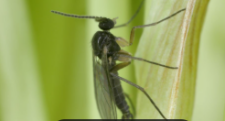
Have you noticed tiny insects flying around your home or office? Fungus gnats are common household pests that are quite annoying. Here are some ways to keep them in check.
  • Water houseplants only as needed rather than on a regular schedule to avoid oversaturating plants and attracting fungus gnat.
  • Dump water out of the saucer once it drains so plants are not in standing water.
  • If fungus gnats are already present in your plants, allow the soil to dry at least through the upper three-inches.
  • For extreme cases, repot the plant in fresh soilless media. Remove as much soil as possible from the plant roots to eradicate the eggs and larvae of the gnats.
Scale Insects
Varying in size and host, scale insects cause damage by sucking sap from plants. Their damage is not restricted to just trees and shrubs. They can devastate crops of herbaceous ornamentals as well. The time for investigating plants for scale is here and early detection is the best way to prevent crop damage.
Many scale varieties have white, tan or brown shell-like coverings that are round or oval in shape. They can blend into the bark so close inspection is necessary. If signs of scale are found, a dormant oil can be used as long as the plant is in dormancy and the temperature is above 40 degrees F. Dormant oils are beneficial because they can combat a wide range of life stages for scale insects. They are less detrimental to beneficial insects because of the application timing and are less toxic than chemical controls. Read more about the use of dormant oils from K-State Extension Entomology.
Here are some resources to check out for more information about specific scale insect varieties and their hosts.

KDA Announces 2025 Bluestem Pasture Survey

0

The Kansas Department of Agriculture is seeking feedback from Kansans for the 2025 Bluestem Pasture Survey to collect information on native tallgrass pasture use and practices. The survey is administered through the K-State Land Use Survey Center and will be open through April 30, 2025.

The Bluestem Pasture Survey provides reliable, accurate information to Kansas ranchers and the agricultural community as a whole. The survey asks about native tallgrass pasture availability, leasing rates, and fencing rates, and should only take about 15 minutes to complete.

“The native tallgrass region of Kansas provides rich grazing opportunities for cattle producers, and this biennial survey collects valuable data that can aid landowners and renters when entering into lease agreements,” said Secretary of Agriculture Mike Beam. “Underwriting this important survey tool is one way our agency works to provide useful data that supports the state’s agriculture industry.”

The 2025 Kansas Bluestem Pasture Survey is voluntary, anonymous and confidential. To complete the survey, please visit tinyurl.com/bluestem25. If you are unable to complete the survey, but wish to participate, please contact Dr. Leah Tsoodle, Director, Land Use Survey Office, at [email protected] or Heather Johnson, KDA economist, at 785-564-6726 or [email protected] to receive a written survey or to complete the survey over the telephone.

The Bluestem Pasture Survey is a collaborative effort between the Division of Agriculture Marketing at the Kansas Department of Agriculture and the K-State Land Use Survey Center within the Department of Agricultural Economics at Kansas State University.

Long before lab-made colors, cactus bugs put the red in ‘redcoats’

0

Centuries before the now-banned red dye No. 3 was synthesized in a lab, humans turned to insects to bring a little scarlet, vermillion or burgundy into their foods, fabrics and artwork.

On Jan. 15, the federal Food and Drug Administration banned the use of Red Dye No. 3 for use in food, decades after banning it in cosmetics. A generation earlier, Red No. 2 was banned as a potential carcinogen.

“Crimson lake, also called carmine lake, is a red pigment derived from carminic acid, which is produced from the cochineal bug, Dactylopius coccus,” said Jon Zawislak, assistant professor of apiculture and urban entomology for the University of Arkansas System Division of Agriculture.

These are scale insects in the order Hemiptera — the “true bugs,” not beetles — that feed primarily on many species of Opuntia cacti, or prickly pears.

“It was traditionally produced by the pre-Columbian natives of Mexico,” Zawislak said. “After the Spanish conquest, it became an important export commodity from the New World to Europe, especially as a textile dye.”

Prickly pear cacti are breeding grounds for cochineal bugs. Adult female and immature cochineal bugs are flightless. But adult males have wings and can fly. After mating on the cactus, the females lay eggs and the nymphs remain on the plant to feed on its juices.

“They produce red carminic acid as a defense against predators,” Zawislak said.

“Once mature, the insects were laboriously collected by hand picking or brushing off the cactus pads, killed by boiling in water, sun-dried and ground into a fine powder,” he said. “It takes more than 30,000 insects to make one pound of this pigment powder.”

Carmine, the primary ingredient in the red dye, is extracted by boiling the powder. The color could be altered by adding other chemicals.

“The brilliant pigment was used to dye the robes of Catholic Cardinals and the British Redcoats,” Zawislak said. “It’s also been used as a natural colorant in many foods and cosmetics, sometimes listed on package ingredients as ‘carmine,’ ‘E120,’ ‘cochineal extract’ or ‘Natural Red 4’ — making whatever it’s in non-vegetarian or vegan, and as a protein it could potentially cause allergic reactions in some people.”

In 2012, Starbucks announced it was phasing out insect-based color from its food, instead using a tomato-based color.

Cochineals are still farmed in parts of Mexico, but the practice is on the decline.

Not the only bugs

However, cochineals are not the only insect in the dye business.

here are a few species that produce similar products, and at least one more is commercially grown — Kerria lacca —  from which ‘lac’ dye and shellac, a natural resin, originate,” said Austin Jones,  extension instructor and director of undergraduate education and outreach coordinator, with the Division of Agriculture and the Dale Bumpers College of Agricultural, Food and Life Sciences. “India seems to be the main area of production, but other countries on the Asian continent dabble as well.”

Use of dyes in food

“Food dyes are used to add or correct the color or shade of a product, often to increase the product’s appeal to consumers,” said Sun Ferreira, assistant professor-food process engineering for the Division of Agriculture and Bumpers College.

“In the case of jams using berries, a processor may not need to add dyes since the fruits will provide enough color,” he said. “However, in products such as breakfast cereals, beverages, syrups, and baked goods, the color provided by the fruits may not be bright or intense enough, and processors may choose to use food colorants.

This happens because the natural red color may fade during cooking/baking and storage. Additionally, the use of colorants or dyes ensures product consistency in appearance, as horticultural products may vary over seasons or varieties,” Ferreira said.

Ferreira noted that food producers have several natural dye options:

  • Beet juice for deep reds and is used in beverages, plant-based meat analogs and baked goods
  • Paprika, turmeric and annatto, when mixed can produce red hues.
  • Raspberries and strawberries can be used to create pinks and reds
  • Red cabbage, which can achieve shades of red to blue depending on the product acidity.

“The issue with some of these natural alternatives is their stability to light, heat, and oxygen, which may alter their color,” he said. “To overcome this, techniques such as microencapsulation can be used to extend and facilitate their application, although this may increase their cost.”

“One of the main and greatly used ‘natural’ alternatives is the use of lycopene extracted from tomatoes,” Ferreira said. “Lycopene-based food colorants are heat, light, and pH stable, which greatly facilitates their usage.”

Ferreira said that are still some synthetic dyes that are FDA approved and widely used, but “also have data showing potential associations with behavioral issues. The FDA and European Union may require label claims for these dyes.”