Wednesday, January 28, 2026
Home Blog Page 214

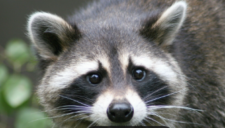
It’s illegal to own a pet raccoon in Kansas. One man is trying to change that

0
Kansas lawmakers are considering a proposal that would allow Kansans who obtain raccoon ownership permits to keep the animals as pets.

For the past four years, Lenexa resident Stephen Kaspar has been feeding and training wild raccoons that wander onto his property.

“It is the highlight of my life,” he said during a legislative hearing on Monday. “These are the things that you do when you become an empty nester. You start playing with raccoons in the backyard.”

But it’s against Kansas law to own a pet raccoon. That’s why Kaspar is urging state lawmakers to pass a bill that would legalize pet ownership of raccoons.

Owners would be required to obtain a raccoon ownership permit, complete educational training and vaccinate their raccoons for rabies and other diseases. They’d have to provide raccoons with their own room or enclosure, a measure Kaspar said is designed to ensure people provide proper care and enrichment to the animals.

“It’s not supposed to be easy — not everybody should just get a permit,” he said. “This is a commitment.”

Kaspar said 20 other states have already legalized raccoon pet ownership. He said the bill text, which he suggested based on other states’ legislation, gives Kansas an opportunity to set a gold standard for pet raccoon ownership.

Rep. Joe Seiwert, a Republican from Pretty Prairie, testified in support of the proposal.

“I was a poor little farm kid back in the ’50s, and we had a lot of wild pets, and actually a little coyote we named Wiley after a famous movie star,” he said.

Seiwert’s legislative intern, Charles Simpson, delivered the remainder of Seiwert’s testimony.

“I strongly believe that this bill strikes an essential balance between allowing individual freedom to keep raccoons while ensuring their health and safety, as well as the well-being of the community,” Simpson read.

Seiwert said he decided to advocate for the bill because he believes some Kansans might already have pet raccoons, unknowingly breaking state law.

“A lot of people have them and don’t realize that they’re not legal pets,” he said.

But some at the hearing expressed concern about the potential for the bill to fuel the spread of infectious diseases like rabies.

“That is a major human health concern when it comes to pet ownership of raccoons, primarily because there is not a label vaccine for rabies in raccoons,” said Erin Petro, state public health veterinarian at the Kansas Department of Health and Environment.

She said rabid raccoons in the U.S. have caused human death as recently as 2018.

Kaspar suggested limiting ownership permits to Kansans who purchase raccoons from breeders certified by the U.S. Department of Agriculture. Those raccoons, he said, have been bred in captivity since the 1960s and are genetically distinct from wild raccoons. He said there haven’t been any known instances of USDA-bred raccoons contracting rabies.

Kyle Hamilton, an assistant revisor of statutes, said the bill in its current form does not distinguish between USDA-bred raccoons and wild raccoons. Language clarifying that distinction could be added if lawmakers decide to work the bill.

Several lawmakers appeared skeptical of the proposal, including Rep. Brooklynne Mosley, a Lawrence Democrat.

“I’m happy I never got a chance to witness my parents as empty nesters because they had my little brother in their mid 40s. So I did not have to witness ‘raccoon dad,’” she said.

She asked Kaspar about local support for his bill. He said more than 100 Kansans have signed a petition in support of the bill, and estimated that he is in communication with 100 other people from around the country on TikTok who support the bill.

“There is a huge movement,” Kaspar said, noting that both Nebraska and Oklahoma have legalized raccoon pet ownership.

“Those are not great states to be comparing us to,” Mosley replied.

Eureka Republican Rep. Duane Droge, a former veterinarian, said it’s difficult to domesticate animals.

“Dogs were domesticated over hundreds and thousands of years,” he said. “You can’t domesticate in one generation.”

“I had a roommate in veterinary school that had (a pet raccoon) that took over the refrigerator,” he added. “It would hide until you opened the refrigerator door and it would take over the refrigerator. You couldn’t even go in the kitchen.”

It’s unclear if lawmakers will work the bill this legislative session. Lawmakers have the option of taking up bills that are introduced but not passed this year during next year’s legislative session.
Dangerous Waters: The Most Snake-Infested Lakes in Kansas You Need to Know About

0

The snake population in the landlocked state of Kansas is remarkably varied. Kansas’s ecosystems are home to almost forty different kinds of snakes, and there are numerous lakes and reservoirs where they could be hiding nearby.

Although it is fortunate for both residents and tourists that only five of them are poisonous and that no snake bite deaths have been reported in more than 50 years, it is still unsettling to encounter one in the wild if you are even the slightest bit afraid of snakes.

It’s highly probable that you may encounter one or two of Kansas’s many stunning lakes while you’re there. The lakes in Kansas with the highest snake infestations are listed below.

Wilson Lake

The 9,000-acre Wilson Lake, often called Wilson Reservoir, is regarded as one of the most picturesque places in Russell County, Kansas.

A wide range of wildlife, including bears, deer, waterfowl, and many others, consider Wilson Lake’s rocky shorelines and numerous outcroppings and cliffsides to be great real estate.

Regarding snakes, there is a chance of coming across the Western Rat Snake, which has been observed in this area of Kansas.

It has a cream-colored belly with blotchy spots and is distinguished by its keeled scales, black body, head, and tail. Large bodies of water, wooded areas, and hillsides are all part of its natural environment.

Despite being innocuous to people, rodents, birds, and rabbits—which are the main food sources for the Western Rat Snake—are not as lucky.

Lone Star Lake

Located inside the boundaries of Douglas County, Kansas, Lone Star Lake is a true gem. It is a 185-acre lake that is entirely artificial.

It is a popular location for outdoor enthusiasts since it offers a variety of activities, including fishing, camping, and water sports.

Because it offers a naturally rich habitat for some species to flourish, it might also be a desirable location for snakes. The Rough Green snake is one of the snake species that may be found here.

Its yellow underside and bright green, slim body make it easy to identify, and it is most active during the day.

You can be sure they are totally safe if one slithers past your toes while you’re hiking the surrounding paths around the lake. The only food the Rough Green snake consumes is insects.

Clinton Lake

Another gem in the crown of Douglas County, Kansas, is Clinton Lake. Because of its crystal-clear blue seas, it is a popular outdoor attraction.

It offers more than 50 kilometers of hiking trails and is used for boating, fishing, and leisure. In addition, it supplies 10,000 people with water and manages local flooding.

Clinton Lake, which spans 9,200 acres, provides a wealth of habitat for several wildlife, including cormorants, gulls, Great Blue Herons, and White-Tailed Deer, to mention a few.

One snake species to keep an eye out for at Clinton Lake is the gopher snake, which is easily recognized by its frequent hissing when approached and is probably lurking in the surrounding forests.

The Gopher Snake is quite harmless, so don’t be alarmed by its hiss if you come across it.

Hillsdale Lake

Hillsdale Lake is located in Kansas’ Miami County. Like a lot of lakes and reservoirs, it is under the management of the U.S. Army Corps of Engineers, who keep an eye on the area to manage damage, water supply, and flood control.

With 8,000 acres of adjacent public areas and almost 4,600 surface acres, the lake is perfect for recreational purposes.

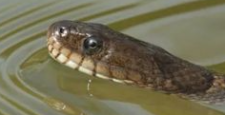
Since this area is a part of their natural habitat, it won’t be unheard of for you to come across a real water snake while you’re enjoying these waters.

They favor lakes and mountain streams and are the least aquatic of Kansas’ water snakes. They are about 55 inches long and may be recognized by their cream-colored belly and dark brown hue.

The primary distinguishing factor when trying to identify the Graham’s Crayfish Snake, another local snake, is that they only eat crayfish. In this region, water snakes typically feed on fish and frogs.

Milford Lake

Milford Lake, the biggest lake in Kansas, is located in Geary County. It boasts more than 160 miles of coastline, including sandy beaches and recreational boat launches, and is nestled within the well-known Flint Hills.

Additionally, visitors like kayaking, canoeing, and camping. As you enjoy your time at Milford Lake, you may come across the Eastern Hog-Nosed snake, but don’t be alarmed by its large size, rough scales, and upturned snout.

They are not dangerous to people, however they prefer to hide in forests and by bodies of water.

For this type of snake, toads are the only food item on the menu. As the Eastern Hog-Nosed snake’s sole prey, toads are essential to the environment of Milford Lake because they help regulate the toad population.

To Conclude

For animals, the state of Kansas is a natural paradise. Some of the nicest lakes and reservoirs in the area are surrounded by vast tracts of unspoiled grasslands and woodlands.

Because they contribute significantly to their habitat and healthy ecosystems, snake infestations actually turn out to be a thriving population.

Although it is uncommon to come across a venomous snake among the 40 species found in Kansas, you are likely to see at least one of the snakes listed here, so keep an eye out and watch your step!


Overcome poor soil, lack of space with straw bale gardening

0

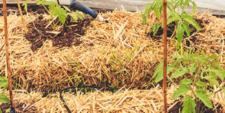
Straw bale gardens are becoming popular with growers plagued with poor soil or limited garden space, said University of Missouri Extension horticulturist David Trinklein. Straw bale gardening combines container gardening and raised-bed gardening into one green-thumb package.

You can grow many vegetables, fruits and flowers in a straw bale garden, Trinklein said. Cool-season varieties can be planted as early as mid-March if you cover plants with protective materials such as clear plastic or floating row cover.

Use bales of straw, not hay, for gardening, he said. Hay contains weed seeds and usually is too dense for best results. Choose bales held together tightly with twine. Farmers and local farm supply stores are good sources for straw. Avoid bales made from wheat or oats treated with an herbicide during production.

To assemble a straw bale garden, first choose a location that gets at least six to eight hours of direct sun. Once bales are watered, they become heavy and hard to move. If you place bales on the ground, Trinklein suggests putting them on a base of thick layers of newspaper to control weeds. Set bales so that twine is on the outside and cut ends are face up. Place bales in single rows to allow best access, air circulation and sun exposure.

Successful straw bale gardening begins with conditioning the bales. This involves adding water and nitrogen to help bales partially decompose. Conditioning helps prevent nutrient tie-up once plants are added, Trinklein said.

Nitrogen deficiency is common in straw bale gardening. This happens when the soil microbes take nitrogen away from garden plants as they break down the organic matter in straw. If leaves turn yellow, you need to add more nitrogen.

To condition bales, soak them with water daily for 12 days. On days 1, 3 and 5, add ½ cup of a high-nitrogen fertilizer such as urea, ammonium nitrate or a lawn fertilizer to each bale. If using lawn fertilizer, make sure it is not the “weed and feed” type, which contains herbicides that would harm garden plants.

Continue to water to activate the microbes and break down the straw. On days 7 and 9, add only ¼ cup high-nitrogen fertilizer. On the 11th day, add 1 cup of a general-purpose fertilizer such as a 12-12-12 mix to each bale.

After the 12th day, touch the bale to check for heat. If it is cool to touch, you can plant.

To plant, dig small pockets or holes into the straw and set plants into the holes. Fill the holes with soilless medium and cover the plant’s roots. Water the base of the plant to settle the medium around the root system.

If planting seeds, put a layer of sterile potting media on top of the bale and tamp it down into the bale. Plant seeds according to package instructions.

Straw contains few nutrients, so feed the plants regularly with a water-soluble liquid fertilizer solution. However, do not overfertilize plants growing in straw bales, Trinklein said. Otherwise, you end up with plants lush with abundant vegetative growth and little fruit. Too much nitrogen causes pollen abortion, and flowers fall off.

Be especially careful not to overfertilize vining crops such as cucumbers and melons. For sweeter-tasting melons, cut back on water when the fruits begin to size.

Keep bales adequately watered during the growing season. Drip lines or soaker hoses may be helpful and eliminate hand watering.

Straw bales provide conditions for good root growth, especially for tomatoes. You will see few weeds, but mushrooms may appear, Trinklein said. Discard them. Earthworms like the nutrient-enriched bales and help plants thrive. You should see fewer pests than in conventional gardening.

Salad greens are a perfect choice for straw bale gardening, Trinklein said. You can enjoy greens up to frost, and even after frost with protection. Tomatoes, peppers and eggplant also grow well in straw.

Although space in a straw bale garden is limited, avoid the temptation to crowd plants. Space them as you would if growing in soil. MU Extension’s “Vegetable Planting Calendar” (G6201) lists typical spacing for garden vegetables. It is available for download at https://extension.missouri.edu/p/g6201.

Unfortunately, straw bales last only one growing season. However, used bales make excellent compost.

Get out and play: K-State expert says outdoor time is learning time for kids

0
Time spent outside benefits physical and mental development.

Turns out, time spent outside is good not only for children’s ability to be physically active. Kansas State University child development specialist Bradford Wiles says it’s pretty valuable for their minds, as well.

“There are so many benefits for adults and children to be together,” Wiles said. “Not only do we respond better mentally and physically to fresh air, but being outside typically involves some movement. It’s a great opportunity for parents and their children to learn with and from each other.”

“Mentally,” he adds, “there are just so many cool things happening. Trees are growing, plants are no longer dormant, there are insects everywhere and other parts of the natural environment are starting to emerge. Getting outside is a really good opportunity to spend time with your family just having a good time.”

Weather is rarely predictable, but spring should provide warmer weather that is conducive to outdoor activities, Wiles said, noting that parents don’t need to plan structured activities.

“I think some of the best advice I can give to anyone is that there’s nothing wrong with saying, ‘hey, let go outside and let whatever happens, happen,’” Wiles said.

Unplanned activity “gives your children an opportunity to do some self determination,” he said. “They are continually being told what to do and how to do it, so going outside opens up the possibilities for them to engage in self-directed play. Let them choose what they’re going to do. That’s really empowering for them.”

Wiles describes play as “the work of early childhood.”

“For children, they’re completely learning about their world through play. They are learning cause and effect – they are beginning to understand what happens if I do ‘this.’ That’s part of growing up and so the opportunity to engage in self determination builds their self esteem.”

Wiles said children develop self-efficacy – an individual’s belief in their ability to making things happen – by exploring their world. He notes it can be simple things, such as throwing rocks or drawing in the mud.

“All of those things feed into a mental health component of child development,” Wiles said. “There’s always value in getting some energy out; that’s a shorter term effect. But the longer term is very much about increasing self efficacy and making sense of what they can and can’t do.”

“That’s an important part of growing up. What we know is that children who get experiences in managing frustration from an early age, and learn the skills that go with that, end up being much healthier mentally going forward.”

The same skills can be learned during indoor play, but getting outside as the temperatures get warmer provides a larger world to explore.

“One of the things I love about being outside is that it’s almost it’s own reward,” Wiles said. “We all generally feel a little bit better. Yes, the sun will take your energy out of you…but at the end of the day, it’s just great. Being outside and playing with your kids or letting them play on their own or with peers…What’s not to love?”

More information on child development is available online from K-State Research and Extension.

Avocado Addiction

0

Trent Loos
Columnist

What an interesting history of avocado production and consumption in the USA.
Because I have a limited amount of knowledge about avocado growing and marketing, despite having a relative in the business of selling this tree fruit, I thought I would do a little  research into the implications of tariffs on Mexican imports as it affects avocado consumers. OH MY! I had no idea the history of these little gems and how getting them here isn’t much different than importing drugs from the cartels in Mexico. You can literally find pictures of armed guards around avocado trees in Michoacan, Mexico that are reportedly the cartels protecting their crop. This avocado thing is a very big deal with a ton of interesting history.
First off, let’s look at some consumption facts. Americans are “addicted” to avocados. Apparently, the region in Southern California best suited to growing avocado trees has never been able to grow enough to even satisfy the domestic market. USDA indicates that Americans eat the equivalent of 7 lbs of avocados annually. Thanks to a man named Mr. Rudolph Hass and his tree grafting skills, the production of avocados got much easier. Clearly genetics always have and always will matter.
Now for the history lesson. On February 27, 1914, B.T. Galloway, then Acting U.S. Secretary of Agriculture, signed a Notice of Quarantine Number 12, which stated: “I… do hereby declare that it is necessary, in order to prevent the introduction into the United States of the avocado seed weevil, to forbid the importation … from Mexico and Central America, the seeds of the avocado.” The authority for this action rested with section 7 of the Plant Quarantine Act, approved by Congress on August 20, 1912.
Right off there is nothing new about this trade dispute although the California avocado industry rightfully made that well known because of the risk to trees growing in Florida and California. That is basically how imports were banned until February 8, 1973, when the original avocado seed quarantine was terminated and 7 CFR Part 319 was amended concurrently, adding the avocado seed to the list of items prohibited from Mexico and all countries in Central and South America because of the avocado weevil on the justification that better protection was afforded by this regulation. That only lasted a short 20 years and the fight commenced again.
Mexico truly hit a gravy train and wanted to expand the approved area that avocados could come from into the U.S. On February 5, 1997, the USDA issued a Final Rule authorizing the importation of Mexican avocados into the U.S. subject to certain conditions. This was the first time USDA used the so-called “systems approach” to manage risks posed by multiple quarantine pests known to occur in the area where fruit was originating. The Final Rule allowed for shipment of Mexican avocados to 19 northeastern states during four months of the year—November through February.
This systems approach is still a big deal today. For example, we are importing pork from Poland even though wild hogs in Poland possess African Swine Fever. The wild hogs are from a “region” different than the location of the Smithfield Pork plant that sources our imports. In no way, shape or form do I believe that pork coming into the United States from Poland should be equivalent to avocados coming in from Mexico, but I am sure the avocado growers of California do not agree with me.
Fast forward to 2015 when the USDA lifted a ban, which had been in place since 1914, on all imported avocados from Mexico. The ban was initially put in place due to concerns about the Mexican fruit fly, a pest that can cause significant damage to avocado crops. However, with the implementation of new safety protocols and inspection procedures, the USDA deemed it safe to allow Mexican avocados into the US market. Since then, per capita avocado consumption in the U.S has ballooned from 2 pounds in 2001 to calendar year 2024 where it is in excess of 7 lb. per person annually.
The moral of the story is that there are a few things we can not produce here in the United States as easily as other countries can, but we still cannot put our domestic production at risk. The best thing I can ask for is that the next time you order guacamole or buy an avocado, you at least consider the all-out battle it has been to keep it on the menu as a choice for consumers in the domestic market.