Wednesday, January 28, 2026
Home Blog Page 213

Hay feeding strategy

0

K-State beef cattle experts share how to incorporate older hay into the diet

To help reduce waste and stretch the food dollar, many people look for ways to use items in the refrigerator before they spoil.

Beef producers with old hay stored on their operation often look for appropriate ways to incorporate that into the forage feeding strategy. This was the topic that Kansas State University Beef Cattle Institute experts addressed on a recent Cattle Chat podcast.

In this case, a listener runs spring and fall-calving cows in the same pasture and is trying to determine how to best meet the varied nutritional requirements with hay that is 2-3 years old.

“Depending on the type of hay, when it was cut, and how it was stored, there could be a lot of variability in the quality of that forage,” K-State nutritionist Phillip Lancaster said.

To help determine the quality of the hay, K-State veterinarian Bob Larson recommended producers keep track of the harvest date.

“If we know the harvest date and are familiar with the maturity pattern in the area, we will have a pretty good idea about the nutrient quality of that hay,” Larson said.

Lancaster said the highest quality hay needs to be fed to lactating cows that have high maintenance energy requirements. He said producers can use older hay, but they will likely need to offer a vitamin and mineral supplement as well.

“In 2-3-year-old hay that is stored outside, the beta carotene in those bales deteriorate rapidly, so it is important to offer them a vitamin A supplement,” Lancaster said, adding that the minerals need to be fresh.

In some herds, producers can separate the fall and spring calving cow herds, allowing them to offer the older hay to cows with lower maintenance requirements, such as cows in mid-gestation. But in this case, the cows are maintained together and that leads to a different strategy, the experts said.

“With the fall-calving cows just coming out of the breeding season and the spring-calving cows in their last trimester, I recommend primarily offering them hay cut this year, but every once in a while, you could throw them a bale of the older hay to try to use it up and that should allow them to keep from getting too thin,” Lancaster said.

To hear the full discussion, listen to Cattle Chat on your preferred streaming platform.

Keeping your IDentities Safe

0

In January of this year, Keeping IDentities Safe reached an agreement with DSA (www.documentsecurityalliance.org) under which DSA will now be publishing this newsletter for its members. DSA is an association of more than 100 government, industry and academic organizations dedicated to securing the production, issuance, and authentication of government-issued identification documents and banknotes to help combat fraud and other criminal acts.

As a courtesy to our past readers, DSA has enabled Keeping Identities Safe the ability to send the DSA newsletter to you for the first quarter of 2025 (January, February, and March). The newsletter after that time will only be sent to the DSA mailing list.

DSA will continue to publish this monthly newsletter as a benefit to its government, academic and corporate members.

If your organization is interested in joining DSA, please find information about membership at https://documentsecurityalliance.org/join/application/.

If you are an employee or associate of an organization that is currently a member of the DSA, please email your newsletter subscription request to: info@documentsecurityalliance.org.

If you are an employee of a federal, state, county or city government, or otherwise are a volunteer with local law enforcement and would like to receive their newsletter, please email your newsletter subscription request to: [email protected].”

Carry Your Physical REAL ID When You Travel in 2025!

If you have traveled by air in the past year, it is highly likely that you saw one or more of the brightly illuminated Transportation Security Administration (TSA) notices of the May 7, 2025, deadline requiring passengers to present REAL ID compliant drivers’ licenses (DLs) or compliant IDs such as national Passports or Enhanced DLs.

TSA’s Domestic Aviation Operations is responsible for about 440 Federalized airports, screening more than 2 million passengers daily, and totaling over 815 million passengers annually. At most of those 440 airports, the passenger identity confirmations are assisted by electronic systems in which the inspections are assisted by ID scanning screens or devices into which IDs can be inserted to confirm the validity of the physical document as well as the information on it. Most of these machines were built and installed prior to the advent of mobile driver’s licenses (mDLs). In the past two years, following extensive pilot programs at three airports, TSA has fine-tuned new electronic machines that can read mDLs as well as physical identity documents. i.e., drivers’ licenses.

In 2024, TSA began deploying the new ID scanners and training the TSA passenger inspectors in their use, along with related connectivity to DMV sourced data. This has been a complex endeavor that required care to ensure reliability. Consequently at this date, only 31 airports in the USA are listed by TSA as having the capability to verify passenger identities by reading digital information. TSA will add digital screening at other large airports in 2024, as rapidly as staffing and budget constraints allow. (See list compilation below for those already prepared.) All DMVs advise you to carry your physical REAL ID on your person to ensure you can move quickly through TSA checkpoints.

On September 27th, 2024, I was caught at the Atlanta airport in the midst of flooding from Hurricane Helene. Although I arrived at the airport more than two hours prior to boarding, I didn’t get through TSA security in time to catch my flight, due entirely to long lines at TSA checkpoints. This was despite being in the TSA PreCheck lines.

Many of my fellow passengers shared my fate, some due to arriving at the airport with their cell phones containing mobile IDs, but without their physical driver’s licenses. In the press of congestion, an overloaded wi-fi, and the physical limits on TSA personnel, many missed their flights. I observed more than a dozen fellow travelers who only had mobile IDs in the TSA PreCheck line. These travelers were pulled from the line because the electronic readers were unable to verify their passenger information. They were not happy, and likely were not able to fly out of Atlanta’s airport that day as TSA personnel were so overwhelmed by the crush of passengers.

I was fortunate that United Airlines booked me out on the next flight to DCA, as that day – according to FlightAware – more than 170 flights into or out of Hartsfield-Jackson Atlanta International Airport were canceled, and more than 500 flights were delayed.

Weather events remain disruptive, and affect the reliability of digital systems, so carry your physical ID when you travel!

• My experience in Atlanta demonstrates that weather or other circumstances can create surprise problems when only having an mDL with you, so carry your physical card. TSA can verify the physical ID using the readers in place at every airport.

• There is also the possibility that in the months following May 7th, 2025, mDLs will NOT be accepted at TSA checkpoints because the regulatory waiver process will not be completed by any state. And the waiver process is the only way TSA will be able to accept an mDL. Per federal regulations final in 2024, no state’s mDLs will be deemed compliant unless the respective states have received a formal granted a waiver by TSA.

The following is a compilation of links and summary information to help readers get ready for the REAL ID deadline on May 7, 2025.

The Transportation Security Administration continues to roll out equipment and training so that additional airport are able to accept REAL ID compliant mDLs, once the states receive their respective waivers. A mostly complete list of those airports follows, and readers should save the link to the TSA map of airports that are capable of verifying digital ids.

https://www.dhs.gov/real-id/real-id-mobile-drivers-licenses-mdls

“Mobile driver’s licenses,” or “mDLs,” are digitized versions of the information on physical driver’s licenses and identification cards, and are stored on mobile electronic devices, such as smartphones.

mDLs Approved for Federal Use

Mobile IDs from the following states are now approved by TSA (see link for details: Arizona, California, Colorado, Georgia, Hawaii, Iowa, Louisiana, Maryland, New Mexico, New York, Ohio, Puerto Rico, Utah, Virginia, West Virginia; https://www.tsa.gov/digital-id/participating-states

Most Federal agencies are at least twelve months away from having digital reading capability at their physical sites. In fact, with the exception of military bases and “secure federal facilities,” digital readers are few and far between at government buildings. The deadline for agencies to submit their planned locations for requiring REAL IDs for entry is May 7, 2025.

A recent posting from the Department of Homeland Security.

Not all Federal agencies are accepting mDLs. Before attempting to use an mDL, individuals should contact the agency they intend to visit to ask whether the agency accepts mDLs. To reduce risk of potential disruptions, TSA strongly encourages all mDL holders to carry their physical REAL ID cards in addition to their mDLs.

In conclusion, mDLs are the near future for controlled travel by airports, airlines and military bases, where reliable digital equipment and trained users are affordable and in place. Despite this, always carry your physical driver’s license or state- issued ID!

The 31 Airports in the United States where TSA can verify passengers’ identities with mobile IDs, including TSA Pre-check Touch IDs and digital passports, as of January, 2025 – from TSA Digital ID Map 1/21/2025 listed by city

https://www.tsa.gov/travel/digital-id/map#CID

Atlanta International Airport (Hartsfield-Jackson), Georgia

Baltimore/Washington International Maryland, (Thurgood Marshall) Airport

Cedar Rapids, (Eastern Iowa Airport), Iowa

Charlestown West Virginia International-Yeager Airport

Chicago, Illinois (O’Hare) International Airport

Cincinnati, Ohio (/Northern Kentucky) International Airport

Columbus, Ohio International Airport (John Glenn)

Dallas/ Fort Worth, Texas International Airport

Denver, Colorado International Airport

Detroit, Michigan Metropolitan Airport

Des Moines, Iowa International Airport

Dulles, Virginia International Airport

Gulfport-Biloxi, Mississippi International Airport

Honolulu, Hawaii Daniel K. Inouye International Airport

Huntington, Indiana Tri-State Airport

Jackson, Mississippi (Medgar Wiley Evers) International Airport

Las Vegas, Nevada (Harry Reid) International Airport

Los Angeles, California International Airport

Miami, Florida International Airport

New Orleans, Louisiana International Airport (Louis Armstrong)

Newark, New Jersey Liberty International Airport

New York JFK International Airport,

New York – LaGuardia Airport

Oklahoma City -OKC Will Rogers World- Airport

Phoenix Sky Harbor International Airport

Richmond International Airport

San Francisco International Airport

San Juan, Puerto Rico (Luis Muñoz Marín) International Airport

San Jose Mineta International Airport

Salt Lake City International Airport

Washington, DC – National Ronald Reagan Airport

 

Understanding Your Knife Rights in Kansas: A Legal Guide

0

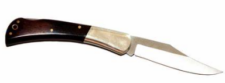
Kansas knife laws are relatively permissive, allowing citizens to enjoy a wide range of rights when it comes to knife ownership and carry. Here’s a comprehensive guide to understanding your knife rights in Kansas:

Legal Knives

Kansas law allows the ownership and carry of most types of knives, including:

  • Pocket knives
  • Fixed-blade knives
  • Switchblades
  • Balisong (butterfly) knives
  • Disguised knives
  • Karambits
  • Swords and sword canes
  • Machetes
  • There are no restrictions on blade length for knives in Kansas.

    Illegal Knives

    The only knives explicitly prohibited in Kansas are:

    • Throwing stars
    • Ballistic knives

    Manufacturing, selling, buying, transferring, or possessing these items is unlawful within the state.

    Carrying Laws

    Open Carry

    Open carry of any legal knife is permitted in Kansas without restrictions.

    Concealed Carry

    Concealed carry of knives is generally allowed in Kansas, with a few exceptions:

  • You cannot carry blackjacks, billy clubs, sand-clubs, slung-shots, bludgeons, or metal knuckles concealed.
  • Ballistic knives are prohibited from concealed carry.

    Restricted Locations

    While Kansas knife laws are generally permissive, there are some locations where carrying knives is prohibited:

    • Schools and educational institutions
    • Government buildings
    • Jails and juvenile correction facilities
    • Some public places
    • Private properties (if prohibited by the owner)
    • Public transportation (if prohibited)

      Age Restrictions

      Kansas does not have specific age restrictions on knife ownership or carry. However, minors should have parental permission and supervision when handling knives.

      Preemption

      Kansas has a statewide preemption law that makes knife regulations uniform across the state. Local municipalities cannot enact more restrictive knife laws than those set by the state.

      Restrictions for Convicted Felons

      Convicted felons face restrictions on knife ownership and carry. It is unlawful for a convicted felon to own or possess certain types of knives, including daggers, dirks, stilettos, and switchblades.

      Penalties for Violations

      Violating Kansas knife laws can result in various penalties:

      • Carrying illegal knives: Up to two years imprisonment or a fine up to $600.
      • Carrying knives in prohibited locations: Up to one year imprisonment or a fine up to $500.

      Kansas knife laws are generally favorable to knife owners, with few restrictions on the types of knives that can be owned and carried. However, it’s crucial to be aware of the prohibited locations and the restrictions that apply to convicted felons. Always exercise caution and responsibility when carrying and using knives in public spaces.

Celebrate 20 Years with the Ultimate Experience!

0

Make the 20th Anniversary Grand Finale of the Symphony in the Flint Hills Signature Event truly unforgettable with our Patron Package. This exclusive package offers premium access and special amenities, ensuring you enjoy this historic event in the most memorable way possible. Don’t miss your chance to be part of this once-in-a-lifetime celebration!

Special Guest Artist: Logan Mize

General Admission tickets for the Signature Event will be available for purchase starting Saturday, March 1 at 10:00 A.M.


Kansas farmers and wetlands vie for water. A new proposal will aim for long-term sustainability

0
The tension over water for Quivira National Wildlife Refuge has lasted for decades. But recently, water users made progress toward using less groundwater in the area that impacts Quivira.

STAFFORD COUNTY, Kansas — A proposal to resolve decadeslong wrangling over water in central Kansas is slated for release this spring. The draft plan falls under a federal program that has under previous administrations traditionally opened doors to significant financial backing for water conservation projects.

Years of talks, policy proposals, local conservation incentives, data crunching and a few lawsuits haven’t solved a conflict that effectively pits rising water use by humans — primarily for crop irrigation — against wildlife conservation at one of the most important wetlands in the country.

Instead, streamflows to Quivira National Wildlife Refuge have worsened over time.

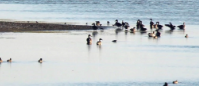
Although Quivira has water rights under Kansas law, in practice, the refuge often stands too dry to support the hundreds of thousands of shorebirds that must find shallow waters in the heart of the continent to survive their long migrations.

Two recent developments may open a new chapter in the saga.

Firstly, water users exceeded an important target to pump less groundwater in 2025 in the watershed that impacts Quivira.

Secondly, local and federal officials are crafting the first watershed plan for the area under a federal program that in past years has covered up to 75% of construction and installation costs for projects that benefit water supplies for agriculture.

The rest of the money would need to come from state and local sources.

The Natural Resources Conservation Service — which is part of the U.S. Department of Agriculture and is the lead agency working on the proposal — said in an email that federal money depends on congressional appropriations, “so funding is not guaranteed.”

NRCS said the goal of the plan is “to provide for long-term, sustainable agricultural water management.”

The public will get its first peek at the draft this spring, the agency said. A public comment period will follow.

NRCS is working with local water officials on the proposal.

“We want to see this thing resolved,” Orrin Feril, manager of the area’s groundwater district, said in an interview in September, and “to see Quivira get the water that it feels entitled to, that makes it so that Quivira can flourish into the future.”

Big Bend Groundwater Management District 5 spans parts of eight south-central Kansas counties. It represents irrigators and other groundwater users, such as municipal utilities and landowners pumping water for livestock.

The U.S. Army Corps of Engineers, U.S. Fish and Wildlife Service, U.S. Environmental Protection Agency, Kansas Department of Health and Environment and Kansas Department of Agriculture are also cooperating on the project, NRCS said.

NRCS said the draft evaluates “a wide range of options” for achieving sustainable water use.

Some of those options include analyzing the potential impact of: state-mandated water cuts; buying water rights from irrigators and retiring those rights; paying farmers to cut back on pumping; drilling new wells or repurposing existing ones to pump groundwater directly to Rattlesnake Creek; or having water users create the kind of locally imposed pumping limits that northwest Kansas farmers employ to slow depletion of the Ogallala aquifer.

Not enough water for everyone who wants it

The way water rights work in Kansas, landowners who have held the paperwork longest get precedence.

Quivira has had water rights since the early 1960s that specify how much water the refuge is entitled to from Rattlesnake Creek, the main waterway that feeds into it.

Like other streams in this part of the country, the water in Rattlesnake Creek comes in large part from an underground aquifer spilling into the creek bed.

Over the decades, the state of Kansas also approved hundreds of other water rights in this area that entitle farmers and others to drill wells and use groundwater. (The state no longer grants any new groundwater rights in the area.)

Depleting this underground water means that the aquifer has less to give to Rattlesnake Creek. A state investigation found that since the 1970s, the creek has often run too low to fulfill Quivira’s water rights.

The refuge’s needs take precedence, on paper at least, over the vast majority of other water users in the watershed because of seniority.

Kansas enforces a senior water right, however, only if the owner of that right demands action.

The Fish and Wildlife Service owns the refuge. After decades of trying to resolve the matter through voluntary efforts, it began about a decade ago to ask Kansas to act. It repeatedly filed to have its water rights upheld, but it also eased off each time amid public and political pressure.

Communities near Quivira have begged the federal agency to weigh the potential harm to local incomes if Kansas imposes cuts on groundwater pumping.

The Rattlesnake watershed, nearly 100 miles long, cuts northeast across half a dozen rural counties before reaching the wetlands.

In 2023, more than 30 community leaders cosigned a letter warning against hammering the regional economy, hurting the tax bases of local governments and schools and making it difficult to attract new employers, such as a proposed dairy.

Politicians from both major parties backed their concerns, including Democratic Gov. Laura Kelly and Republican U.S. Sen. Jerry Moran.

The Fish and Wildlife Service agreed to a fresh round of talks in lieu of seeking enforcement of its water rights. That means groundwater officials, government agencies, agriculture groups and conservation groups meet regularly in search of a solution that won’t require Kansas to impose top-down cuts on groundwater pumpers who impact Quivira.

The Fish and Wildlife Service kept its demand for enforcement on file with the state of Kansas in case things don’t work out. This looms over the situation, adding urgency.

But with a new administration in Washington, D.C., critics of the Fish and Wildlife Service’s stance see an opportunity.

This month, Republican U.S. Congressman Ron Estes wrote to the Trump administration, urging it to ratchet down the stakes. He called Fish and Wildlife’s looming pressure “one of the significant barriers” to solving the situation, and asked for a promise that the agency won’t pursue enforcement of Quivira’s water rights at least through the end of 2026.

“Agriculture is the basin’s primary industry,” he wrote. “Any reduction on the farms’ ability to irrigate would be an economic disaster for thousands of hardworking Kansas families.”

A successful start to a five-year plan

Under the Biden administration, the Fish and Wildlife Service had agreed to hold off on pursuing top-down enforcement and instead see whether landowners could find ways to hit annual targets for five years to divert less water from Rattlesnake Creek.

By August 2024, it became clear that they would hit the first target, after enough landowners signed agreements promising to reduce pumping in 2025.

Kelly and Moran celebrated the news.

“The unparalleled progress we have made is encouraging,” Kelly said, adding that work will continue to ensure water for wildlife “while avoiding economic damages to local communities.”

“The work done today will help ensure farming and ranching operations continue for generations to come,” Moran said.

The Nature Conservancy also applauded the development.

“It demonstrates that the collective efforts of local communities, conservation groups, natural resource agencies and private industry drive on-the-ground solutions so that people and nature can thrive together,” said a written statement from Heidi Mehl, the group’s director of water and agriculture programs in Kansas.

A mishmash of programs and incentives made it possible to hit the first-year target. The single biggest factor was a new Central Kansas Water Bank program that offered money to groundwater users if they agreed to ease off their pumps. The program prioritized areas of the Rattlesnake watershed that impact Quivira the most. It sealed dozens of deals to reduce water use for 2025.

But that money wasn’t easy to come by. The state kicked in $4 million and an alliance of state and regional organizations scrambled to raise several hundred thousand more.

It’s unclear how far this approach can stretch. The annual targets require additional reductions to water usage in the area for each of the next four years.

And still, the five-year plan is just a start. If successful, it would prevent the water shortage from continuing to worsen, but it wouldn’t end the shortage.

That’s why people on all sides of the issue want to see a long-term fix, even if they don’t all agree on how to achieve it.

“So that we’re not having to do this every single year … And so that the issue is no longer hanging over this region — and we’re moving forward,” said Feril, from the Groundwater Management District.

Audubon of Kansas, which sued unsuccessfully to protect Quivira, said in a statement last summer: “Quivira needs its water right upheld.”

Past voluntary efforts have consistently failed to resolve the situation, it said.

“Without more water, only a few small pools remain,” it said. “Birds must compete with each other for limited resources. Concentrations of birds in smaller areas also increases the chances of disease transmission.”

North American shorebird populations have shrunk by an estimated one-third over the past 50 years. Many of these species migrate among North America, the Caribbean, and Central and South America. They face a wide variety of risks on their international paths, including pollution, intense hunting and the loss of wetlands and grasslands to agriculture and other development.

In the U.S., they rely on finding wetlands far away from the shores they’re associated with.

Each spring, more of these birds cut north through the middle of the United States than follow the Pacific and Atlantic flyways.

This is why Quivira’s salt marshes, more than 700 miles from the nearest coast, play host to so many shorebirds. Hundreds of thousands of them can stop to refuel at Quivira and nearby Cheyenne Bottoms in a single migration season.

The two sites also support endangered whooping cranes, a species that numbers fewer than 700 wild birds, and hundreds of thousands of ducks, geese, egrets, ibises and other avian travelers.

Cutting back on pumping groundwater in the area would increase the amount of water bubbling into Rattlesnake Creek and Quivira, but not immediately. Groundwater moves slowly, a state investigation concluded, so it could take anywhere from two years to decades to see the results.