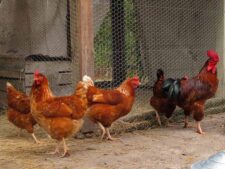
For most of us, summers are getting hotter and drier. Heat stress and dehydration are the number one cause of death for chickens during extreme heat. Before we talk about how to keep your chicken flock cool during summer, let’s quickly discuss why they get hot & overheated. Chickens get hot because they are covered in insulating feathers and they cannot sweat. Down chicken feathers are great at insulating the body and trapping heat because they are soft and fluffy.
Thermoregulation in Chickens
Thermoregulation is how a chicken regulates its core body temperature. There are seven Temperature Zones that chickens can experience. The Ideal or Comfort Zone is when air temperatures are at 70-75F, this is the optimal temperature for chicken health. As air temperatures rise to 76-90F, chickens enter the Warm Zone, they move away from each other, eat less, and drop their wings to their sides. At 91-105F chickens experience Heat Stress and start panting, drinking more, and egg production decreases or ceases. Temperatures above 105F become fatal as the chicken’s core temperature becomes too high. On the other hand, air temperatures of 51-65F start to chill chickens, they will ruffle their feathers and eat more feed to stay warm. Chickens experience Cold Stress when air temperatures are at 26-51F, chickens start to shiver, congregate together for warmth, and egg production will slow and even cease completely. Air temperatures below 25F are a fatal cold zone for chickens and if exposed to these temperatures without water, shelter, or protection from the elements, the chicken’s core temperature drops too low. Temperature Zones vary depending on breed, age, weight, climate, how well the chickens have acclimated to the climate, and health (The Chicken Health Handbook, Gail Damerow, pages 103-107). Browse chicken cage parts for DIY bird cage ideas.
How Chickens Keep Cool
Chickens have an internal body temperature of 105-107F. And when the outside temperature is above 80F, it’s hot for chicks, in general. Chickens keep cool during heat in a few different ways. During the summer the combs and wattles on chickens became larger and redder, not just from being in production. Combs and wattles get larger and redder in the summer because the chickens are pumping blood through them. The blood cools quickly and returns to the rest of the body cooling the chicken. Here you can check out chicken cages to keep them in healthy conditions.
Panting is another way that chickens keep cool. Chickens don’t have sweat glands so they cannot sweat and that is why they pant with their beaks open. Chickens also hold their wings out from their body to dissipate heat. Dust bathing is another way that chickens keep cool during the hot summer. My chickens especially like peat moss to dust bathe in during the summer, and year round. I purchase bales of peat moss and dump them into my run. Chickens will stay in the shade during the hottest parts of the day. Water consumption increases and you’ll notice that you will need to refill your waterer more often.
Best Ways to Keep Poultry Cool in Hot Summers
So how can you help to keep your chickens cool when the temperature is above 80F? The three best things to provide your chickens to keep cool are water, shade, and air flow. I like to freeze water bottles and place them in my waterer. At the end of the day I wipe off the water bottles and refreeze them to use again. I purchase bales of peat moss and dump them into my run for the chickens to scratch and dust bathe in. Potting soil works well too. Sometimes I’ll wet the peat moss down to make it less dusty. Some poultry owners install fans in their poultry areas to provide airflow.
The HatchingTime grow out pens and breeder cage systems are designed with wire style panels that provide air movement between all compartments. Some chickens will stand in shallow water to cool down. Frozen treats encourage chickens to eat and stay hydrated during hot weather. My chickens love frozen watermelon rinds. Rich in antioxidants and electrolytes, watermelon is a great treat in hot weather for humans and poultry alike. Chickens will eat less feed when it’s hot so make sure that their feeders are topped off in the morning when they eat the most. Silo feeders and waterers ensure that your birds will have food and water for days.
Heat Tolerant Chicken Breeds
All chicken breeds can handle the heat, but certain breeds handle heat and high temperatures better than others. Some of the most heat tolerant are Mediterranean chicken breeds like the Leghorn, Ancona, White-Faced Black Spanish, Andalusian, Minorca, Catalana, and Sicilian Buttercups. Other heat tolerant breeds are Turkens or Naked Necks, Lakenvelders, Dominiques, Sumatras, and American Gamefowl are just a few. The most heat tolerant chicken breeds are light weight, have large combs and wattles, clean legs, and less downy fluff. If you live in an area that has cold winters and hot summers you might be wondering what chicken breeds you should raise. Heat tolerant breeds readily adapt to the cold by growing more down feathers to keep them warm. Chickens don’t molt out feathers because of heat, they molt in the fall when the shorter days triggers them to molt.
Pay extra attention to all your chickens during hot weather and keep a close eye on your cold tolerant or heavily feathered birds. Make sure that there is plenty of ventilation and air flow in your nest boxes as hens can quickly overheat as they crowd together to lay their eggs. Make sure your chicken coop is adequately ventilated as well. Enjoy the warm weather and spend some time outside with your chickens.