Friday, February 6, 2026
Home Blog Page 347

Car & truck memories

0
Thayne Cozart
Milo Yield

Recently at our Ol’ Geezer Gang morning coffee klatch the conversation turned to old cars. Many of the models that came to our aging minds we thought of as either “vintage, jalopies or just plain junk.”

I’m glad we happened upon that automotive conversation becuz now I have some “vintage” or “junk” vehicular memories to share with my faithful readers.

So, let me start with a vintage car — a Kaiser-Frazier — that wuz given to the Yield clan by my paternal grandmother when I wuz in high school. The low-mileage car stamped my childhood memory with several unique traits.

I think it wuz a 1949 model. It wuz shiny black when it arrived in our yard. It wuz adorned with what must have been a half a ton of sparkling chrome on the grill, both front and rear bumpers, along the edge of the running boards, around all the lights, and a spear-like hood ornament. My pappy, Czar E. Yield, thought he’d hit the automotive jackpot.

Alas, that early judgement turned out to be a fantasy for a car that wuz driven on dusty rural roads. That’s becuz another feature of the Kaiser-Frazier was a felt headliner. And, sadly, some manufacturing quirk turned the car into a passenger-sized vacuum cleaner. While being driven on dusty roads, prodigious and copious volumes of dust wuz sucked up and stored above the felt headliner. Then, every time the car hit a jarring chug-hole, a fine cloud of dust filtered through the headliner and covered all the passengers below. It wuz like riding underneath a flour sifter, only it wuz a dust sifter.

Needless to say, my sainted mother didn’t appreciate the “flour sifter” trait of the Kaiser-Frazier. She looked like a dusty vagabond ever time she went to town. So, the gift Kaiser-Frazier quickly got sold to another unsuspecting soul. In retrospect, I hope its new owner only drove on paved roads.

***

Another vintage car from my childhood memory bank wuz a yellowish “big boat Packard” driven by my maternal grandfather. It might have been a Packard Caribbean model. This would have been in the late 1940s or early 1950s.

At the time we were living on a rental farm in Bourbon County in southeast Kansas and grandpa lived in the fast lane of life in Kansas City, Mo. His Packard wuz top-of-the-line becuz grandpa wuz a successful electrical contractor at the time and he felt the need to flaunt his success. He added to his aura with a jaunty snap-brim straw hat and an ever-present Roi-Tan cigar clamped tightly in his teeth. He “ate” cigars, more than smoked them.

I loved the times grandpa drove his Packard down for a visit becuz he never failed to bring me a bunch of candy bars. That is one memory etched into me.

Another grandpa Packard memory is much more humorous. For the record, he drove fast whether it be in the city or on our dusty county line road. On one of grandpa’s visits, he wuz fogging down the county line a few miles north of our home and he drove smack through a flock of guineas dusting in the road. I never knew if he didn’t see the guineas or if he simply didn’t want to slow down for them. But, I’d bet he never hit the brakes.

What I do know is that when grandpa drive into our driveway that day, the expansive chrome grill of his expensive yellowish Packard wuz thoroughly adorned with guinea feathers, blood, guts and gore. And, grandpa had some choice words to say about guineas. I’m not sure he appreciated the belly-laughs of his son-in-law and daughter either.

***

I recall two of my uncles and aunts from my mother’s side of the family tree drove to see us on the farm in their own vintage cars. One wuz a Nash Rambler and the other wuz one of the first Volkswagen Beetles. All I remember about those cars wuz that both were too low-slung for gravel roads.
***

I’ll move along now to some of the memorable cars that I’ve owned. My first wuz a high-mileage 1953 Ford Custom Deluxe sedan. Cost me $400. It wuz junk from the get-go. The most memorable thing about that miserable car wuz that it burned up generators at a disgusting pace. And, I hope the auto engineer who decided to place the generator in a nearly-impossible-to-reach-place underneath the engine has spent his time in Hell busting his knuckles changing the brushes on those generators — in the winter.

The only good thing I can say about that ’53 Ford is that it didn’t dissuade Nevah from courting and marrying me while I owned it.

***

Our second car wuz a brand new Opel Kadett station wagon. It looked sharp at the time, but the metal in it wuz so tinny that a friend dented the fender by just leaning on it. However, it did get great mileage in the mid-1960s. I recall a round trip we made in the car from Stillwater, Okla., to Knoxville and Pigeon Forge, Tenn, and into western North Carolina — more than 2,000 miles — on less than $30 worth of 15-cent-a-gallon gasoline.

***

Another lemon of a vehicle that I owned wuz a brand new Chevy pickup truck. I know it wuz a lemon because it shelled the engine just after it passed the 25,000-mile new car warranty and General Motors virtually said, “Sorry, Bub.” I’ve never bought another Chevy truck since that day. The incident still sticks in my craw.

***

My words this week about cars and trucks are not words of wisdom, but simply my personal credo: “I’ve never been a vehicle lover. I own them because they are an expensive necessity. I own them to take care of me, not for me to take care of them. I’m a vehicle ‘appreciator’ because I appreciate when they get me from here to there in comfort and safety.”

Have a good ‘un.
Mosquitoes can take a bite out of outdoor fun

0

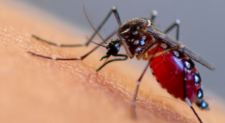
With summer rain come mosquitoes, and with mosquitoes come not just itchy bites but the risk of diseases such as West Nile virus, St. Louis encephalitis, malaria, Zika virus and yellow fever, among others, says University of Missouri Extension horticulturist and entomologist Tamra Reall.

Prevention

The best way to avoid getting mosquito bites around your home and yard is to empty any standing water, especially after it rains or the sprinklers run, says Reall.

These puddles, even those as small as a tablespoon, are where mosquitoes lay their eggs and the larvae grow. Water collects in flowerpots, tire swings, toys, trash, gutters, poorly drained soil and holes in trees. Empty these containers and fix drainage problems. Chlorinated and filtered swimming pools are not mosquito havens, but untreated pools are.

Wear long-sleeved shirts and long pants when working in the yard. Wear a repellant, preferably one containing DEET. Adult mosquitoes like to rest on vegetation, so keep grass mowed to eliminate potential hiding places. Make sure door and window screens are in good condition. Use a fan to create a breeze. Mosquitoes are not strong flyers, so a light breeze can keep them away.

Avoid spraying lawns and using foggers. Mosquitoes can develop resistance to sprays and quickly infest the area again. Foggers may be effective for only a few hours and contain pesticides that kill helpful insects, including pollinators and mosquito predators.

Field tests show that bug zappers and ultrasonic pest eliminators are not effective ways to attract and kill mosquitoes.

The Missouri Department of Conservation recommends using nontoxic mosquito dunks and pellets for areas with stagnant water. These are safe for animals, beneficial insects and the environment.

Treatment

If you get a mosquito bite, wash the affected area with soap and water. To reduce swelling and itching, apply an ice pack for 10 minutes; reapply as needed.

The U.S. Centers for Disease Control and Prevention recommends this at-home treatment:

  • Mix 1 tablespoon baking soda with just enough water to create a paste. Apply the paste then wash it off after 10 minutes.
  • Use an over-the-counter antihistamine or anti-itch cream.
  • Consult a health care provider if you develop a fever or pain.

It has a clear lake and trails. Now Kansas’ new state park is getting amenities.

0

Kansas’ new state park already has “crystal clear blue water” and miles of trails, and it is now closer to having more amenities.

Kansas lawmakers last year created Lehigh Portland State Park in Iola. Now, the Kansas Department of Wildlife and Parks is working on infrastructure improvements around the 138-acre lake on a nearly 360-acre property.

The state is bidding out contracts to construct a visitor’s center, a limestone campground, a shale campground and such infrastructure as water, sewer and roads.

When Gov. Laura Kelly ceremonially signed the bill last year, Brad Loveless, the then-secretary of KDWP, indicated more work was needed.

He said: “Tremendous value is being added to Kansas’ already world-class state parks system in the form of a beautiful lake and quality trails. While I know this property is going to be an instant hit with our park-goers, I also know that our park staff’s plans for development will make it even more inviting in the very near future.”

What Lehigh Portland infrastructure work is KDWP bidding out?

The state government contracting portal shows KDWP has four open requests for proposals. The agency is looking for contractors to build the following:

  • A limestone campground.
  • A shale campground.
  • A visitor’s center.
  • Infrastructure, including water, sewer, a lagoon and roads.

If you catch one of these invasive fish in a Kansas lake, just let it die. Here’s why

0

If you’re going fishing in Kansas anytime soon, you may want to double check what kind of fish you’re catching before you decide to throw them back.

That’s because your catch could be one of Kansas’ many invasive species that the Kansas Department of Wildlife and Parks is trying to eradicate.

“[Invasive species are] usually either causing harm or has the potential to cause harm, whether that’s ecologically, environmentally or economically,” said Michael Parr, an aquatic invasive species biologist with the Kansas Department of Wildlife and Parks.

If there are invasive species known in any body of water, there will be signs posted with additional information.

“Those alert signs will have a picture of whatever species are present there,” Parr said.

The department’s eradication efforts depend on the species, Parr said. For some, employees manually remove as many of them as possible. The department has also held fishing events in the past for anglers to help remove invasive species.

Here’s what to know about invasive aquatic species in Kansas and what you can do to help.

What are some of the most common invasive fish in Kansas?

Common carps, bighead carps, silver carps, rusty crayfish and white perches are some of the fish you may see around Kansas that are actually invasive.

Of those, Parr said the common carp is probably the most common.

While this species is not native to Kansas, it has become so widespread that they’ve become “naturalized.” But just because they’re common doesn’t mean they’re any less invasive, Parr said.

“People do like to fish for them … but yet they still are invasive,” Parr said. “So if you do see one, it’s good practice if you catch one, not to release it back of the water and either consume it or dispose of it.”

Adult common carps are usually gold or dark brown and have reddish fins. They also have whisker-like barbels around the mouth.

What other invasive species live in Kansas waters?

One of the most invasive species in Kansas are zebra mussels, a kind of mollusk the size of a fingernail with a zig-zagged pattern on their shells. These are native to waters in Eurasia , according to the United States Geological Survey.

This is a species that is especially hard to contain, Parr said.

“The single female mussel that’s fertilized can lay up to a million eggs per spawning season. And usually there’s two spawning seasons a year, depending on temperature,” Parr said. “Once they get established in a water body, I mean, they just take off within five years.”

What should I do if I come across an invasive species in Kansas?

If you catch an invasive fish or other aquatic species, do not throw it back into the water, Parr said.

“You would have to euthanize it or dispose of it,” Parr said.

The easiest way to help prevent the spread of invasive species is to wash your boat before bringing it on another body of water. This prevents the spread of smaller aquatic organisms from one body of water to the next.

“It’s really important to drain all the water before transporting your boat … and allowing for dry time or using a high pressure, hot water pressure washer to wash your boat trailer,” Parr said.

“Every water body that someone’s at … before they leave that water body, they should be cleaning their boat and trailer, cleaning off any mud, animals or vegetation that might be stuck on there.”

For those who don’t have access to a power washer, Parr said the wildlife department has boat cleaning stations available at several of their reservoirs around Kansas.

“We’re trying to at least have some of those available for the public to use to help that ‘Clean, drain, dry’ initiative help stop spreading those invasive species,” Parr said.

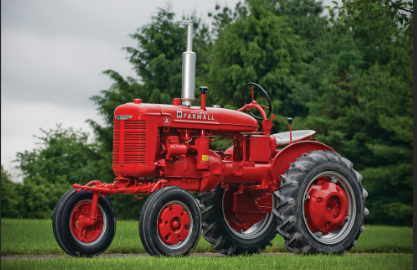
Kansas Governor Laura Kelly Proclaims AUGUST 22, 2024 – ANTIQUE TRACTOR PRESERVATION DAY

0

An Historic State of Kansas First!

Proclamation issued on behalf of the people of Kansas, commemorating the state’s renowned agricultural heritage, and Kansas resident Michael Hinton’s passion for classic tractors.

HUTCHINSON, KANS. (July 29, 2024) – Kansas Governor Laura Kelly has awarded Michael Hinton a prestigious state of Kansas Proclamation, in connection with the website that he
and his daughter Melissa (Hinton) Bledsoe [West Plains, MO], created: www.TalkingTractors.com, which serves as a ‘virtual educational resource’ for those who share a like passion for preserving America’s heritage farm machinery for future generations.

Hinton explained the Governor’s Proclamation is both significant and “good for Kansas” for many reasons: The Proclamation is issued by the state of Kansas – Where his family’s story
and agriculture heritage resonates; Secondly, it is issued to the people of Kansas – many of whom (if not most), have farming ancestors and/or current relations to farmers. Thirdly, it
reflects Hinton’s desire to leave a legacy for tomorrows successors (consistent with the framed print on his home office wall); through the sharing of memories and stories of tractors long ago manufactured and used to farm with during a given era.”

Hinton added there is also “historical relevance” in regard to the Proclamation’s August date – “Farming in Kansas during the last two decades of the nineteenth century and first
decades of the twentieth, was a matter of horsepower and wheeled machinery.  In 1914, under horse and mule power, Kansas farmers planted nine million acres and harvested 181,000,000 bushels of wheat. Tractors began to replace draft animals in 1915, and the number of all kinds of tractors steadily increased. In August 1917, a small tent city was erected in Fremont, NE. Under the canvas, forty-eight tractor companies exhibited their machinery with over three hundred tractor models on display. But that was only a fraction of the tractors offered to farmers. The number of tractor manufacturers peaked in 1921 when there were 186 different firms looking to entice farmers to buy their tractors.”

ABOUT MICHAEL HINTON:
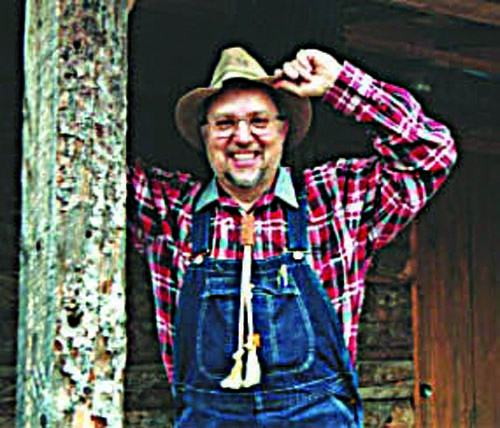
An alum of America’s heartland, Michael has been fortunate to have his agricultural upbringing evolve into a career, hobby, and passion. He proudly serves as an unwavering advocate for agriculture and the state of Kansas, continuously working to generate National awareness about the ways the tractor transformed American farming, while educating that tractors are more than just imperative farm machinery used for agriculture production, stating: “They are part of our core heritage. A cherished family keepsake, handed down from one generationnto another, engrained with acres of stories. They create friendships that span fields near and far, and memories that last one’s lifetime.” In addition to his predominant distinction as “America’s Premier Antique Tractor Enthusiast;” Michael is employed in a leadership capacity as Director of Sales & Marketing at AgTrax, a global leader in the agribusiness software technology field, headquartered in downtown Hutchinson, Kans.

Michael’s passion for tractors first began during his youth, growing up in rural Newton, Kans. where his boyhood home was landscaped in every direction with wheat fields. The same affection was rekindled when he married his wife, Tonya in 1989 and he took a keen interest in his father-in-law’s International Harvester tractors. It was not until 16 years ago, whilenliving in the Ozarks, that Hinton acquired his first vintage Farmall tractor. That spark led him to further expanding his classic tractor collection, developing an antique tractor show website and spearheading several local/national events, which culminated in the Governor of the state of Missouri bestowing him Proclamations spanning three consecutive years (2010, 2011, and 2012) – an historical Nationwide first! Additionally, Hinton was recognized with a statement in the Congressional Record, and awarded two United States Post Office Commemorative Pictorial Postmarks.

“I cannot imagine a better life than being born a Kansan, raised a Kansan, and calling Kansas home…”where a short drive in any direction can find you in the countryside and subsequently eyeing a classic tractor – it’s nostalgic, stated Hinton. My hope is to serve and be identified as a distinguished representative of the Kansas heartland who brought attention to our country’s esteemed farm machinery history, as well as a genuine friend to all – like the late Roger Welsch (Senior correspondent, CBS News Sunday Morning “Postcards from Nebraska” segment), whose own history has helped frame the architecture of my efforts.” Hinton further credits his wife and daughter who assist behind-the-scenes with his heritage tractor projects, along with acknowledging their family, and a network of countless friends and colleagues.