Friday, February 6, 2026
Home Blog Page 348

Cicada Killer Wasps

0

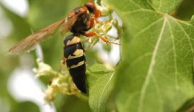
Description: At about 1 ½-inches long, cicada killers are an intimidating wasp. They have
reddish colored wings and legs and a black abdomen with wide, yellow stripes. Cicada killers live independently though nests may be relatively close to each other. Females have a stinger which is used to paralyze their prey. They rarely sting people unless agitated. Males are smaller and do not have a stinger.

The female wasp is responsible for locating cicadas and paralyzing them with her
stinger. She then carries the cicada back to her burrow. Each burrow can house up to
20 cicadas.

Life Cycle: Adult females lay a single egg on each cicada they drag into the ground.
Eggs hatch in two to three days into legless, white grubs which feed on the cicada. The
larvae then create a protective case in which to overwinter. Adult wasps die in early fall.
In spring the larvae pupate in the pupal cases and emerge as adults in June/July. There
is one generation per year of cicada killers.

Damage: Cicada killers typically cause very little damage to the landscape. A heavy
infestation may become a nuisance as they protect their nests. The burrows may be
considered unsightly, especially in a lawn area.

Control: Cicada killers prefer well-drained, light soils in full sun. They may burrow along
sidewalks or flowerbeds but do not like areas covered with mulch. Maintaining a thick,
healthy lawn is the best control for preventing burrows. Pesticides are not usually
necessary since adults are only present for about two months beginning mid to late
summer.

Watering Young Trees and Shrubs

0

Young trees and shrubs have not established the root system necessary to survive
extreme heat and dry spells without supplemental water. After planting, it is essential to
keep the root ball area moist for several weeks, but even a couple years later it may be
necessary to periodically apply water to the area. Newly planted trees should receive 10
gallons of water weekly. Here are some tips for watering to eliminate waste and meet
plant needs.

• Direct water where it is needed (avoid watering
hardscapes!)
• Do not water on windy days
• Water between 6 PM and 10 AM to reduce
evaporation
• Assess soil moisture before adding water to the
landscape
• Apply the water slowly so it can sink deep into
the root zone
• Build a reservoir (three to four-inches tall)
around trees to keep the water in the desired
area.
• Use a water bag, or five-gallon bucket with a 1/8-inch hole drilled in the base, to
direct water to the base of trees.
• Mulch around plants to retain moisture and moderate soil temperature
• Understand water requirements of your plants. Provide water to plants only if
needed, not based on a schedule.

Crabgrass Control

0

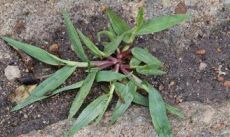
Crabgrass is a common weed in lawns this time of year particularly in sparse lawns. The blades of this warm-season, annual are flat, wide and lighter green than the desired turfgrass.

Crabgrass dies back after setting seed or the first frost leaving bare spots in the lawn. At that time cool-season grasses should begin to flourish and fill in the spaces. If you have crabgrass in your lawn now you can expect it again next year since it is so efficient at re-seeding.

Preventing crabgrass from establishing in the lawn is the best method of control.
Maintain a thick, healthy lawn to stop crabgrass seeds from germinating. Mow your lawn
no shorter than three-inches to help prevent sunlight from reaching the seeds on the soil
surface. Pre-emergence can be used in spring.

At this point in the season, it is too late for a crabgrass preventer. Manually removing
crabgrass plants is recommended for small areas and light infestations. There are some
herbicides that will kill crabgrass including: Ortho Weed-B-Gon Max + Crabgrass
Control, Fertilome Weed-Out with Crabgrass Control, Monterey Crab-ERad and
BioAdvanced Lawn Weed & Crabgrass Killer. Each of these contains quinclorac, which
is a crabgrass herbicide, as well as other active ingredients that control broadleaf
weeds. Quinclorac can also provide control for foxtail and certain other broadleaf weeds such as field bindweed, black medic and clover. Be sure to bag your clippings if you use
a crabgrass killer and don’t use them as mulch or compost.


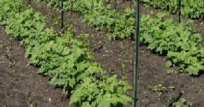
Green Beans Producing Flowers but not Beans

0

Temperature is a key factor affecting bean production. High (above 85 degrees F)
and low (below 70 degrees F) can cause plants to create flowers but not beans.
Inconsistent soil moisture can also inhibit bean development and is exacerbated by
hot, dry winds.

Proper crop management is the best way to mitigate these problems. Mulch
surrounding plants regulates soil temperature and moisture. Using a windbreak crop, such as corn, can protect the bean plants from drying winds. Harvest regularly to encourage plants to continue producing. If beans are left on the plant past their peak harvest time the plant will use energy to produce seed rather than create new beans.