Saturday, February 7, 2026
Home Blog Page 354

While drought is receding in northeast Kansas, swaths of the state still parched

0

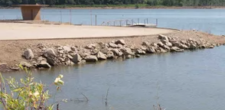
Earlier this month, Perry Lake rose to its highest levels since 2019, when water levels were more than double their averages, according to the United State Geological Survey.

At its recent peak on July 10, the lake, which is northeast of Topeka, held more than 342,000 acre-feet of water, which is only slightly above the average for the reservoir.

With water levels returning to normal after years of drought, is Kansas exiting its recent period of drought?

Water levels up in some regions

Much of central and western Kansas remain abnormally dry, or in moderate or severe levels of drought. But about half of the state is experiencing no drought, compared to a year ago when only 3.6% of the state wasn’t in drought.

Drought is relative and is defined by its deviation from what is typical. So, in the more precipitous east, it will take more rainfall to get back to normal than in the dryer west. Currently, reservoirs in northeast Kansas are all running above average.

“All of our reservoirs in northeast Kansas, our Kansas River main stem, are in flood control stage right now,” said Susan Metzger, director of the Kansas Water Institute at Kansas State University, “and so that’s a product of rainfall and snow melt that’s happened throughout the entire basin to bring those water levels up.”

The diversity of Kansas’s water supply

While the northeast is getting a water surplus, the central, southern and western regions of the state are still suffering from drought in areas where there’s not much rainfall to begin with.

Cheney Lake near Wichita is at its lowest point since 2013 and has more localized needs for water retention. In the areas where rain would help recharge Cheney Lake, the area went nearly 300 days without rainfall totally more than an inch or more until just last month, when two separate storms combine for just over an inch of rain.

“We’re in the third year of a drought and we’ve been running about two thirds of our normal precipitation the last three years,” said Ron Graber, a watershed specialist in south-central Kansas. “And just a lot of these little kind of small, small rains — not very many.”

Water levels can be impacted by faraway snow melts and rains that feed into rivers that cross state lines, but local water conditions are also important. Cheney Lake is fed by the North Fork Ninnescah River, which hasn’t gotten the rainfall that’s affected rivers servicing the northeast part of the state.

“Down in Cheney and the Wichita area in south-central Kansas, they just haven’t experienced that same level of rainfall,” Metzger said, “and they aren’t the beneficiary of some of the upstream sources of flow that might be like if we get rain in Nebraska that benefits the Kansas River.”

Is the drought over?

Metzger says drought conditions are often indicative of how the drought will move across regions.

“Sometimes you can see where drought might be emerging in one area, and then that helps you think that that drought condition could make its way to you,” Metzger said. “The opposite could be true as well.”

Weather patterns like drought tend to move from west to east, and Colorado to the west is in a similar situation to Kansas with about half the state in varying degrees of drought.

As a state, there is slightly more precipitation than normal last month, but nearly 600,000 Kansans are residing in areas where there is drought.

Water levels effect on Kansans

Agriculture producers are the most impacted by water levels, with irrigation making up about 85% of consumptive water use in the state. Municipal water use for homes is about 10%, with the remaining 5% of water used for recreation, industry, hydraulic dredging and saving for future use.

Urban and suburban water users can still feel the effect of drought.

For the outdoor types, plans to use reservoirs and rivers for recreation can be affected by drought and excess water levels. Water use in homes can also become more expensive during low water years.

Too much of a good thing?

Regions of the state are returning to a more normal state of precipitation, but flooding comes with its own set of problems.

“Too much water can be challenging for an agricultural producer, as well to the federal reservoirs that we have,” said Will Boyer, a watershed specialist in northeast Kansas. “There’s flushes of nutrients and sediment that come into the reservoir when we need to start having runoff events that can lead to problems with algae blooms.”


7 outdoor activities to try after dark

0
Photo credit: Kim MyoungSung

By Renae Blum

Blazing temperatures can put a damper on outdoor fun during the day. So why not head outside after dark? Bring a friend and explore one of the following options under the cover of night.

Fishing

Fishing at night is a great way to beat the heat. It also can make for a great fishing experience, depending on the species and location, said Daryl Bauer, Nebraska Game and Parks’ fisheries outreach program manager.

“Just about any species of fish is more active during low-light periods, which is late in the day, early in the morning and after dark,” Bauer said. He added that while most people think of fishing after dark in the summer, it can be a good opportunity year-round.

“Honestly, there are times I fish after dark when I’m ice-fishing, so it’s not just a summer thing,” Bauer said. “A lot of my best fish have been caught after dark.”

Anglers should seek out clear waters for the best opportunities. Consider using a headlight or a mini mag flashlight, as well as lighted or glow-in-the-dark bobbers, depending on what you’re fishing for.

Observe the night sky

The night sky holds wonders year-round. Find a place away from city lights to sit back and enjoy the view with family and friends.

In August, you can look forward to a couple astronomical sights. One is the Perseid meteor shower, the largest of the year, which peaks on Aug. 11 and 12. During the peak, you might spot as many as 50 meteors an hour, which rises to 90 or more if you can find a true dark sky location. This year’s display should be especially good as the moon will set in time to see the action. The best viewing is from midnight to sunrise, but any time after dark will work.

On Aug. 19, you can observe the full Sturgeon Moon, which is the first supermoon of the year. A supermoon occurs when the moon is full and at its closest point to Earth. It also happens to be a blue moon, which is the third of four full moons in an astronomical season.

Watch wildlife

Observing wildlife at night is a great way to connect with nature – and there’s a variety of opportunities. You might spot mammals like raccoons, deer, bats and coyotes, as well as owls, frogs, toads and fireflies. To prepare, familiarize yourself with the habitat and the types of animals you might encounter. Dress in dark, quiet clothing and bring a flashlight or headlamp with a red filter; binoculars; camera; insect repellant and comfortable shoes.

For your best chance at spotting wildlife, be patient, move quietly, use red light and stay downwind. It’s also important to be safe, so go with a friend and have a plan. Let someone know where you’re going and when you plan to return. Also, be respectful of the wildlife you see and practice leave-no-trace principles.

Campground games

Dark skies can add extra excitement to ordinary campground games – and give kids an alternative to screen time. After sunset, get your group together and play games like Truth or Dare, Telephone or Hide and Seek. You can modify Hide and Seek to be played with flashlights; whoever gets caught in the flashlight’s glare is out. Set boundaries so kids know how far they’re allowed to wander.

Light-up or glow-in-the-dark toys are great options as well. Before your next camping adventure, buy some glow-in-the-dark ring toss or cornhole equipment. Glow sticks or glow-in-the-dark Easter eggs can be another source of fun.

Listen for wildlife

It can be easier sometimes to hear wildlife at night rather than see it. For example, owls, coyotes, frogs and toads, and crickets and katydids all make distinctive sounds at night.

Before you head out, familiarize yourself with the typical calls of local wildlife species and know the habitat you’re heading to, as different habitats attract different wildlife. Position yourself near suitable habitats such as ponds for frogs, wooded areas for owls, or open fields for crickets and katydids. You might want to bring along a recording device or smartphone app so you can listen back later and work on identification.

Be sure to pick a quiet location away from human noise and activity, and once you’re there, let your hearing adjust to the environment. Be patient, staying quiet and still. You also can try listening at different times; some animals are more vocal during specific times of night. Try listening during dusk, midnight and early morning to catch a variety of species.

Go mothing

One fun way to discover the wildlife around you is through mothing – using a light to look for moths at night. Mothing can be done anywhere there are plants for their caterpillars to eat, so a backyard, forest, garden or woodland area can work. You’ll need a light source, such as a flashlight, lantern or porch light, as well as a flat surface such as a bedsheet, towel, shower curtain or laundry basket.

Before you head out, check the weather – clear nights with no rain are best. When ready, hang up your sheet and aim your light source at it. Then be patient, as it may take a while for nearby moths to see your light. Wait and see what lands on your sheet and be gentle. If you want to observe a moth up close, approach it slowly and gently. Moths can be easily startled and may fly away if disturbed.

Consider taking photos or notes to document what you see and to help with identification. You also can check back periodically from dusk to late evening, which is when moths are most active; you might spot different species.

Go boating

If you’re looking to stargaze or fish, boating at night can be a fun opportunity. This activity is best for seasoned boaters who are familiar with the lake in question, said Nebraska Game and Parks’ Boating Law Administrator Jeff Clauson.

Those boating after dark should avoid alcohol and be wary of other vessels, as well as hazards in the water. “Make sure you have your lights working and leave them on even when the bugs come out,” Clauson said.

For more ideas on outdoor fun, and to learn more about Nebraska’s wildlife, visit OutdoorNebraska.gov.

My Empty-Bucket List

0
lee pitts

People have been making up their own bucket-lists ever since the movie of the same name came out starring Morgan Freeman and Jack Nicholson. You may recall it was about two old geezers who made a list of the things they wanted to do before they “kicked-the-bucket”. My own bucket list is empty as I’ve already done most of the things people seem to want to do. So what I’ve done is create my own “empty-bucket” list of the top ten places I wouldn’t want to be caught dead.

# 10 and #9- I don’t want to go to Mexico (#10) to see a bull fight (#9). First of all I simply don’t want to go to Mexico for health reasons. Over 40 years ago we’d cross the border frequently with a friend at Nogales to eat Mexican food at a restaurant there. It was good food and good fun and we didn’t feel any danger. Do the same thing now and you’ll end up in a Mexican jail or morgue. Also, it’s a good bet your car or truck will be impounded and the next time you go to Mexico you might see you’re vehicle being used as a cop car as they get second pick, right after the drug dealers.

As for watching a bullfight… I can’t think of a more gory display of man’s violent tendencies than watching a bull killed slowly and ruthlessly for no good reason. I like cattle way too much to take pleasure in watching them experience such an atrocious death.

#8- I definitely don’t want to be incarcerated in a rest home when I become totally worthless to society. Instead I’d rather commit a felony and go to prison for life. Going to prison will save five grand a month, the food is usually better, you have a better chance of getting your own private room and you get better medical care for free with your own concierge doctor.

#7- Another place high on my empty-bucket list of places I’d least like to go to is the hospital. As if it isn’t painful enough to be cut open from stem to stern the medical masochists then put you in a room for a week with three other occupants: a Valley girl who is often visited by a gang of giggling girlfriends, a middle age woman who insists on taking command of the TV remote control, and an old guy who snores so loud he sounds like a cheap chainsaw.

#6- High on my list of things I DON’T want to do is attend a family reunion where I get stuck reminiscing about the good old days with the in-laws of my second cousin who I’ve never met before.

# 5- I hope I never add to my motel stationery collection by spending one more night in a hotel or motel. I lived out of a suitcase for 40 years acquiring motel and hotel “points” but that’s not all I acquired. I also got a bad back from sleeping in bad beds and a fear of bed bugs.

#4- If I lived in “tornado alley” in Oklahoma I’d migrate to California too like depression-era okies did because all the prunies have is earthquakes. I tried to outrun a tornado in Oklahoma once and if I had to do it on a regular basis I’d either end up in the nuthouse or AA.

#3- I haven’t been in an airport for five years now and I hope I never will. Enough said.

#2- I’ve never been afraid of an upcoming operation but I dread a visit to the dentist worse than death itself. I’ve had thirteen teeth pulled and replaced with implants and every time I visit the dentist I fear a masked man is going to steal all my money, disfigure my face (even worse than it already is) and leave me for dead without any painkillers.

#1- I guarantee you’ll never hear about me running with the bulls in Pamplona, Spain. I’ve been running from bulls ever since I was 15 and worked on a ranch with a particularly nasty strain of man-eating bovines. If I wanted to be shish-kabobbed and perforated by a bovine I can do that at home without getting on an airplane and staying in high priced hotels.

KU News: KU Aerospace Engineering launches first CubeSat into orbit

0

From the Office of Public Affairs | http://www.news.ku.edu

Headlines

KU Aerospace Engineering launches first CubeSat into orbit

LAWRENCE — A team of engineering students at the University of Kansas has successfully launched a small satellite, called a CubeSat, aboard a NASA-sponsored Firefly Aerospace rocket. The university’s first satellite, known as “KUbeSat-1” reached orbit late in the evening July 3 when it was launched through NASA’s ELaNa 43 (Educational Launch of Nanosatellites 43) mission from Space Launch Complex-2 at Vandenberg Space Force Base, California.

‘Overlooked’ peoples’ influence on Colonial Spanish America examined in new book

LAWRENCE — A University of Kansas professor of history is the author of a new book titled “Overlooked Places and Peoples: Indigenous and African Resistance in Colonial Spanish America, 1500-1800.” Published by Routledge, the volume focuses on the experiences of Native peoples, Africans and Afro-descended peoples and “castas” (individuals of mixed ancestry) living in regions perceived as fringe, marginal or peripheral. It offers new insight into how and why the inhabitants of these places responded contentiously or cooperatively to Spanish colonialism.

Full stories below.


————————————————————————


Contact: Cody Howard, School of Engineering, 785-864-2936, [email protected], @kuengineering

KU Aerospace Engineering launches first CubeSat into orbit


LAWRENCE — A team of engineering students at the University of Kansas has successfully launched a small satellite, called a CubeSat, aboard a NASA-sponsored Firefly Aerospace rocket.

The university’s first satellite, known as “KUbeSat-1” reached orbit late in the evening July 3 when it was launched through NASA’s ELaNa 43 (Educational Launch of Nanosatellites 43) mission. According to NASA, the mission includes eight CubeSats flying on Firefly Aerospace’s Alpha rocket for its “Noise of Summer” launch from Space Launch Complex-2 at Vandenberg Space Force Base, California.

This marks the first time an institution from Kansas has launched a small satellite under this program.

“This launch brings a dream to reality for the 70 students directly involved, the alumni who have generously supported the mission and all peer classmates,” said Rick Hale, professor and chair of the Department of Aerospace Engineering. “A successful orbital mission will open the door to sustained design-build-test-operate activities in orbital remote sensing that mimic our sustained success in suborbital remote sensing.”

CubeSats are tiny “nanosatellites” about the size of a loaf of bread, weighing in around 3 pounds with each unit about 10 centimeters per side. KUbeSat-1 is a three-unit satellite launched under the NASA CubeSat Launch Initiative program that offers educational institutions and nonprofit organizations a chance to share space on its rockets.

KU’s CubeSat will use a new method to measure the energy and type of primary cosmic rays hitting the Earth, which is traditionally done on Earth. The second payload, the High-Altitude Calibration Instrument Version X will measure very high frequency signals generated by cosmic interactions within the atmosphere. The anticipated lifetime in orbit is 1-2 years, with realistic expectations closer to one year. Data from the mission will be used for academic research and development for more advanced payloads in the future.

The initial proposal to build the program from the ground up was submitted in 2018 and approved in 2019.

“The primary goal of KUbeSat-1 has been to allow students at KU to work on an engineering project that has the same stakes as projects in the aerospace industry,” said Brody Gatza, graduate research assistant and project manager. “The project has encompassed all facets of engineering and has given our team experience working with NASA, leading aerospace companies and regulating agencies.”

This isn’t KU’s first try at getting a satellite in orbit. Students made a CubeSat attempt in 2006 wherein the launch vehicle failed, and initial scheduled launches for this satellite began in 2022.

NASA’s CubeSat Launch Initiative is an ongoing partnership between the agency, educational institutions and nonprofits, providing a path to space for educational small satellite missions.

-30-

————————————————————————

Don’t miss new episodes of “When Experts Attack!,”

a KU News Service podcast hosted by Kansas Public Radio.


https://kansaspublicradio.org/podcast/when-experts-attack

————————————————————————


Contact: Jon Niccum, KU News Service, 785-864-7633, [email protected]

‘Overlooked’ peoples’ influence on Colonial Spanish America examined in new book


LAWRENCE — Beginning in the 15th century, the Spanish Empire claimed jurisdiction over “New World” territories that included the Caribbean and much of North and South America. In doing so, millions of people were eventually conquered, uprooted and/or displaced.

“The stories we tell reveal that colonialism is a long process, and it was resisted by people all over the Americas,” said Robert Schwaller, professor of history at the University of Kansas.

“It helps us understand the tenacity of the human spirit. Even at the height of the European imperialism of the day, there were always groups that managed to carve out autonomy for themselves.”

Those stories are captured in a new book titled “Overlooked Places and Peoples: Indigenous and African Resistance in Colonial Spanish America, 1500-1800.” Published by Routledge, the volume focuses on the experiences of Native peoples, Africans and Afro-descended peoples and “castas” (individuals of mixed ancestry) living in regions perceived as fringe, marginal or peripheral. It offers new insight into how and why the inhabitants of these places responded contentiously or cooperatively to Spanish colonialism.

Co-edited by Schwaller and Dana Velasco Murillo of the University of California San Diego, the book evolved from a panel at the 2017 meeting of the American Society for Ethnohistory.

“We were looking at the way in which the Spanish Empire — even though it had claimed to conquer the Americas — still had all these peoples who were basically not conquered. The Spanish were engaging in policies either of trying to further conquer them or negotiate ways to coax them into the empire,” said Schwaller, who first collaborated with Murillo when they were graduate students.

“‘Overlooked Places and Peoples’ pays attention to sites of Spanish encounters with Indigenous and African peoples in the Americas but also in places that we don’t necessarily think about. Off the map, as it were.”

Schwaller also contributes a chapter titled “The Spanish Conquest of Panama and the Creation of Maroon Landscapes, 1513-1590.” It spotlights thousands of enslaved Africans who fled captivity in Spanish Panama and formed their own communities. The self-sufficiency of these “maroons,” along with their periodic raids against Spanish settlements, incited armed conflict as Spaniards sought to kill or re-enslave their populations.

“Our book’s geographic focus gave me an opportunity to think through the spatiality of African maroon resistance,” he said. “The Spanish approach to the geography of Panama helped to create conditions that African maroons exploited. In particular, the way the Spanish systematically depopulated Panama created a landscape that maroons were able to flee into and inhabit.”

But Schwaller is not the only book contributor with that last name. His father, John F. Schwaller, a research associate in Latin American studies and history at KU, wrote the chapter “Native Spanish Frontier Conflict and the Politics of Empire: Viceroy Don Luis de Velasco in New Spain and Peru.” It examines the policies of a territorial governor who had to resolve challenges to Spanish rule from overlooked peoples in both Mexico and Peru.

Who is the better writer in the family?

“I think it depends,” the younger Schwaller said, laughing.

“But we certainly both have a writing style that is meant to be clear and inviting and accessible to readers, regardless of how much background they have in the topic.”

One concept that ties all the chapters together is they avoid focusing only on “famous” individuals.

“We’re dealing with everyday people. And so oftentimes, that person only pops up in one or two historical documents. Many of the chapters reveal how these events affect everyday people, even though we don’t have access to fully fleshed-out biographies devoted to them.”

A KU faculty member since 2011, Schwaller has written other books including “African Maroons in Sixteenth-Century Panama: A History in Documents” (University of Oklahoma Press, 2021) and “Géneros de Gente in Early Colonial Mexico: Defining Racial Difference” (University of Oklahoma Press, 2016). His upcoming book will be a comparison between Panama and Hispaniola in Mexico.

“I hope ‘Overlooked Places and Peoples’ really does open up the types of questions we ask about colonial Latin America. All the contributors came to the project because these were stories we found doing a prior project involving more famous groups, and we ran across pockets of people that we didn’t know much about,” he said.

“These stories all reveal the fact that there is always some persistent resistance to empire, even if we have to find it hiding on the margins.”

-30-

————————————————————————


KU News Service

1450 Jayhawk Blvd.

Lawrence KS 66045

Phone: 785-864-3256

Fax: 785-864-3339

[email protected]

http://www.news.ku.edu


Erinn Barcomb-Peterson, director of news and media relations, [email protected]

Today’s News is a free service from the Office of Public Affairs