
In his greatest imagination, Dad would have never believed how ranch hay processing could change in half a century.
Back then, Dad left his grocery store butcher job about noon and headed to the hay field.
A fairly-new John Deere 1020 tractor was hooked to a seven-foot sickle mower for cutting the grass field. By the next afternoon, the grass had dried enough for hay, so Dad raked it into windrows with the fairly-new side-delivery rake.
The well-used John Deere 15T twine square baler was hooked to the only tractor on the ranch. When Dad started baling the hay, something always went wrong. Either the baler knotter didn’t work, or the tying was so tight the bale twine broke; for sure something.
It was a one-man operation up to this point. There wasn’t a hay trailer, so, the small bales were dropped on the ground behind the baler. At about 5 o’clock, his son arrived at the ranch from a town job and started picking up the hay bales.
The half-ton pickup was driven from bale to bale, and the then-younger worker got out at each bale and threw it into the truck bed. About 39 bales would make a load when properly stacked.
Real work was still to come as the hay bales had to be unloaded and stored away. Dad generally pushed the bales off the pickup to the helper who stacked them into the open hay barn. It was a lot harder when the bales were stored in the hay mow.
This year has been entirely different. Dad’s grandson uses the ranch swing-type swather to mow down the grass. If weather cooperates, hay is ready to bale the next day.
Custom operators bale the hay into either big round bales or small square bales. While big bales are easier to handle, small bales are needed for feeding livestock in small pens.
Small bales are accumulated into eight-bale packs that are picked up with a tractor front-end loader and stacked on a hay wagon. The bales are easily unloaded with the tractor and stored in the hay barn.
Putting up hay is sure a lot easier than it used to be.
Reminded of Proverbs 27:25: “Grass can become hay, but a rancher must work diligently to harvest what he can for the livestock.”
+++ALLELUIA+++
XVIII–27–7-1-2024
Hay Harvest Has Changed

Booby-Trapped

The feds came out with a list of rules that protect wolves but make living in the West like walking through a mine-field. The feds have now placed booby-traps everywhere in the West that are meant to trap people like you, so I’d watch my step if I were you.
It’s become very dangerous to tread anywhere on the 46% of the eleven western-most contiguous states that is public land owned by the U.S. government. For example, a person may NOT kill a wolf in the act of killing livestock on public land. If you do you’re facing serious prison time and legal bills up the wazoo. If you are one of those people who believe in the three S’s, as in shoot, shovel and shut up, be sure to bury the carcass on your neighbor’s property so he or she will be the one being someone’s girl friend in prison.
These new rules make it harder for urban dwellers too, not just ranchers. Suppose you live in a big city and take Fifi, your Poodle, for its daily walk in a park that, unbeknownst to you, is public property. And suppose a wolf jumps out of the weeds and starts killing and eating your beloved Poodle. And suppose you pick up a branch and start trying to beat said wolf so he’d stop munching on Fifi. Well, you’re going to be cell mates with the rancher because you can’t kill or injure a wolf in the act of injuring your pet.
As if to rub it in, you cannot go home and get your gun and go back to shoot the wolf now feeding on Fifi’s carcass. I’d think twice if I were you because it’s now illegal to kill a wolf on public property feeding on the dead carcass of an animal it murdered. You’re just supposed to stand there and watch the wolf tear and rip the meat from a dog that you loved dearly.
It is now illegal “to enter official enclosures or rendezvous sites where there is denning behavior.” Pardon me but I think you’d need a master’s degree in wildlife biology to be able to recognize “wolf rendezvous sites”. Are these rendezvous like mountain men and trappers traveled to 150 years ago or are they more like the rendezvous when a businessman cheats on his wife by meeting his secretary at some discreet hotel room? I think the feds should have given us some guidance here as to how to identify a wolf rendezvous site.
If you’re a public lands rancher you may not kill a wolf or harass a wolf just because it is hanging around your property. I think we should test this rule out by taking a few trapped wolves to Washington D.C. where they could hang out around the offices of Congresspeople. Just how long do you think it would be before they’d call out the combined might of all four major branches of the U.S. military to deal with said wolves. I bet you we’d have F-18 Hornets in the air, M1 Abram tanks on the ground and the U.S. Navy Seals trying to kill those wolves.
Here’s a government booby trap that could catch a lot of people: You cannot shoot a wolf just because you thought it was a coyote or something else. I bet I could select three photos, one each of a large dog, a coyote and a wolf and the experts at the Fish and Game Department couldn’t tell them apart. I’d advise you to find out if the bus stop where the bus picks up your little Billy and Vanessa is on public land. If it is DO NOT shoot the wolf that is deciding who to eat first, your son or your daughter. Just remember… to be safe DO NOT KILL OR INJURE A WOLF. PERIOD!
Don’t forget, the only time you can legally kill a wolf for killing your livestock is if it’s on tribal or private property. But I wonder what happens if you only wound the wolf on private property who then goes on public land to die?
These new rules are loaded with such booby-traps, just make sure you don’t get caught in one or you’ll be on the evening news doing the perp walk, dreading your first blind date in prison.
“Prescriptions for Parks”
Doctors write prescriptions for medications all the time. However, have you ever heard of a doctor prescribing a walk in the park? While this prescription will not fit in a bottle, it can pack some powerful health benefits. It may sound strange, but doctors actually can prescribe time outdoors to their patients with the help of a national program, ParkRx.org. This free online program can help a patient track their outdoor activity and discuss more outdoor exercise options with their doctor.
In South Dakota, health care providers can contact the Department of Health to get a ” pad that is redeemable for a free 1 day pass to any South Dakota State Park or a discounted annual pass. Minnesota, Iowa, Wyoming, Montana, and Nebraska all have Walk with a Doc” programs where you can meet at a public location to walk with a doctor and other health-minded individuals. Spending time in nature has been proven to help both physical and mental health.
A review of 20 medical trials of participants who spent time in a forest environment found that their blood pressure was significantly lower after being in a forest than it was in a non-forest environment. Additionally, this improvement lasted for several days after being in the wooded area. These participants did not need to go for hikes, simply walking in, sitting in, or viewing the forest was able to give the participants lower blood pressures. This worked both for people with high blood pressure and normal blood pressure. It also showed improvement regardless of age as children, young adults, and older adults all had similar findings.
One study found that children who spend more time outdoors have reduced rates of nearsightedness. Children who spent more time outdoors also have a lower risk of developing asthma according to another study. Increasing outdoor play also decreases BMI in preschoolers and lowers obesity in adults.
Time outside has also been shown to be associated with improved sleep and sleep quality. Spending time outdoors has been linked to improving the immune system and decreasing stress. While spending time in State Parks and Forests is beneficial, even walking around the local neighborhood and being in an outdoor green space” has shown to have health benefits.
Of course, no medication is without side-effects. The great outdoors has bugs, you can get sunburned or there are uneven surfaces and loose gravel. So when you are going outside, remember to use sunscreen or wear a wide-brimmed hat and have bug repellent if going into areas where there are mosquitos and ticks. It is also important to have proper fitting shoes for your adventures to prevent blisters and slips or falls. With all the benefits of spending time outdoors, it just makes sense that doctors should write prescriptions for outdoor activities. So get out into nature to stay healthy out there!
Jill Kruse, D.O. is part of The Prairie Doc® team of physicians and currently practices as a hospitalist in Brookings, South Dakota. Follow The Prairie Doc® at www.prairiedoc.org and on Facebook and Instagram featuring On Call with the Prairie Doc®, a medical Q&A show providing health information based on science, built on trust, streaming live on Facebook most Thursdays at 7 p.m. central.
Tomato is the vegetable that everyone likes to plant

Remember when I said there are about 10,000 varieties of tomatoes to choose from so you should be able to find one that works best for you here in Kansas? Tomato is the vegetable that everyone likes to plant. It’s also the garden crop that is easy to grow but seems to have about 1,000 problems for the home gardener, however we usually end up getting them to grow anyway!
Like why won’t my tomatoes produce? There are lots of reasons why so here is just one.
With the high daytime temperatures, you may notice your otherwise healthy tomato plants failing to produce fruit. When daytime temperatures reach above 85 degrees F it interferes with pollination and can cause the plants to abort their flowers. The optimal temperature for tomatoes to fruit is between 70 and 85 degrees F. Once the weather returns to more moderate temperatures the plants will resume fruit production. During the period of slowed fruiting, ensure plants are receiving proper care to reduce the amount of stress.
There are some varieties of tomatoes that are less sensitive to the heat including cherry tomatoes and some larger, slicing tomatoes, but the heat tolerance is only a few degrees different.
Increased Activity of Vector-Borne Diseases Identified in Kansas
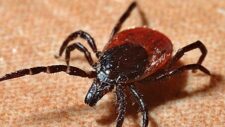
While ticks and mosquitoes are a natural part of our environment, it is important to know that some may transmit harmful diseases. The Kansas Department of Health and Environment (KDHE) tracks illnesses caused by ticks and mosquitoes, and as of May 29, 2024, has received over 200 laboratory reports of tickborne diseases. Additionally, KDHE has received several reports of tick bites and complaints of high numbers of ticks, which indicates that tick activity and density are increasing and are occurring earlier in the season this year.
Numerous tickborne diseases caused by bacteria are present in Kansas. These include Ehrlichiosis, Rocky Mountain Spotted Fever and other Spotted Fever Group Rickettsioses (SFGR), and Tularemia. Two rare tickborne viruses, Heartland virus and Bourbon virus, have also been identified in Kansas in both humans and ticks. All of these tickborne diseases are transmitted by the Lone Star tick, the most abundant tick in Kansas. Lone Star ticks can be found widely throughout at least the eastern two-thirds of the state in a variety of habitats and are aggressive human biters. This year alone, KDHE has investigated several tickborne disease cases with severe health outcomes, including hospitalizations due to Rocky Mountain Spotted Fever and Tularemia, and a fatal case of Bourbon virus.
“Vector-borne diseases, both those that are transmitted by ticks and those transmitted by mosquitoes are extremely active this year,” Dr. Erin Petro, KDHE State Public Health Veterinarian, said. “I really encourage people to take the risk of vector-borne diseases seriously and take personal protective measures for themselves and their pets to reduce their chance of acquiring an illness from a tick or mosquito bite. We’re also seeing emerging tick-associated conditions, like Alpha-gal syndrome, which can have lifelong consequences for those affected, which is why bite prevention is so important.”
In addition to increased tickborne diseases being reported to KDHE, there have been increased case reports of West Nile Virus (WNV), which is a reportable disease. While WNV cases occur every year in Kansas, the concerning trend this year is how early it’s being seen. Cases of WNV typically start in late July to early August. However, KDHE has already had two cases of WNV reported.
These cases serve as an important reminder to take precautions as you enjoy the outdoors this summer. Ticks are commonly found at the edge of trails, on tall grasses and in wooded, shaded areas. Mosquitoes are often more common at dawn and dusk and can breed in small amounts of standing water.
To reduce the risk of contracting a vector-borne disease, take the following steps:
- Use an EPA-registered insect repellent such as DEET, picaridin, oil of lemon eucalyptus or IR3535 on all exposed skin. If going camping or hiking, treat clothing and gear with products containing 0.5 percent permethrin.
- When doing yardwork, hiking, camping or recreating in areas where ticks and mosquitoes may be found, wear long pants tucked into socks or boots, if possible. Additionally, light colored clothing can make it easier to spot ticks.
- Take steps to control mosquitoes indoors and outdoors, such as emptying standing water, particularly in old tires, tarps and flowerpots. Empty bird baths at least once a week to disrupt the mosquito life cycle.
- Ensure pets remain tick free by consulting with a veterinarian about tick prevention products.
- After spending time outdoors, shower and check for ticks again (some can be hard to spot). The vital areas to check are in and around the hair and ears, under the arms, inside the belly button, around the waist, between the legs and the back of the knees.
- If a tick has bitten you, don’t squeeze it. Remove it with tweezers by grasping the tick as close to the skin’s surface as possible, then pull outward. Dispose of the tick by flushing it down the toilet. Don’t forget to check pets for ticks.
- Pay attention to common signs and symptoms of vector-borne illness such as fever/chills, body aches and/or rash. If any of these symptoms are present within a few weeks of spending time outdoors in areas that may have ticks or mosquitoes, it’s important to talk with a doctor about being tested for vector-borne illnesses.
For more information, visit KDHE’s Tickborne Disease Data Stories to learn more about tickborne diseases, signs and symptoms specific to each disease, tick bite prevention and tick distribution. CDC also has additional information about vector-borne diseases on their website.
