Thursday, February 12, 2026
Home Blog Page 418

Kansas farm invites innovative experiments

0

MOUNDRIDGE, Kan. — Ray Flickner knows the usual risks farmers take with weather, price volatility and personal safety. He’s also become quite comfortable facing the risks inherent in being an early adopter of unproven technology. The fifth generation farmer raises corn, soybeans, sorghum and wheat alongside research projects on the Flickner Innovation Farm, a former homestead near Moundridge in McPherson County.

Innovation has a long history at the 150-year-old farm, where the land has been used for a dairy, swine operation and commercial catfish farm. In 2019, Flickner and his wife, Susan, embarked on a journey to discover the technology that will drive agriculture forward in the 21st century through collaborations with more than a dozen university, industry and agency partnerships.

It Begins with Water

Flickner says his uncle drilled one of the first irrigation wells in the area, which has become one of the most senior water rights in the region. The only older one is owned by the city of Moundridge.

“We do have a water problem in the state of Kansas,” Flickner says. “We’ve allocated and appropriated more than what Mother Nature has provided us. I’m lucky that I have a shallow aquifer that does recharge.”
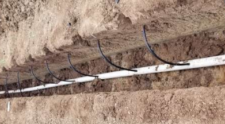
In 2001, Flickner began one of his most ambitious experiments to conserve water. He switched from the proven but resource-hungry flood irrigation to a subsurface drip irrigation system, which involved burying miles of tubing with small nozzles under a field. To date, the farm has converted more than 600 acres to the underground watering system. The conversion has proven efficient, using nearly 40 percent less water than the county average.

Center pivots are also employed on the farm, but they’ve been retrofitted with longer drop hoses, modern sprinkler heads and, in one case, a mobile drip system that places droplets directly on the soil surface. The goal is to lose less water to evaporation and have more of it reach the crops it helps grow.

“Water conservation is very near and dear to my heart,” Flickner says. “In 2023, if you had irrigation in McPherson County, you did pretty good. If you didn’t have irrigation, you did not do too well. It just made a world of difference. The fact you can water a crop is a major insurance policy in years it doesn’t rain.”

Appetite for Risk

Flickner’s willingness to accept the risk of unproven technology on his farm is part curiosity and part background. He was a teacher before he entered the banking industry, where he primarily worked with farmers and ranchers in Kansas and across the nation.

“Being on the lending desk gives you the opportunity to see different operations,” he says. “Some were very successful, and others were not so successful, financially speaking.”

Flickner took the lessons he learned from lending and has applied them not only to his farm, but his life in general.

“If you’re in the agricultural industry, you’re not risk averse,” Flickner says. “Risk comes with the territory. Now, you have to figure out how to manage that. My entire lifetime, if I hadn’t bought something through leverage, I’m not sure what we’d have. I’d be living in a little shack someplace.”

Flickner says his willingness to take chances was the subject of some deep discussions with his late wife, Susan, who didn’t have the same tolerance for debt. Flickner has always viewed leverage as a tool that can help or hurt, and he says he’s fortunate to be in a position where it’s mostly helped. It doesn’t hurt that he views borrowing money in the same way he looks at trying new technology: It’s not necessarily about getting bigger, but making the whole operation better.

“The idea of trying something new and different has always intrigued me,” he says. “Can we move the needle? Can we do things differently to help improve things?”

Innovation on the Farm

While subsurface irrigation was a big technological step for Flickner, it was just the beginning of learning how to maximize the natural resources on his farm. The ultimate goal is to grow more grain with less water, less labor, less fertilizer and fewer pesticides. With a focus on the future, Flickner also understands the past and how it’s influenced him today.

“I can’t fault my forefathers for plowing the prairie when they came here because if they hadn’t, I wouldn’t be here today,” he says. “It was a matter of survival. You use the tools and techniques available to you. Hopefully we can get away from the plow.”

Flickner’s ancestors plowed the prairie to raise many of the same crops he does today, but it came at the cost of wind and water erosion on the bare soil when crops weren’t growing. Today, Flickner employs a minimum-tillage practice that leaves the bulk of crop residue in the fields, not only to keep the soil in place but also to conserve moisture. He’s also begun experimenting with cover crops, which don’t have a cash value. Instead, they offer further protection for the soil while also allowing water to penetrate more easily, preventing runoff.

When it does rain enough for runoff to occur, the farm has installed monitoring stations that capture samples of the water that can be tested to see what else is leaving the farm with the water, like fertilizer and other nutrients. Dry conditions have hampered those tests so far.

“The initial focus was water conservation,” Flickner says. “It has grown into a much bigger situation with the cover crop concept and soil health, surface water evaluation. We’ve got to have rain, but that will happen.”

Teaching and Learning

In addition to Flickner’s experience in banking, he and his wife both had backgrounds in education. Their shared passion for teaching helped turn their farm into a classroom where they’ve hosted projects ranging from graduate student research to private companies testing products in real-world conditions.

“I’ve told the researchers this is a blank canvas,” Flickner says. “You can paint it however you think it should be painted, but I do reserve veto power. There’s been a couple of projects that I said, ‘No, we’re not going to do that.’”

Sometimes the projects find success in other areas; for example, one effort used a “drone in a box,” or an unmanned aircraft, that could take off, record crop data from above and land without any human intervention. The company ultimately pursued opportunities outside agriculture after successfully proving it worked on the Flickner Innovation Farm.

As Flickner participates in these projects and meets more researchers, he discovers there’s a lot no one knows — yet.

“The more I do this, the more questions I come up with and the fewer answers researchers can provide,” he says.

Peer Recognition

Flickner’s efforts to improve his farm have earned him numerous accolades, including the Kansas Farm Bureau Natural Resources Award in 2021 and the 2023 Kansas Leopold Conservation Award, which celebrates extraordinary achievement in voluntary conservation. Winners receive a crystal award and $10,000 for their efforts.

“It’s always humbling but rewarding to be recognized by those in the industry for what you’ve done,” Flickner says. “It’s something I’ll remember forever.”

Flickner also hosts field days at the farm, inviting others to see what projects are underway and ask questions about what’s working and what isn’t.

“I’ve heard from a number of people they’ve implemented some things they saw (at field days),” Flickner says. “You’ve got to be willing to share the data. For agriculturists, that can be a challenge. Because of my desire to make things better, I’ve been willing to share that information.”

His goal isn’t to win awards or squeeze out a little more profit, but rather to leave the farm in a better state for the next generation — and hope they continue the journey of trying to move the needle.

“You do what you think is right,” he says. “You hopefully leave it better for the grandkids.”

Learn more about the Flickner Innovation Farm at www.facebook.com/FlicknerFarms.

Celebrating Innovation

Kansas Farm Bureau’s Natural Resources Award honors members using time-honored and cutting-edge conservation practices to protect and improve our state’s natural resources. These good stewards serve as mentors for KFB members and nonmembers alike to help demonstrate innovative agricultural production and resource conservation. Learn more about the program at www.kfb.org/nra.

The Leopold Conservation Award Program recognizes and celebrates extraordinary achievement in voluntary conservation by agricultural landowners. The program shares the stories of these conservation-minded farmers, ranchers and forestland owners to inspire countless other landowners to embrace opportunities to improve soil health, water resources and wildlife habitat on their working land. Learn more about the Leopold Award at www.sandcountyfoundation.org.
Saturday night to see hundreds of millions of birds heading north, including across Kansas

0

Rising spring temperatures and weather conditions will likely push hundreds of millions of birds northward this weekend — and bird lovers in Kansas, Nebraska, Missouri and Iowa will get a front-row seat.

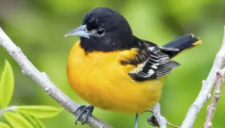
A mind-boggling variety of warblers, cuckoos, flycatchers, orioles, buntings and other travelers will largely fly under the cover of night.

But when the sun comes up, it’s time for them to feed and rest, making this a great weekend to grab binoculars or a bird song ID app and head outdoors.

“This is a big one,” said Andrew Farnsworth, a visiting scientist at the Cornell Lab of Ornithology. “You’re in the right place. The Central Flyway is the thoroughfare for spring migration.”

350 million birds are about to flap their wings northward

On Saturday night alone, Bird Cast scientists expect nearly 350 million birds to head north in the U.S. As many as 100 million or 200 million of them will take the Central Flyway over several eastern Great Plains and Midwest states.

Kansas City and surrounding areas are projected to be the hottest of hotspots.

“We’re at a period of the season when the largest numbers and the greatest diversity of birds are moving,” Farnsworth said. “Through the eastern Great Plains, you may be talking about between 100 and 200 species.”

Warm temperatures and clear skies Saturday night will spur birds on their epic journeys.

The heavy traffic might continue Sunday night, but a rain front could move in by then, putting a damper on the movement.

Farnsworth offers a birdwatching pro-tip: Night-time rainfall during peak migration is a great time to visit green spaces the next morning and check out who stopped to wait out the storm.

Spring bird migration tends to peak in the first half of May for Kansas, Missouri, Nebraska and Iowa.

Saturday night expected to see mass migration of birds across Kansas

Bird Cast tracks bird movement with radar and combines that information with weather conditions to create day-by-day migration forecasts each fall and spring.

The program is operated by the Cornell Lab, Colorado State University, the University of Massachusetts Amherst and the University of Illinois.

On any given night during spring migration, some birds are on the move. But specific nights end up seeing incredible numbers on the wing. They’re nudged by weather conditions such as rising temperatures, precipitation patterns and favorable winds.

Scientists urge people to turn off any unnecessary lights at night this time of year. Many millions of birds die each year by slamming into windows, and light pollution during migration season increases the risks.

Turn off outdoor lights and close blinds to help birds on their journey

Deciding to turn off your own outdoor lights or to close your blinds and curtains helps — even if other homeowners and businesses in your area don’t follow suit.

“It does make a difference,” Farnsworth said. “Every light off does count.”

Some cities, such as Houston, have mounted major campaigns to turn off unnecessary lights during peak migration season.

Lettuce Eat Local: Meatballs and Mothers

0

Amanda Miller
Columnist
Lettuce Eat Local


“What do you think about that, Benston?” 

It was hard not to grin at least internally every time that high-pitched little voice said something to “Benston.” Even though she actually asked to confirm a couple times over the course of the weekend, the 6-year-old foster girl we had on respite for three days was apparently convinced of the T in Benson’s name. I didn’t correct her since our son didn’t seem to mind, and I’m sure it wouldn’t have made a difference anyway. 

She, on the other hand, had no such qualms, and often corrected me since she was convinced I kept calling Brian “Ryan”; sorry, kid, I do know my husband’s name so I’m pretty sure I got it right. 

Unfortunately I can’t tell you her name, but we loved having her in our home for the short time we were able. I haven’t talked much about our involvement in foster care recently, since we took a break for the few months surrounding Kiah’s advent into our family. After Benson’s rough beginning, we just couldn’t anticipate how this one would go, and then even when we got to come straight home, we wanted some time for transition. It’s been hard knowing how and when to get involved again: knowing that just because we are in and committed to foster care doesn’t mean that we do it all the time or for all time. 

Many moms of littles can find themselves in “survive” mode, but right now I am in “thrive” mode, and I don’t want to give that up. It’s not that we don’t have our moments (or days, or weeks) that are rough — Benson is full of big emotions in this season of development (a generous way to describe his meltdowns), Kiah is still so chill but also several weeks into a major sleep regression, and being a mom has a lovely way of reminding me of my own things I need to keep working on. I don’t so much get hangry (hungry-angry), but I do get tangry (tired-angry), and what do you know, this constantly starving baby makes me so tired that I don’t have as long a fuse for her constantly volatile big brother. 

So we do have our moments where survival is the goal. Yet we are in such a Good Place in this season, and I want to be careful with and intentionally bask in this gift of my long-awaited children. 

That said, having extra kids in our home doesn’t necessarily mean I can’t, even though it does up the chaos levels a bit. I have several major caterings in the next month, so we are only considering respite care placements for now (unless of course we get a call for a baby, and then someone else will have to say no for me); we’ve had two lovely little girls for a few days each in the last couple weeks, a two-year-old and then this six-year-old. 

In a beautiful bittersweet twist, each of the four Mother’s Days since I became a mom have included foster kids. Here I waited so many years for babies, and now I get to love not only on my children but also on someone else’s — a heavy, precious role, as the kids are for whatever reason apart from their first mom. 

Our little friend this weekend said her favorite meal was spaghetti and meatballs, so that’s what I made for supper. It was a great excuse to pull out what is such a staple meal in some households but something that I haven’t made in years. Spaghetti and meaty sauce, sure, but not meatballs. I don’t like sticking my hands in raw ground beef and I don’t really like meatballs, so I don’t feel like making it and because I’m the Mom, I don’t have to. But also because I’m the Mom, I loved making it for this sweet girl — and the rest of my family sure didn’t mind. I had a lovely salad.  

But before you think I was too selfless, I knew there was my Mom Stash of chocolate pudding in the fridge and chocolate bars in my closet. What do you think about that, Benston?


Family-Pleasing Meatballs

Our girl who came with the warning that she doesn’t eat meals very well demolished five of these meatballs, so that’s all the stamp of approval we need. The baking step gets them nice and browned, and the simmering in the sauce coats them in flavor as well as lets dinnertime be flexible for whenever the rest of the things/people can get corralled to the table. I used a danish dough whisk to mix up the meatballs and a cookie scoop to portion them, so I only had to touch the raw meat a little when forming them. 

Prep tips: I added ¼ pound mild sausage to the mix, which is great if you have it available. 

4 ounces [1 cup] breadcrumbs

½ cup milk

1 pound ground beef

1 egg

2 garlic cloves, smashed and minced

½ teaspoon fennel seeds, crushed

1 ounce [¼ cup] grated Parm

a bit of chopped fresh parsley 

1 ½ teaspoons salt

Soak breadcrumbs in milk for 10 minutes; press out and discard milk, adding soaked bread to a large bowl. Add remaining ingredients, mixing well but gently. Scoop out onto an oiled rimmed baking sheet, and bake at 425° for 30 minutes, turning meatballs over after 15 minutes. Add to a pot of your favorite spaghetti sauce and simmer for up to 45 minutes. 

“Learning to Adapt after a stroke”

0

Working as an RN in inpatient rehab, I am often called upon to care for patients who have had a cerebrovascular accident, or more commonly called a stroke. I have observed that every stroke patient experiences a unique combination of symptoms but the one of the most important tasks they accomplish in rehab is learning how to be adaptable.

According to the American Stroke Association, left sided strokes (which affect the right side of the body) cause patients to experience more difficulty with language, both in speech and understanding. Right sided strokes, can cause more behavioral changes that may lead to uncharacteristic impulsivity, and may affect the patient’s vision. Based upon the type of stroke, each patient’s experience is different and they will have their own set of challenges to overcome as they work towards recovery.

Identifying the challenges is a crucial aspect of stroke rehabilitation. A main focus of the rehab team, for example, is balance and gait. Physical therapy is crucial in recovering strength and coordination in the affected side. If a patient is experiencing weakness to the left or right side of their body, they may require the use of a walker to allow for safe ambulation. Some patients may instead require the use of a cane, quad cane, or hemi-walker. Finding the correct assistive devices is one way stroke patients work to return to some normalcy.

Stroke patients may regain their freedom of movement with the help of an adaptive foot brace, or the use of a specialized cane. They may adapt to using their non-dominant hand for eating or writing. They may learn tools to adapt their speech patterns, or use electrical stimulation of the facial muscles to increase strength, and improve oral function. What all of these things have in common is learning how to change, how to adapt. And while each stroke is different, and symptoms vary from patient to patient, one common thread is that all stroke patients, their families, and friends must learn to adapt. And it isn’t just the physical recovery, people must adapt to the emotional and psychological changes as well. Depression, anxiety, altered moods or sudden mood changes are all common symptoms following a stroke. Often, I have had patients who are so frustrated that they feel like giving up on therapy, even giving up on life. Patients and family members may experience grief: mourning the loss of the person that they were, or that they once knew. Author Delanie Stephenson wrote of her stroke, “While my body and mind were healing, I was learning to be a new person”. Just as the body needs time and practice to adapt to the physical changes, the brain also needs time and practice.

Neuroplasticity does not return overnight, and may take months to return to normal. Regaining function requires setting goals, hard work, patience, and most important an acceptance of the need to adapt!

Carter Holm, RN is a Registered Nurse at Avera McKennan in Sioux Falls Specializing in inpatient rehabilitation. Holm is a Certified Rehabilitation Registered Nurse and works with patients through their rehabilitation from strokes, brain injuries, spinal cord injuries, and trauma. Follow The Prairie Doc® at www.prairiedoc.org and on Facebook and instagram featuring On Call with the Prairie Doc® a medical Q&A show celebrating its 22nd season of health information based on science, built on trust, streaming live on Facebook most Thursdays at 7 p.m. central